
JOURNAL
Perspectives on the Professional Kitchen Journey
Journal gathers reflections on the movement from curiosity to profession, from the pleasure of cooking to the realities of the business, from executing recipes to developing a culinary voice. These articles follow the long and uneven path of a cook who begins to take food seriously. At first, the question may be simple: What would it mean to cook better? Then it becomes more demanding: Could this become my profession? Later, inside the pressure of kitchens and the restaurant environment, the question changes again: How do I keep learning, leading, and thinking clearly inside the work?
Eventually, another question naturally appears. How do I begin to author my own work?
This is the deeper concern running through the Journal. Culinary authorship is not only the act of inventing dishes. It is a way of seeing, questioning, testing, organizing, and refining the many situations a cook encounters across a professional life. It appears in the plate, but also in the menu, the mise-en-place, the brigade, the supplier relationship, the business model, the field note, the restaurant visit, and the decisions made under pressure.
Professionalizing a passion is not only a technical transition. It is a mental one.
The kitchen asks for speed, precision, repetition, hierarchy, stamina, and accountability. But it also asks for attention, imagination, memory, judgment, and care. The heat of the kitchen is not separate from the dream. It is one of the places where the dream is tested, corrected, and made usable.
Surviving the line, however, is only the beginning. A serious cook eventually has to ask not only how to execute well, but how to think through the work. How to recognize a problem. How to study an ingredient. How to read a restaurant. How to design a menu. How to understand culture without reducing it to decoration. How to lead without reproducing unnecessary chaos. How to build a business model that can actually carry the food.
This is where the culinary creative Process becomes central.
Research, experimentation, documentation, and refinement are not only steps for developing a dish. They are a way of approaching culinary practice itself. They help transform uncertainty into process. They give the cook a place to put attention, curiosity, intuition, doubt, and discovery. They allow creativity to become something more reliable than a sudden burst of inspiration.
The Journal exists to give perspective within that process.
Some articles begin from memory. Others begin from the restaurant floor, the market, the menu, the line, the supplier, the owner’s desk, the dining room, or the quiet pressure of decision-making. Some address the first threshold into professional cooking. Others speak to the cook already inside the industry, trying to understand what kind of chef, leader, creator, or business owner they may become.
Search Journal
Use the search bar to explore specific topics such as ingredients, creativity, documentation, plating, menu, leadership, kitchen culture, service, suppliers, training, pricing, the restaurant business, the culinary creative process, etc..

When Does a Recipe Become Your Own?
When does a recipe become truly yours? This article explores culinary authorship, influence, variation, documentation, and the work required to turn inherited knowledge into personal creative practice.
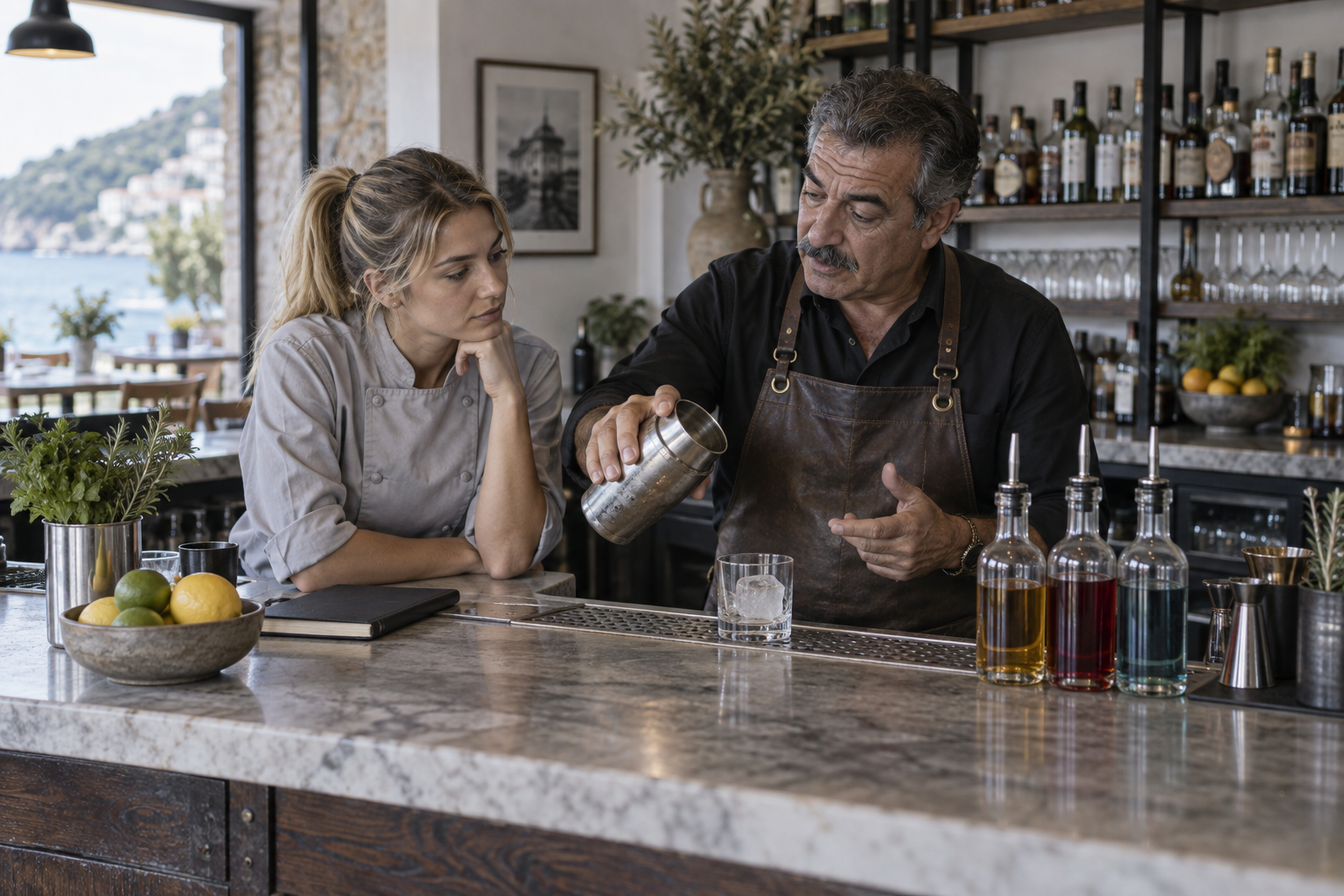
Field Notes From the Bar: What Chefs Can Learn From Mixology
The bar and the kitchen often work with the same sensory questions. These field notes explore what chefs can learn from mixology, beverage pairing, extraction, flavor, and closer collaboration with the bar.

Improvisation Is Not Creative Direction
Improvisation is an essential kitchen skill, but it is not the same as creative direction. This article looks at how knowledge, structure, and reflection turn spontaneous solutions into useful culinary development.

Originality Is Not Novelty — Why a Culinary Voice Begins With Origins, Research, and Sustained Exploration
Originality in cooking is not simply about producing something nobody has seen before. It grows through origins, research, repetition, experience, and the sustained development of a culinary point of view.
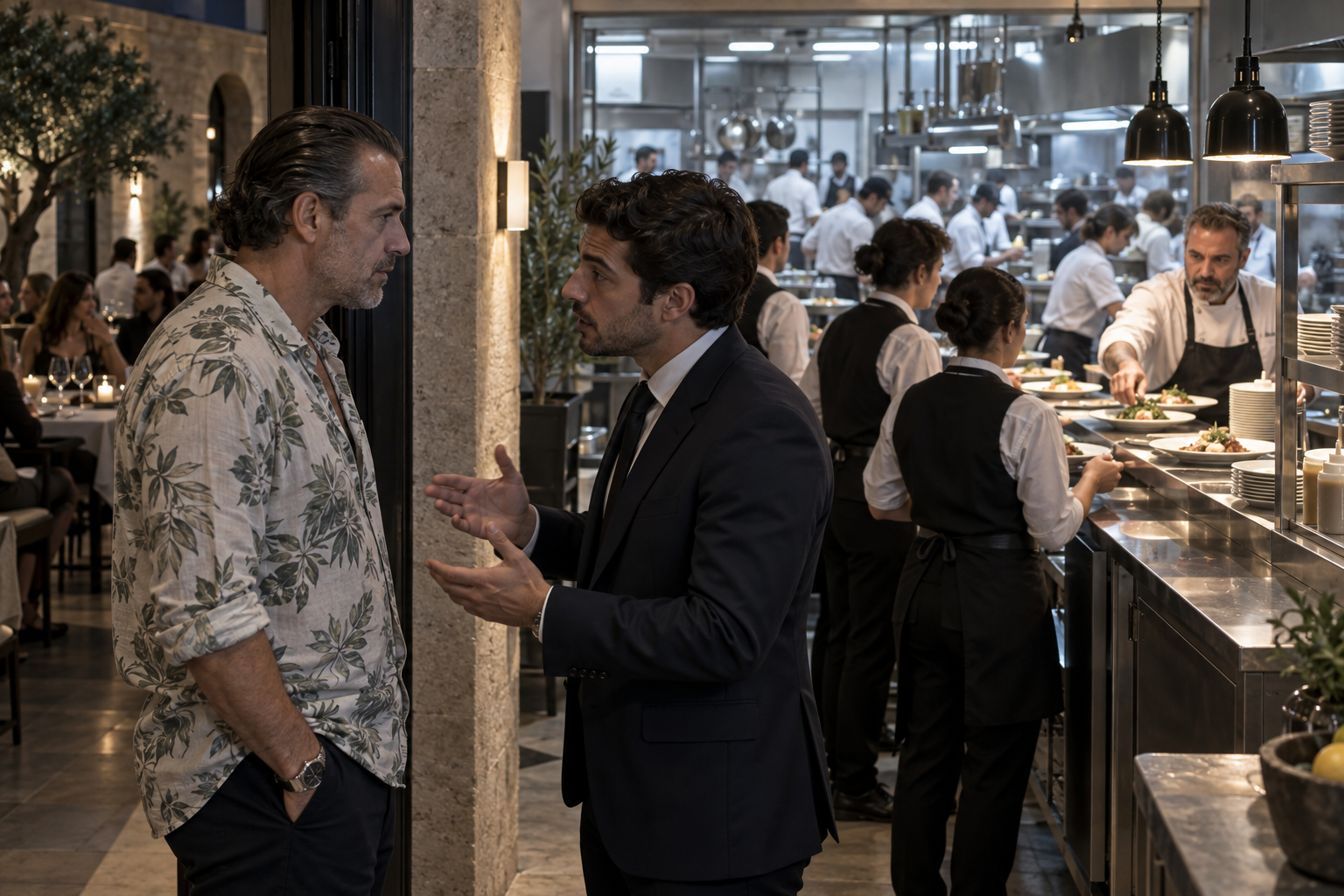
Funnels and Bottlenecks: From the Kitchen to the Table
Restaurant bottlenecks are often not where the real problem begins. This article looks at how movement, systems, layout, communication, menu decisions, and management affect the flow from kitchen to table.

Repetition Reveals Your Culinary Voice
Culinary voice is not something we simply declare. It becomes visible through repeated choices, sustained exploration, technical mastery, and the patterns that accumulate across a body of wor

Reports Are Only Useful If Someone Reads Them
Restaurant reports are only useful when someone knows how to read them. This article looks at how sales, labor, inventory, waste, and other operational data can support clearer judgment and better management decisions.
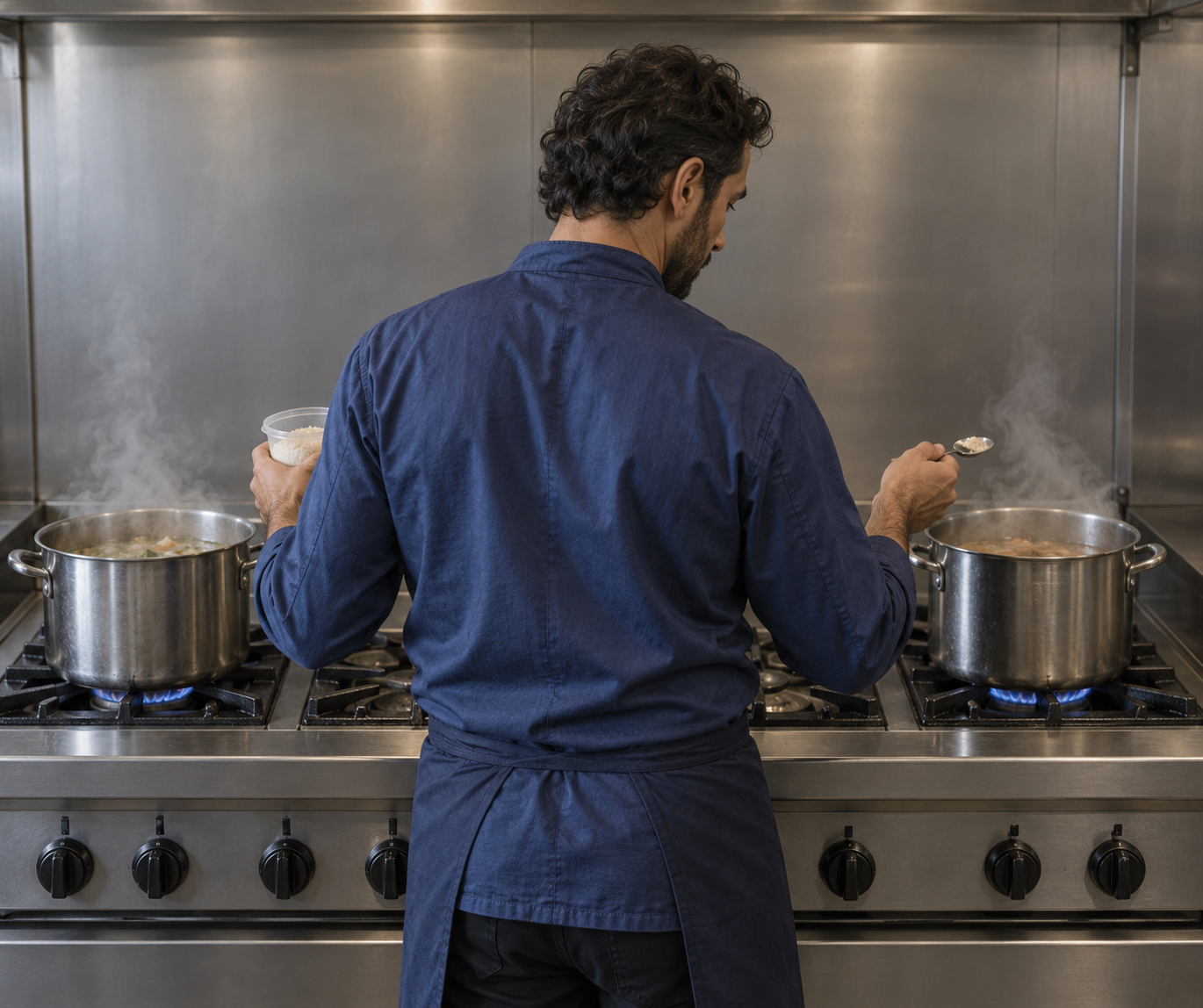
Culinary Judgment: Knowing What to Keep, Change, and Remove
Culinary judgment is not simply instinct or confidence. It is the ability to use experience, context, evidence, and responsibility to decide what should stay, change, or disappear.
JOURNAL ARCHIVE INDEX
As the section grows through periodical publications, the index is organized as a growing and exploratory archive, not a linear course. You do not need to read it from the beginning. Enter through a concern that is closest to your practice right now. Each article is a point of entry into a larger field of concerns around culinary authorship, professional practice, ingredients, menus, leadership, hospitality, and restaurant work. The guided themes below through the index offer another way into the archive.
Each theme gathers articles around a central concern in the professional kitchen journey: authorship, ingredients, culinary culture, business, leadership, and menu matters. Use it as a guide when you want to return to a specific article, follow a line of research, or move through the Journal at your own pace. Start with the theme closest to your current question. Then follow the thread.
The Shift to Authorship & THE CULINARY CREATIVE PROCESS
The first shift is internal. A cook moves from following instructions to understanding how ideas are formed, tested, and refined into something that can be repeated. These essays explore the movement from executing recipes to developing your own culinary work. They focus on creativity, method, intuition, documentation, failure, and the discipline required to turn ideas into repeatable results.
When Does a Recipe Become Your Own?
A reflection on culinary authorship, influence, variation, and the work required to turn inherited knowledge into personal creative practice.
Originality Is Not Novelty — Why a Culinary Voice Begins With Origins, Research, and Sustained Exploration
An essay on why originality grows through origins, research, experience, and sustained inquiry rather than through novelty alone.
From Cook to Creative Chef: The Shift to Culinary Authorship
A foundational essay on moving from following recipes to developing a personal culinary voice with intention.
The Myth of Inspiration: Building a System for Culinary Creativity
A reflection on why inspiration is not enough, and why creative cooks need structure, repetition, and method.
The Culinary Creative Process: How Cooks Develop Ideas
An introduction to the creative process behind dish development, from attention and questioning to testing and refinement.
From Gut Feeling to Method: Turning Culinary Intuition Into a System
An essay on how instinct becomes stronger when it is organized through research, experimentation, documentation, and refinement.
The Undocumented Kitchen: Why Your Best Ideas Keep Disappearing
A practical reflection on why ideas vanish in fast-moving kitchens, and how documentation protects creative work.
Why Failed Recipes Are the Key to Creative Mastery
An article on failure as part of culinary R&D, and how failed tests can become useful material for future refinement.
Building a Culinary Grammar: How Knowledge Becomes an Archive, and the Archive Becomes an Atlas
A reflection on how to turn scattered culinary research into a usable, navigable atlas that feeds the creative process.
An article on why a successful first attempt does not mean a dish is ready, and how stress testing builds reliable culinary systems.
What Culinary R&D Means for a Working Cook — Research and Development Beyond the Laboratory
A reflection on how research, experimentation, observation, and refinement become part of everyday creative kitchen practice.
Designing a Culinary Test — How a Question Gives Experimentation Direction
An article on how clear questions, comparisons, and controlled changes turn kitchen experimentation into useful learning.
Testing, Repeating, Refining — Why Development Is More Than Trying Again
A reflection on why testing, repetition, and refinement are different stages in turning an idea into a reliable preparation.
How to Taste a Culinary Test — Evaluating More Than Whether We Like It
An article on tasting as part of development, and how cooks learn to evaluate what changes, holds, and actually works.
Better Is Not Specific Enough — How Criteria Give Culinary Development Direction
A reflection on how clear criteria help cooks move from preference and feedback toward judgment, direction, and decision-making.
Culinary Judgment: Knowing What to Keep, Change, and Remove
An exploration of how experience, evidence, context, and responsibility help cooks make better decisions about what should stay, change, or disappear.
Improvisation Is Not Creative Direction
A reflection on how improvisation supports creativity, while knowledge, structure, and investigation turn spontaneous solutions into sustained culinary development.
Repetition Reveals Your Culinary Voice
A reflection on how repeated choices, sustained exploration, and technical mastery gradually reveal patterns across a cook's body of work.
THE PROFESSIONAL KITCHEN: LEADERSHIP, OPERATIONS & SYSTEMS
The professional kitchen is where culinary work meets people, resources, systems, pressure, and responsibility. These essays examine the structures that allow professional kitchens to function: leadership, management, training, communication, staffing, accountability, suppliers, workflow, operational controls, economics, and the systems required to turn culinary intention into daily practice.
Is Cooking School Worth It? Paths Into the Professional Kitchen
A reflective guide to culinary school, self-taught learning, apprenticeships, and the different ways cooks enter the profession.
The Gap: Bridging Professional Technique and Home Intuition
An essay on the threshold between home cooking and professional cooking, and what changes when passion enters the discipline of the kitchen.
The Cost of Discipline: What the Brigade Taught Me That Art School Didn’t
A reflection on the brigade system, service pressure, structure, and the discipline required to make creative work hold under real conditions.
Kitchen Myth: Why Culinary Excellence Does Not Require Chaos
An essay challenging the idea that great kitchens must be aggressive, chaotic, or emotionally destructive in order to produce excellent work.
Before You Hire the Chef: Why Alignment Matters More Than an Impressive CV
A leadership article on hiring chefs, aligning expectations, understanding the kitchen’s needs, and choosing the right person for the right operation.
The Supplier Is Part of the Kitchen: Why Relationships Beat the Lowest Price
An article on supplier relationships, reliability, trust, product standards, and why the lowest price is not always the best operational decision.
The Kitchen That Keeps Teaching: Why Staff Training Builds Better Restaurants
An essay on training as part of restaurant culture, including technique, hygiene, equipment, communication, leadership, and continuous development.
Who Is Accountable When Things Break? Why Clear Protocols Protect a Restaurant
A practical article on breakage, equipment misuse, protocols, responsibility, and the difference between blame and real accountability.
Where the Restaurant Leaks: How Systems and Audits Protect Your Business
An article on irregularities, inventory, reports, audits, theft, waste, and the systems that help restaurants see where money and product disappear.
When the Chef Runs the Whole Restaurant: The Risks of Becoming Chef, Owner, and Manager
An essay on the weight of carrying the kitchen, business, leadership, decision-making, marketing, finances, and emotional tone of a restaurant at once.
Do Not Correct During Service Unless You Must: How Timing and Leadership Shape Kitchen Discipline
A practical guide to restaurant leadership and knowing the difference between an immediate operational intervention and a post-service correction.
Listening Is Part of Management: How Leaders Filter and Act on Information
An article on how restaurant leaders can filter operational noise, document patterns, and turn active listening into a structural management tool.
The Implementation Gap — Why Restaurant Vision Often Fails to Become Daily Practice
This article looks at the gap between what a restaurant intends to be and what the team actually practices every day.
Staff or Team? Why Restaurant Culture Needs a Clear Operating Structure
An essay on the dangers of confusing transactional roles with emotional loyalty, and how to build a clear operating structure.
The Economy of Favors Between Restaurants: When Generosity Needs a Protocol
An article on why borrowing ingredients or equipment from neighboring businesses requires strict operational protocols to protect your own service.
What Kind of Manager Does Your Restaurant Need? Why Management Must Fit the Business Structure
A guide to aligning a leader's strengths with your restaurant's specific organizational structure to avoid operational chaos.
Restaurant Marketing Needs a Strategy: Why Promotion Without Direction Creates Noise
A reflection on why restaurant marketing must be an intentional blueprint that connects the kitchen's reality to guest expectations.
What Makes a Restaurant Profitable? Why the Business Model Matters More Than the Format
An analysis of why true restaurant profitability lies in structural design and execution rather than visible popularity or scale.
Funnels and Bottlenecks: From the Kitchen to the Table
An operational look at how layout, systems, communication, menu decisions, and small points of friction affect restaurant flow from kitchen to table.
Reports Are Only Useful If Someone Reads Them
A reflection on how restaurant reports become useful when sales, labor, inventory, waste, and other data are actually interpreted and connected to decisions.
Culture & Field Research
A cook’s voice is shaped by more than technique. It is shaped by markets, restaurants, migration, memory, heritage, and the way food travels through people and places. These essays look beyond the station and into the wider world that shapes culinary thought: culture, migration, markets, restaurants, trade shows, internships, and direct observation.
What Is Culinary Culture? Tradition as a Source for Authorship
An essay on culinary heritage as a living field of knowledge, and why tradition can expand rather than limit creative work.
Fusion Cuisine Is Not the Problem: The Difference Between Cultural Exchange and Culinary Confusion
A reflection on cultural exchange, culinary history, and the difference between responsible cross-cultural cooking and superficial combination.
The Migrant Palate: How Culinary Heritage Rewrites Memory
An essay on migration, memory, taste, and how culinary identity gains new layers through movement and encounter.
Field Notes // The Tactile Classroom: Markets of Madrid, Paris, and Guadalajara (Part 1)
A field note on markets as places of culinary learning, through vermouth, cheese, birria, and the sensory education of direct contact.
Field Notes // The Tactile Classroom: Markets of Guatemala and Antwerp (Part 2)
A continuation of the market essay, moving through Guatemalan food culture, Antwerp’s weekly market, migration, improvisation, and living tradition.
Where the Industry Gathers: What Trade Shows Can Teach a Cook
An article on trade shows, conferences, and culinary events as forms of field research for cooks, chefs, and restaurant operators.
Books for Cooks: Why Culinary Growth Requires Reading Beyond Recipes
An essay on why true culinary growth requires studying leadership, business, and psychology outside of the recipe book.
A Possible Antidote to Kitchen Burnout
A reflection on burnout, professional pressure, and how a clearer method can help cooks remain connected to the work without disappearing into it.
Why Kitchen Internships Matter: Field Research in the Professional Kitchen
An essay on internships as a way to observe professional systems, kitchen models, scale, pressure, and the hidden structure of serious culinary work.
How to Read a Restaurant: Field Research From the Entrance to the Final Bill
A guide to visiting restaurants as a culinary professional, observing hospitality, service, menus, bathrooms, kitchens, timing, and the full guest experience.
The Chef’s Notebook: Why Thinking on Paper Still Matters in the Kitchen
A reflection on why a physical notebook remains the most vital tool for giving unformed culinary thought the space it needs to breathe.
The Other Kitchens
Field notes on hotels, catering, private dining, teaching, and development work as different ways to learn, work, and remain connected to cooking.
Zero Waste Is Not a Slogan
A practical reflection on reducing food, water, packaging, and operational waste through better menu design, purchasing, portioning, and kitchen systems.
Field Notes From the Bar: What Chefs Can Learn From Mixology
Field notes on what chefs can learn from pairing, extraction, flavor development, and closer creative exchange between the kitchen and the bar.
Menu Matters & Culinary Thinking
A menu is never just a list of dishes. It is the blueprint of the restaurant. It determines equipment, labor, flow, purchasing, service, pricing, and the experience the guest is invited to enter. These essays examine the menu as a central structure of the restaurant. The menu is treated not as a list of dishes, but as architecture: a system that shapes the kitchen, the dining room, the business model, and the guest experience.
The Blank Plate: A Lesson in Culinary Composition
A reflective essay on the plate as a space of composition, memory, attention, and the first awareness of visual culinary structure.
Menu Matters: The Invisible Architecture Behind Every Meal
A foundational article on the menu as sequence, rhythm, structure, and the hidden architecture behind how a meal unfolds.
Menu Matters: Not a List of Items, but the Story of Your Restaurant
An essay on the menu as narrative, and how a restaurant’s dishes, service, language, and staff must carry the same story.
Menu Matters: Why the Kitchen Must Follow the Menu
An article on why the menu should guide the design of the kitchen, equipment, stations, staffing, and service flow.
The Equipment Your Kitchen Does Not Need: Why More Machinery Does Not Create a Better Restaurant
A practical reflection on unnecessary equipment, trapped capital, broken machines, bad capacity planning, and why tools must follow the menu.
Menu Matters: Why the Menu is Your Restaurant’s Business Model
An essay on the menu as the place where food, cost, labor, pricing, equipment, suppliers, and profitability meet.
Menu Matters: Stress-Test Your Menu Before You Open
A practical article on testing a menu before launch, gathering feedback, identifying weaknesses, and protecting the restaurant from avoidable failures.
Plating Is Part of the Dish: How Presentation Shapes Service and Meaning
A look into why plating is not just decoration, but an operational and financial blueprint that dictates the mechanics of service.
Pricing Your Menu Is Not Guesswork: How Cost, Value, and Strategy Meet on the Page
An exploration of why menu pricing is a calculated intersection of operational costs, perceived value, and business strategy.
The Menu as Object: How Physical Form Shapes Service and Guest Decisions
A practical reflection on why the format of your menu must be designed to reduce decision friction and survive the dining room.
The Shadow of an Ingredient: What Every Menu Item Brings Into the Restaurant
An introduction to the hidden costs of storage, labor, and waste, and how to audit menu items to protect your margins.
AI in the Kitchen: Formulating Questions for Culinary R&D
An essay on using AI as a thinking assistant in culinary research, while keeping the cook responsible for taste, testing, and authorship.
A reflection on how common staples can expand your culinary perspective and transform your research and development process.
Understanding the Ingredient
Better cooking begins with deeper ingredient knowledge, including season, source, technique, heritage, behavior, and repeated observation.
How Documentation Changes the Way You Taste — Why Writing Something Down Makes You Notice More
An article on how writing sharpens observation, preserves experimental memory, and turns past tests into material for future research.
How Creative Chefs Think About Ingredients: Building a Culinary Grammar
An article on how ingredients can be studied beyond basic preparation, through observation, technique, flavor, texture, and transformation.
How to Begin Experimenting With Ingredients: From Question to Formula
A practical guide to beginning ingredient experiments with clear questions, controlled variables, documentation, and repeatable results.
The Creative Advantage of a Small Menu
An exploration of how a smaller menu can concentrate attention, improve execution, deepen ingredient knowledge, simplify operations, and strengthen culinary identity.