What Is Culinary Culture? Tradition as a Source for Authorship
A tortilla can look like a simple thing. It can arrive in a plastic bag, stacked neatly, almost identical from one piece to the next. You open the package, warm one in the microwave, fill it with something, fold it, serve it, and move on. Nothing dramatic happens. But if you stay with it a little longer, the tortilla begins to open.
You realize it is not only a flat piece of corn dough. It is the result of a grain, a region, a technique, a tool, a fire, a hand, a habit, a meal structure, a history. It may be made from white corn, yellow corn, blue corn, or another local variety. It may be thin or thick. It may be pressed by hand, shaped with a wooden press, made by machine, cooked on a steel plancha, a metal comal, a clay comal, over gas, over fire. Each version changes something. The flavor changes. The texture changes. The smell changes. The use changes. The story changes.
Then you learn about nixtamalization. You understand that corn is not simply ground into masa. It is transformed through an ancient process that changes its structure, its nutrition, its aroma, its behavior under the hand. Suddenly masa is not one thing. It becomes a whole world. Tortillas, tamales, drinks, atoles, antojitos, folded foods, steamed foods, toasted foods, festival foods, everyday foods. What looked simple begins to reveal a universe. This is culinary culture.
Not culture as decoration. Not culture as a costume placed on food to make it look more interesting. Culinary culture is the living field around an ingredient, a technique, a dish, or a way of eating. It is the accumulated knowledge of people who learned how to transform what was available into something meaningful, useful, pleasurable, and repeatable. It is memory, but not only memory. It is practice. It is the way something is planted, harvested, processed, cooked, served, shared, adapted, protected, and changed. For a cook, this matters deeply.
Because the moment you begin to understand culinary culture, food stops being only material. It becomes a set of relations. You are no longer looking only at what an ingredient can do in your hands. You begin to ask where it has been, who has worked with it, what problems it solved, what pleasures it carried, what rituals surrounded it, what migrations changed it, what economies shaped it, what tools made it possible. And that changes the way you cook. It does not mean you become paralyzed by respect, afraid to touch anything. It means the opposite. You become more awake. More precise. More responsible. More capable of transformation because you are no longer working blindly.
A cook who understands heritage does not see tradition as a wall. He sees it as a source. There is a difference between using an ingredient because it looks interesting and approaching it with curiosity about its world. One attitude consumes. The other studies. This is why, when I encounter an ingredient I do not know, I try not to begin by asking only, “What can I do with this?” I try to ask first: How is this used? Who cooks with it? Where does it come from? What does it belong to? What is its usual context? What does it taste like when it is prepared by someone who grew up with it?
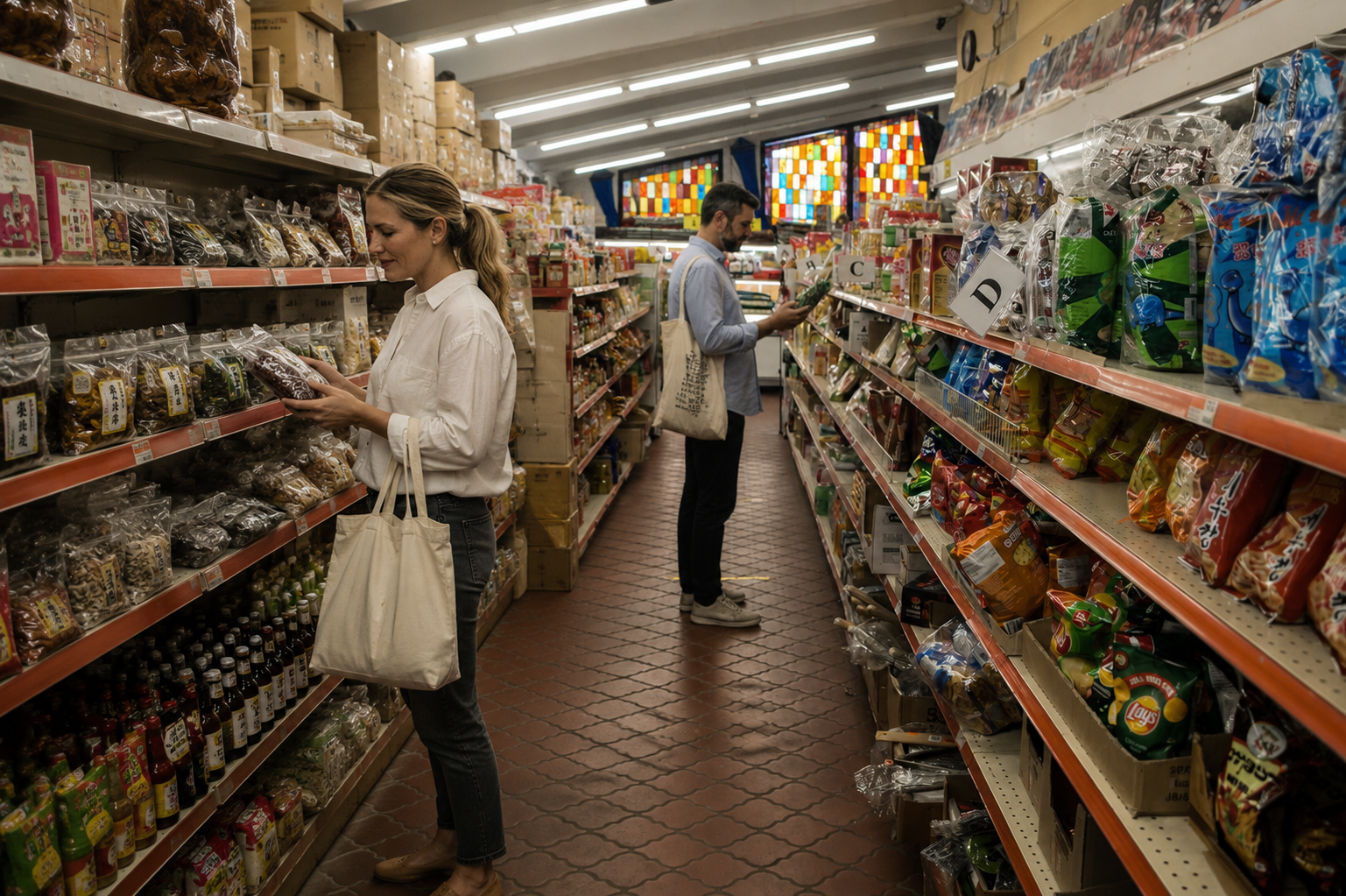
Those questions open doors. Sometimes the answer is in a book. Sometimes it is in a market. Sometimes it is in a small shop run by people who brought those ingredients across oceans because they needed the flavors of home nearby. Sometimes it is in a city neighborhood you have passed many times without really entering. Sometimes it is in the conversation with a vendor who tells you, “No, don’t cook it like that. We usually prepare it this way.” That sentence is worth listening to.
A serious cook should learn to go to the source whenever possible. And the source is not always another country. It may be across the city. It may be a regional market. It may be a family kitchen. It may be a community festival, a bakery, a butcher, a spice shop, a restaurant where the food is cooked for people who already know what it is supposed to taste like. To experience culinary culture, you have to leave the neutral space of the supermarket.
You have to go where food still carries context. This is part of the work. Not as tourism. Not as collecting “exotic” flavors. But as field research. You go, you observe, you taste, you ask, you take notes. You notice what people buy. You notice what they ignore. You notice what is abundant. You notice which ingredients are treated as special and which are everyday. You listen to the names. You look at the tools. You ask how something is eaten, when it is eaten, with what, by whom. This kind of attention changes your culinary grammar. It gives you more than information. It gives you orientation.
A dish is never only a dish. It belongs to a way of thinking. It may carry agriculture, religion, poverty, abundance, celebration, preservation, migration, conquest, trade, weather, geography, necessity. Sometimes a technique develops because sources are scarce. Sometimes a dish exists because an ingredient has to be preserved. Sometimes a flavor combination exists because two cultures met through trade. Sometimes it exists because people were displaced and had to rebuild their food with what they could find. Culinary culture is full of beauty and mystery, but it is not always innocent.
Ingredients travel through many kinds of histories. Some through exchange, curiosity, and commerce. Others through invasion, extraction, slavery, migration, exile, survival. To cook with awareness is not to carry the weight of all history on every plate, but to understand that food has never existed outside of human movement. This is one of the reasons heritage matters. Heritage is not a nostalgic word. It is not only about preserving the past exactly as it was. Heritage is the knowledge that remains active. The techniques that continue. The flavors people protect. The gestures people repeated so many times they become identity.
But heritage also changes. Every tradition that is alive has adapted. Ingredients arrive. Tools change. Cities grow. Families move. Markets shift. People substitute, invent, repair, simplify, refine. What we call traditional food is often the result of many transformations that became stable enough to be recognized. This is important for creative cooks. Because if you understand that culture has always moved, you stop thinking of culinary creativity as disrespectful by nature. The question is not whether you are allowed to transform something. Cooking has always transformed. The question is how you transform it, and how you present it.
Do you understand what you are preparing? Do you know what role that ingredient plays in its original context? Do you understand the technique before altering it? Are you using culture as decoration, or are you entering into conversation with it? Can you explain why the transformation makes sense? This is where culinary culture becomes a point of departure for authorship. Not because it gives you permission to take anything and use it however you want. But because it gives you depth. It gives you references. It gives you structure. It gives you stories, tensions, affinities, and possibilities.
You may discover an ingredient in a small imported foods shop that you had never seen before. You ask what it is. Someone tells you it is used in stews, or drinks, or sweets, or ceremonial dishes, or daily cooking. You take it home. You read. You test. You taste it in its traditional form if you can. You begin to understand its logic. Then, maybe, you see another possibility. Not a random invention. A movement from understanding into transformation. That is a very different kind of creativity. It has roots. And when creativity has roots, it becomes more precise.
A cook who works this way begins to build dishes differently. You do not only assemble flavors. You build relationships. You can tell why an ingredient is there, what it brings, what it refers to, why it has been moved into another context. You can speak about the dish without inventing false romance around it. The story is already present because the work was done with attention. This is also how style begins to develop. Style is not only visual. It is not only plating. It is not only a set of recurring ingredients or colors on the plate. Style is a way of choosing. A way of caring. A way of connecting references.
When you understand culinary culture, your choices become richer. You begin to know why one kind of corn matters over another. Why one chile behaves differently from another. Why does a clay comal give another kind of result. Why is a spice toasted in one cuisine and bloomed in oil in another. Why a sauce is ground by hand. Why a broth is served with the meat instead of separately. Why the order of eating matters. These details are not decorative. They are culinary grammar. And the more grammar you have, the more intelligently you can create your own compositions in the kitchen.
This is one of the central values of Culinary Collector: to treat ingredients, tools, techniques, and traditions not as isolated facts, but as living material for culinary understanding. To look at food deeply enough that it becomes useful. To gather knowledge not for display, but for practice. Because knowledge that returns to the kitchen never remains incomplete. You read, but then you cook. You observe, but then you test. You taste, but then you document. You respect, but then you transform carefully. This is the movement.
Culinary culture gives the cook a wider field of consciousness. It teaches humility because you realize how much existed before you arrived. It teaches curiosity because every ingredient contains more than its surface. It teaches responsibility because you understand that what you serve carries references, whether you name them or not. And it teaches possibility. Because once you see how much is contained in a tortilla, a grain of rice, a fermented paste, a spice blend, a broth, a bread, a pickle, a sauce, a tool, a market gesture, you understand that cooking is never only cooking. It is connection, transformation, preservation, and interpretation.
A cook can perform a recipe and do it well. There is dignity in that. But the creative chef begins to ask what lives behind the recipe. What world made it possible. What choices shaped it. What can be learned from it. What can be carried forward. This is not about making food more complicated. It is about making your attention more complete. Culinary culture is the depth beneath the plate. It is the reason an ingredient is never just an ingredient. And when you begin to see that, you cook differently. You cook with more care. You cook with more context. You cook as someone who knows that every dish is not only something served, but something continued.
What Is Culinary Culture? Tradition as a Source for Authorship