Menu Matters: Stress-Test Your Menu Before You Open
How to Find the Weak Points Before Service Finds Them for You
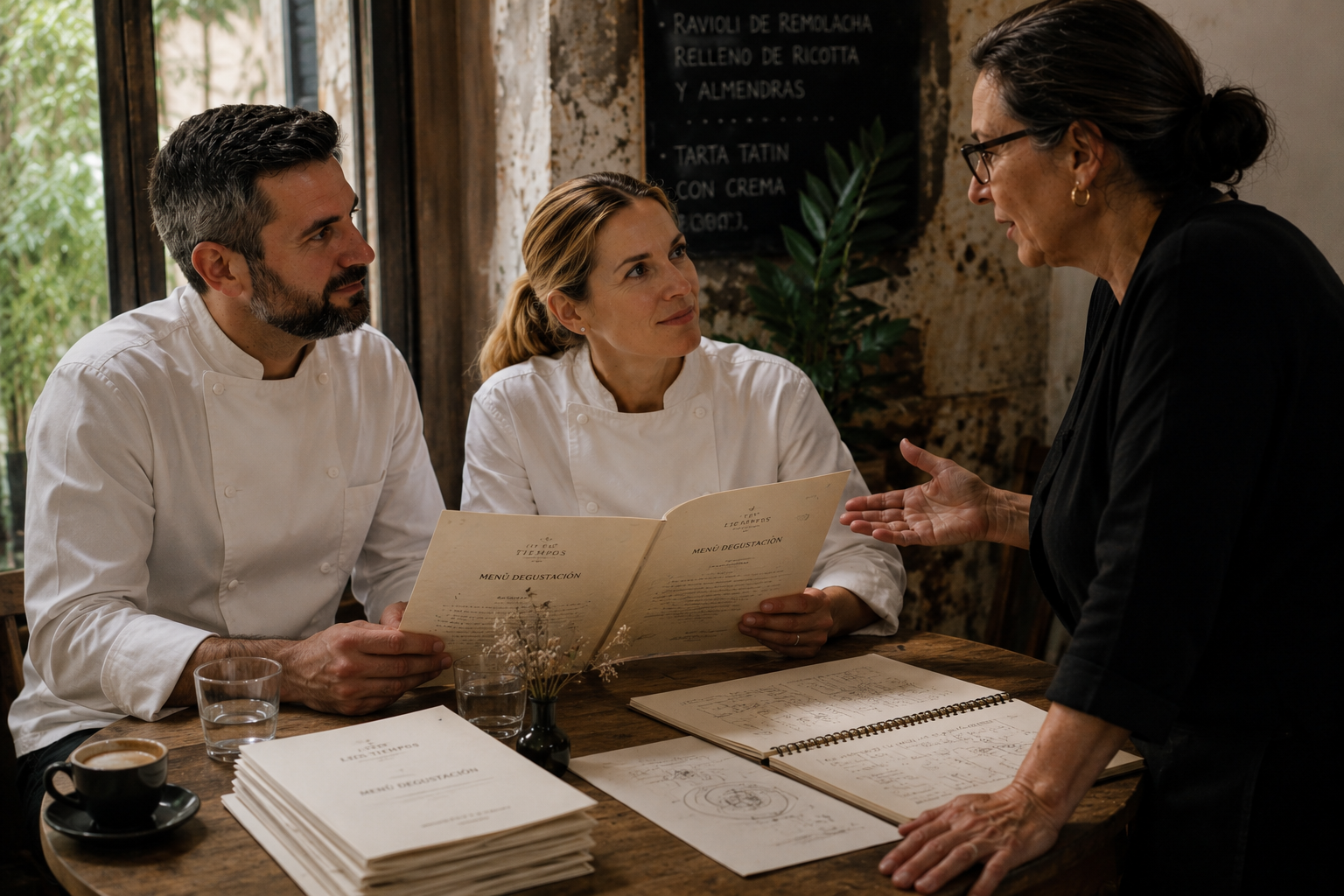
There is a moment in every restaurant project when the menu begins to feel real. Not finished forever, but real enough. The dishes have names. The structure makes sense. The sections are clear. The prices have been considered. The ingredients seem available. The story feels coherent. You look at the printed page and think: this could work. That is a beautiful moment, but is also a dangerous one.
Because a menu can make perfect sense inside the mind of the person who created it and still fail to communicate clearly to the people who will encounter it from the outside. The chef knows what the menu means. The owner knows the intention. The team may understand the concept because they have heard the story many times. But the guest has only the page. The investor has only the page and the numbers. The cook has only the dishes and the labor behind them. The restaurateur sees the operation beneath the language. A menu has to survive all of those readings.
This is why, before a menu becomes the foundation of a restaurant, it needs to be tested. Not admired. Tested. Compliments are pleasant, but they do not take you very far. Of course, it is nice when someone says, “This looks beautiful,” or “I would eat here,” or “This sounds delicious.” That kind of encouragement has its place. But encouragement does not always reveal weakness. A menu needs a more serious kind of attention. It needs to be placed in front of people who can question it from different angles. Not to destroy it. Not to make it perfect. Perfection is not the goal, excellence is. The objective of testing is to understand where the menu is strong, where it is unclear, where it is vulnerable, and where your intention is not arriving on the other side.
You may believe the menu feels accessible. Others may read it as expensive. You may believe it feels sophisticated. Others may read it as confusing. You may believe the concept is obvious. Others may not understand what kind of restaurant it is. You may believe there are enough options. Others may feel the menu is narrow. You may believe one dish is central to the identity. A cook may look at it and immediately see that it will create a bottleneck in service. This is not failure. This is information. And it is much better to receive that information before opening than during the first month of service, when pressure, payroll, rent, staff training, suppliers, and customer expectations are already moving around you.
A menu should be stress-tested before the restaurant is under stress. This does not mean asking everyone or anyone what they think. That is one of the traps. If you simply hand the menu to people and ask for opinions, you will receive opinions but probably out of context. Many of them. Some useful, some emotional, some personal, some contradictory, some completely irrelevant to the restaurant you are trying to build. Someone will say they do not like spicy food. Someone will ask for cheesecake. Someone will say there should be more vegetarian dishes. Someone will say the prices are too high because they personally would not pay them. Someone will suggest adding something that belongs to another restaurant entirely. If you are not careful, feedback becomes noise. And noise can weaken your approach to reinforcing your menu. This is why the test has to be designed. You need questions. Not too many. Not vague. Not questions that invite people to redesign the restaurant according to their personal preferences. Clear questions that help you understand whether the menu is communicating what it needs to communicate, and whether the structure can support the restaurant you want to build.
The first group to test with is potential guests. Not random guests. Potential guests. People who understand the type of place you are trying to open. If you are developing a fine dining concept, show the menu to people who actually dine in that world. If you are building a neighborhood pizzeria, show it to people who would realistically become regulars. If you are creating a fast-casual concept, show it to people who understand speed, price, clarity, and convenience. Context matters. A person who never eats out, or never pays for the kind of food you are proposing, may still have an opinion, but it may not help you understand your actual audience.
With potential guests, the questions should focus on perception. What kind of restaurant do you imagine from this menu? Does the menu feel clear? Does it feel expensive, accessible, casual, refined, generous, limited, exciting, confusing? Which dishes would you order first? Which dishes would you ignore? Do the prices feel aligned with the experience you imagine? Is there anything missing that would stop you from coming? Is there anything that feels out of place? You are not asking them to become chefs. You are asking them to help you understand what the menu communicates. This is important because a menu is not only an internal document. It is a public language. If the guest reads a different story than the one you think you are telling, you need to know that.
The second group is cooks. Cooks see another menu. They do not only read the dish. They see the prep behind it. They see the station. They see the containers, the timing, the heat, the refrigeration, the knife work, the pickup, the number of hands required. A potential guest may say, “This sounds delicious.” A cook may say, “Yes, but how are you going to execute this during a full service?” That question matters. Show the menu to cooks you respect. Not only chefs with big names, but practical cooks who understand service. People who know what happens when a dish that looks simple on paper becomes complicated on the line.
Ask them what they see. Do any dishes look too labor-intensive for the concept? Do several items compete for the same station at the same time? Are there ingredients that create storage or contamination problems? Does one preparation require equipment that may become a bottleneck? Are there too many last-minute steps? Are there components that will not hold well? Are there risks in texture, temperature, timing, or consistency? This is where details appear. A cook may notice that two dishes require the same oven space at the same moment. Or that one garnish will collapse after thirty minutes. Or that a sauce with a strong aroma will affect everything else in the refrigerator. Or that an ingredient you imagined as simple is actually difficult to clean, portion, and maintain at volume. This is not negativity. This is professional foresight. A menu should pass through the eyes of people who know what labor looks like.
The third group is someone with a marketing or audience perspective. This does not mean handing over the soul of the restaurant to marketing. It means asking whether the menu, price, location, and audience are aligned. A menu does not exist in a vacuum. A beautiful seafood concept in a neighborhood that does not support seafood may struggle. A sophisticated tasting menu in a location without access, parking, visibility, or destination appeal may need a very strong promotional strategy. A casual restaurant with prices that read as fine dining may confuse people. A menu with an interesting story may fail if that story is not visible in the language, photography, website, and launch.
A marketing-minded person can help you see perception. How will this menu be positioned? Who is it speaking to? Is the price aligned with the neighborhood? Is the concept easy to explain? What is the strongest story for the launch? What part of the menu could become memorable? What will people repeat when they tell someone else about the restaurant? This last question is especially useful. If people cannot describe the restaurant easily, it may be harder for the concept to travel by word of mouth.
The fourth group is restaurateurs. This is different from asking cooks. A cook sees execution. A restaurateur sees survival. A restaurateur may look at the menu and ask about suppliers, margins, lunch versus dinner behavior, staff training, seasonality, equipment costs, waste, average check, customer expectations, and whether the concept has enough clarity to hold through the difficult first months. They may tell you something you do not want to hear. That is part of the value.
Maybe they once tried a similar dish and discovered that people only ordered it at lunch. Maybe they opened with too many seafood items in a place where customers wanted meat. Maybe they underestimated how difficult one product was to source. Maybe they learned that one section of the menu created waste every week. Maybe they know that the neighborhood behaves differently on weekends than during the week. You do not have to obey every warning. But you should listen. A good warning does not kill the idea. It gives the idea more reality. This is the spirit of a menu stress test. You are not asking for permission. You are gathering intelligence.
That distinction is important. If you show the menu to ten people and expect approval, you will become vulnerable to every reaction. One person loves it and you feel confirmed. Another person criticizes it and you feel attacked. That is not useful. The point is not to be approved. The point is for the menu to pass through pressure before the restaurant depends on it. A serious menu test should produce information you can work with. After gathering responses, you need to return to the material calmly. Do not change the menu immediately after every conversation. Let the responses accumulate. Look for patterns.
One person saying the menu feels expensive may be personal. Six people saying it feels expensive is information. One cook questioning a dish may be personal preference. Three cooks identifying the same execution problem is a signal. One restaurateur warning you about sourcing limitations. Two suppliers confirming the same risk is something to take seriously. Patterns matter more than isolated comments. Once the information is gathered, a simple SWOT analysis can be useful. Nothing complicated. Just a clear look at the menu through four windows: strengths, weaknesses, opportunities, and threats.
Strengths: what is already working? Weaknesses: what is unclear, fragile, expensive, difficult, or confusing? Opportunities: what parts of the menu could become stronger, more marketable, more distinctive, more efficient? Threats: what external conditions could create problems, suppliers, neighborhood, pricing, competition, labor, seasonality, customer habits? This kind of analysis helps move feedback out of emotion and into a black and white structure. You begin to see the menu more clearly. Maybe the concept is strong, but the language needs work. Maybe the prices are right, but the portions are not clear. Maybe the menu has a beautiful identity, but one section does not belong. Maybe the dishes are exciting, but the kitchen would need more prep space than planned. Maybe the opening menu is too ambitious. Maybe the strongest opportunity is not adding more dishes, but making the existing ones easier to understand.
That is where the work becomes practical. You return to the desk. Then you return to the kitchen. Because a menu is not corrected only with language. It has to be corrected through testing. If a dish is being questioned for execution, cook it under realistic conditions. If pricing feels vulnerable, run the numbers again. If a concept is not communicating, rewrite the descriptions. If the guest does not understand the offer, clarify the structure. If cooks see a bottleneck, redesign the prep or remove the dish. A stress test does not end with feedback. It ends with revision. And the revision should strengthen the menu without making you anxious. This is delicate.
You do not want to sand away all personality because a few people were confused. You do not want to make the menu generic because you are afraid of criticism. You do not want to turn a strong concept into a safe concept that no longer has a reason to exist. The purpose of testing is not to remove risk. Restaurants always carry risk. The purpose is to understand which risks you are taking. Some risks are worth taking because they are central to the identity of the restaurant. Others are unnecessary because they come from poor planning, unclear communication, fragile sourcing, unrealistic labor, or dishes that do not belong. A good menu test helps you tell the difference.
This is what makes the menu stronger. Not bulletproof. No menu is bulletproof. But more solid. More conscious. More prepared. If later you speak to investors, partners, landlords, suppliers, or a future team, you are not simply saying, “I think this menu will work.” You can say, “We tested the concept with potential guests. We reviewed the structure with cooks. We looked at positioning. We spoke with people who understand restaurants. These are the strengths we confirmed. These are the risks we identified. These are the changes we made.” That is a different conversation. It shows that the menu is not only an expression of taste. It is a tested foundation.
This matters because restaurants are expensive places to learn basic lessons. Every unclear decision becomes more expensive after opening. Every unstable dish becomes more stressful when tickets are coming out of the printer. Every menu confusion becomes more visible when customers are paying. It is better to discover weakness on paper than during service. It is better to hear the difficult question before the rent is due. It is better to adjust the menu while it is still flexible than after the restaurant has already taught guests what to expect. The menu is not finished because you like it. It is closer to ready when it has been questioned and still holds strong. That is the test.
Not whether everyone approves, but whether the structure survives contact. With guests. With cooks. With operators. With the market. With the numbers. With the real conditions of the restaurant you are trying to build. And if it does not survive completely, good. Now you know where to work to improve it. Because the menu that breaks a little during the test may be the menu that survives better after opening. This is what stress-testing gives you. A chance to learn before the restaurant is too exposed. A chance to separate personal attachment from operational truth. A chance to refine the story before the guest misreads it. A chance to strengthen the business before the business begins.
Menu Matters: Stress-Test Your Menu Before You Open