Kitchen Myth: Why Culinary Excellence Does Not Require Chaos
Reflections on two Michelin-starred kitchens, and why true mastery breathes
The Battlefield vs. The Choreography
I have worked in two Michelin-starred kitchens that could not have been more different. In one, that was a Mediterranean-French menu, I left every night looking as if I had survived something. My white jacket was stained beyond recovery. My apron was twisted and soaked. My hands were cut. Service felt like a battlefield. Orders rang in with a metallic bell ding. Stations were isolated territories; no one said a word except ‘Chaud’ or ‘Oui Chef!’. Everyone performed their roles with precision, but tension hung in the air. You did not sip water unless you stole the moment. You did not slow down. You endured. The food was impeccable. The star was deserved. But excellence came through friction at any cost.
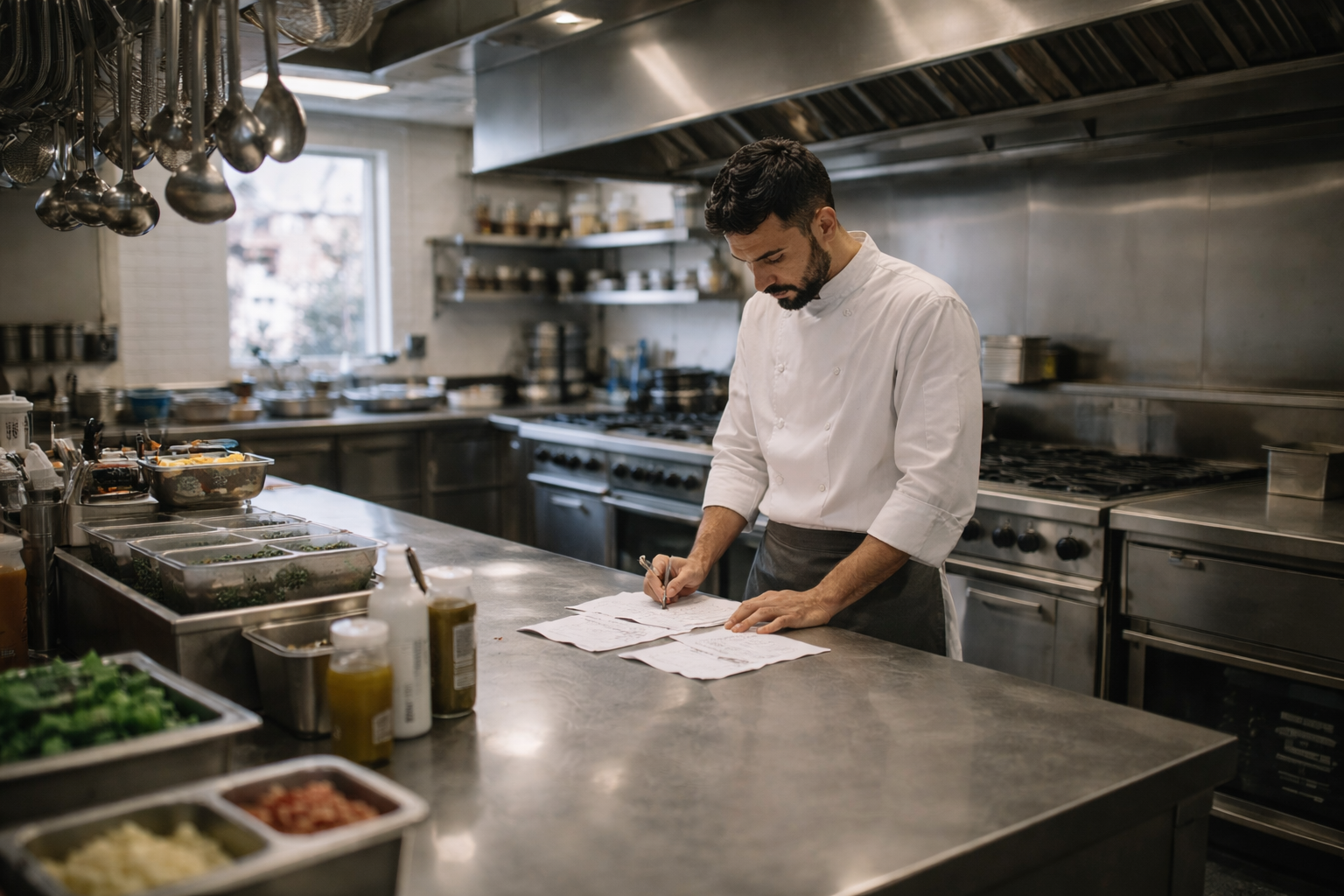
In the other kitchen I had worked previously, also Michelin-starred, the space was smaller, the team leaner, and the hours longer. In this Barcelonian restaurant, we worked both lunch and dinner. Yet I left whole. Focused. Even proud. Service there felt like choreography. Orders were organized centrally. Plating took place around a shared service table in the kitchen. The tray was left complete, already arranged; servers did not build it themselves. When the dish was ready, there was no bell. There was a clap. Soft. Rhythmic. Almost ceremonial. Guests heard it faintly in the dining room, a subtle signal that something precise had just occurred. Inside, it felt like a dance. The difference was not nationality. It was not equipment. It was not even talent. It was leadership.
The Mythology of Kitchen Chaos
There is a dangerous romance around chaos in professional kitchens. Young cooks often believe that intensity proves seriousness. That exhaustion equals legitimacy. That noise and aggression are signs of high standards. Some chefs cultivate this mythology. Pressure becomes identity. Friction becomes tradition. But tension is not the same as precision. In the chaotic kitchen, solitude was impossible. You were reacting. Bracing. Defending your station. You performed, but you did not breathe. The system demanded resilience more than clarity.
In the choreographed kitchen, something unexpected happened: my mind became quiet. Not because the service was slow. It was not. Not because the standards were lower. They were not. But because the system held you. The chef radiated calm. Orders were handled collectively. Friction between the service and the kitchen was minimized before it escalated. Everyone knew the rhythm. Everyone trusted the rhythm. And in that trust, a strange solitude emerged. You were part of something larger than your station, and because of that, you could focus entirely on your role within it.
The Architect of Energy
The chef is not only a cook. The chef is an architect of energy. The regulator of emotional climate. The translator between the front of the house and the kitchen. The conductor of the choreography. Good chefs remove friction. They design the flow. They understand that excellence does not require violence. When chaos is organized, solitude becomes possible. This is important for the young cook dreaming of opening a restaurant. For the mid-career chef who believes suffering is inevitable. For the owner who equates pressure with productivity. For the cook who stays in a toxic kitchen because they think there is no alternative. There is.
I have seen both systems. Both produced remarkable food. Only one was sustainable. Only one allowed the people inside it to grow without eroding themselves. True mastery does not scream. It does not smash plates. It does not glorify burnout. It moves with intention. It breathes. It builds environments where focus is possible even at peak intensity. Inside that movement, you find something rare. A calm center. And in that center, you discover the solitude that allows you not just to survive service, but to inhabit it.
Kitchen Myth: Why Culinary Excellence Does Not Require Chaos