From Cook to Creative Chef: The Shift to Culinary Authorship
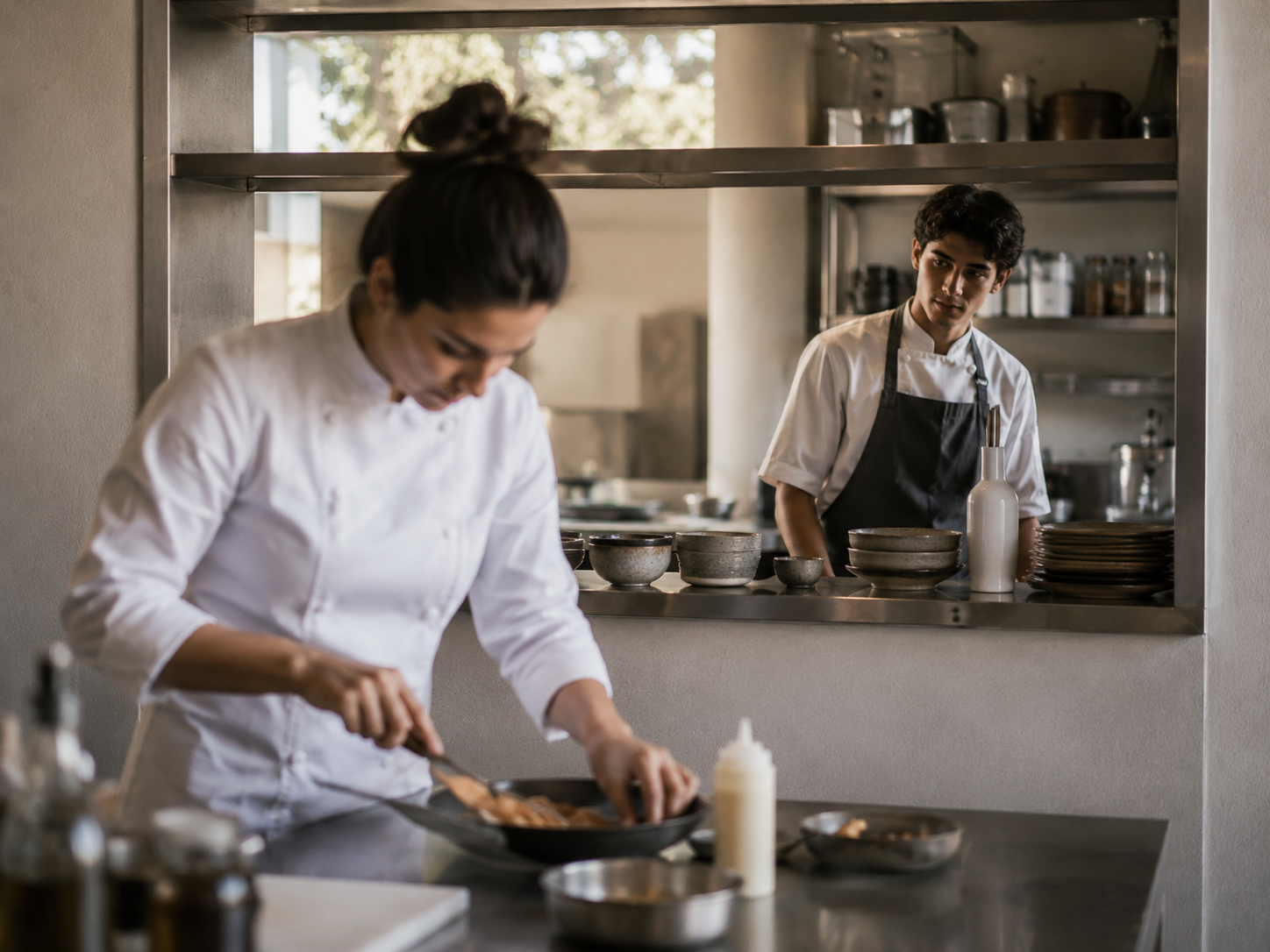
There is a moment in every cook’s trajectory where something begins to shift, even if nothing around them has changed. The kitchen is still the same, the rhythm of service is still demanding, the hierarchy is still in place, and the expectations remain clear. You arrive, you prepare, you execute, and you repeat. And if you do it well, you improve. You become faster, more precise, more reliable. You begin to understand the flow of a professional kitchen and your place within it.
Achieving the mastery of that repetitive execution, in that sense, is not a limitation. It is the foundation. A kitchen that does not execute well cannot function, no matter how ambitious its ideas may be. When a team is aligned, when the chef is clear, and when every cook understands their role, there is a kind of quiet satisfaction in the work. Service moves forward with consistency, and the result is something that, from the outside, appears seamless. But for some cooks, that is not where the story ends. At a certain point, often without warning, a different kind of question begins to emerge. It is not a rejection of the work, nor a frustration with the system, but rather a subtle awareness that something is missing.
You are no longer only concerned with how well a dish is executed, but with where it comes from in the first place. You begin to look at what you are preparing and wonder who decided it should be this way, and why. This is where the idea of becoming a creative chef starts to make sense. Not every cook is operating from that place, and that is not necessarily a problem. Many kitchens are built around strong systems where the role of the cook is to execute with excellence, and there is real value in mastering that craft. But when we speak about a creative chef, we are referring to something different. We are referring to the person who is not only responsible for the outcome, but for the direction. The one who shapes the menu, who defines the approach, who decides the how and the what the kitchen is trying to express.
That shift, from execution to authorship, is not automatic. Becoming a chef, in title, does not guarantee it. A person can lead a kitchen, manage a team, and maintain consistency without ever developing a true creative voice. Authorship is something that has to be built, and it begins long before there is any formal recognition of it. In many cases, it starts in small, almost invisible ways. A cook experimenting at home, trying to understand ingredients beyond the constraints of service. A moment in the kitchen where there is space to suggest an idea, to adjust a preparation, or to approach something differently. Sometimes it is the decision to move to another restaurant, not for better conditions, but for better exposure. To work in a place where the menu changes, where experimentation is part of the culture, where the process behind the dishes is as important as the dishes themselves.
These decisions may seem minor at the time, but they begin to reposition the cook in relation to their work. Instead of only asking how something is done, a creative cook begins to ask what else could be done. And that question requires a different kind of discipline. Authorship is not a moment of inspiration. It is not the result of a single idea or a sudden breakthrough. It is the accumulation of attention over time. It is built by returning to the same questions, the same ingredients, the same interests, and pushing them further with each attempt. It requires looking back at what has been done, recognizing patterns, identifying what continues to attract your attention, and slowly shaping a direction from that. This is where a structured approach becomes essential.
Without a way to capture, revisit, and refine your work, those early attempts remain isolated. They do not connect, and they do not evolve. But when you begin to document your process, when you start to organize your ideas and experiments, you create continuity. You allow your work to speak to itself over time. You begin to see that what once felt like scattered efforts are actually pointing in a consistent direction. That direction is what eventually becomes your voice. And voice, in a kitchen, is not something abstract. It is something that can be recognized in the way a menu is constructed, in the choices of ingredients, in the repetition of certain ideas, in the way dishes evolve across seasons. It is not built in a single service or a single menu, but across many iterations, each one informed by what came before.
For a cook who is aware of this shift, the question is no longer whether they are capable of becoming creative, but whether they are willing to take responsibility for that process. It means continuing to execute at a high level, because that never disappears, but also committing to something beyond it. It means creating space, however small, to explore, to document, and to refine. For a creative chef this is not a separate activity from the work of the kitchen. It is an extension of it. And once that process begins, the transition is already underway. The cooks who start to engage with their work in this way are no longer only executing what exists. They are beginning to shape what comes next.That is the real shift. Not in title, not in position, but in practice. And over time, that practice is what allows a cook to become something more than reliable. It allows them to become the author of their kitchen.
From Cook to Creative Chef: The Shift to Culinary Authorship