Why Kitchen Internships Matter: Field Research in the Professional Kitchen
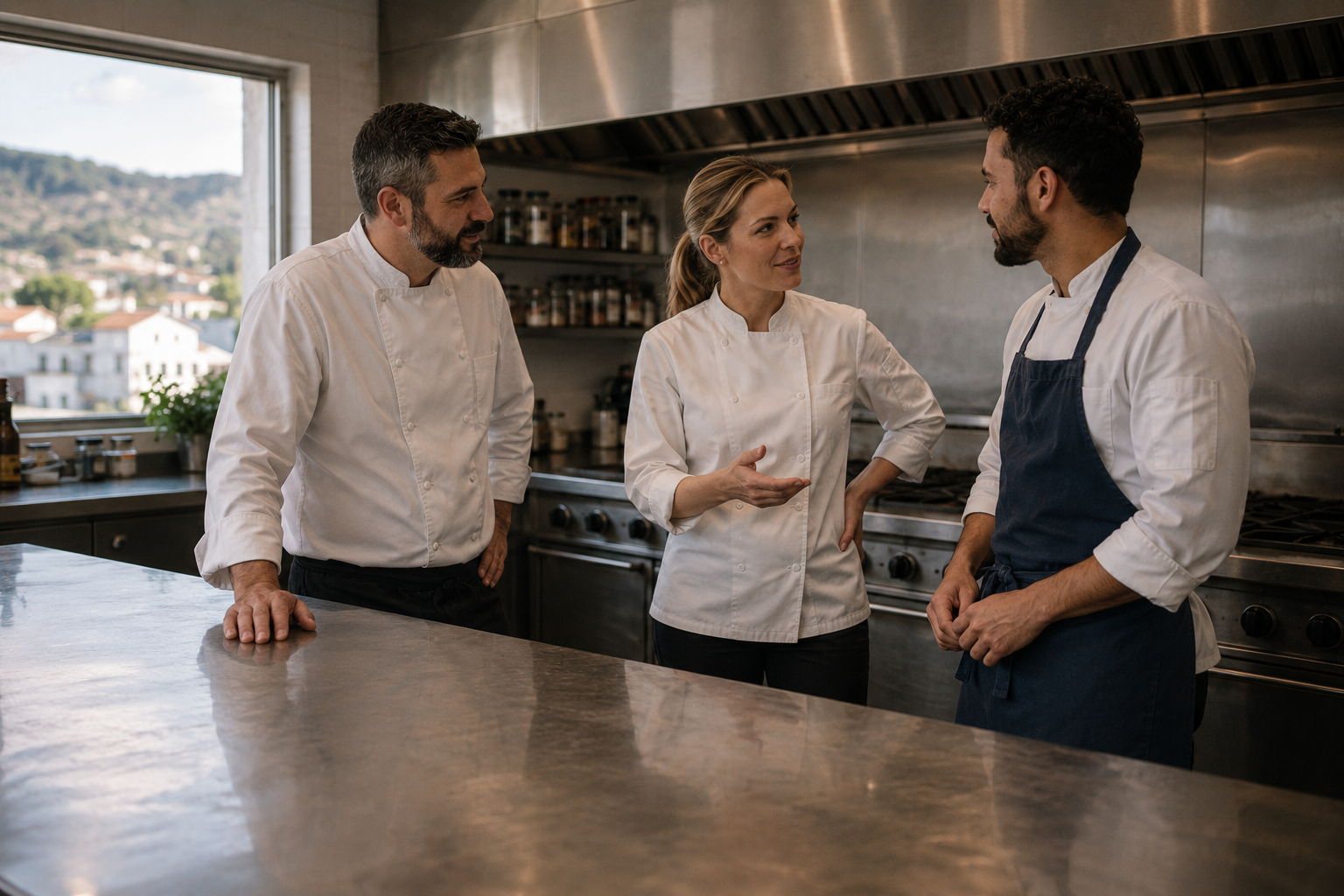
After cooking school, or sometimes even before it, a young cook may hear the same advice again and again from peers or mentors: Go do an internship. Go stage somewhere. Go see how a real kitchen works. Go learn from a serious restaurant. At first, this can sound confusing. Why do an internship if you could look for a job? Why work somewhere for little pay, or sometimes no pay, when kitchens are already difficult places to survive? Why give your time to a restaurant that may not hire you afterward?
These are fair questions. A kitchen internship should not be romanticized. It should not be treated as some noble sacrifice every cook must endure without thinking. It takes time, energy, humility, and sometimes money you do not really have. Depending on where you live, the rules around internships, stages, and unpaid labor may also be different, so the terms should always be clear before you begin. But when chosen well, an internship can be one of the most formative experiences in a cook’s education. Not because it guarantees a job, but because it gives you access to a kitchen’s way of thinking. That distinction matters.
A job and an internship are not the same thing. A job asks you to become part of the operation. You are hired to perform a role, carry responsibility, and contribute to the business in exchange for payment. You may learn, of course, but the primary relationship is employment. An apprenticeship is something slightly different again. Traditionally, an apprentice enters a craft under the guidance of someone more experienced, often with the idea of growing inside that business or trade over time. There is a longer arc. You begin with simple tasks, become useful, learn the system, and gradually earn more responsibility.
An internship, especially in the restaurant world, is usually temporary. You enter a kitchen to observe, assist, and learn. You may be there for a few days, a few weeks, sometimes longer. You are not necessarily being trained for a permanent position, although that can happen. You are there to understand how that kitchen operates, how it organizes its work, how it thinks about food, how it moves through service, how it uses its staff, how it reaches the standard that attracted you in the first place. In that sense, an internship is a form of field research. You are not only learning a recipe. You are learning a model.
This is why internships are so common after culinary school. School gives you structure, technique, vocabulary, and a protected environment where you can begin to understand the profession. But a restaurant shows you what happens when those ideas operate under pressure. Timing changes. Speed changes. Hierarchy becomes real. The distance between theory and service appears immediately. At school, you may have time to finish your sauce carefully. In a restaurant, the sauce has to be ready when the plate needs it. At school, the ingredients often appear. In a restaurant, someone ordered them, received them, paid for them, stored them, portioned them, and built a prep system around them. At school, a mistake becomes a lesson. In a restaurant, a mistake may delay a table, damage a dish, waste product, or put pressure on the person next to you. That is not meant to scare anyone. It is simply the reality of the environment. And the sooner a cook understands that reality, the better.
An internship allows you to stand inside that reality without pretending you already belong to it completely. You arrive to learn. That should shape your whole attitude. You do not go to an internship to impress everyone. You do not go to prove you are secretly more talented than the cooks already working there. You do not go to show that your school trained you better, or that you have better ideas, or that you are ready to redesign the menu. You go to become useful. That is the first lesson. What do you need me to do? How should I do it? Where should this go? How fast do you need it? Who do I report to? What is the standard here?
A good intern listens before acting. Watches before assuming. Repeats instructions carefully. Asks questions at the right moment. Works clean. Works quietly. Stays alert. Understands that every kitchen already has a rhythm before he arrives. This does not mean becoming invisible. It means learning how to become useful and reliable. Many interns are surprised by how simple their first tasks may be. They imagined cooking, but they are peeling vegetables. They imagined sauce work, but they are picking herbs. They imagined plating, but they are placing tiny elements on a dish, one after another, for hours. They imagined learning secrets, but the first lesson is precision.
At first, this can feel disappointing. But this is often where the real education begins. If a restaurant is known for extraordinary detail, someone has to produce that detail. If every plate has ten precise gestures, then there are people behind those gestures. If the food looks effortless, it is because the labor has been organized to make that appearance possible. The intern begins to understand something important: High-level food is not only the result of genius. It is the result of intention and organization. A tiny garnish placed in the same position on every plate may seem insignificant until you realize that consistency is what allows the restaurant to maintain its language. A cook assigned to one very small task may feel underused until he understands that the scale of the brigade is part of the cuisine itself.
Some restaurants can cook the way they cook because they have the team to support it. That is a lesson. If you dream of opening a restaurant with complex plating, many components, constant menu changes, and highly detailed service, you need to understand what kind of kitchen makes that possible. How many cooks? How many interns? How much prep? How much storage? How much discipline? How many hands are required before the guest sees one finished plate? An internship teaches you not only food, but proportion. It shows you the relationship between ambition and infrastructure.
This is one reason choosing the right internship matters so much. The best internship is not always the one offered by the most famous restaurant. It is the one that teaches you something connected to the cook you are trying to become. If you want to work with live fire, go toward kitchens that understand fire. If you want to cook traditional food at a high level, look for restaurants that respect that tradition deeply. If you are interested in hotels, banquets, and large-scale hospitality, a small tasting-menu restaurant may not teach you the systems you need most. If you want to open an intimate neighborhood restaurant, then study the kitchens that survive through clarity, rhythm, and repeat customers.
A Michelin-starred restaurant may be valuable. A bakery may be valuable. A hotel kitchen may be valuable. A family-run regional restaurant may be valuable. A catering operation may be valuable. A farm to table restaurant may be valuable. A production kitchen may be valuable. The question is not only, “Is this place prestigious?” The question is, “What will this place teach me?” And even more specifically: “What will this place teach me that I need for my path?” That is how an internship becomes strategic rather than random. Many cooks collect names for their CV. There is nothing wrong with wanting strong references. A known restaurant can open doors. Chefs recognize certain kitchens. They understand what kind of standards you may have been exposed to.
But a name alone is not an education. If you stage in a restaurant that has nothing to do with the direction you want to take, the experience may still teach you discipline, speed, or humility, but it may not build the skill set you actually need. On the other hand, three internships in kitchens that share a clear logic may create a strong professional direction. Imagine a cook who wants to become serious about live-fire cooking. If he has interned in several kitchens where fire is central, different scales, different cuisines, different equipment, different approaches to smoke, heat, embers, meat, vegetables, timing, then his path begins to make sense. When he later applies for a job in a restaurant kitchen built around fire, the chef sees more than experience. The chef sees direction.
Internships can also build your network, but only if your attitude makes people want to remember you. Kitchens are professional ecosystems. Chefs know other chefs. Sous chefs move. Cooks leave one restaurant and open another. A good internship can become a reference, a recommendation, an introduction, or simply a name spoken well when someone calls. But that depends on how you worked. Were you respectful? Were you reliable? Were you clean? Did you arrive on time? Did you follow instructions? Did you complain constantly? Did you treat simple tasks as beneath you? Did you make the team’s life easier or heavier?
Attitude counts because kitchens are already under pressure. No serious kitchen wants an intern who creates more work through ego. If you become difficult, they will not fight to keep you. They will simply let you go, or worse, they will remember you badly. That may sound severe, but it is true. An internship is temporary, but reputation is not. This is why preparation matters before you begin. You should know what you are entering. How long is the internship? What are the hours? Is there payment, a stipend, meals, housing, or nothing at all? What will be expected from you? What should you bring? Who will supervise you? What language is spoken in the kitchen? What kind of food does the restaurant cook? What is its style, its rhythm, its reputation, its menu?
Do your research before you arrive. Eat there if you can. Study the menu. Read about the chef. Look at the kind of kitchen it is. Understand why you are going there. And when you contact the restaurant, do it properly. Do not call in the middle of service. Do not write a vague message saying you love food and want an opportunity. Be clear, respectful, and specific. Explain who you are, what you are studying or where you have worked, why that restaurant interests you, when you are available, and what you hope to learn. If you can visit, visit with respect. Eat there if possible. Pay attention. If there is an appropriate moment, ask how they receive internship applications. Do not demand the chef’s time during service. Kitchens remember people who understand timing. This is already part of the profession. Knowing when and how to approach a kitchen is part of knowing how kitchens work.
It is also important to be honest with yourself financially and physically. An unpaid or poorly paid internship may sound valuable, but can you actually sustain it? Where will you sleep? How will you eat? How will you cover transportation? How long can you do it without resentment growing inside you? This is not a small question. Some interns become frustrated because they enter without truly accepting the terms. They begin with excitement, then after several days or weeks they feel used. Sometimes they may be right; some kitchens do exploit interns, and that should not be ignored. But sometimes the frustration comes from not having understood the arrangement clearly from the beginning. This is why clarity matters.
If the restaurant promises learning, there should be learning. If the internship becomes only repetitive labor with no instruction, no observation, no respect, and no professional value, then the cook has to evaluate whether it is worth continuing. But if you agreed to enter as an intern, and the kitchen assigns you simple work while allowing you to observe a high-level operation, then the question becomes: are you paying attention? Because sometimes the lesson is not in the task. It is in the system around the task.
You may spend hours portioning, cleaning, picking, labeling, or placing one element on a plate. But around you, the kitchen is revealing its structure. Watch how the chef speaks. Watch how prep lists are written. Watch how product is received. Watch how cooks move. Watch how the pass works. Watch what happens when something goes wrong. Watch who solves problems. Watch where bottlenecks appear. Watch what kind of behavior is tolerated. Watch how the team cleans. If you only look at your hands, you may miss the kitchen. A serious intern observes the whole organism. That is the real advantage. When you enter several kitchens this way, you begin to compare models. One restaurant may be precise but tense. Another may be small but beautifully organized. Another may rely on a large brigade. Another may cook extraordinary food with very few people because the menu has been designed intelligently. Another may be famous but chaotic. Another may be humble and deeply efficient.
These comparisons educate you. They help you understand not only how to cook, but what kind of kitchen you believe in. That is essential if you ever want to lead and become “The Chef” in a kitchen. Because one day, whether you become a chef, sous chef, owner, consultant, educator, or creative director, you will need to decide what kind of conditions your own work requires. You will need to know what scale of food fits what scale of team. You will need to understand that a dish is never separate from the kitchen that produces it. Internships can teach that faster than almost anything, if you know what you are looking at. Still, they are not obligatory in the same way for everyone.
A cook can build a career without doing prestigious stages. A cook can learn through steady employment, mentorship, school, self-study, and time. There is no single correct path. But for many cooks, especially those who want exposure to different techniques, cuisines, structures, and standards, internships can be a powerful tool. The key is to choose them with intention. Do not go only because everyone says you should. Go because there is something there you need to understand. A set of techniques. A rhythm. A cuisine. A leadership style. A scale of operation. A service model. A way of thinking about ingredients. A kind of precision you have not yet seen. And when you arrive, arrive as a student of the whole kitchen. Do the task. Watch the system. Respect the people. Ask at the right time. Take notes after service. Protect your reputation. Learn what the whole ecosystem can teach you.
Why Kitchen Internships Matter: Field Research in the Professional Kitchen