
THE CREATIVE CHEF METHOD
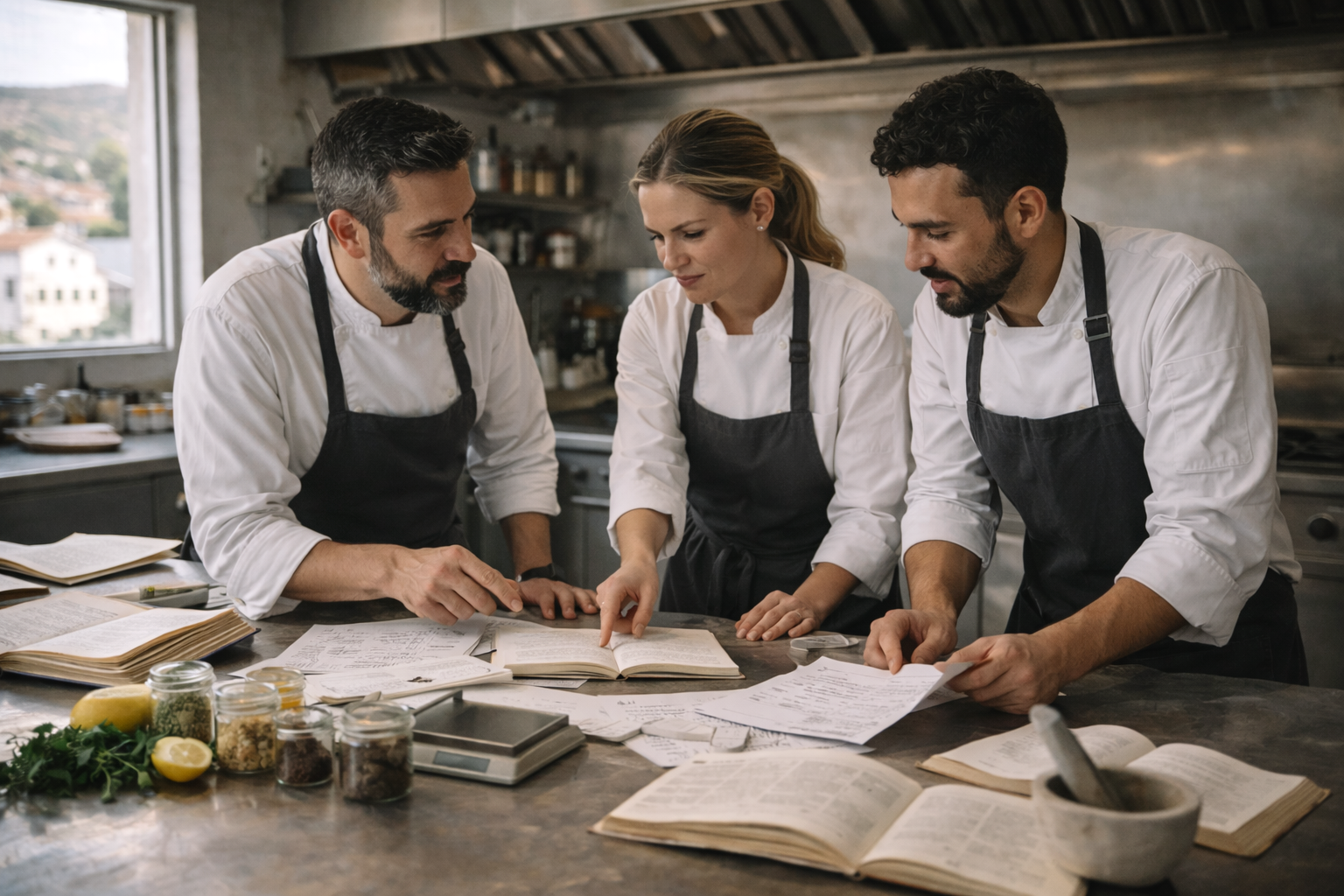
In professional kitchens, ideas don’t come fully formed. They are observed, tested, adjusted, and documented over time. The Culinary Collector archive helps you organize and gather knowledge through essays, field notes, and material studies drawn from real kitchen practice. The Creative Chef Method is what allows you to take that knowledge further. To work with it. To test it. To shape it into something you can use, refine, and return to. The method allows you own your creativity, it guides you through a structured way for going from execution to authorship.
BEING CREATIVE IN THE KITCHEN
Most cooks rely on recipe variations to produce new menus or design new dishes. They follow instructions, repeat results, and move on.
But when it comes to developing their own ideas, the process often becomes unclear. Experiments happen without structure. Observations are not recorded. What works is easily forgotten. What doesn’t work is repeated. Over time, this creates a gap between cooking and thinking.
The Method is designed to close that gap.
Our Process
At its core, the Method is a disciplined, repeatable cycle:
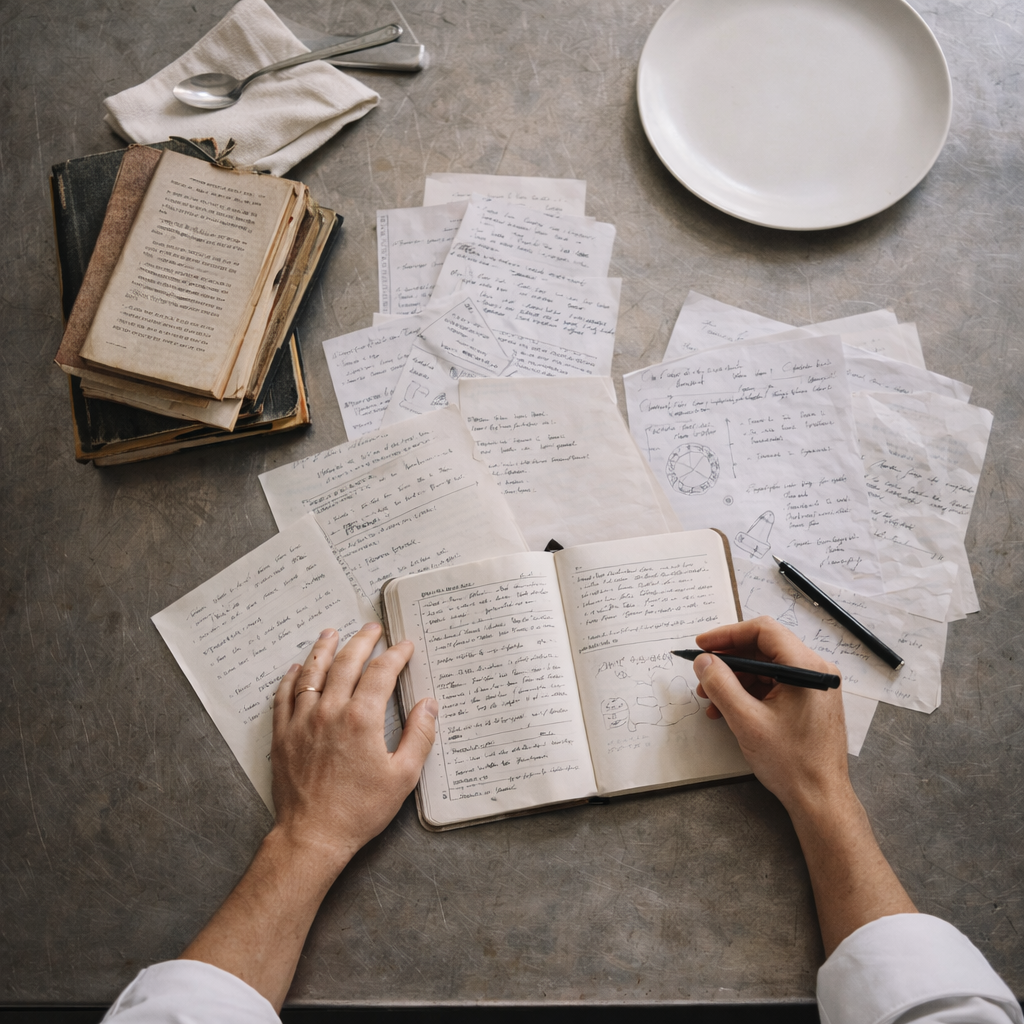
01 — Observe & Frame
Understand the ingredient, the context, and the intention behind what you are doing.
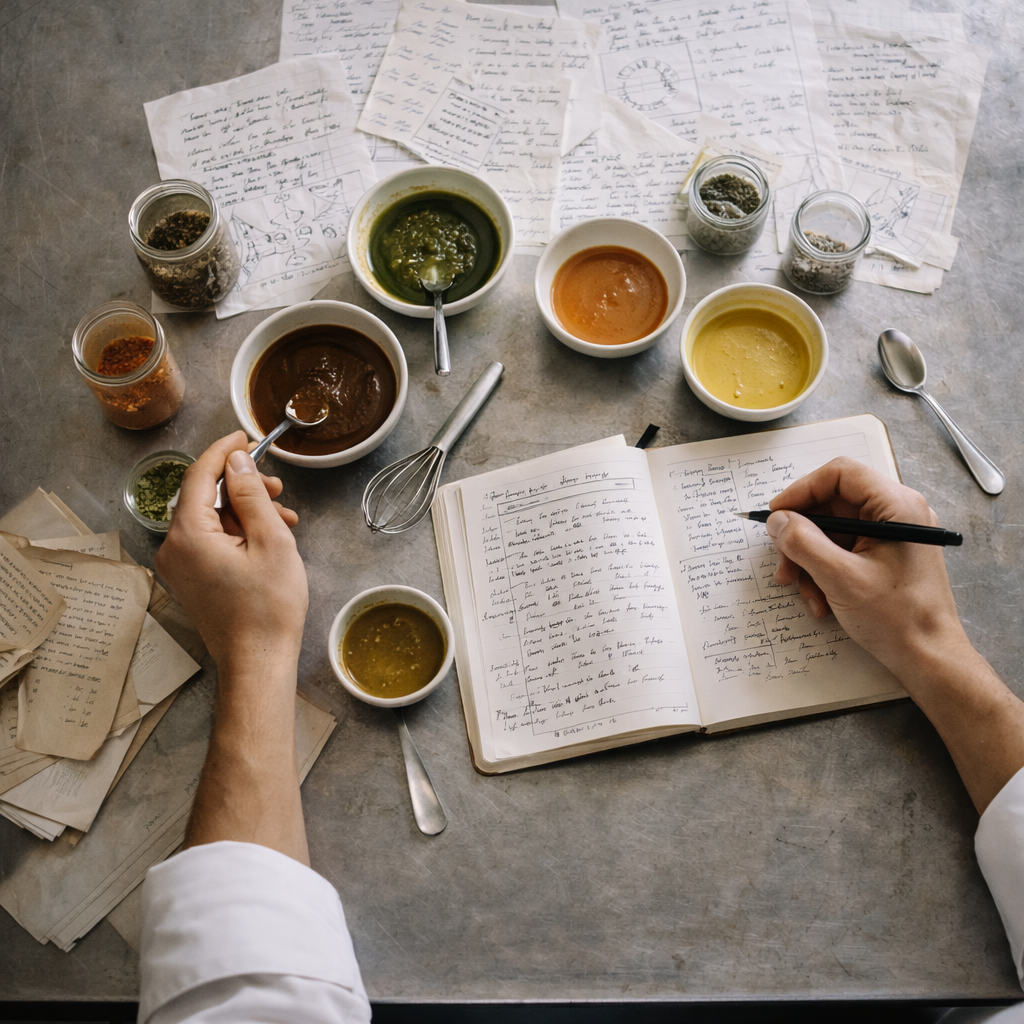
02 — Experiment & Adjust
Work through trials, variations, and controlled changes in the kitchen.
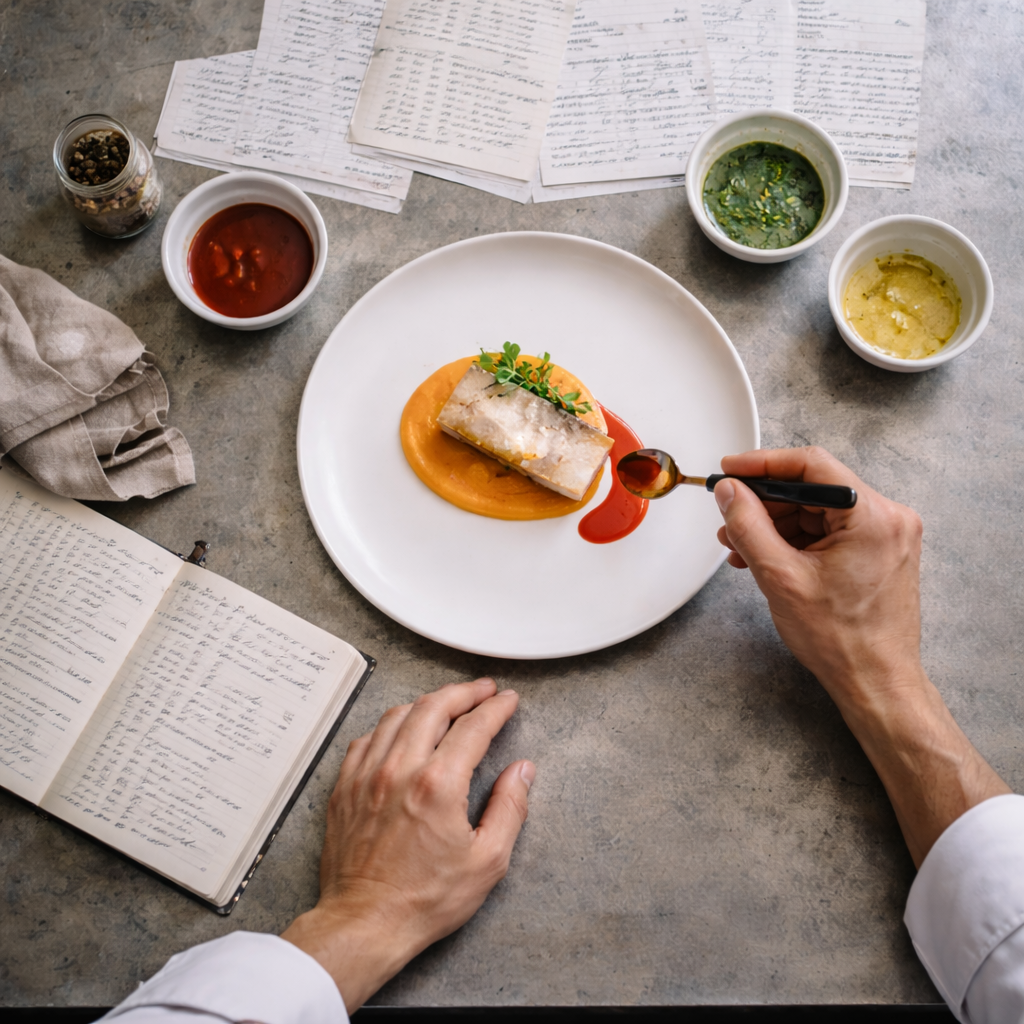
03 — Document & Refine
Record results, identify patterns, and transform experiments into repeatable outcomes.
Questions from Practice
Questions from Practice brings together a series of practical questions about culinary creativity, authorship, and the work of developing ideas in the kitchen. These are the kinds of questions that appear when a cook begins to move beyond execution and starts asking how ideas are formed, how a personal direction is developed, and how creative work can become more deliberate. Each entry begins with one question and follows it toward a clear, thoughtful answer.
The section is organized around seven areas of practice: perspective, reference, intention, experimentation, documentation, refinement, and execution. Together, they trace the movement of an idea from its earliest point of observation to its final application. We begin by looking at how cooks learn to see differently, then consider how references and vocabulary are gathered, how a direction is defined, how ideas are tested, how knowledge is recorded, how a dish is evaluated, and how the result is prepared for content interation and real-world use.
A Practical Q&A on Culinary Creativity and Authorship
The questions are presented individually, but they belong to a larger conversation. If you read them together, they offer an extended view into the thinking behind The Creative Chef Method: why creativity is not simply a matter of inspiration, why culinary authorship requires more than originality, and why a personal style emerges through research, experimentation, documentation, and refinement. Some answers lead naturally toward other parts of the Culinary Collector learning platform, where a particular ingredient, technique, formula, or reflection can be explored in greater depth.
You don’t need to read this section from beginning to end. You can enter through the question that is closest to the work in front of you. Perhaps you are trying to begin a new dish, organize your notes, evaluate an experiment, or understand why an idea is not yet working. Each question offers a point of entry, while the collection as a whole forms a practical reference for cooks who want to think more clearly about how creative work happens in the kitchen.
Learning to observe ingredients, environments, habits, and assumptions differently, so new culinary possibilities can begin to emerge.
PERSPECTIVE
INTENTION
Defining what a dish or project is trying to express before deciding how it should be developed.
How do I know whether a new culinary idea is actually worth the time and resources to test?
How do you move from a vague point of culinary inspiration to a concrete, workable recipe formula?
Why do the most successful and creative dishes require a fiercely defined culinary intention?
How do strategic creative constraints actually prevent a new dish from becoming overly complicated?
What essential questions must a chef ask themselves before drafting a completely new menu concept?
How do I decide which specific cooking technique will best express the core narrative of a dish?
Recording processes, observations, failures, and results so culinary knowledge can be retrieved, compared, and developed over time.
DOCUMENTATION
What exact data points must be recorded during a recipe test to ensure it is perfectly replicable?
Should professional chefs use paper notebooks or digital systems for recipe R&D?
How do I transition scattered, mid-service kitchen notes into a structured culinary R&D archive?
What is the most effective way to organize years of recipe development notes?
How do I accurately track minute ingredient variations and their outcomes over time?
How do you build a system for logging kitchen failures so they become useful reference data?
How do I create a living document that evolves alongside seasonal ingredient changes?
EXECUTION
Translating a developed idea into a reliable result that can survive service, production, collaboration, and real-world use.
How do chefs stress-test a new recipe to ensure absolute consistency across different cooks?
How do I scale a delicate, original dish for high-volume service without losing its core identity?
How do I integrate a radically new dish into an existing kitchen workflow without disruption?
How do I adapt a perfected recipe when supply chains or ingredient sourcing suddenly changes?
How should I revisit and update archived recipes as my culinary style naturally matures?
How does the final execution of one dish inform the starting point for my next culinary idea?
Building a personal culinary vocabulary through ingredients, techniques, cuisines, books, histories, and other fields of knowledge.
REFERENCES
EXPERIMENTATION
Testing ideas through controlled variation, comparison, and repeated practice to understand what actually works.
What is the fundamental difference between kitchen improvisation and true recipe experimentation?
How many variables should I change at once during a culinary recipe test?
How do chefs isolate and test flavor, texture, and technique separately?
How do I safely test the chemical stability and behavioral limits of unfamiliar ingredients?
How can I speed up recipe iteration without compromising the accuracy of the test?
What is the best way to extract useful data from a failed culinary experiment?
REFINEMENT
Evaluating a dish with greater precision through repetition, restraint, feedback, and careful adjustment.
How do you know when a dish is truly finished and ready for the menu?
What is the precise difference between changing a recipe and refining it?
If a dish tastes good but lacks impact, how do you improve it?
How do I objectively evaluate my own culinary creations without personal bias?
What is the most effective way to gather and filter feedback from a kitchen tasting panel?
How do I balance visual presentation with flavor integrity during final dish refinement?
How do I decide whether to abandon a struggling dish concept or push it through one more revision?
Creativity is Not a QUESTION OF Talent; IT’S A METHOD
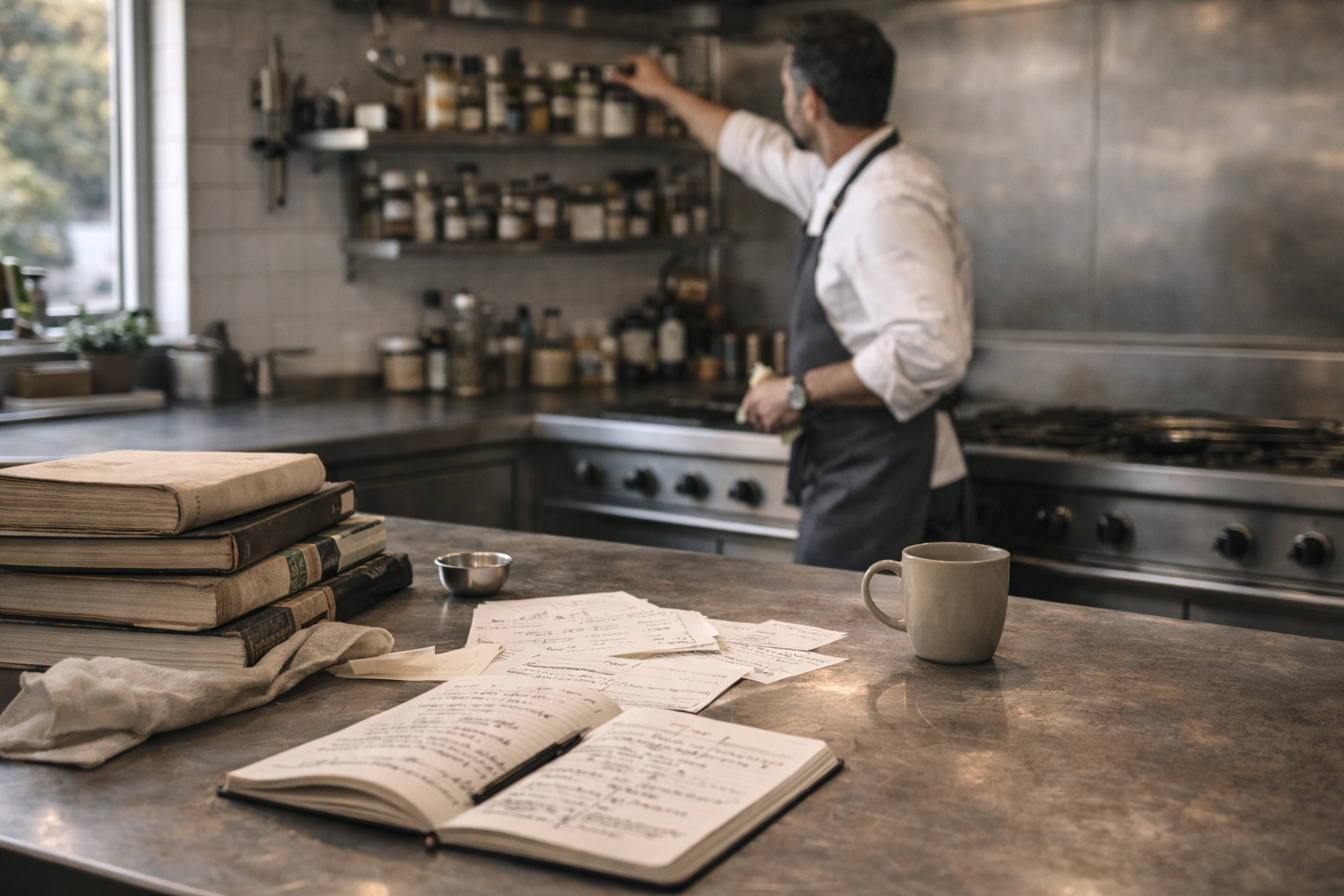
The Culinary Creative Process: How Cooks Develop Ideas
Read about how the transition from executing someone else's menu, to authoring your own ideas is the hardest leap in a professional kitchen. It does not happen by waiting for inspiration, and it does not require innate genius. It requires a system.
This essay introduces the thinking behind the Creative Chef Method. It explores why recipes are not enough, why creativity requires structure, and how cooks can begin moving from instinct and repetition toward a more deliberate creative practice.
The Method is being developed as a structured program for cooks who want to move beyond recipes and develop their own work.
Inside, you will work with:
• A clear creative process you can apply in your kitchen.
• Guided exercises focused on observation, experimentation, and reflection.
• Practical tools for documenting your work and tracking results.
• Examples drawn from real culinary exploration.
• A system you can return to and build upon over time.
This is not only about producing perfect dishes. It is about building a system, a way of thinking and working in the kitchen.
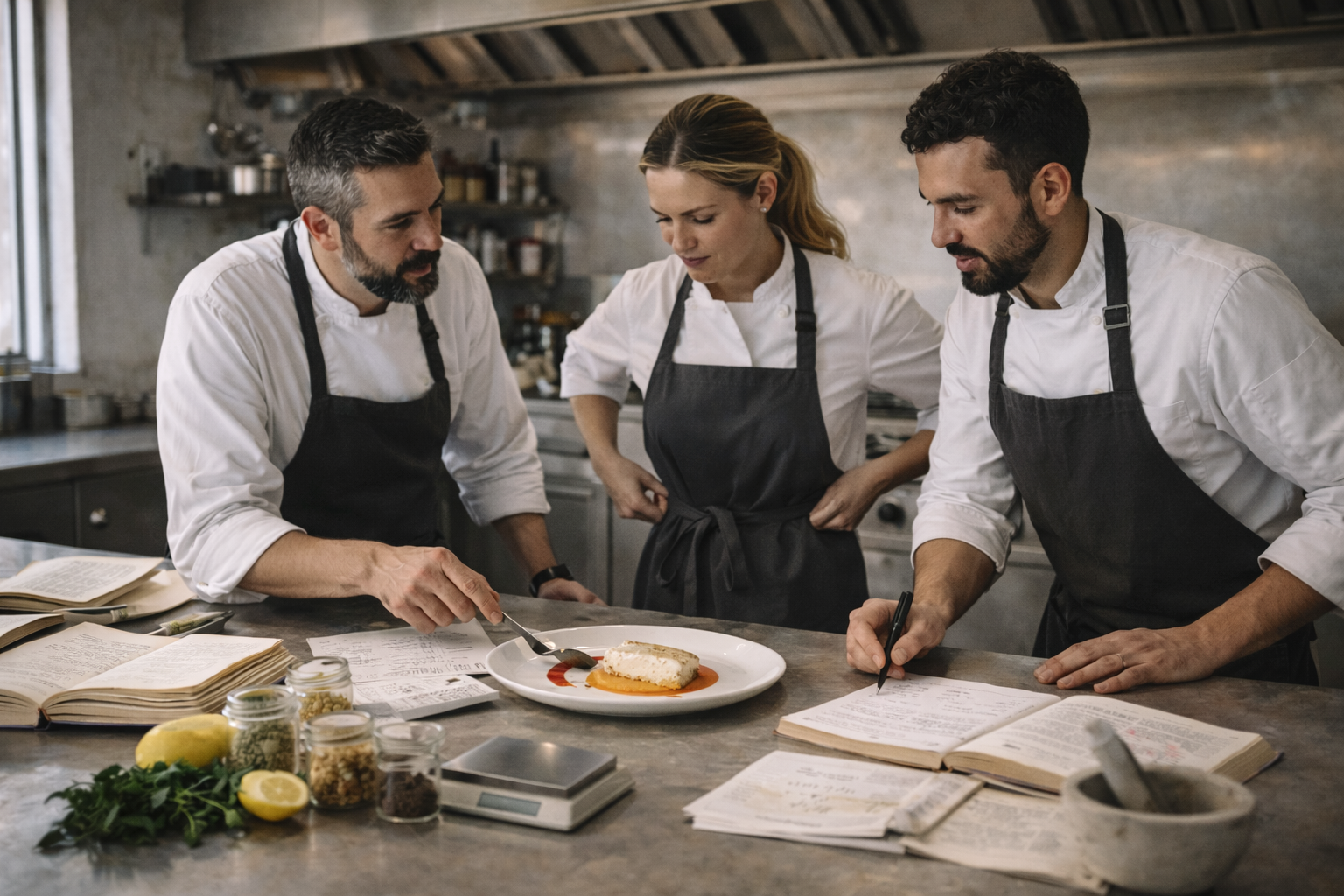
Join the Waiting List
The full Creative Chef Method program is its final preparations.
If this approach resonates with you, join the waiting list and be notified when the program becomes available.
You’ll receive updates as the course, worksheets, and R&D tools are released.