The Gap: Bridging Professional Technique and Home Intuition
I remember standing behind the counter at my friend Jorge’s restaurant in Guatemala, watching him blaze through his kitchen, calm and steady. He had returned a few years ago from Le Cordon Bleu and opened a place called Camille. The menu carried French technique with Latin American memory and the occasional Asian gesture. It was ambitious for its time. It was alive. I was an excited home cook back then. I could make dishes I was proud of. I had recipes that worked. I understood flavor in my own kitchen.
But what I will see happening there was something different, next-level stuff. A guest wanted a steak — but not with the sauce on the menu. Another asked for shrimp prepared slightly differently. Someone wanted a substitution that would have thrown me completely off balance. Jorge didn’t hesitate. He adjusted. He improvised. He called instructions to his cooks while flipping a pan, checking a reduction, and tasting a sauce. Orders were coming in. Plates were going out. And everything left the pass impeccable.
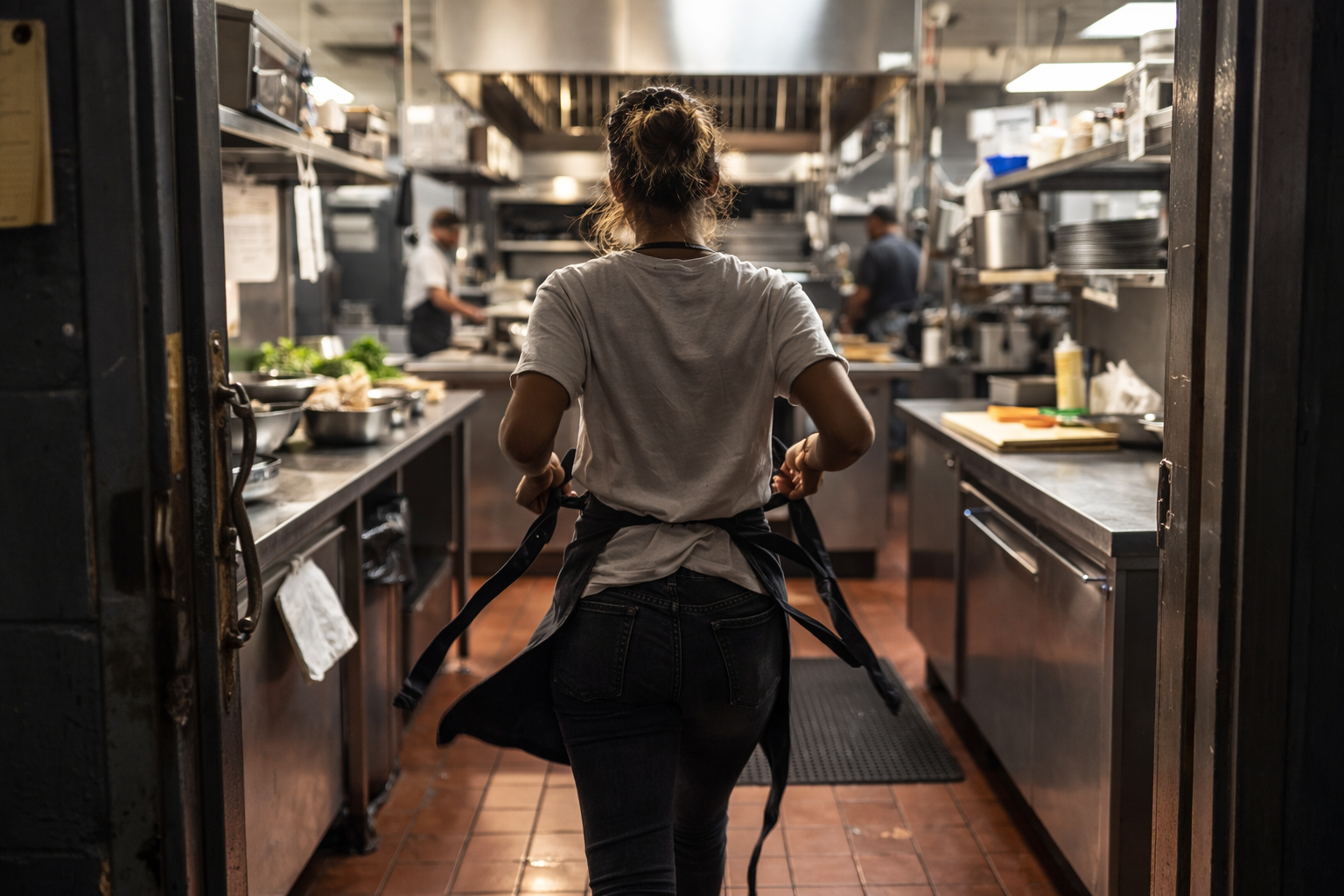
He would let me step into the kitchen from time to time. Throw an apron in my face and say, “Wash your hands,” and “Peel this,” he said. “Flip that.” Even the small tasks felt overwhelming. The pace alone was disorienting. And yet he was doing ten times what I was attempting — calmly, decisively, without drama. That was the first time I felt the gap. Not between talent and talent. But between environments. At home, intuition can carry you far. You cook one dish. You taste as you go. You adjust slowly. You recover if something slips. Time bends around you. In a professional kitchen, time does not bend. It compresses.
The gap is technical, yes. Knife skills. Sauce work. Timing. But it is also psychological. Can you think clearly while ten tickets are printed at once? It is organizational. Is your mise en place strong enough to support variation on demand? It is cultural. Do you understand hierarchy, communication, and repetition? And it is identity-based. Being a “chef” is not a diploma. It is earned authority; it is the moment when others trust your lead because you can deliver consistently under pressure. This is what I eventually understood: professional cooking is not better. It is structured.
A home cook may create a more beautiful plate on a relaxed Sunday afternoon. But a professional cook can reproduce that plate fifty times in one hour without losing integrity. That difference is not about taste. It is about systems. The encouraging truth is this: the gap is smaller than you think. The instincts you build at home, tasting constantly, adjusting seasoning, caring about texture; those are real foundations. They matter. They transfer. But the gap is also harder than you imagine. Because what separates the two worlds is repetition under pressure. It is building habits so strong that creativity survives inside speed. It is learning that discipline protects intuition, rather than suffocating it.
You do not go to “chef school.” You go to cooking school. Becoming a chef is something else entirely. It happens slowly, through practice, through mistakes, through earning the respect of a team. If you are a serious home cook flirting with the idea of professionalizing your craft, understand this: you are not starting from zero. But you are stepping into a different ecosystem. Structure does not erase your voice. It tests it. And if it survives that test, it becomes something steadier, sharper, more durable. The gap is not a wall. It is a threshold. Crossing a threshold means carrying something with you.
If you are a passionate home cook stepping into professional cooking, do not leave your origins behind. Bring the reason you started. Bring the memory of cooking with fresh herbs from your garden. Bring the excitement of plating something just because you feel like it. Bring the curiosity that made you buy that first serious knife. Professional kitchens will test you. They will compress time. They will demand repetition. There will be days when cooking feels less like romance and more like labor. And at some point, especially when fatigue sets in, someone may ask you, “Why did you become a cook?”
If you no longer know the answer, the structure alone will not sustain you. Some students enter cooking school with a clear plan. Twenty years later, they have built exactly what they imagined. Others enter without a map and discover their path through practice. Both are valid. What matters is that you remember the spark. The passion of the home cook is not naïve. It is foundational. It is the part of you that tasted something and wanted to understand it. The part that was experimented on without permission. The part that cared deeply before there was any paycheck attached.
A professional structure will shape you. It will sharpen you. It will discipline your movement and refine your timing. But your origin, that first impulse, is what keeps the structure from becoming mechanical. The gap is real. The threshold is demanding. But if you cross it carrying your initial fire, the discipline you acquire will not extinguish it. It will always give it direction and become your existential compass.
The Gap: Bridging Professional Technique and Home Intuition