Fusion Cuisine Is Not the Problem: The Difference Between Cultural Exchange and Culinary Confusion
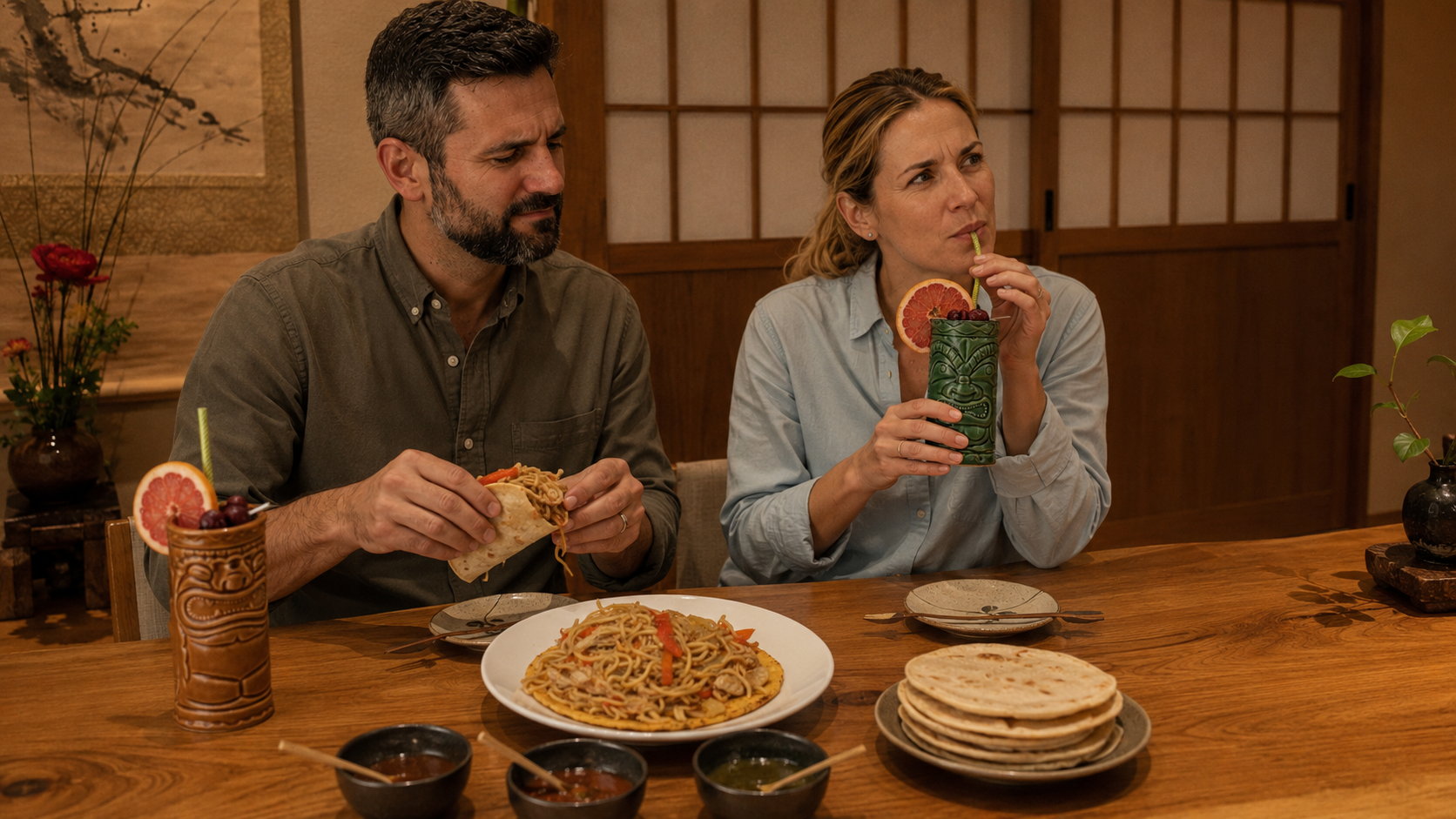
Few culinary terms create as much friction as fusion cuisine. For some cooks, it represents freedom. It allows ingredients, techniques, and references from different culinary traditions to meet on the same plate. For others, it represents confusion. A little Japanese ingredient here. A Mexican condiment there. A French technique underneath. A tropical garnish added at the end. Everything the cook finds interesting is brought together, but nothing appears to belong to anything else.
The result may be described as creative. It may also feel arbitrary. This is where much of the criticism begins. Fusion cuisine is often accused of removing ingredients from their context, treating traditions as a collection of visual and flavorful effects, and allowing cooks to combine anything without understanding why the original preparations existed. That criticism is valid. But it does not tell the whole story. The meeting of cuisines is not a recent invention. It did not begin when restaurants started placing the word fusion on their menus. Ingredients, techniques, crops, tools, and eating habits have crossed borders for as long as people have traded, migrated, traveled, conquered, married, settled, and adapted.
Cuisines have always changed through contact. The real question is not whether culinary traditions should meet. They already have. The question is how a cook participates in that meeting creatively and responsibly. We often speak about traditional cuisine as though it emerged fully formed and then remained unchanged. But tradition is not a frozen point. It is accumulated practice. A preparation may be considered traditional today even though several of its central ingredients arrived from somewhere else generations earlier. An ingredient may be so deeply associated with one country that we forget it was once foreign there. A technique may have crossed a border, been adapted to local conditions, and eventually become inseparable from the cuisine that adopted it.
This makes the idea of culinary purity difficult to sustain. Pure from when? One hundred years ago? Five hundred? Before a particular migration? Before a crop arrived? Before trade connected one region to another? The more closely we study culinary history, the more movement we find. People carried seeds. They brought preservation techniques. They introduced new fats, grains, spices, animals, and cooking vessels. When familiar ingredients were unavailable, they substituted what they found locally. When unfamiliar ingredients appeared, they applied methods they already understood. From these encounters, new dishes emerged. Some were initially foreign. Later, they became local. Eventually, they became traditional. Fusion may be an imperfect word, but the process it attempts to describe is not exceptional. It is one of the ways cuisine develops.
The Criticism of Fusion Is Often a Criticism of Weak Research
Consider a preparation as familiar as pasta with tomato sauce (spaghetti al pomodoro). It appears unmistakably Italian. Yet the ingredients and historical paths behind it extend far beyond one place. Noodles developed through a long and complex history of grain preparation and exchange with Asia. Tomatoes arrived in Europe from the Americas. Olive oil belongs to the agricultural and culinary history of the Mediterranean. The dish feels coherent not because every element originated in the same place. It feels coherent because generations of cooks absorbed those elements into a culinary system. The tomato was no longer simply an imported object placed on top of pasta. It was studied, cultivated, cooked, seasoned, preserved, and integrated. It entered domestic practice. Regional variations emerged. Techniques stabilized. The dish acquired memory.
That is an important distinction. Culinary integration takes time, attention, and repetition. Random combinations do not become meaningful simply because the ingredients come from different cultures. What matters is whether the relationship has been understood and developed. When people reject fusion cuisine, they are often reacting to something specific. The dish has no clear point of view. The ingredients compete rather than support one another. A traditional preparation has been reduced to a garnish. A culturally significant food is presented as an exotic effect. The cook cannot explain the reference beyond saying, “I like these flavors.” The criticism is therefore not always about cultural exchange itself. It is about superficiality.
A cook borrows the visible surface of a cuisine without studying the structure beneath it. A sauce is removed from the dish it traditionally accompanies. A spice blend is used without understanding how it is balanced. A ritual preparation becomes a fashionable appetizer. A name is applied loosely because it makes the menu sound more interesting. Once the context disappears, the ingredient becomes a symbol. It is no longer being used for what it contributes technically, historically, or culturally. It is being used to suggest exotism. This is where fusion becomes messy. And the term itself can make that carelessness easier to appreciate. “It is fusion” becomes a defense against criticism. The dish does not need to correspond to a tradition because it is fusion. It does not need a recognizable reference because it is fusion. It does not need coherence because creativity supposedly exists beyond rules.
Heritage Expands Creativity
But creativity without reference is not automatically freedom. Sometimes it is simply a lack of understanding. Respecting heritage does not mean that a cook must reproduce traditional dishes without change. It means understanding what is being changed. Where does the preparation come from? Who developed it? Under what conditions? Which ingredients are essential to its identity? Which elements changed from region to region? When is it eaten? Does it have ceremonial, domestic, religious, seasonal, or communal significance? What problem did the technique solve? These questions do not imprison the cook. They create more possibilities.
You may discover that an ingredient has traditionally been used at several stages of ripeness. That the leaf, seed, root, peel, and fruit each have different applications. That a preservation technique developed because the harvest was brief. That a condiment was designed specifically to balance a fatty preparation. This knowledge gives you more to work with. Heritage is not a fence around the ingredient. It is an archive of experiments conducted by other cooks over generations. The creative cook does not have to follow every answer in that archive. But ignoring the archive means discarding knowledge before understanding its value.
Sometimes two preparations from distant places reveal striking similarities. In a conversation with another chef, we began comparing Guatemalan Pepián and Catalan Romesco.They are not identical preparations, and each belongs to its own history, ingredients, applications, and cultural context. But placing them beside one another reveals an interesting structural relationship. Both may involve toasted or roasted ingredients. Both build depth through peppers, seeds or nuts, aromatics, and grinding. Both transform these elements into a concentrated sauce or foundation. The exact ingredients differ.
One may work with pumpkin or sesame seeds, dried Guatemalan chiles, and local culinary traditions. The other may use almonds or hazelnuts, dried peppers such as ñora, olive oil, and ingredients associated with Catalan cooking. The comparison does not prove that one dish came directly from the other. Nor does it make them interchangeable. What it does is open a field of inquiry. How did related grinding techniques travel? How did imported ingredients enter existing preparations? How did cooks on different sides of the Atlantic adapt peppers, seeds, nuts, oils, and methods of thickening? Which similarities come from contact, and which emerge because cooks facing similar materials sometimes develop comparable solutions?
This is a more interesting conversation than simply declaring one preparation authentic and the other unrelated. Comparison can reveal movement without erasing difference. We should also be careful not to romanticize culinary exchange. Ingredients and techniques did not travel only through curiosity, friendship, and generous cultural encounters. They also moved through colonization, enslavement, forced labor, displacement, economic exploitation, and unequal trade. The development of cuisines across the Americas, the Caribbean, Europe, Africa, and Asia cannot be separated from these histories. People brought culinary knowledge with them, sometimes voluntarily and sometimes under violent conditions. They adapted because they were building new lives, because familiar ingredients were unavailable, because survival required substitution, or because dominant systems controlled what could be grown and eaten.
The resulting cuisines may be rich, complex, and deeply loved. That does not make their history simple. To speak responsibly about cultural exchange, a cook should be willing to acknowledge both creativity and power. Who was allowed to claim the dish? Whose labor produced the ingredient? Whose techniques were absorbed without recognition? Whose food was once dismissed and later celebrated when presented by someone else? These questions are uncomfortable. They are also part of developing your culinary authorship.
Context changes the meaning of a dish; a preparation can change its meaning when it moves. Something originally served during a ritual, religious observance, harvest, funeral, or family celebration may appear in another setting as a small appetizer. That transformation is not automatically disrespectful. Food moves between contexts constantly. But the cook should know that a movement has occurred. Perhaps the new dish openly acknowledges the source and explains what has been adapted. Perhaps the original preparation becomes a point of departure rather than a costume. Perhaps the change creates a meaningful dialogue between the old context and the new one. Or perhaps the cultural reference is used only to create exotic theater.
The difference often lies in intention, research, and communication. Why is this preparation here? What has been preserved? What has been changed? What does the cook want the guest to understand? Without those questions, cultural references can become decoration. With them, the dish may create a genuine encounter. In creative restaurants, someone may come to the table and explain a dish. The chef, cook, server, or sommelier describes the ingredient, the technique, the memory, or the cultural reference. Perhaps a final element is poured, opened, burned, broken, or released in front of the guest. There is theater in this. That is not necessarily a problem. Restaurants are sensory and performative spaces. The presentation can deepen attention. But the story has to correspond to the work.
A compelling explanation cannot rescue a confused dish. Cultural research cannot remain in the speech while disappearing from the plate. The guest should not need a five-minute narrative to understand why two incompatible elements have been placed together. Storytelling becomes meaningful when it gives the guest access to decisions already present in the food. This ingredient comes from here. This technique was traditionally used for this reason. We changed this part because of the season, location, or product available to us. We preserved this part because it carries the identity of the preparation. Now the story is not fluff. It is part of the restaurant’s documentation. It reveals the lineage of the idea.
A Responsible Cook always Has a Point of View
A successful cross-cultural dish requires more than respect. It also requires authorship. The creative cook has to decide what the dish is trying to become. Is one culinary tradition providing the structural foundation while another introduces a specific ingredient? Is a traditional technique being applied to a local product? Are two preparations being compared because they share a related culinary grammar? Is the dish reflecting the cook’s own migration, family history, or lived experience between cultures? These are different creative positions. Without one, the dish easily becomes a collection of references. The cook keeps adding because each element is individually interesting.
But composition requires exclusion. Not everything that can be combined should remain on the plate. The final dish needs hierarchy. One element leads. Another supports it. A technique creates the structure. A condiment introduces contrast. A garnish completes rather than distracts. This is where ‘fusion cuisine as a style’ has to submit to the same standards as any other cuisine. Does it taste good? Does it make sense? Is the technique controlled? Are the references legible? Does each element have a function? Can the cook explain the choices without hiding behind novelty? The label does not lower the standard.
A responsible cross-cultural process can begin simply. Choose the ingredient, preparation, or technique that interests you. Study it in its original and regional contexts. Understand how it is traditionally produced and used. Look for variations. Notice which elements remain stable and which change. Taste several versions when possible. Speak with people who know the preparation through practice, not only through books or social media clips. Then identify what you are actually interested in. The flavor? The structure? The preservation method? The texture? The way the preparation organizes a meal? The ingredient relationship? Once that is clear, experimentation becomes more precise. You are not merely combining two cuisines. You are investigating a relationship between specific elements.
This is where the Culinary Collector’s Creative Chef Method becomes useful. Research the references. Experiment with controlled variations. Document what changes. Refine the result until the relationship feels intentional rather than accidental. The process does not guarantee that everyone will approve of the dish. Cultural interpretation will always involve disagreement. But the cook can show that the work came from attention rather than extraction. Credit Is Part of the Recipe When a dish draws clearly from a cultural preparation, acknowledgment matters. Name the reference. Do not present a known technique as though it appeared spontaneously in your own kitchen. If the dish was inspired by a person, community, cook, book, trip, or tradition, say so when appropriate. Credit does not diminish creativity. It locates it.
The cook’s contribution may lie in the adaptation, the comparison, the local ingredient, the new application, or the composition. There is no need to erase what came before in order to establish authorship. In fact, acknowledging lineage often makes the creative decision stronger. It allows the guest or reader to see the conversation. Here is the reference. Here is what changed. Here is what the new context made possible. This is a more mature form of creativity than claiming complete originality. Cuisine is rarely created from nothing.
Fusion or Confusion?
There have been many attempts to replace fusion cuisine. Cross-cultural cuisine. Transcultural cuisine. Global cuisine. World cuisine. Integrated cuisine. Each term solves one problem and creates another. Some sound academic. Some are too broad. Some suggest a harmony that may not exist. Some still reduce entire culinary cultures to categories available for combination. Perhaps no term can fully describe every kind of culinary encounter. A chef applying a Japanese fermentation technique to a Canadian ingredient is doing something different from a migrant cook combining the food of childhood with the products of a new country. A colonial cuisine carries a different history from a contemporary restaurant collaboration. A dish created through family intermarriage is different from one designed through formal culinary research.
Calling all of these things fusion hides their differences. Still, the term remains because it gestures toward something real. Cuisines meet. The work is not to find a perfect label before cooking can continue. The work is to become more precise about what kind of meeting is taking place. Some fusion dishes are weak. Some are disrespectful. Some depend on stereotypes. Some use expensive or fashionable ingredients without understanding them. Some combine cultural references only because the result looks marketable. Criticism of those dishes is necessary. Defending the historical reality of culinary exchange does not mean defending every contemporary use of it.
“Cuisine has always changed” is not permission to act without care. History does not excuse laziness. It creates responsibility. If the cook has access to more ingredients, more travel, more books, more videos, more teachers, and more culinary traditions than almost any previous generation, then the cook also has greater capacity to research before borrowing. Access should increase rigor. Not reduce it. Fusion cuisine is not the problem. Unexamined confusion is. The meeting of culinary traditions can produce extraordinary food. It can reflect migration, adaptation, memory, trade, friendship, necessity, and invention. It can reveal similarities between distant cuisines and allow local ingredients to enter new technical systems.
But the meeting itself is only the beginning. The cook still has to do the work. Study the traditions. Understand the ingredients. Recognize their history. Acknowledge the source. Test the relationship. Remove what does not belong. Refine the dish until the references become a composition rather than a collection. Culinary heritage does not ask us to keep cuisines separate. History has already shown that separation was never absolute. Heritage asks us to understand what we have inherited before deciding what to do with it. That is where a more responsible culinary creativity begins. Not from the idea that everything can be mixed, but from the understanding that everything already carries a history, and that bringing histories together requires more care than simply placing ingredients on the same plate.
Fusion Cuisine Is Not the Problem: The Difference Between Cultural Exchange and Culinary Confusion