Menu Matters: Why the Kitchen Must Follow the Menu
A menu is not just a list of dishes. It is the operational blueprint for your entire restaurant
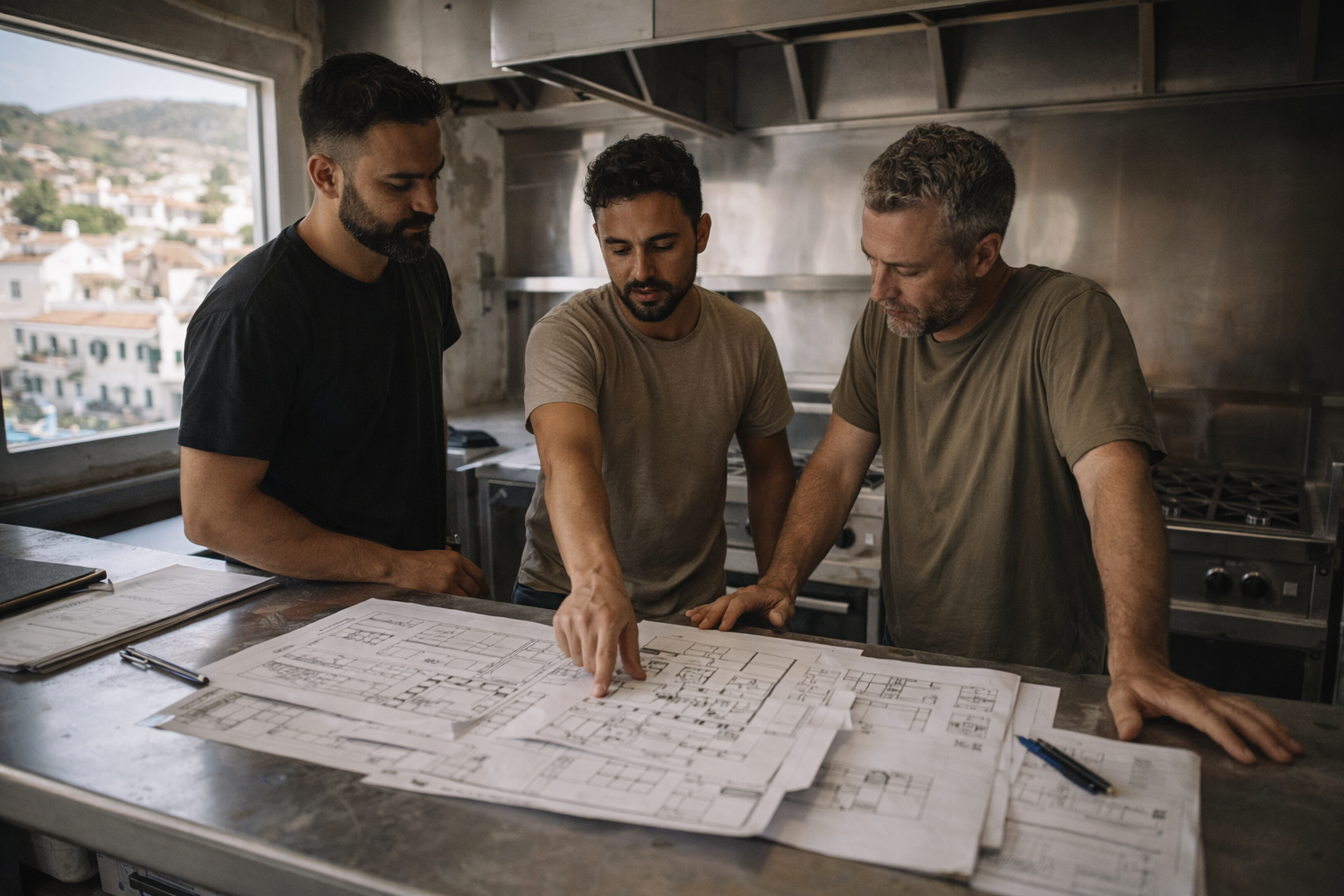
I have walked into beautiful kitchens that do not work. The equipment was new. Stainless steel gleamed. The tiles were polished. The dining room outside was carefully styled — curated chairs, perfect lighting, thoughtful branding. And inside the kitchen, chaos. Not because the cooks were incompetent, but because the kitchen was never designed for the menu it was meant to execute. This is one of the most expensive misunderstandings in hospitality: people design restaurants, and then they decide what to cook.
Clearly, it should be the other way around. A menu is not just a list of dishes. In a restaurant, it is the map of your infrastructure. It dictates equipment, workflow, storage, ventilation, staffing, prep time, purchasing volume, and ultimately, survival. If you are opening a pasta restaurant, your kitchen must revolve around pasta. Fresh or dry? Do you need pasta rollers? How many burners will be dedicated to boiling? Where is the finishing station? Is there refrigerated storage beneath the range for quick access? Does your pass allow plates to move efficiently from sauce to garnish to service?
If you plan to fry, where is the fryer placed? Why are you buying one at all if nothing on your menu requires it? I have seen kitchens with six burners and a single small plancha, even though ninety percent of the menu is griddled. I have seen expensive equipment used as shelving because no one thought through the flow. Flow is everything. When I step into a kitchen, I watch how bodies move. Do cooks bump into each other? Are refrigerators placed across the room from the stations that need them? Every unnecessary step becomes friction. Friction becomes irritation. Irritation becomes slow service. Slow service results in lost money.
Many restaurants are opened by excellent home cooks. Friends say, “You should open a place. Everyone would love this dish.” And they might be right about the flavor. Anthony Bourdain warned about this kind of moment in Kitchen Confidential — the dangerous confidence that comes from being the star of your own dinner table. What he was really pointing to was not a lack of talent, but a lack of perspective. A restaurant is not a dinner party scaled up. It is a system. A home menu is about harmony and pleasure. A restaurant menu is about the business: repetition, cost, labor, and survival.
In menu design for a restaurant, you think differently. Can you produce that dish fifty times in an hour? Can you store its components safely? Can you prep it without waste? Does the cost allow you to pay rent, staff, utilities, and still generate profit? If your signature appetizer is made from an exotic watermelon that you have to fly in from the other side of the world, and on top of that requires multiple steps and care, how many do you need to sell daily to justify the labor and overhead?
Your menu is the restaurant's identity, yes. When someone asks, “What kind of restaurant is it?” They are asking about your menu. Steakhouse. Pasta bar. Middle Eastern grill. That definition is not branding language. It is operational clarity. Menu is also financial modeling. If your concept requires selling a thousand portions a day to survive, are you in a location that can support that volume? If not, the dream collapses under arithmetic. This is why menu matters before looks and trends, before precipitating into signing a lease, or acquiring some random kitchen equipment at a great price.
The menu is the compass. You build the kitchen around it. You design the workflow around it. You hire around it. You invest around it. Recipes can evolve. Dishes can be refined. But the menu — the core offering, the structural idea of what this place is — must be defined first. Otherwise, you end up with a beautiful space and a frustrated brigade trying to make sense of it. A restaurant should be built with a clear intention. And that intention begins with the menu. Menu matters because it is the first act of orchestration. Everything else is execution.
Menu Matters: Why the Kitchen Must Follow the Menu