Field Notes // The Tactile Classroom: Markets of Guatemala and Antwerp (Part 2)
Guatemala City — Pepián With a Soul
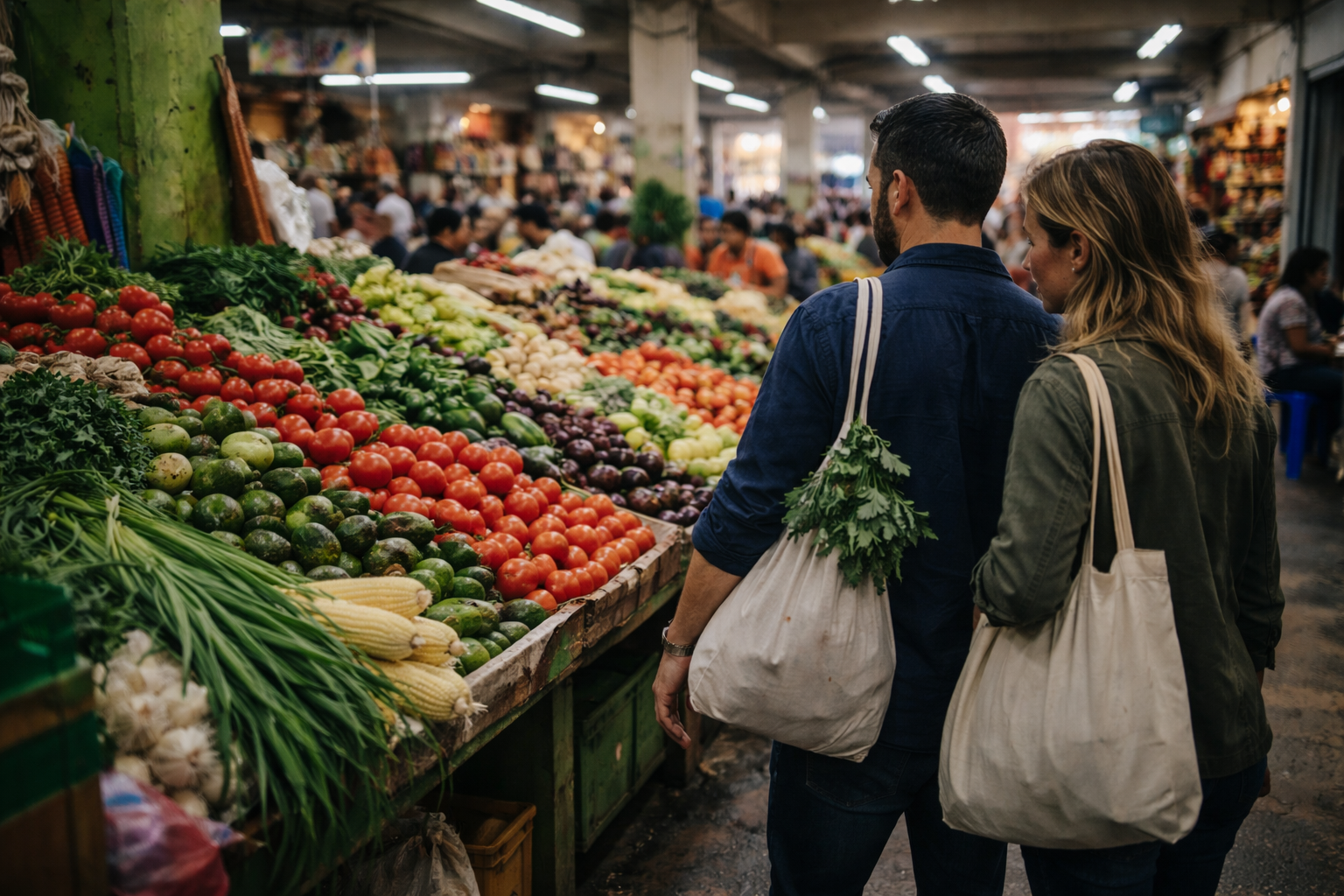
In the central market of Guatemala City, the food is not at street level. You have to descend. Down a set of worn stairs, past the light, into a vast basement gallery where the air is thicker — humid with steam, maize, roasted chiles, simmering broth. There, between produce stalls and butchers, the food stands stretch in long rows. Women press tortillas by hand. Men grind nixtamalized maize in loud metal mills. The rhythm is constant. Frescos are being poured from large glass jars: Jamaica, Horchata, and Tamarindo.
This is not a curated food hall. It is continuity. You find dishes there that are not trending, not plated for social media, not softened for convenience. Recipes that have survived because they are made the way they have always been made. Revolcado, for example, is a deep red stew thickened not with starch but with collagen from the pig’s head, enriched with achiote, slow and unapologetic. Not fashionable. Not light. But intact. And then there was the pepián. The stall was always crowded. The first time I went, it was sold out. I arrived too late. The second time, I came early and secured a plate.
It was dense, complex, layered with toasted seeds and chiles, ground into a thick sauce that clung to the meat. Tortillas arrived warm, made by hand, thick, the size of a palm, slightly imperfect, alive. As I ate, I asked the woman cooking why she didn’t simply prepare more. Her pepián always finished first. She looked at me, almost bewildered. “Why would I make more?” For her, the question made no sense.
She explained that she organized her cooking around her life. She rose at a certain hour. She prepared what she could with care. She came to the market. She sold what she made. When it was finished, it was finished. She preferred to go home with energy. To be with her family. To return the next day in good spirits. It was not about maximizing output. It was about preserving balance. Her pepián was not just a dish. It was rhythm. Boundaries. Dignity. True tradition.
In that basement market, surrounded by grinding maize and hand-pressed tortillas, I understood something larger: tradition survives not because it is optimized, but because someone protects it.
Antwerp — The Saturday Rituals
In Antwerp, every Saturday, the Theaterplein transforms. It does not matter if it is raining. It does not matter if it is freezing. It does not matter if the wind cuts across the square. People go. By mid-morning, the space fills with stalls — produce, bread, cheeses, flowers, cured meats, fish packed in ice, farmers selling what they grew themselves. At one point, there was even a stand run by people growing vegetables in their own back gardens — small-scale, deeply personal, proudly local. But what makes this market different is that it does not live there permanently. It arrives. It assembles. And then it disappears.
If you walk through the square late Saturday afternoon, after the last truck has pulled away and the final crate has been stacked, it is as if nothing ever happened. A clean plaza. Open space. Silence. By Tuesday, you can barely imagine that days earlier it was dense with bodies and color. It is almost like a traveling circus. By dawn, it is there. By dusk,k it is gone. But during those hours, it becomes everything. I lived there for some years, and some student friends introduced me to their beloved market rituals.
The first was the 20-euro surprise bag of vegetables. It will happen at a particular stand (only insiders knew about it, and somehow it felt that you were performing some illicit transaction). You handed over the cash and the bag, no instructions, just the wait. The grocer filled your bag with whatever was at its peak that week — roots, greens, bulbs, herbs, maybe something you did not recognize. No negotiation. No list. You accepted seasonality as authority; you were guaranteed not only the best quality but also variety and abundance.
The second ritual was the corner stand that baked fresh msemen bread and built enormous rolls to order. They would spread the warm bread open and begin layering without hesitation: dolmas, falafel, pickled vegetables, hummus, olives of every shade, crumbled feta, threads of honey. Sweet against brine. Crunch against softness. Acid against fat. A little chaos. A little poetry. A mobile feast. I was always curious where it came from.
One day, I asked. The man behind the counter smiled. “I’m from Turkey. He’s from Morocco. That one from Algeria. That one from Romania. The owner? Slovenia.” “And the dish?” I asked. “Where is it from?” He shrugged gently. “From here, I guess. We make it up as we build it.” It was Mediterranean, yes — but not anchored to one flag. It was migration layered into bread. It was improvisation born from proximity. Fusion without a manifesto. Community made edible. And it was extraordinary.
That market, which appears and vanishes each week, taught me something subtle: food culture is not always fixed in stone buildings. Sometimes it is temporary. Portable. Reassembled again and again by the people who carry it. And yet, despite its ephemerality, it is reliable. Saturday comes. The market returns. People gather. Ritual resumes.
A Lesson in Culinary Culture
At the market, food is not theoretical; ingredients are not abstract. They have weight. Smell. Imperfection. Seasonality. You see what is abundant. You see what is scarce. You see what is local. You see what is imported. You watch how vendors touch their produce. How they speak about it. How they arrange it. You understand that culinary culture is not born in plated perfection. It is born in proximity. In conversation. In improvisation. In someone pressing tortillas as you sit down. A bartender explaining why one vermouth tastes like late afternoon and another like a bitter sunset. In a smen roll that belongs to no country and to all of them.
If you want to learn to cook deeply and with respect for tradition, go to the market. Go without a rigid list. Go like a flâneur: wander, observe, take notes, make pictures. Ask. Taste. Listen. Absorb. But also understand this: the market is not a trend, not an aesthetic, not a weekend diversion. It is one of the oldest human institutions we have. Long before restaurants, long before cookbooks, long before culinary schools, there were markets. As long as people have lived in communities, they have gathered to trade, exchange, negotiate, and share.
Markets are culinary culture in its most fundamental form. They are portraits of a place and of a time. Some stand in cities that have modernized around them for centuries, still organized by meat, by fish, by produce, still carrying echoes of what was sold there hundreds of years ago. Others evolve constantly, absorbing migration, new ingredients, and new techniques. In every country of the world, the market reflects who its people are and what they value. It is there that new ingredients are discovered, that old ones are preserved, that stories are passed from vendor to cook. The market is not an exotic escapade. It is ancestral, it is ‘quotidien’ and deeply human.
Field Notes // The Tactile Classroom: Markets of Guatemala and Antwerp (Part 2)