The Supplier Is Part of the Kitchen: Why Relationships Beat the Lowest Price
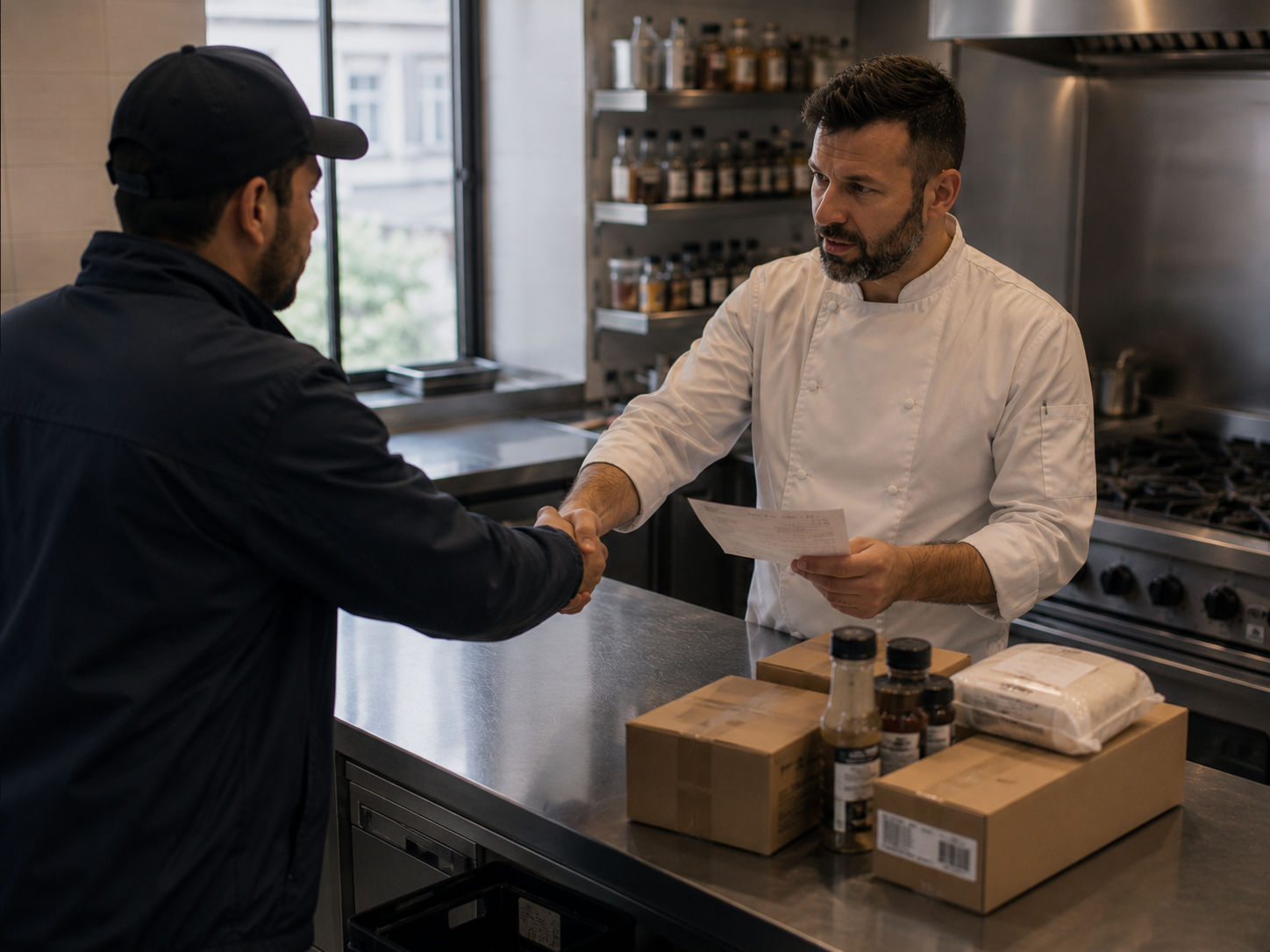
If you have operated a restaurant for many years, you probably already understand the value of a good supplier. If you are opening your first restaurant, you will learn it sooner or later. Hopefully sooner. From the outside, the relationship can look simple. The restaurant needs products. The supplier has them. An order is placed, a truck arrives, an invoice is signed, and the ingredients enter the building. But that is only the visible transaction.
Behind a reliable supply relationship are timing, trust, product knowledge, standards, communication, credit, logistics, memory, and the willingness to respond when the restaurant is under pressure. A good supplier does more than deliver what was ordered. A good supplier helps the restaurant remain operational. This becomes clear the first time something goes wrong. You forget to submit an order. A private event sells more than expected. A refrigerator fails and part of the inventory is lost. A menu item suddenly becomes popular. A delivery arrives incomplete. A holiday changes the normal schedule. A cook miscounts stock, and you discover three hours before service that the kitchen does not have enough product.
You make the call. The supplier says, “Let me see what I can do.” That sentence can save a service. Perhaps the truck has already left. Perhaps the warehouse is closing. Perhaps the product must be collected from another supplier. Perhaps someone drives across the city with the missing case because the relationship has been built over years. At that moment, the value of the supplier is no longer measured only by the unit price. It is measured by reliability. And reliability is one of the most valuable forms of operational support a restaurant can have. The longer a supplier works with a restaurant, the more the relationship should develop beyond the order sheet.
The supplier begins to understand what the kitchen accepts and what it rejects. Which products must arrive at a particular stage of ripeness. Which fish size works for the portion. Which lettuce leaves are required for presentation. Which cuts of meat meet the standard. Which delivery hours disturb service and which ones fit the receiving routine. This knowledge matters. A new supplier may see only “lettuce.” A supplier who knows the restaurant understands that the kitchen needs large, intact leaves because they are used visibly on the plate. Small damaged leaves will not work, even if the weight and price are technically correct. A careless supplier may place the best product on top of the case and hide weaker pieces underneath. A good supplier does not try. Not only because the restaurant will reject it, but because the supplier understands that sending unacceptable products creates more work for everyone. The case will be returned. The chef will call. Another delivery will be required. Trust will weaken.
A mature supplier-buyer relationship reduces this friction. The supplier begins to purchase with the restaurant in mind. Sometimes the product is unavailable, and the supplier finds it elsewhere. Perhaps it comes from another distributor. Perhaps the supplier suggests a legitimate alternative. Perhaps the delivery is split because only part of the order can be fulfilled. What matters is that the supplier communicates before the problem reaches the kitchen. That is part of service too. Restaurant purchasing is highly sensitive to price. It has to be. A small difference repeated across large quantities can materially affect food cost. Owners and chefs should compare offers, negotiate, review invoices, and understand what the market is charging. But focusing only on the lowest price can be expensive. Imagine that one supplier sells a product ten percent cheaper. On paper, the decision appears obvious.
Then the deliveries begin arriving late. Product quality changes from one week to the next. Cases contain inconsistent sizes. Invoices require correction. Items are substituted without approval. Calls go unanswered when something is missing. The price is lower. The cost of the operation may be higher. Someone has to inspect and return the weak product. Prep becomes inconsistent. Portions change. The kitchen needs more labor to sort usable from unusable items. An emergency purchase must be made elsewhere at a higher price. A dish may be removed from the menu during service. Price is only one part of supplier performance.
The complete cost includes quality, yield, reliability, communication, timing, waste, labor, and the operational consequences of failure. A more expensive tomato with excellent yield may cost less in the finished recipe than a cheaper one that arrives damaged, overripe, or inconsistent. A supplier who delivers correctly may be worth more than one who offers a lower invoice but creates several hours of corrective work each week. This does not mean loyalty should protect poor pricing forever. It means the comparison has to be complete. A restaurant will eventually receive competing offers. A new distributor appears with a lower price. A chef joins the business and recommends a company used in a previous kitchen. Another supplier offers a product that appears better, cheaper, or both. These opportunities should be explored.
A restaurant should not remain with a weak supplier simply because the relationship is old. But before replacing someone who has served the business reliably, it is often worth having a direct conversation. “Another company is offering this product ten percent below your current price. Can you improve your offer?” A good supplier may say no. Perhaps that product is purchased at a higher cost. Perhaps the margin is already minimal. Perhaps the competitor is using temporary pricing to enter the account. But the supplier may respond elsewhere. “I cannot lower that item, but I can improve the price on these other products.” Now the relationship can be evaluated across the complete order rather than through one line on an invoice.
I have seen this happen many times. The supplier understands that the restaurant is reviewing costs. The restaurant gives the supplier an opportunity to remain competitive. Both sides speak honestly, and the relationship continues with a better arrangement. That conversation is often more valuable than changing suppliers immediately for a small short-term saving. Because the existing supplier already knows the account. The supplier knows the receiving hours, the standards, the purchasing pattern, the people, and the unusual requests. That accumulated knowledge has value. Switching suppliers resets part of that relationship to zero.
Loyalty Has to Be Earned on Both Sides
Loyalty is important, but it should not become passivity. Some restaurants remain with poor suppliers because changing feels inconvenient. No one has researched alternatives. No one has compared prices. The relationship continues through habit. The product is inconsistent. The service is weak. The prices rise without explanation. Yet the restaurant keeps ordering because “we have always bought from them.” That is not loyalty. It is neglect. A supplier relationship should continue because it serves both businesses well. The supplier provides quality, reliability, fair pricing, and communication. The restaurant orders responsibly, pays according to the agreed terms, receives products professionally, and gives clear feedback. Loyalty has responsibilities on both sides.
A restaurant cannot expect exceptional service while paying every invoice late, changing orders constantly, rejecting acceptable products without reason, or calling only in emergencies. Suppliers also run businesses. They manage inventory, transportation, fuel, staff, warehouses, product loss, credit, and schedules. It is not easy to be a good supplier. When you find one, the relationship deserves care. Pay on time. Order clearly. Respect cut-off hours. Communicate changes. Receive the delivery properly. Report a problem with evidence, not anger. A supplier who knows the restaurant is organized and fair will often be more willing to help when an exceptional situation appears. Trust grows through time and repetition.
For Good or Bad, a New Chef Can Change the Supply Network
When a new chef enters a restaurant, the chef often arrives with supplier relationships from previous positions. This can be an advantage. The chef may know a better fishmonger, butcher, produce distributor, specialty importer, cheesemaker, or equipment provider. These relationships can improve quality, pricing, availability, and access to products the restaurant could not source before. But the change should not happen automatically. A chef may prefer a supplier because of familiarity, but the restaurant still needs to evaluate the business relationship independently.
What products will be purchased? At what price? Under which payment terms? What is the minimum order? What are the delivery conditions? What other restaurants use the supplier? Who verifies quality? Who approves invoices? How will performance be reviewed? This connects directly to operational control. When a person with purchasing authority brings an entire supplier network into the restaurant, the business should not surrender oversight simply because the person is trusted or experienced. Most supplier relationships are legitimate. But purchasing is also an area where irregularities can occur. Undisclosed incentives, inflated pricing, manipulated quantities, false credits, unauthorized substitutions, or coordinated behavior between someone inside the restaurant and someone outside it can damage the business without being immediately visible.
The answer is not to treat every new supplier as suspicious. The answer is due diligence. Verify the company. Request references. Compare prices. Confirm delivery quantities. Separate ordering, receiving, invoice approval, and payment whenever possible. A chef can recommend the supplier. The restaurant should still approve the relationship. A new supplier can make a very convincing presentation. Excellent samples. Attractive pricing. Flexible terms. Fast delivery. Personal attention. Promises that every product will meet the restaurant’s exact standard. Then the account begins. The first delivery is strong. The second is acceptable. By the fifth, substitutions appear. Delivery times change. Quality begins to vary. The supplier explains that the market was difficult, the truck had a problem, the product will be better next week, the original price can no longer be maintained.
Every supplier will face genuine difficulties. Agriculture, fishing, transportation, weather, importation, labor, and markets are not completely predictable. One weak delivery does not necessarily define the relationship. But repeated excuses reveal a pattern. This is why replacing an established supplier should usually be tested carefully. Begin with a category or a limited order. Compare the new supplier’s performance over several deliveries. Check quality, consistency, communication, invoicing, timing, and how problems are resolved. Do not move the entire account after one beautiful sample. A sample proves that the supplier can provide the product once. A relationship proves that the supplier can provide it repeatedly. Restaurant operators ask for references when hiring employees. Suppliers should also have references.
Which restaurants do they currently serve? How long have those accounts worked with them? What type of operation do they understand? Can they handle your volume? Are they experienced with the product category? A supplier that serves several respected businesses is not automatically the right choice, but the information gives you somewhere to begin. Call someone you know. “How is the quality?” “Do they arrive on time?” “How do they respond when something is missing?” “Do prices change without warning?” “Are credits handled correctly?” “Would you trust them with an important order?” These questions reveal the everyday relationship, which is often very different from the sales presentation. You are not only buying products. You are choosing another business whose performance will affect yours.
The Supplier Should and the Standard of Your Business
A good supplier is not only responsive. The supplier becomes selective on your behalf. They see the fish and know it will not pass your inspection. They reject produce before loading it. They call because the available product is different from the usual standard. They understand that a substitute cannot simply appear without discussion because the ingredient affects the recipe. This requires communication from the restaurant. The chef cannot reject the product angrily without ever defining what acceptable means. Specifications should always be clear. Size. Weight. Ripeness. Variety. Origin. Fat content. Packaging. Temperature. Shelf life. Delivery condition. The more important the product is to the menu, the more precise the specification should be.
This is where the menu connects to purchasing. A restaurant should not ask for “good tomatoes.” It should understand what kind of tomato the recipe requires, how it will be used, what level of ripeness works, how frequently it must be delivered, and what variation the kitchen can tolerate. The supplier cannot protect a standard that has never been articulated. The supplier relationship does not end when the truck arrives. Receiving is where the promise becomes physical. The order should be checked. Does the quantity match? Is the product correct? Is the temperature safe? Is the quality acceptable? Does the invoice match the order and delivery? Were any substitutions authorized? Are damaged cases being credited?
This protects the restaurant, but it also protects the supplier. If discrepancies are identified immediately, they can be corrected while the delivery is present. If the restaurant calls three days later saying something was missing, the situation becomes harder to verify. A professional receiving process gives both sides a clear record. The person receiving should know the specifications. If the chef is the only person capable of identifying acceptable quality, then every delivery depends on the chef’s presence. That is fragile. Train the team. Photograph unacceptable products when necessary. Record shortages. Obtain signatures for returns. Confirm credits. Keep purchasing and receiving information connected. Strong relationships still need records. Trust should not eliminate documentation. It makes accountability easier to discuss.
A restaurant should know what it is paying. Not only today. Across the year. Prices change for legitimate reasons. Seasonality, weather, supply, transportation, demand, fuel, imports, and harvest conditions all affect cost. Tomatoes may rise during one period and fall during another. Fish may change according to catch and season. Dairy, meat, oils, and imported goods may move for different reasons. A price tracking report creates context. Without history, every increase feels arbitrary. With history, patterns become visible. You may discover that a product rises during the same months each year. That information can influence recipe costing, menu pricing, purchasing quantities, preservation, or seasonal substitution.
If the restaurant uses a large amount of one ingredient, costing the recipe only from the price paid on one particular day may be misleading. The more useful figure may be an average price across the season or year. This gives the menu more financial stability. Tracking also supports negotiation. You can approach the supplier with evidence. “This product has risen steadily for six months, but market availability has remained stable. Can you explain the change?” Perhaps there is a valid reason. Perhaps the supplier reviews the account and finds that automatic increases were applied without considering your volume. Perhaps the price can be fixed temporarily. Data creates a better conversation than suspicion.
Compare the Complete Account
Supplier comparison should not happen product by product alone. One distributor may be cheaper on produce but higher on dairy. Another may offer good pricing but require large minimum orders. One may deliver six days a week. Another may deliver only twice. One may give thirty-day terms. Another requires immediate payment. The account has to be evaluated as a system. Product cost. Yield. Quality. Order minimums. Delivery frequency. Payment terms. Emergency support. Credits. Communication. Reliability. Sometimes using several suppliers is the right solution. A specialist for meat. Another for produce. Another for seafood. A broadline distributor for staples. A local producer for a particular ingredient. But depending on your business model, too many suppliers can also create complexity. More invoices. More delivery windows. More minimums. More receiving work. More relationships to manage.
Again, the answer depends on the operation and the identity of your restaurant. The goal is not the greatest number of options. It is a supply network strong enough to support the menu without becoming unnecessarily difficult to control. A trusted supplier is valuable. Complete dependence is risky. What happens if the supplier closes, loses access to a product, changes ownership, has a transportation problem, or suffers a major price increase? For critical ingredients, the restaurant should understand its alternatives. This does not mean dividing every order constantly or hiding backup relationships from the primary supplier. It means knowing where else the product could come from and what changes would be required if the normal source failed.
Resilience needs options. The strongest supplier relationship is not one built on captivity. It is one that continues because both parties choose to maintain it. Good suppliers often know more about their category than the restaurant does. The fishmonger understands the catch. The butcher understands cuts, yields, availability, and changes in quality. The produce supplier sees what is entering the market, what is ending, what is abundant, and what is unreliable. The importer understands delays, substitutions, and products that will soon become available. Ask questions. What is particularly good right now? What is becoming difficult to source? What are other restaurants using? Is there a less familiar cut with better value? Which variety has the best yield? When will the season change? What should we avoid this week? This is part of culinary research.
A supplier can become an extension of the chef’s awareness. Not by designing the menu, but by providing real information from the supply chain. Sometimes the ingredient that changes a dish enters through one of these conversations. “I know you normally buy this, but something unusual arrived today. Would you like to see it?” That is a valuable call. It happens more often when the supplier understands the restaurant’s curiosity, standards, and way of working. The supplier may never appear on the menu. The guest may never know who delivered the fish, the oil, the vegetables, the wine, the flour, or the plates. But the supplier’s work appears in the restaurant every day. It appears in the consistency of the ingredient. In whether prep can begin on time. In whether the menu is complete. In whether the kitchen can survive an unexpected rush. In whether costs remain understandable. In whether the chef can trust that tomorrow’s delivery will match today’s standard.
This is why supplier relationships should not be treated as interchangeable transactions. The restaurant should compare, negotiate, audit, and protect itself. But it should also recognize value when value is present. A supplier who knows the business, respects the standard, communicates honestly, offers fair pricing, and responds in difficult moments is not only bringing boxes through the back door. That supplier is carrying part of the restaurant’s continuity. And continuity is worth something. Sometimes it is worth more than the lowest price. Because when service is approaching, the refrigerator is almost empty, and you make the call that begins with, “I need your help,” the person on the other side is no longer simply someone who sells you products. They are part of the network that keeps your kitchen standing.
The Supplier Is Part of the Kitchen: Why Relationships Beat the Lowest Price