The Atlas of Flavor & Texture
Building Your Own Culinary Map of Ingredients, Techniques, and Taste
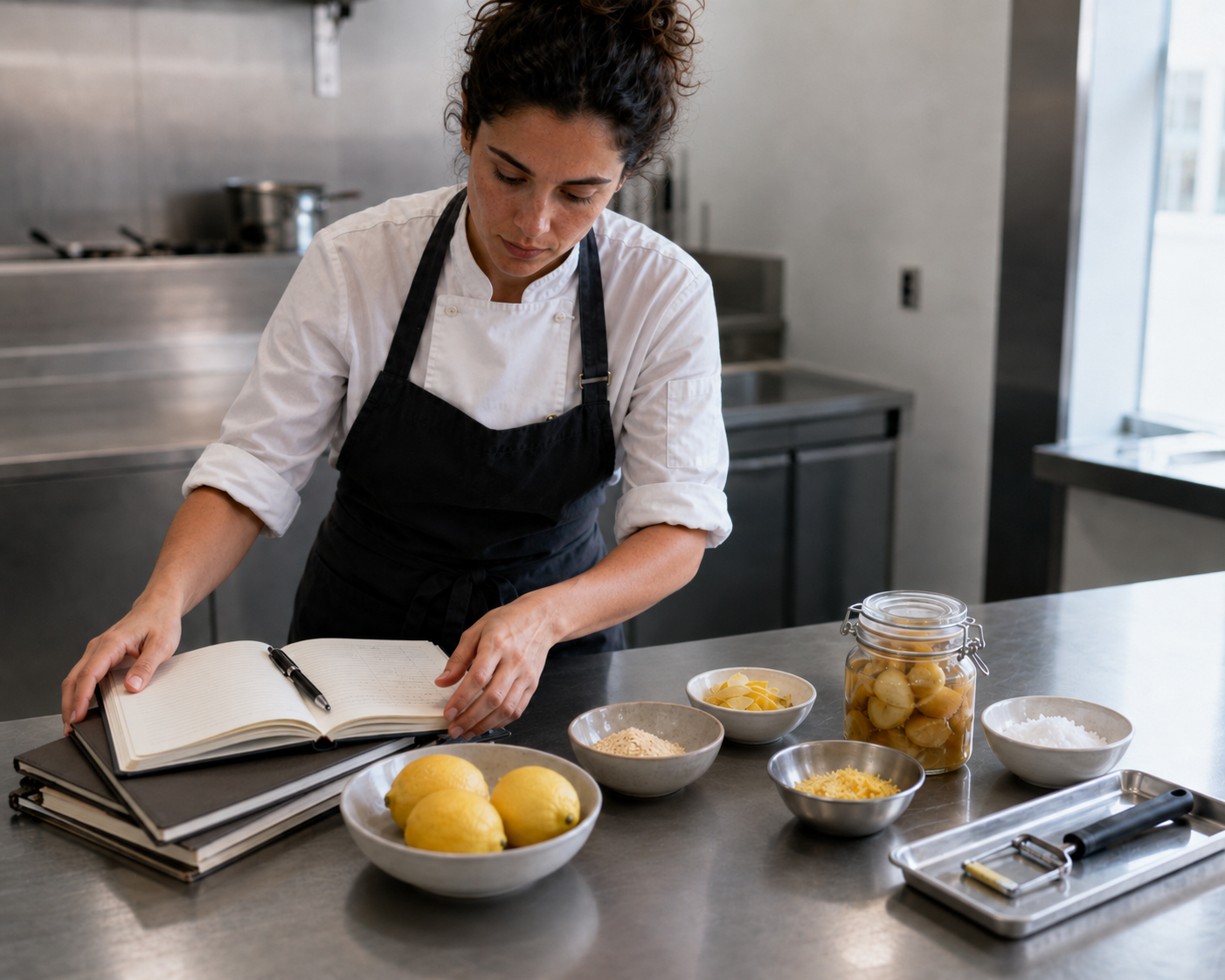
Every serious cook eventually discovers that recipes are not enough. Recipes can teach us how to repeat a dish, but they do not always teach us how to think. They may show us what to do with tomatoes, rice, corn, herbs, fire, oil, or fermentation, but they do not always reveal the larger world behind those ingredients: how they behave, how they travel, how different cultures transform them, and how they might become part of our own culinary language.
This is where the idea of an atlas becomes useful. An atlas is not a collection of everything. It is a way of organizing what matters. For a cook, an atlas of flavor and texture is a personal system of references: ingredients you return to, techniques that open possibilities, aromas that stay in memory, textures you want to understand, and traditions that help you see food from another angle.
The goal is not to learn every cuisine in the world. That would be impossible, and honestly, unnecessary. The goal is to build a meaningful world of references, one that grows from curiosity, research, experimentation, and documentation. You learn what you need to learn because something calls your attention: an ingredient at the market, a technique from another tradition, a flavor that feels unfamiliar but precise, a texture you want to recreate. That is how authorship begins. Not by inventing from nothing, but by learning how to see.
Mapping Begins With Curiosity
A cook’s atlas often begins with a simple question: What else can this ingredient do? Take the tomato. It can be raw, roasted, charred, dried, crushed, fermented, cooked into sauce, preserved in oil, clarified into water, or reduced into paste. In Italy, it becomes the foundation of sauces, soups, and preserves. In Spain, it appears grated over bread, cooked into sofritos, or folded into rice dishes. In Mexico and Central America, it enters recados, salsas, broths, and stews. In Chinese cooking, it can meet eggs, beef, noodles, or gentle broths with a completely different logic of sweetness and acidity. The same ingredient becomes many things depending on the culture, the technique, and the intention. That is the first lesson of the atlas: an ingredient is not fixed. It is a material with possibilities.
Technique Changes the Ingredient
Once we start looking closely, we realize that flavor is never only inside the ingredient. Flavor is also produced by method. A tomato confit cooked slowly in olive oil gives one result. A tomato cooked sous vide creates another. A tomato thrown directly onto embers becomes smoky, blistered, and almost wild. A tomato dried under controlled heat becomes concentrated and leathery. A tomato fermented with salt becomes sharp, alive, and acidic in a different way.
The ingredient is the same, but the technique changes its voice. This is why the Ingredient Exploration Matrix matters. It gives us a way to look at ingredients through several lenses: texture, flavor, aroma, process, and heritage. Instead of asking only, “What recipe can I make with this?” we begin asking better questions:
How does this ingredient change under heat?
What happens when it is dried, fermented, roasted, or crushed?
What textures can it produce?
What traditions have already worked with it deeply?
What do I want to learn from it?
These questions transform cooking from execution into research.
Ingredients Travel, and So Does Knowledge
Some ingredients become global travelers. Rice began in Asia, yet today it is central to cuisines far beyond its original geography. It appears in Japanese bowls, Korean rice cakes, Thai sticky rice, Indian biryanis, Persian tahdig, Italian risotto, Spanish paella, Caribbean rice and beans, and countless Latin American daily meals. In each place, rice is not simply borrowed. It becomes rooted. It takes on local technique, local expectation, local identity.
Corn offers another kind of journey. Born from the agricultural intelligence of Mesoamerica, maize becomes masa, tortillas, tamales, atoles, chicha, pozol, popcorn, bourbon, polenta, cornbread, industrial starch, syrup, and even packaging material. It can be sacred, daily, festive, ancestral, processed, refined, abused, or reimagined.
To follow an ingredient like rice or corn is to follow human movement, adaptation, trade, memory, and invention. This is why building an atlas is not only about collecting flavors. It is about understanding how ingredients carry history, and how techniques carry ways of thinking.
Your Atlas Is Not Universal. It Is Yours.
There is too much to know. That is not a problem. It is part of the work. A cook does not need to master every ingredient, region, and technique. What matters is learning how to build a world of references that is useful, alive, and personal. Your atlas should grow from your own questions.
Maybe you become interested in tomatoes, and that leads you into sauces, confits, charred salsas, preservation, and acidity. Maybe rice leads you into steaming, fermentation, starch, porridge, paella, and clay pot cooking. Maybe corn leads you into masa, nixtamalization, drinks, fermentation, and texture. Maybe seaweed leads you into mineral depth, broth building, salinity, and oceanic umami.
Each ingredient becomes a door. Each technique becomes a path. Each note you take becomes part of your map. Over time, this map becomes more than information. It becomes your culinary grammar
Documentation Makes the Atlas Useful
A culinary atlas cannot live only in memory. Memory is generous, but it is unreliable. If you want to develop authorship, you need to document what you notice. Write down what happened when you roasted the tomato instead of stewing it. Record what changed when you used short-grain rice instead of long-grain. Note how corn behaved when ground fine, toasted, soaked, fermented, or cooked into dough.
Documentation turns experience into material you can use again. This does not need to be complicated. A cook’s notes can be simple: ingredient, technique, time, temperature, texture, aroma, result, next question. What matters is that the observation is captured. Without documentation, experimentation disappears. With documentation, it becomes part of your archive. This is the difference between trying something once and building a practice.
From Atlas to Authorship
The purpose of building an atlas is not to collect knowledge for its own sake. The purpose is to cook with more awareness. When you understand ingredients more deeply, you begin to make better decisions. You know why one oil works for finishing and another for cooking. You understand why one rice should remain separate and another should become sticky. You recognize that tomatoes can bring acidity, sweetness, body, or umami depending on how they are treated. You see that corn is not one ingredient, but a world of forms.
This is where creative cooking begins to mature. Authorship does not mean ignoring tradition. It means studying tradition carefully enough to understand what you are touching. It means knowing when to follow, when to adapt, and when to ask a new question. Your atlas gives you that foundation.
How to Begin Your Own Atlas
Start with one ingredient and make sure you map it. Choose something familiar enough to work with often, but rich enough to deserve attention: tomato, rice, corn, salt, oil, mushrooms, garlic, citrus, beans, chiles. Then study it through five lenses:
Texture: What forms can it take? Crisp, soft, creamy, chewy, fluid, dry, brittle?
Flavor: What are its dominant tastes? Sweet, sour, bitter, salty, umami, earthy, floral?
Aroma: What does it release fresh, cooked, dried, fermented, roasted?
Process: What happens when it is cut, heated, crushed, soaked, aged, or preserved?
Heritage: Which cultures have developed deep knowledge around it?
Then cook. Taste. Compare. Write. The atlas grows through repetition.
Keep in Mind These 13 Principles for Flavor, Texture & Aroma Discovery
1. Contrast is King. Every crunch needs a cream.
2. Balance of Opposites. Harmony lives between extremes.
3. Aroma as Bridge. Let scent weave a connection.
4. Texture Progression. Let dishes unfold through rhythm.
5. Umami Elevation. Depth without heaviness.
6. Layer , Not Load. Introduce flavor in waves.
7. Time as Ingredient. Patience seasons everything.
8. Local Material, Global Logic. Translate ideas across regions.
9. From Raw to Transformed. Honor each stage of an ingredient’s life.
10. TheSilence Between Flavors. Rest gives clarity .
11. Memory & Association. Cook with your stories.
12. Resonance Over Recipe. Seek harmony , not formula.
13. Imperfection as Aesthetic. Let irregularity reveal life.
Closing Reflection — The Map Is Never Finished
The Atlas of Flavor & Texture is not a finished object. It is a practice. It grows every time you notice an ingredient differently. It expands when you encounter a technique you did not know. It becomes richer when you taste something unfamiliar and ask why it works. It becomes more personal when you decide what matters to you, what you want to study, and what kind of cook you are becoming. The world of food is too vast to own. But you can learn to navigate it. That is the purpose of the atlas: not to contain everything, but to help you find your way.
Cultural Note — The Meeting of Worlds
The story of fusion cuisine began wherever people met in ports, markets, and kitchens where ingredients from one shore to another. Trade ships once carried more than spices across the Mediterranean, Africa, and Asia; they carried imagination. Cinnamon from Ceylon met olive oil from Crete. Lemons from Persia crossed with chiles from the Americas. Every exchange rewrote the map of taste.
What we call fusion today is simply the visible thread of a long history of curiosity; of cooks who blended what was local with what was new. To create an atlas of flavor is to honor that journey: the routes of salt and spice, memory and invention, and the shared human desire to make something delicious from the meeting of worlds.