Seaweeds — Oceanic Umami, Mineral Depth & Culinary Possibilities
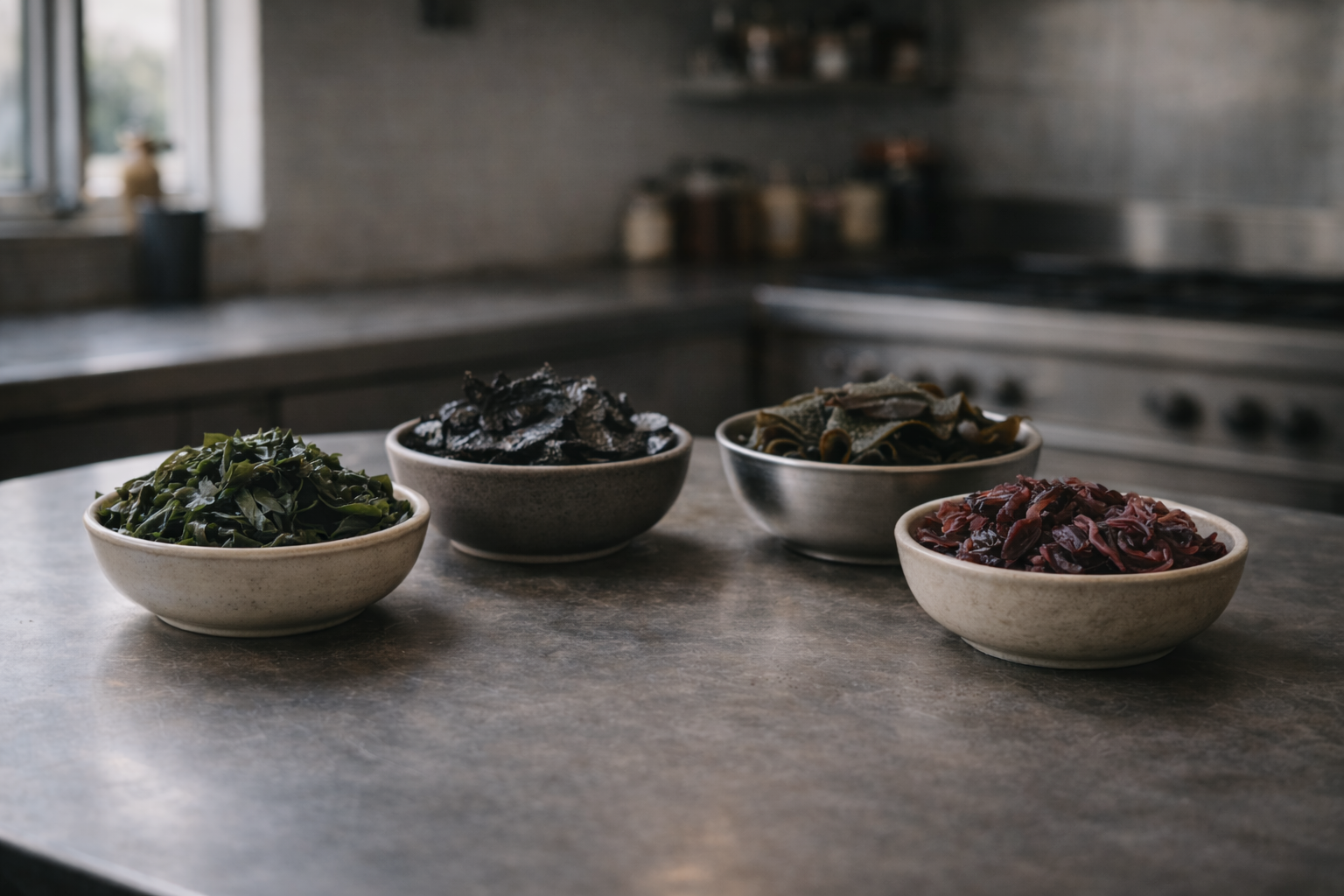
In many Asian culinary traditions, seaweeds are not a garnish or an afterthought, they are foundational for creating specific flavor profiles, but also they represent cultural expressions. Harvested from rocky coasts, sun-dried on woven mats, simmered into broths, or eaten fresh from the sea, seaweeds carry the taste of oceans, tides, and time. They offer more than flavor; they embody a philosophy of nourishment rooted in subtlety, depth, and transformation.
At the same time, this exploration is only an entry point into a vast and diverse marine world. Across Asia, and beyond, there are countless species, regional practices, and cultural relationships with seaweeds that extend far beyond what can be captured here. What follows is not a complete map, but a guided introduction: a way to begin understanding how seaweeds function as ingredients, and how they shape flavor, texture, and culinary identity.
Seaweeds are remarkably versatile, from the refined kombu used in Japanese dashi to the bursting sea grapes of the Philippines and the mineral-rich strands of Korean miyeok. They thicken, flavor, mineralize, and balance. They are at once ancient and contemporary: rich in umami, dense in nutrients, and increasingly relevant in modern, sustainable cooking.
Function & Flavor in the Kitchen
Seaweeds provide what is often most difficult to achieve in plant-based cooking: depth and complexity. They introduce salinity without relying solely on salt, structure without heaviness, and umami without animal products.
Whether infused into broths, powdered over vegetables, folded into salads, or wrapped around fillings, seaweeds expand the vocabulary of flavor. They allow the cook to build layers that feel both subtle and complete.
Perhaps most compelling are the fusion possibilities they invite. Seaweeds move effortlessly across culinary boundaries—nori dusted over coconut curries, kombu simmered in tamarind broths, wakame paired with Sichuan pepper and lime leaf. They can be crumbled into rice dishes, layered into wraps, or transformed into unexpected condiments. In this way, seaweed becomes a bridge: between land and sea, tradition and invention.
Essential Seaweeds
The following selection highlights some of the most commonly used seaweeds across Asian cuisines. While far from exhaustive, these examples offer a practical starting point for understanding their diversity, applications, and flavor profiles.
Nori
Type: Red algae, dried into sheets
Traditional Use: Japan, Korea, China (sushi, onigiri, garnishes)
Texture & Flavor: Crisp, briny, roasted umami
Idea: Toast and crumble into seasoning blends or wrap rice and vegetable bites
Kombu
Type: Brown kelp
Traditional Use: Japanese dashi, Korean broths
Texture & Flavor: Gelatinous when hydrated, deeply mineral and umami-rich
Idea: Infuse broths, sauces, or pickling liquids for added depth
Wakame
Type: Brown seaweed
Traditional Use: Soups, salads, miso dishes
Texture & Flavor: Slippery, subtly sweet, lightly chewy
Idea: Use in fresh preparations or quick stir-fries for balanced mineral notes
Hijiki
Type: Brown algae, fine dark strands
Traditional Use: Simmered dishes in Japan and Korea
Texture & Flavor: Firm, concentrated oceanic flavor
Idea: Fold into grain salads or fritters for contrast and depth
Aonori
Type: Green algae, powdered
Traditional Use: Garnish for noodles and street foods in Japan
Texture & Flavor: Fine, herbaceous, umami-bright
Idea: Blend into oils or sprinkle over vegetables and snacks
Mozuku
Type: Brown seaweed, delicate strands
Traditional Use: Okinawan vinegared dishes
Texture & Flavor: Light, slippery, slightly tangy
Idea: Serve in chilled preparations or as a refreshing topping
Mekabu
Type: Wakame root (sporophyll)
Traditional Use: Soups and vinegared dishes
Texture & Flavor: Sticky, concentrated umami
Idea: Stir into broths or use to add body to sauces
Sea Grapes (Caulerpa lentillifera)
Type: Green algae (“green caviar”)
Traditional Use: Philippines, Okinawa, Vietnam
Texture & Flavor: Bursting pearls, fresh salinity
Idea: Use as a fresh garnish or palate-cleansing element
Arame
Type: Brown kelp, fine strands
Traditional Use: Japanese and Korean home cooking
Texture & Flavor: Tender, mild, slightly sweet
Idea: Incorporate into grain bowls or vegetable dishes
Dulse
Type: Red algae
Traditional Use: Japan, Korea, and coastal regions beyond Asia
Texture & Flavor: Soft, slightly chewy, smoky-salty
Idea: Crisp into snacks or crumble into soups and grains
Sea Lettuce (Ulva spp.)
Type: Bright green macroalgae
Traditional Use: China, Japan, Southeast Asia
Texture & Flavor: Light, leafy, mildly oceanic
Idea: Blend into sauces or use in fresh, chilled dishes
Ecklonia cava (Kajime)
Type: Brown kelp
Traditional Use: Japan and Korea
Texture & Flavor: Tender, dense, umami-rich
Idea: Use in broths or grind into powders for seasoning
Caring for Seaweeds — Selection, Storage & Use
Understanding how to handle seaweed is essential to unlocking its full potential in the kitchen.
Dried Seaweed
The most common and stable form.
Storage: Airtight container, cool and dry environment
Use: Soak or rinse before use (depending on type); soaking liquid can enrich broths
Tip: Look for vibrant color and natural surface bloom (e.g., kombu’s white powder)
Pickled or Salt-Preserved Seaweed
Often pre-seasoned and ready to use.
Storage: Refrigerated after opening
Use: Rinse lightly to adjust salinity; ideal for salads or quick dishes
Tip: Avoid overly soft or cloudy products
Fresh or Rehydrated Seaweed
More delicate and time-sensitive.
Storage: Refrigerate and use within a few days
Use: Best in fresh applications or added at the end of cooking
Tip: Should smell clean and oceanic, never overly fishy
Choosing Seaweed
Color: Deep, vibrant tones indicate quality
Texture: Supple when hydrated, not degraded
Source: Prefer sustainably harvested, traceable products
Seaweeds reveal a different way of thinking about flavor—one rooted in balance, restraint, and depth. They invite us to cook with a broader palette, where the ocean becomes an ingredient, and where subtlety carries as much power as intensity.