Molecular Cuisine Techniques — 23 Departure Points for Texture, Precision, and Transformation
Molecular cuisine is often misunderstood as spectacle: spheres, foams, smoke, frozen clouds, unexpected textures. But at its best, it is not about tricks. It is about understanding how matter behaves when guided by temperature, pressure, acidity, air, time, and proportion.
In this sense, molecular cuisine belongs naturally inside Materia. It studies the physical and chemical grammar of cooking: how a liquid becomes a gel, how oil and water become stable, how aroma can be captured, how air can become structure, how texture can be designed with intention.
The goal is not to replace traditional cooking, but to expand the cook’s vocabulary. A brine, a roux, a fermentation, a reduction, and a spherification all belong to the same larger question: how do we transform ingredients into experience? Your reference text frames molecular cuisine as “a contemporary dialect born from observation and precision,” not as something detached from craft.
This article gathers 23 molecular cuisine techniques, organized into clusters so we can see how they function as points of departure for creative exploration.
Safety and scope note: This article is an introductory atlas, not a technical manual. Some molecular techniques involve specialized equipment, controlled gases, enzymes, cryogenic materials, vacuum systems, food safety concerns, and precise ratios. Liquid nitrogen, sous-vide cooking, transglutaminase, carbonation systems, and pH-sensitive preparations should be studied carefully before use.
Departure Points is a Materia series built around creative exploration. Each article gathers 23 known or traditionally used applications of an ingredient, technique, region, or culinary material, then organizes them into clusters so cooks can see patterns, possibilities, and relationships. Each point of departure is a catapult for further inquiry: a reference, a context, and a question to carry back into the kitchen. What does this material do? How has it been used before? What changes when we alter the medium, the technique, the temperature, or the cultural context? From there, the work begins.
Cluster I: Structure, Gels, and Liquid Geometry
These techniques transform liquids into forms: spheres, gels, sheets, membranes, and controlled structures. They teach the cook that texture can be designed before the first bite.
1. Spherification
Spherification encapsulates liquids into delicate spheres with a thin gel membrane. The result resembles caviar, but the purpose is not imitation alone. It allows flavor to arrive as a burst, released only when pressure breaks the membrane.
2. Reverse Spherification
Reverse spherification changes the direction of the process: calcium is placed inside the flavored liquid, while sodium alginate forms the bath. It is especially useful for creamy, acidic, or alcoholic bases that may not behave well in standard spherification.
3. Gelification
Gelification transforms liquids into gels using agents such as agar-agar, gelatin, carrageenan, pectin, or gellan. It allows broths, juices, purées, and sauces to become sliceable, layered, elastic, firm, or trembling.
4. Encapsulation
Encapsulation traps flavors, aromas, or liquids inside edible membranes or capsules. It is a technique of controlled release, where flavor appears at a specific moment rather than spreading evenly through the dish.
5. Thermal Gel Reversal
Thermal gel reversal creates gels that behave against expectation. Some systems set when heated and soften or liquefy when cooled. The lesson here is precise: temperature is not only heat, it is behavior.
6. Edible Films and Sheets
Edible films and sheets create thin membranes that carry flavor, color, or aroma. They may wrap, cover, dissolve, or add transparency. This technique turns surface into structure and presentation into texture.
Cluster II: Air, Foam, and Suspension
These techniques introduce air into food. They make flavor lighter, more volatile, more aromatic, and sometimes more temporary. Air becomes a material.
7. Emulsification
Emulsification brings together liquids that normally resist each other, such as oil and water. Through agitation, stabilizers, or emulsifiers, sauces, foams, dressings, and creams can hold together with stability and intention.
8. Foam Creation / Espumas
Foams and espumas use lecithin, gelatin, egg proteins, siphons, or gases to aerate a liquid into a light structure. They can carry intense flavor without heaviness, allowing aroma to rise quickly from the plate.
9. Aeration / Whipping / Whipping Siphon
Aeration incorporates air mechanically or through pressurized gases. It can create mousses, whipped infusions, light sauces, or instant foams. The core lesson is mouthfeel: density can be lifted without losing flavor.
10. Carbonation
Carbonation infuses carbon dioxide into liquids, fruits, or sauces. It creates effervescence and a sensory surprise: sound, acidity, freshness, and texture appear together. Carbonated fruit is a clear example of texture created through gas.
Cluster III: Temperature, Freezing, and Preservation of Texture
These techniques use cold, rapid cooling, or precise temperature control to preserve structure, alter mouthfeel, and control transformation.
11. Sous-Vide Cooking
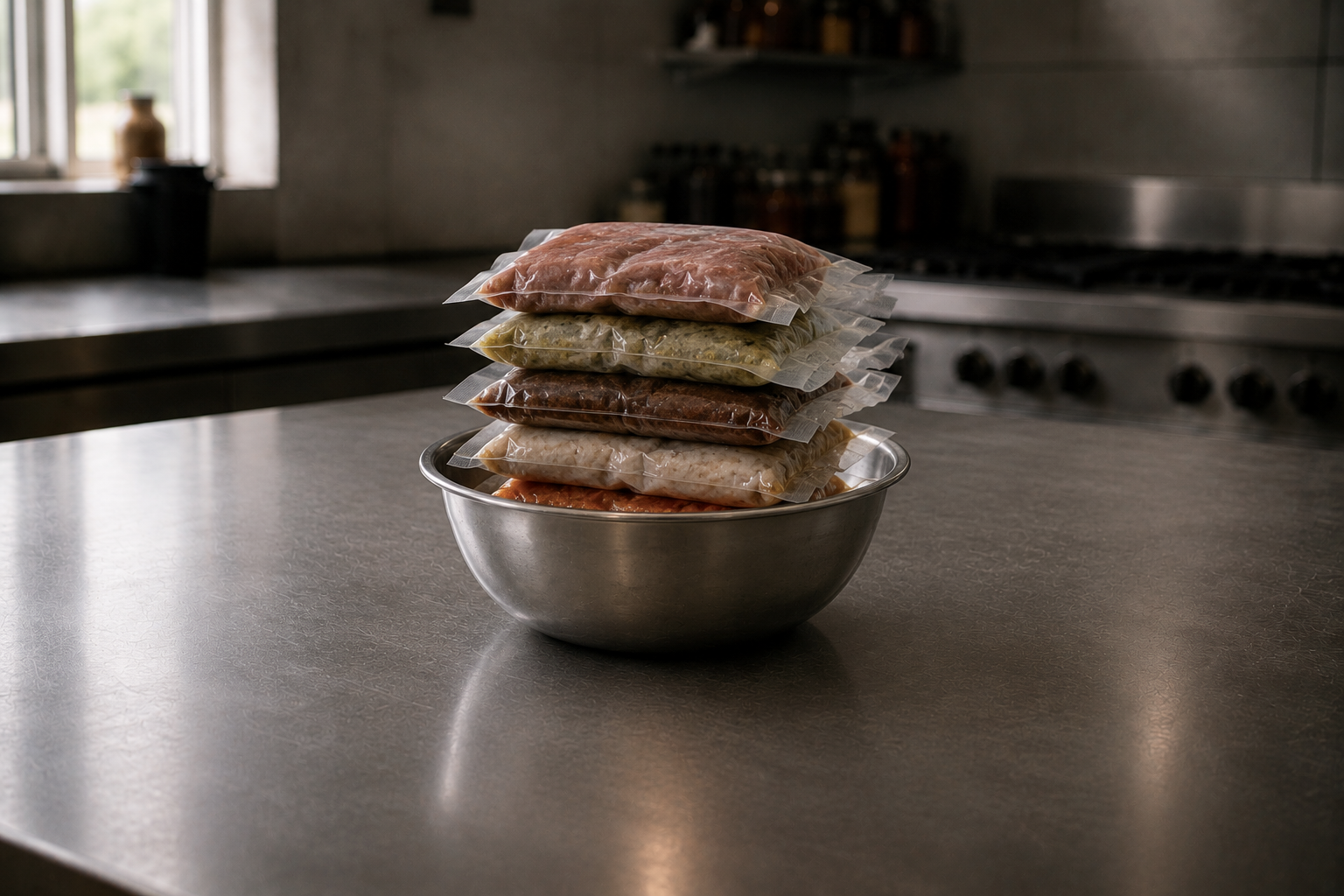
Sous-vide cooking uses sealed bags and precise water temperatures to cook ingredients slowly and evenly. It protects moisture, tenderness, and flavor integrity. Its value is not novelty, but control.
12. Cryo-Cooking / Liquid Nitrogen
Cryo-cooking uses liquid nitrogen for instant freezing. It can create dramatic visual effects, but its real culinary value lies in rapid texture formation: crisp exteriors, smooth frozen centers, and delicate frozen powders. This requires specialized safety knowledge.
13. Flash-Freezing
Flash-freezing rapidly lowers temperature to preserve texture and prevent large ice crystals. It is useful for delicate ingredients, frozen foams, fruit, herbs, and preparations where structure must be protected.
14. Freeze-Drying / Lyophilization
Freeze-drying freezes food and removes water under vacuum through sublimation. It preserves structure and flavor while creating light, crisp, almost ethereal textures. Fruits, herbs, dairy, sauces, and aromatics can become concentrated fragile forms.
Cluster IV: Extraction, Infusion, Aroma, and Clarity
These techniques focus on what can be drawn out, separated, clarified, or captured. They teach that flavor is not only taste, but also volatility, transparency, and aroma control.
15. Vacuum Infusion
Vacuum infusion uses reduced pressure to force liquids, marinades, or aromas into porous ingredients. Fruits, vegetables, and proteins can absorb flavor faster and more deeply than through passive soaking.
16. Flash Distillation / Rotary Evaporation
Rotary evaporation separates or concentrates volatile aromas at low temperatures under reduced pressure. It can capture delicate aromatic compounds without the damage caused by high heat. This technique belongs more to advanced kitchens and laboratories.
17. Clarification
Clarification removes particles and impurities from liquids to create clear broths, juices, consommés, or transparent sauces. It can be achieved through gelatin clarification, filtration, centrifugation, or freezing methods.
18. Smoking and Aromatization
Smoking and aromatization apply controlled vapors, smoke, or aromatic compounds to a dish. Instead of treating smoke only as a cooking method, molecular cuisine can use aroma as a precise finishing layer.
Cluster V: Concentration, Powder, and Ingredient Reconfiguration
These techniques alter the physical state of an ingredient. They turn moisture into crispness, fat into powder, or familiar dishes into new forms.
19. Dehydration
Dehydration removes moisture to intensify flavor and change texture. It can produce crisps, powders, sheets, brittle garnishes, concentrated fruits, vegetable leathers, or dried aromatic components.
20. Powderization / Maltodextrin
Powderization uses maltodextrin, often tapioca maltodextrin, to transform fats and oils into powders. Olive oil, peanut butter, bacon fat, nut oils, or aromatic fats can become dry, spoonable textures.
21. Deconstruction
Deconstruction reimagines a dish by separating its components and transforming their form. The flavor memory remains familiar, but the structure changes. This can be powerful when it reveals the logic of a dish rather than simply dismantling it.
Cluster VI: Binding, Fermentation, and Controlled Biological Transformation
These techniques use enzymes, cultures, or biological processes to reshape ingredients through time and reaction.
22. Transglutaminase Binding
Transglutaminase is an enzyme used to bind proteins together. It can create seamless cuts, restructure textures, or join pieces into new forms. It is powerful, but it requires care, food safety awareness, and precise handling.
23. Controlled Fermentation
Controlled fermentation uses selected cultures, time, temperature, and environment to transform flavor compounds. While fermentation is ancient, molecular thinking approaches it through measurement, observation, and repeatability. Time becomes a controlled ingredient.
What Molecular Cuisine Techniques Teach the Cook
Molecular cuisine teaches that transformation can be observed, measured, repeated, and redirected. It gives the cook another layer of control over texture, aroma, structure, temperature, and perception.
Across these 23 departure points, several patterns emerge:
liquids can become spheres, gels, films, or sheets
air can become texture
gases can change mouthfeel
temperature can protect or rupture structure
vacuum can accelerate infusion
filtration can create clarity
dehydration can concentrate flavor
enzymes can bind structure
fermentation can be guided with greater precision
presentation can become part of the sensory experience
The creative lesson is clear: molecular cuisine is not a style that must look futuristic. It is a way of asking better technical questions. What is the texture doing? What is the temperature doing? What is the medium doing? What is the timing doing? What changes when we control the reaction more precisely?
Creative Exploration Prompt
Choose one familiar preparation and study it through molecular logic.
For example:
a vinaigrette
a fruit purée
a mushroom broth
a citrus syrup
a herb oil
a vegetable cream
Test it in three directions:
Structure: Can it become a gel, sphere, sheet, or film?
Air: Can it become a foam, mousse, or aerated sauce?
Concentration: Can it become a powder, crisp, reduction, or clarified liquid?
Document what changes.
What happens to flavor intensity?
What happens to texture?
Does the transformation clarify the ingredient or distract from it?
Does the technique serve the dish, or is it only spectacle?
From there, the work begins.