Mesoamerican Cuisine — 23 Departure Points for Maize, Fire, Sauce, and Fermentation
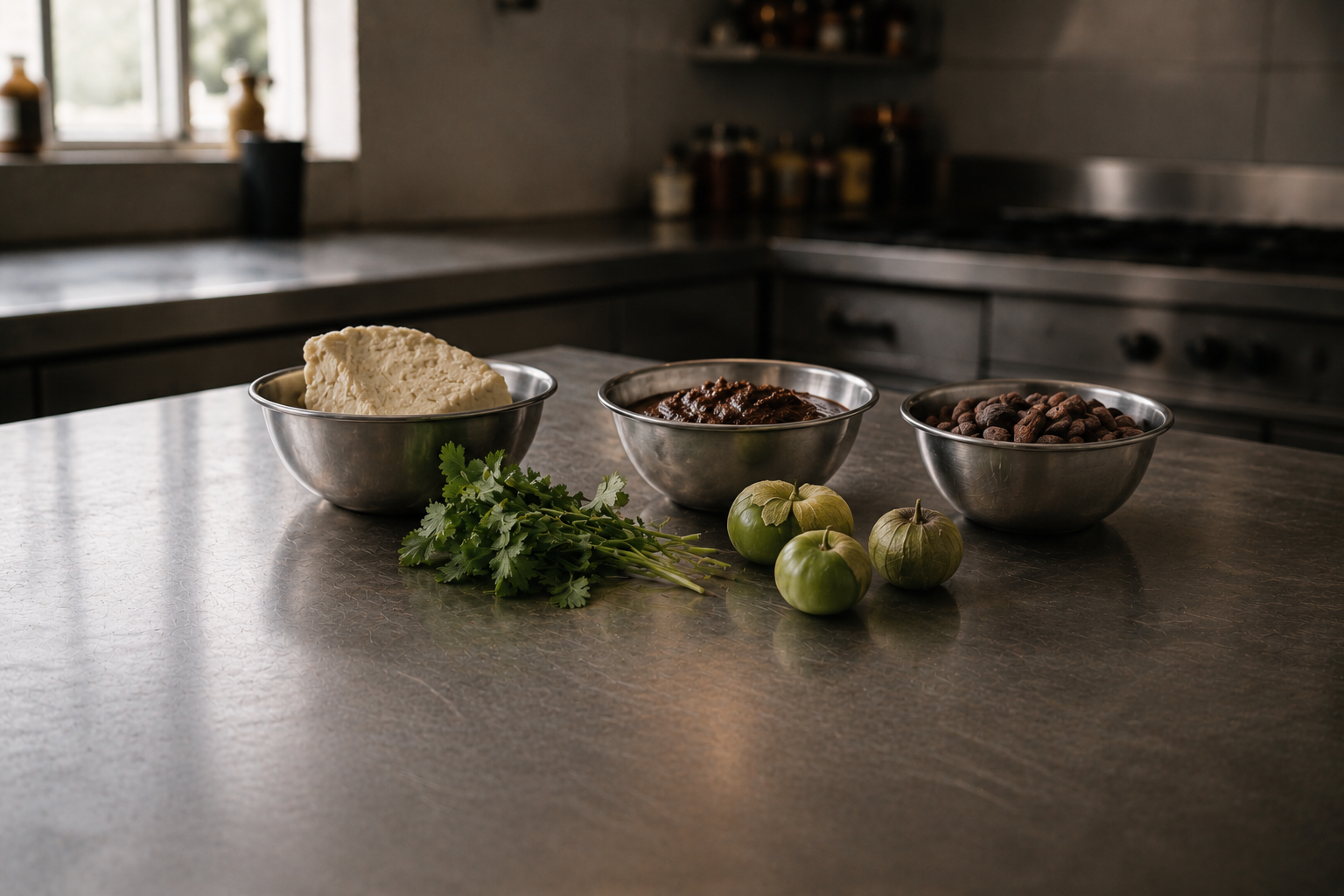
Mesoamerican cuisine is not built from ingredients alone. It is built from transformations: maize becomes masa, cacao becomes chocolate, agave becomes mezcal or pulque, tomatoes become chirmol, seeds become pepitoria, and chiles become sauces, pastes, moles, and recados.
This is one of the great culinary worlds of the Americas, shaped by Indigenous knowledge, regional agriculture, fire, fermentation, nixtamalization, grinding stones, wrapped cooking, sauces, seeds, herbs, and ceremonial foods. Its grammar is deep and alive. Corn, chile, cacao, agave, achiote, cilantro, pumpkin seeds, herbs, flowers, and fermented drinks do not appear as isolated ingredients; they form systems.
This article gathers 23 Mesoamerican culinary materials, preparations, and techniques, organized into clusters so we can begin to see patterns, possibilities, and relationships. The goal is not to define the region completely, but to offer a structured beginning for creative exploration.
Editorial note: Mesoamerican cuisine includes many peoples, regions, languages, and foodways across Mexico, Guatemala, Belize, El Salvador, Honduras, and surrounding cultural areas. This article is a selected introduction, not a complete map. Each term deserves deeper study in its own right.
Departure Points is a Materia series built around creative exploration. Each article gathers 23 known or traditionally used applications of an ingredient, technique, region, or culinary material, then organizes them into clusters so cooks can see patterns, possibilities, and relationships. Each point of departure is a catapult for further inquiry: a reference, a context, and a question to carry back into the kitchen. What does this material do? How has it been used before? What changes when we alter the medium, the technique, the temperature, or the cultural context? From there, the work begins.
Cluster I: Maize, Masa, and the Architecture of Corn
Maize is the structural center of Mesoamerican cooking. It is grain, dough, drink, wrapper, ritual material, and daily food. Through nixtamalization and grinding, corn becomes something more than a crop; it becomes a culinary system.
1. Maíz
Maíz, or corn, is the foundational grain of Mesoamerica. It appears as tortillas, tamales, atoles, tostadas, pozoles, masa preparations, drinks, and countless regional dishes. As a point of departure, maize teaches how one ingredient can become an entire culinary universe.
2. Masa
Masa is dough made from nixtamalized corn. It is used for tortillas, tamales, pupusas, gorditas, sopes, and many other preparations. It is not simply dough; it is transformed corn, structured through water, alkalinity, grinding, and pressure.
3. Nixtamalization
Nixtamalization is the process of cooking and soaking maize in an alkaline solution, traditionally limewater or ash water in some contexts. It improves nutrition, aroma, texture, and the ability of corn to form masa. This is one of the most important culinary transformations in world food history.
4. Elote
Elote, grilled or boiled corn served with lime, chile, cheese, cream, mayonnaise, or butter, shows maize in its most immediate and social form. It is street food, snack, and celebration, where sweetness, fat, acidity, heat, and texture meet directly.
Cluster II: Chiles, Color, Fire, and Aromatic Heat
Chiles are not only about spiciness. In Mesoamerican cooking, they bring color, smoke, fruitiness, bitterness, perfume, and structure. They can be fresh, dried, roasted, charred, soaked, ground, fermented, or blended into sauces.
5. Chile Poblano
Chile poblano is a mild, earthy chile often roasted, peeled, stuffed, or used in sauces. It is central to preparations like chiles rellenos and can also become a deep green or smoky base for stews, fillings, and roasted vegetable dishes.
6. Pique
Pique is a spicy vinegar-based sauce from Central America and the Caribbean-adjacent world, often infused with hot peppers, onions, garlic, and aromatics. It teaches how acidity and chile can become a bright, sharp finishing system.
7. Achiote
Achiote, from annatto seeds, brings vivid red-orange color and a subtle earthy flavor. It is often used in marinades, recados, rice, meats, stews, and wrapped preparations. Its strength lies in color, warmth, and its ability to bind citrus, spice, and fat.
8. Pibil
Pibil refers to a Yucatán cooking method involving marination, often with achiote and sour citrus, wrapping in banana leaves, and slow cooking, traditionally in an underground pit. It teaches how marinade, leaf, fire, and time can work as one system.
9. Cochinita Pibil
Cochinita pibil is a traditional Yucatán preparation of pork marinated with achiote and citrus, wrapped in banana leaves, and slow-cooked. It is one of the clearest examples of how pibil technique transforms meat into something fragrant, tender, acidic, and deeply colored.
Cluster III: Sauces, Pastes, and Ground Flavor Systems
Mesoamerican cuisine is rich in sauces that are not secondary additions, but central culinary architectures. Many are built through roasting, grinding, seed thickening, chile layering, and long cooking.
10. Mole
Mole is not one sauce, but a family of complex regional sauces built from chiles, seeds, nuts, spices, fruits, vegetables, herbs, and sometimes cacao or chocolate. Mole teaches layered construction: bitterness, sweetness, heat, acidity, fat, and time.
11. Recado
Recado refers to Guatemalan seasoning pastes or sauce bases, often built from toasted seeds, chiles, spices, tomatoes, tomatillos, or herbs. Each recado carries a distinct flavor profile and becomes the foundation for stews, meats, vegetables, or ceremonial dishes.
12. Pepitoria
Pepitoria is a Guatemalan sauce or condiment base often made with toasted pumpkin seeds, sesame seeds, tomatoes, and aromatics. It shows how seeds can thicken, enrich, and ground a preparation while adding nutty depth.
13. Chirmol
Chirmol is a Guatemalan sauce made with charred tomatoes, onions, cilantro, and sometimes chiles. It is direct, smoky, and fresh, showing how fire can transform simple vegetables into a sauce with depth and immediacy.
14. Jocón
Jocón is a Guatemalan green sauce often made with tomatillo or green tomato, cilantro, green chile, and thickening elements such as seeds or bread, depending on the version. It is commonly served with chicken, but its logic can extend to vegetables, beans, and grains.
Cluster IV: Plants, Herbs, Flowers, and Vegetal Complexity
This cluster reveals the botanical richness of the region. Leaves, flowers, squash, herbs, and fungi add aroma, acidity, bitterness, texture, and regional identity.
15. Epazote
Epazote is a pungent herb commonly used with beans, quesadillas, soups, and stews. Its flavor is resinous, herbal, and assertive. It teaches how a small amount of a strong herb can define the identity of a dish.
16. Loroco
Loroco is an edible flower bud used in Salvadoran and other Central American cuisines, especially in pupusas, cheeses, sauces, and fillings. Its flavor is floral, green, and lightly tangy, offering a delicate but unmistakable aromatic profile.
17. Chayote
Chayote is a green, pear-shaped squash used in salads, stews, soups, sautés, and roasted dishes. It is mild, crisp when raw, tender when cooked, and excellent at absorbing surrounding flavors.
18. Huitlacoche
Huitlacoche, the corn fungus prized in Mexican cuisine, has an earthy, smoky, mushroom-like flavor. It is used in quesadillas, soups, sauces, fillings, and contemporary preparations. It shows how a so-called imperfection can become delicacy.
Cluster V: Cacao, Agave, Fermentation, and Ritual Materials
Some Mesoamerican ingredients carry strong ceremonial, symbolic, and transformational weight. They become drinks, spirits, sweets, sauces, tonics, and cultural memory.
19. Cacao
Cacao is native to Mesoamerica and has long been used in drinks, ritual preparations, sauces, and later chocolate forms. Beyond sweetness, cacao brings bitterness, fat, fruitiness, tannin, and depth. It works with chile, maize, nuts, seeds, coffee, fruit, and smoke.
20. Agave
Agave is a succulent plant with many culinary and cultural uses. Its sap can become syrup, pulque, tequila, mezcal, or other regional products. Its leaves, fibers, and roasted hearts also connect it to broader systems of food, drink, and material culture.
21. Mezcal
Mezcal is a distilled spirit made from agave, with strong regional associations, especially Oaxaca, though produced in several Mexican states. Its flavor can be smoky, mineral, vegetal, floral, or earthy, depending on agave type, roasting, fermentation, and distillation.
22. Pulque
Pulque is a fermented beverage made from the sap of the maguey plant. It is lightly alcoholic, viscous, tangy, and historically significant. It shows how agave can become not only spirit, but living fermentation.
23. Amaranth
Amaranth is both grain and leafy vegetable, with deep significance in ancient Mesoamerican diets. It is rich in protein and can be popped, ground, cooked, used in sweets, or incorporated into contemporary grain preparations. It connects nutrition, ritual, and texture.
What Mesoamerican Ingredients Teach the Cook
Mesoamerican culinary materials teach us that ingredients are rarely isolated. Maize requires nixtamalization. Achiote often belongs to citrus and leaf wrapping. Seeds become sauces. Chiles become color, smoke, and depth. Cacao and agave move between ritual, drink, sauce, and sweetness.
Across these 23 departure points, several patterns emerge:
maize as structure and identity
nixtamalization as transformation
chiles as color, heat, smoke, and fruit
seeds as thickening and richness
sauces as culinary architecture
agave as fermentation and distillation
cacao as bitterness, fat, and depth
herbs, flowers, and fungi as regional identity
fire and wrapping as essential techniques
The creative lesson is clear: Mesoamerican cuisine offers one of the world’s most sophisticated systems of transformation. It teaches how to build flavor from earth, fire, maize, seed, chile, leaf, and time.
Creative Exploration Prompt
Choose one material from each cluster and design a small preparation around transformation.
For example:
masa + achiote + hoja-style wrapping
cacao + chile + seed thickening
chayote + chirmol + pepitoria
mezcal + citrus + roasted chile
amaranth + agave + cacao
Ask yourself:
What is the base material?
What is being transformed?
What gives color?
What gives structure?
What carries memory or regional identity?
Document how the preparation changes when you alter heat, grinding, acidity, fermentation, or texture.
From there, the work begins.