Corn — Masa, Memory, and the Culinary Foundation of Latin America
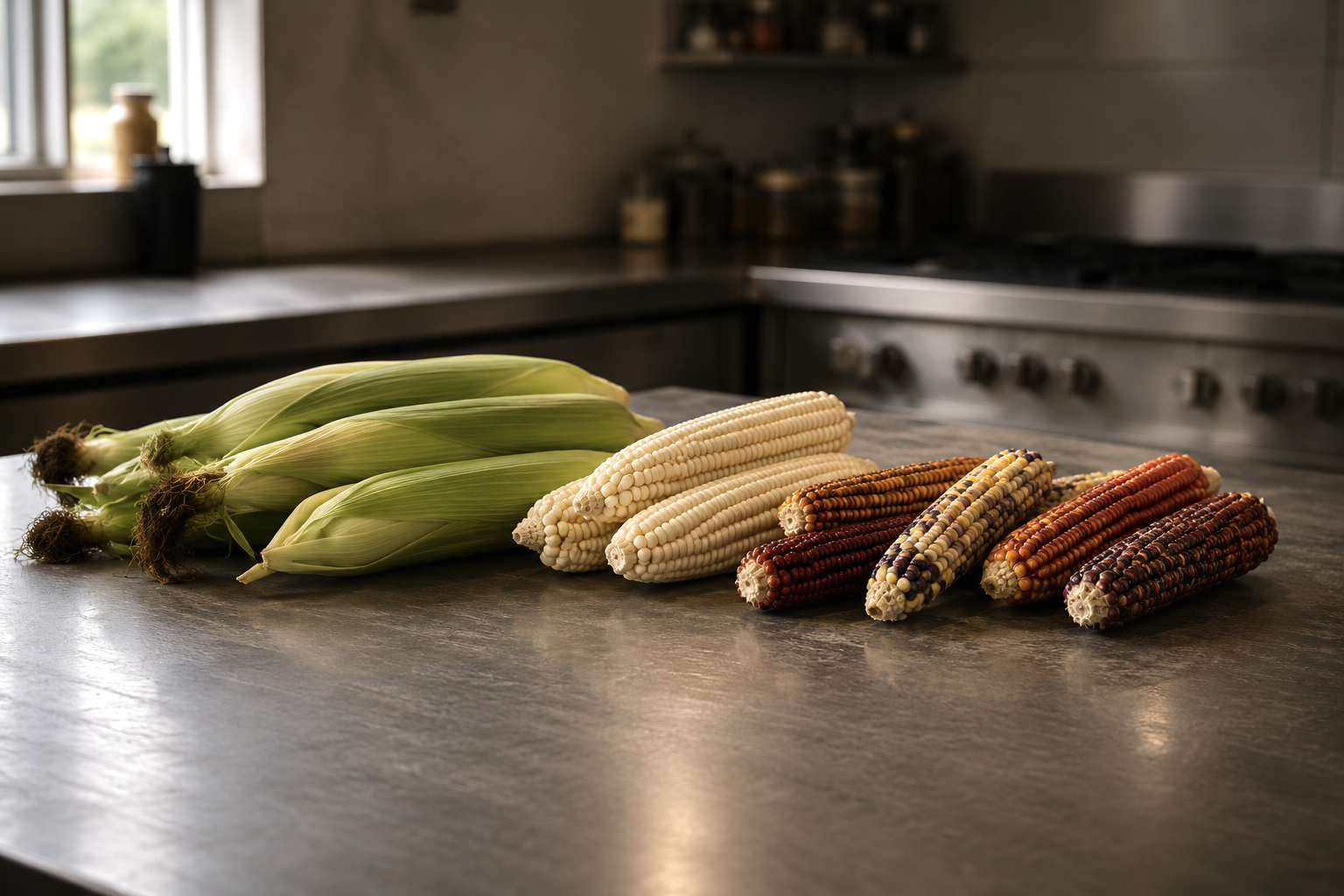
Corn is more than an ingredient in Latin America. It is a historical narrative of origin, a daily material, and one of the great foundations of culinary imagination. Born from the Mesoamerican corridor and later expanded across the American continent, corn became one of the most adaptable ingredients in the world. It traveled north, south, east, and west; across mountains, coasts, river systems, valleys, and eventually oceans.
In Latin America, corn does not remain on the side of the plate. It takes central stage. It becomes masa, tortilla, tamal, arepa, pupusa, humita, dough, garnish, porridge, atole, chicha, drink, fermentation base, and ceremonial substance. It feeds daily life and ritual life alike. It gives structure to meals, but also to memory, agriculture, technique, and identity.
Corn is now global. It appears in porridges, breads, snacks, syrups, distillates, animal feed, industrial products, and countless regional dishes far beyond the Americas. But this Materia study begins with Latin America, where corn holds a particularly deep culinary gravity. Mesoamerica gives us the foundational logic of nixtamalization, masa, tortillas, tamales, and atoles; Central America extends corn into daily sustenance; Colombia and Venezuela transform it into breads of comfort; the Peruvian Andes reveal extraordinary biodiversity through large-kernel, purple, toasted, and fermented corns.
To understand Latin American cuisine without considering corn is impossible. But to understand corn through one regional lens alone is incomplete. This article is an introduction, a point of departure. Later studies can go deeper into masa, corn-based drinks, nixtamalization, and regional preparations. Here, we begin by looking at corn as material, system, and possibility.
What Corn Is — Grain, Seed, System
Corn is often called a grain, but in cooking it behaves as more than one thing. It can be eaten fresh, dried, ground, soaked, cooked, fermented, toasted, steamed, roasted, or transformed into dough. It can become soft, crisp, chewy, creamy, brittle, or drinkable.
Its versatility comes from its ability to move between states:
fresh corn, sweet, juicy, and vegetal
dried corn, stable, starchy, and ready for transformation
nixtamalized corn, activated through alkaline cooking
masa, corn dough shaped into countless forms
corn flour or meal, used in breads, batters, porridges, and coatings
toasted corn, used as garnish, snack, or texture
fermented corn, used in drinks, porridges, and ceremonial preparations
This is why corn is not simply a raw ingredient. It is a system of transformation.
Why Corn Matters — Function Before Form
Corn matters because it can become many things without losing its identity. It can be a base, a vessel, a thickener, a dough, a drink, a garnish, or a fermentation medium.
In the kitchen, corn can function as:
structure, in tortillas, arepas, tamales, pupusas, and breads
body, in porridges, atoles, soups, and stews
texture, through toasted kernels, fried masa, cornmeal, or crisp tortillas
sweetness, in fresh corn, desserts, and drinks
fermentation base, in chichas and regional beverages
ceremonial material, in dishes tied to ritual, season, and gathering
Corn teaches one of the central ideas of Materia: creativity does not always come from adding more ingredients. Sometimes it comes from understanding how one ingredient can be manipulated through technique.
Maize as a System in Mesoamerican Cuisine
In Mesoamerica, corn is not one ingredient among many. It is the condition that makes the cuisine possible. Before it is eaten, it is transformed; before it is transformed, it is understood. Corn here is not treated as neutral raw matter. It requires intervention, patience, and knowledge. The result is not only nourishment, but structure: culinary, social, and symbolic. To speak of maize in Mesoamerica is to speak of process.
Nixtamalization — The First Transformation
At the heart of the Mesoamerican maize system lies nixtamalization: the cooking of dried corn in water with an alkaline agent, traditionally lime or ash, followed by resting, washing, and grinding.
This process does several things at once:
improves digestibility
changes aroma and flavor
unlocks nutritional potential
alters texture
transforms corn into masa
Nixtamalization is not seasoning. It is activation.
Without it, maize cannot fully enter the Mesoamerican culinary system. Once nixtamalized, corn carries the memory of fire, water, minerals, and time. Masa is not flour; it is a preparation.
From Masa to Multiplicity
Once masa exists, an entire universe unfolds. The same dough becomes tortillas, tamales, tlacoyos, sopes, pupusas, gorditas, atoles, and countless regional forms.
Thickness, hydration, grind, resting time, and cooking method alter identity without altering essence. A tortilla and a tamal may begin from the same material, but one meets the dry heat of the comal while the other enters steam. One becomes flexible and direct; the other becomes soft, wrapped, and slow.
This reveals something essential: much of corn’s culinary power comes from variation through technique.
Corn is shaped, wrapped, steamed, toasted, fried, dried, fermented, and rested. Each action produces a new expression while remaining inside the same system.
Corn Beyond Masa — Drinks, Ferments, and Daily Life
Across Latin America, corn-based drinks occupy an important place in daily and ceremonial life. In Mesoamerica, atoles and other corn drinks show how masa, water, heat, and seasoning can become nourishment in liquid form. In Mexico and Central America, fermented corn drinks appear in different regional expressions. In the Andes, drinks such as chicha, including forms made from purple corn, reveal another dimension of corn as color, fermentation, celebration, and memory.
This article does not attempt to cover corn drinks in depth. That deserves its own study. But they must be mentioned here because they reveal something important: corn is not limited to dough, bread, or grain. It can become liquid structure. It can be sipped, fermented, sweetened, spiced, and shared.
Corn Across Latin America — One Ingredient, Many Identities
Although corn was born in Mesoamerica, it became a Latin American foundation.
In Mexico and Central America, it anchors tortillas, tamales, atoles, pupusas, tostadas, and daily meals. In Colombia and Venezuela, it becomes arepas, envueltos, bollos, and comfort breads. In the Andes, corn enters a world of biodiversity: cancha, choclo, mote, purple corn, chicha, and regional stews. In Brazil and the Caribbean, corn often coexists with cassava, rice, beans, plantains, and tropical ingredients, appearing in porridges, cakes, street foods, and festive preparations.
Each region asks something different from corn. Some value elasticity. Others value sweetness, chew, size, color, aroma, or fermentation potential. Corn adapts without becoming anonymous.
Stone, Hand, Heat
The corn system is inseparable from its tools.
Stone metates grind grain slowly, preserving oils, texture, and rhythm. Hands read dough through pressure and warmth. Heat is applied with intention: direct flame, comal contact, steam, boiling water, embers, or frying oil.
Each method creates a different relationship between inside and outside, between softness and structure. These tools are not primitive alternatives to modern equipment. They are precision instruments refined over centuries for a specific material.
Even when adapted to contemporary kitchens, the logic remains: corn must be worked, not forced.
Corn and Time
Corn does not rush.
Dough rests. Tamales steam slowly. Tortillas cook quickly but demand attention. Masa changes character within hours. Leftovers become something else the next day.
Time is not an inconvenience in this system. It is part of the recipe.
This temporal intelligence teaches that flavor does not always come from addition. It often comes from waiting, from allowing transformation to complete itself.
Creative Expansion — Experimenting With Corn
Corn is powerful because it offers structure and neutrality at the same time. It can carry tradition, but it can also receive new flavors with remarkable flexibility.
Try:
miso masa for dumplings, tamales, or savory pancakes
corn tortillas with seaweed salt for mineral depth
black garlic esquites with lime and chile
arepas with Mediterranean herb oil
corn porridge with coconut, ginger, and sesame
tostadas with mushroom “bacon” and fermented chile sauce
purple corn syrup for cocktails, sodas, or desserts
cornmeal crusts for fish, tofu, or vegetables
Corn offers one of the clearest examples of fusion through understanding, not addition. When you understand its structure, you can translate it without losing its dignity.
Closing Reflection
In Mesoamerican worldviews, humans are made of maize. This is not only a mythic image; it reflects lived reality. Corn sustains bodies daily. It structures agriculture, labor, ritual, and memory. Across Latin America, corn continues to carry this gravity. It feeds the everyday and the ceremonial. It becomes dough, drink, bread, porridge, garnish, and offering.
To cook with corn is to enter a long conversation between land, hand, time, and technique. It is one of the clearest reminders that an ingredient can be more than material. It can be a culture, a system, and a way of understanding the kitchen.