Rice — Texture, Culture, and Culinary Foundations in Asian Cuisine
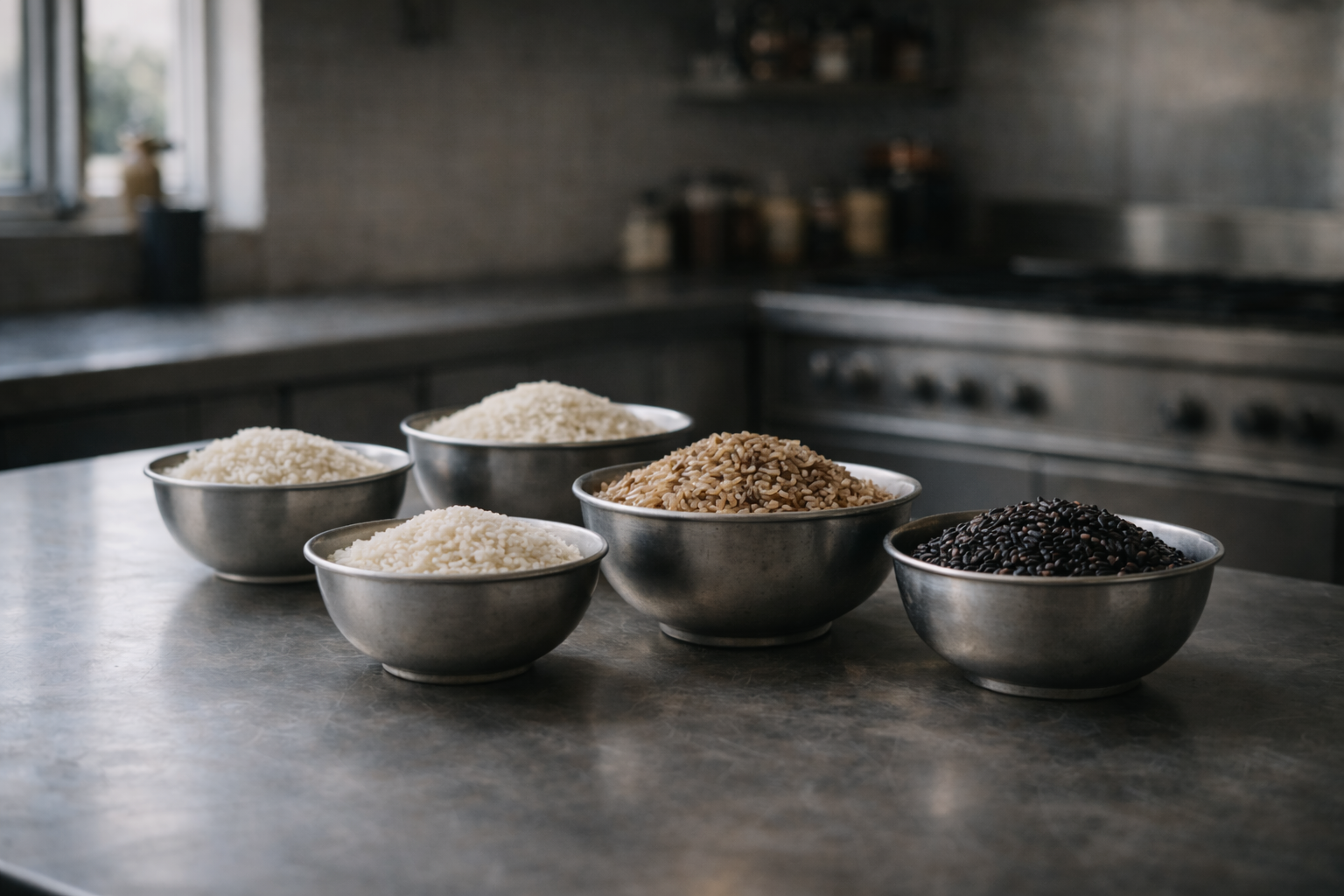
Rice is one of the most ordinary and most extraordinary ingredients in the Asian kitchen. It is a daily presence, a symbol of nourishment, a vessel for flavor, and a canvas for innovation. While often described as a staple, that word barely captures its significance. Rice is memory, ceremony, survival, and creativity, it is an ingredient that adapts and transforms across cultures and generations.
As a global ingredient, rice is also woven into culinary traditions far beyond Asia. From the saffron-infused rice dishes of Spain to the slow-stirred risottos of Italy, from the fragrant basmati preparations of the Middle East and the Indian subcontinent to the everyday plates of Latin America and the Caribbean, rice has traveled, adapted, and rooted itself deeply across cultures. In many of these cuisines, it is not an import but an identity element, central to daily meals, celebrations, and collective memory.
This brief study, however, focuses on the Asian context, where rice has shaped entire culinary systems over centuries. It is here that its diversity of forms, techniques, and meanings reaches an extraordinary level of detail and refinement. By beginning our survey in this region, we gain a clearer understanding of rice origins as both ingredient and structural component in dishes, knowledge that can then travel outward, much like rice itself has done across the world.
In this survey we look beyond the humble, yet exquisite bowl of steamed rice. We explore its many lives: grain, flour, noodle, porridge, paste, paper, and drink. We follow how it is cooked, fermented, steamed, soaked, wrapped, and brewed, and how it shifts identity across regions. Sticky in Laos and Northeastern Thailand, sweet and black-hued in Vietnam, pearly and polished in Japan, toasted and savory in Indonesia, fermented and spiced in Korea.
Each region carries its own language of rice; expectations of texture, method, and meaning. In some places, rice is eaten with the hands; in others, it is treated with ritual care. It feeds, it binds, and it balances. In plant-based cooking, rice becomes a generous foundation, grounding curries, absorbing broths, supporting vegetables, and inviting contrast.
Rice is also remarkably versatile. It becomes noodles, dumpling wrappers, pancakes, fermented pastes, vinegars, and wines. It can be chewy, crisp, fluffy, or soupy. It can be steamed, stir-fried, or fermented. Like the most essential ingredients, it holds both tradition and reinvention. Whether it is the base of a bowl, the wrapper of a dumpling, or the body of a broth, rice is never just rice.
The Many Lives of Rice: Beyond the Grain
Rice extends far beyond the grain itself. Across Asia, it is transformed into structures, textures, and formats that redefine its role in the kitchen. These variations are not secondary uses; they are essential expressions of how rice adapts to culture, climate, and culinary need.
Rice as Noodles & Wrappers
Rice Vermicelli (bun, bihon, bee hoon) – Thin, often soaked and stir-fried or served cold with herbs (Vietnam, Philippines, Singapore).
Flat Rice Noodles (banh pho, kway teow) – Wide and chewy, used in soups or stir-fries like pad see ew.
Rice Paper (banh trang) – Translucent sheets for wrapping spring rolls (goi cuon), softened in water and used fresh.
Rice Sheets (cheung fun) – Soft steamed sheets for dim sum, often rolled around savory fillings (Cantonese).
Rice as Cakes, Dumplings, & Binders
Ketupat / Lontong – Compressed rice cakes boiled in woven palm leaves, sliced into curries or served with sauces.
Tteok (Korea) – Pounded sticky rice cakes in sweet or savory forms.
Bánh Chưng / Bánh Tét (Vietnam) – Stuffed sticky rice cakes wrapped in banana leaves and steamed for celebrations.
Fermented rice cakes (tapai, bubod) – Sweet, lightly alcoholic preparations often linked to festive traditions.
Rice as Flour & Batter
Rice Flour – Used for pancakes, dumpling wrappers, and steamed preparations.
Ground Toasted Rice (khao khua) – Adds texture and aroma to salads such as larb.
Mixed Batters – Combined with coconut milk and spices for regional snacks and street foods.
Rice as Drink & Ferment
Sake (Japan) – Brewed from polished rice; clean, floral, and refined.
Makgeolli (Korea) – Unfiltered rice wine; lightly sweet, tangy, and textured.
Tapai (Indonesia, Malaysia) – Fermented rice with gentle sweetness and aromatic depth.
Rice Vinegar (China, Korea, Japan) – Brewed from rice wine or lees, essential for balance and acidity.
Cooking Rice — Understanding the Grain
Cooking rice is deceptively simple. Its success depends on understanding the grain itself—its starch content, structure, and intended use. Each variety carries its own logic for washing, soaking, water ratio, and cooking method. This guide offers a practical framework, while encouraging you to follow the grain’s purpose rather than a fixed formula.
Know Your Rice Type First
Each rice variety differs in starch content, length, and culinary function. Understanding this is the first step toward better results. When in doubt, consult the source—heritage varieties can vary widely. This is not about making rice “perfect,” but about making the right rice for the right moment.
Washing: Do You Really Need To?
Washing influences both texture and clarity. It removes excess surface starch that can lead to gumminess or cloudiness.
Wash until the water runs mostly clear
Avoid over-washing aromatic rice like jasmine, where surface oils contribute to flavor
Soaking: When and Why
Soaking prepares the grain for more even cooking and improved texture.
Sticky rice requires soaking before steaming
Brown and red rice benefit from soaking for tenderness
Short-grain rice may be soaked briefly for more even results
Water Ratios Matter
Water defines the final texture of rice. It determines whether grains remain separate, soft, or integrated into a dish.
More water creates softer, more cohesive rice
Less water produces drier, more distinct grains
Always allow rice to rest after cooking (about 10 minutes, covered) to stabilize texture
Cooking Methods: Steaming, Boiling, and Beyond
Different methods produce fundamentally different results.
Steaming is essential for sticky rice and layered preparations
Boiling and draining works well for basmati or large-batch cooking
Congee or porridge uses excess water and slow cooking for creaminess
Each method should match the intended dish and texture.
Use the Right Vessel
The cooking vessel shapes heat distribution and final texture.
Heavy-bottomed pots provide even cooking
Steamers are essential for sticky rice and structured dishes
Clay pots enhance flavor and heat retention
Non-stick pots can simplify handling, especially for beginners
Let Texture Guide the Dish
Rice should always respond to what surrounds it.
Fluffy and absorbent for curries
Separate and dry for stir-fries
Soft and integrated for broths or porridge
The goal is not perfection in isolation, but harmony within the dish.
Rice teaches patience and attention. It reminds us that even the most familiar ingredient carries depth, variation, and meaning. When approached with care, it becomes more than a base—it becomes the structure that allows everything else to come into balance.