The Brush
The Instrument of Even Application
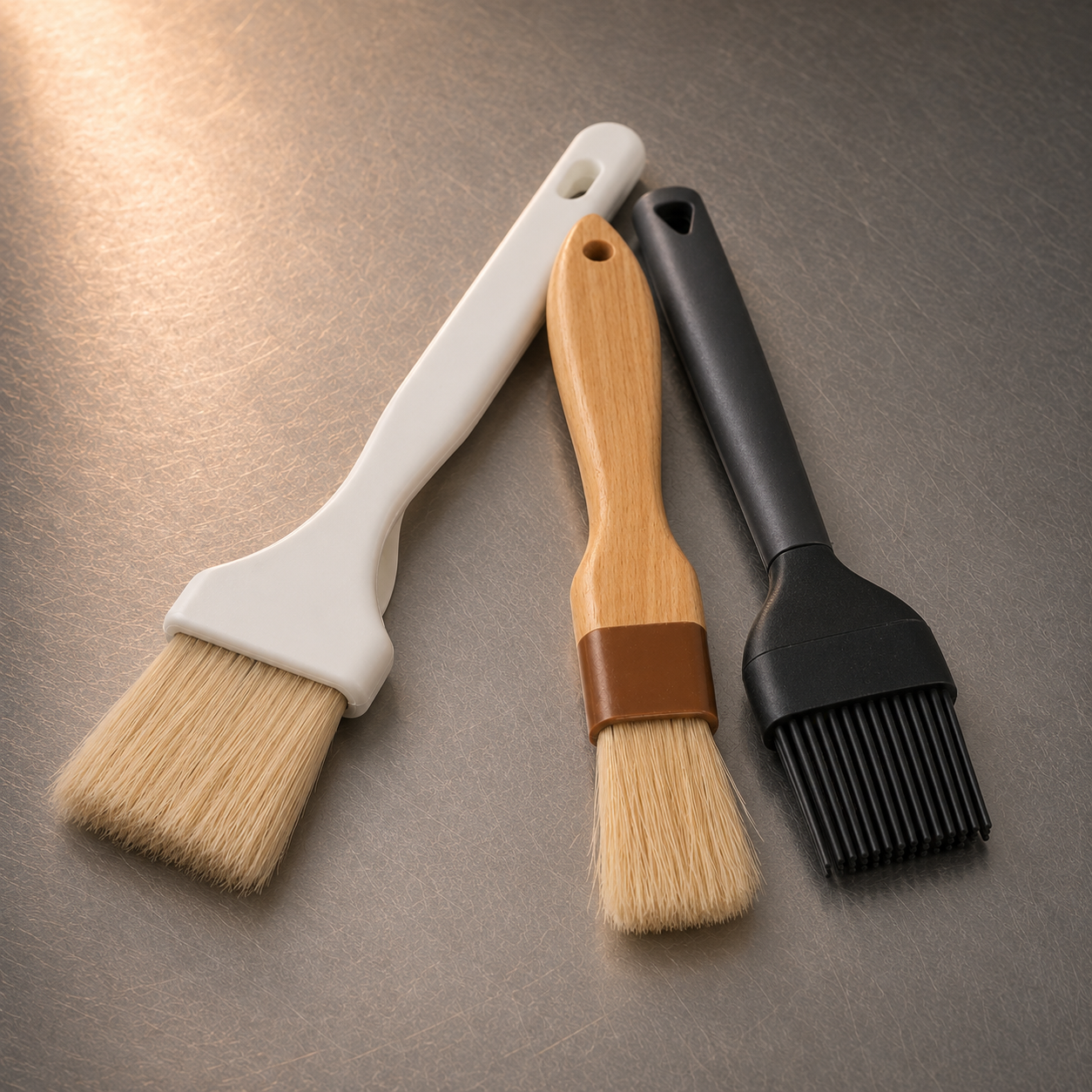
The brush is one of the most overlooked instruments in the kitchen. It appears simple: a handle, a set of bristles, a surface to coat. Yet its function is delicate and precise. A brush allows the cook to apply something without pouring it, spooning it, or submerging the ingredient.
Butter on bread. Egg wash on pastry. Oil on vegetables. Glaze on roasted meat. A thin line of sauce on a plate. In each case, the brush controls contact. It delivers just enough liquid to affect the surface without overwhelming the ingredient. This makes it an instrument of application, but also of restraint. The question is never simply: Which brush is best? The better question is: Best for brushing what?
Function
The brush applies liquids and semi-liquids to surfaces.
Typical uses include:
• brushing egg wash onto pastry
• applying melted butter to bread or dough
• basting meats during cooking
• glazing roasted vegetables or proteins
• applying infused oils before plating
• painting sauces onto plates
• cleaning equipment, grills, or textured surfaces
The brush is useful whenever the cook needs a thin, even, and controlled layer.
Unlike a spoon, which deposits liquid in a specific place, the brush distributes it across a surface. Unlike pouring, brushing allows precision and moderation.
Geometry
The performance of a brush depends on the shape, density, and flexibility of its bristles.
Pastry Brush
Pastry brushes are designed for delicate applications such as egg wash, melted butter, cream, or syrup.
They often have soft bristles that can spread liquid evenly without damaging dough or pastry surfaces.
Basting Brush
Basting brushes are designed for applying liquids during cooking.
They may be larger and more heat resistant, allowing the cook to apply marinades, fats, or glazes quickly before the oven or grill loses too much heat.
Silicone Brush
Silicone brushes are heat resistant and easy to clean.
They are useful for hot applications, especially when brushing oils, sauces, or glazes onto ingredients during cooking.
However, they do not always hold thin liquids as well as natural or nylon bristles.
Plating Brush
Small plating brushes are closer to painter’s brushes.
They are used for visual application: painting sauces, oils, purées, or reductions onto plates with controlled strokes.
Here the brush becomes not only functional but compositional.
Cleaning Brush
Some brushes are not for food application at all.
They are used to clean equipment, remove residue, scrub surfaces, or maintain tools. These must be clearly separated from food-use brushes.
Materials
Brush materials determine heat tolerance, cleaning behavior, and liquid retention.
Natural Bristles
Natural bristles can hold liquids well and are useful for delicate applications.
They can be excellent for pastry work, but they require careful cleaning because residue can remain trapped between the bristles.
Nylon Bristles
Nylon brushes are common and versatile.
They can work well for room-temperature or moderately warm applications, but they may deform or melt under high heat.
Silicone Bristles
Silicone brushes tolerate heat better and are easier to clean.
They are often useful for basting hot foods or applying glazes near the end of cooking. Their limitation is that they may not carry thin liquids as evenly as finer bristles.
Handles and Metal Components
Handles may be wood, plastic, or metal.
If a brush includes metal components, they should be corrosion resistant. Rust, loose parts, or degraded joints can contaminate food or make the tool unsafe.
Ergonomics
A good brush must suit the movement required.
Width
A wider brush covers more surface quickly, useful for bread, pastry sheets, or large cuts of meat.
A narrow brush allows precision when glazing smaller items or working on plates.
Bristle Density
Dense bristles hold more liquid but can be harder to clean.
Loose or widely spaced bristles may clean more easily but may not apply coatings evenly.
Heat Resistance
For high-temperature basting, heat resistance matters.
A brush used near ovens, grills, or hot pans must tolerate heat without melting, burning, or deforming.
Control
Plating brushes require fine control. The handle should feel stable, and the bristles should respond predictably to pressure.
Choosing the Tool
The correct brush depends entirely on the task.
For pastry work, choose a soft brush that applies egg wash or butter gently and evenly.
For hot basting, choose a heat-resistant brush that can tolerate contact with hot surfaces, sauces, or oils.
For plating, choose a small brush with predictable bristle movement.
For cleaning, use a dedicated brush that is never confused with brushes used for food.
In professional kitchens, brushes should be clearly separated by function. A brush used for garlic oil, meat glaze, pastry egg wash, and cleaning should not be the same brush.
The tool must match the job.
Hygiene and Organization
Brushes require particular attention because they can trap residue between bristles.
Fats, sauces, egg wash, marinades, and sugars can remain hidden inside the brush even after a quick rinse. If not cleaned properly, the brush becomes a contamination risk.
Good kitchen practice requires:
• washing brushes thoroughly after use
• drying them properly
• separating food-use brushes from cleaning brushes
• replacing brushes when bristles deform, burn, loosen, or retain odor
• labeling brushes when they are assigned to specific preparations
A brush that smells like old garlic oil, burnt sauce, or stale egg wash has already failed its purpose.
In a professional kitchen, brushes must have a place, a task, and a cleaning protocol.
Common Misconceptions
One common misconception is that any brush can be used for any liquid. In reality, different liquids require different brush structures. Thin oils, thick glazes, egg washes, melted butter, sauces, and reductions do not behave the same way.
Another misconception is that silicone brushes are always better because they are easier to clean. They are excellent for certain applications, especially heat, but they may not hold or distribute fine liquids as delicately as bristle brushes.
A final mistake is using food brushes and cleaning brushes interchangeably. This should never happen. A cleaning brush belongs to maintenance, not food application.
Closing Reflection
The brush is a small instrument of control. It allows the cook to apply flavor, moisture, shine, color, or finish in a thin and deliberate layer. It can make pastry golden, bread glossy, fish aromatic, meat glazed, or a plate visually composed.
But because it touches surfaces so directly, it also demands care. A good brush is not simply one that applies well. It must also clean well, resist damage, and belong clearly to its task. Used properly, the brush becomes an instrument of finishing: the final contact between preparation and surface.