Oils — Flavor Carriers, Heat Mediums, and the Culinary Grammar of Fat
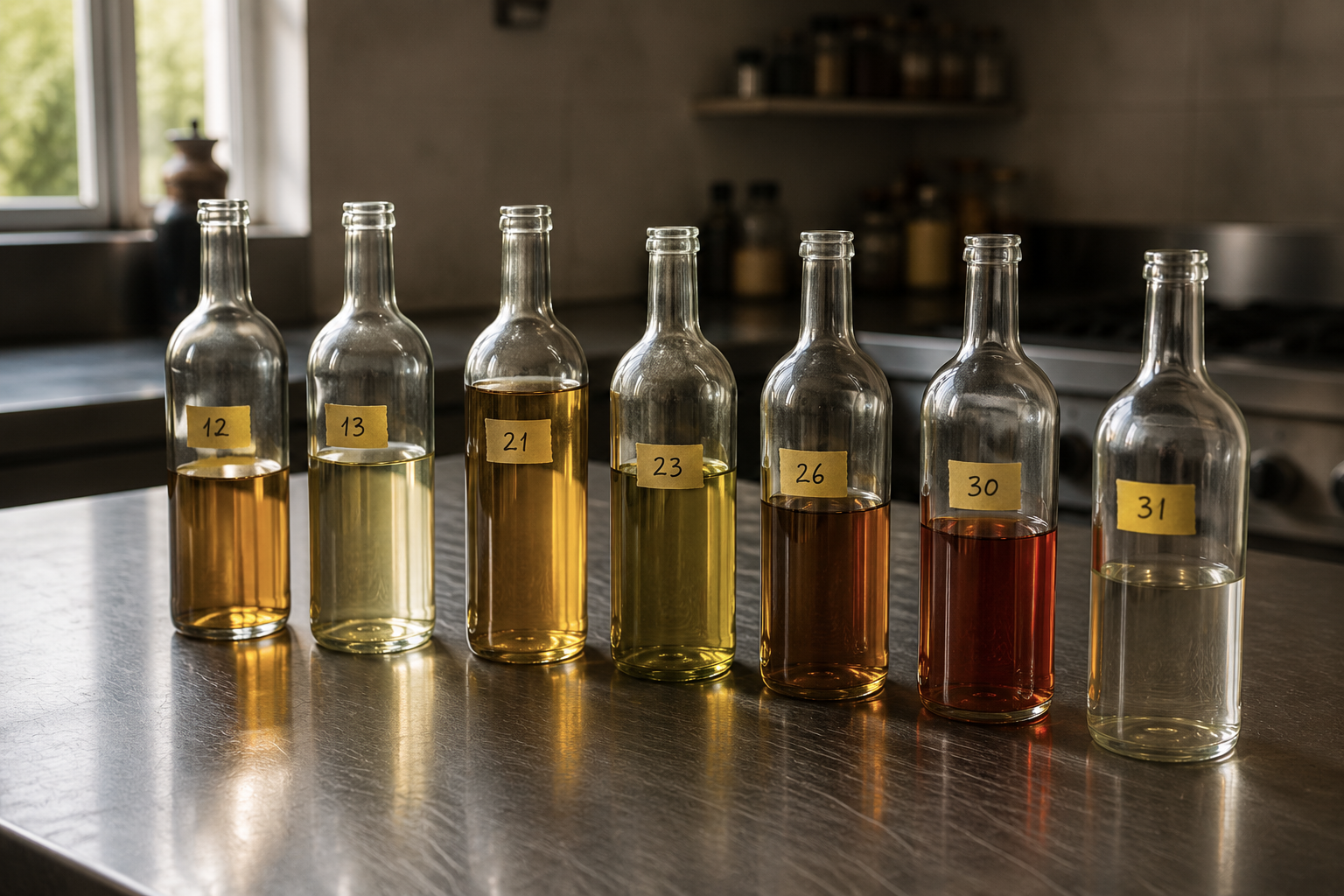
Oil is one of the most powerful materials in the kitchen because it does more than lubricate a pan. It carries aroma, transfers heat, builds emulsions, preserves ingredients, creates texture, and becomes a vehicle for flavor.
A neutral oil can become the silent structure behind a fried preparation. A nut oil can finish a dish with perfume. A seed oil can bring toasted bitterness or earthy depth. An infused oil can carry herbs, citrus peel, chiles, spices, garlic, smoke, flowers, truffles, seaweed, or black garlic into a sauce, dressing, broth, or condiment.
To understand oils is to understand how flavor moves through fat. Not every oil behaves the same way. Some are built for high heat. Others are delicate finishing oils. Some are almost neutral; others are so aromatic that a few drops can define a dish. Some are affordable workhorses; others belong in small bottles, protected from light, oxygen, and heat.
This Materia study looks at oils as culinary materials: where they come from, how they behave, how to choose them, how to store them, and how to use them with intention.
What Oils Are — Extracted Fat, Source, and Process
Culinary oils are fats extracted from plant or animal sources. In this article, we focus primarily on plant-based oils: oils from seeds, nuts, grains, fruits, and kernels.
They may come from:
grapes seeds
sunflower seeds
sesame seeds
peanuts
walnuts
almonds
hazelnuts
coconuts
avocados
rice bran
corn germ
flaxseed
pumpkin seeds
argan nuts
mustard seeds
rapeseed / canola
safflower seeds
The source matters, but so does the process. Oils may be cold-pressed, expeller-pressed, refined, filtered, toasted, blended, deodorized, or chemically extracted. Each method affects flavor, stability, color, aroma, nutritional profile, and cooking behavior. A cold-pressed walnut oil and a refined frying oil are not simply different oils. They have different capabilities, hence their purposes.
Why Oils Matter — Function Before Flavor
Oil matters because it performs several jobs in the kitchen.
It can act as:
a heat medium, transferring energy during frying, sautéing, roasting, or grilling
a flavor carrier, holding fat-soluble aromas from herbs, spices, chiles, garlic, citrus, and flowers
an emulsion builder, forming dressings, mayonnaise, aioli, vinaigrettes, lactonese, sauces, and creamy textures
a preservative medium, protecting ingredients from air when handled correctly
a texture transformer, crisping food through frying or softening it through slow cooking
a finishing ingredient, adding aroma, sheen, and richness
a cultural signature, as with olive oil in the Mediterranean, sesame oil in East Asia, coconut oil in tropical cuisines, mustard oil in South Asia, or argan oil in Morocco
Oil is not background. It is often the invisible architecture of the dish.
The Main Families of Culinary Oils
Neutral Oils — Clean Function and Technical Flexibility
Neutral oils are used when the oil should perform without becoming the main flavor. They are often chosen for frying, sautéing, emulsifying, and general cooking.
Examples include:
grapeseed oil
canola oil
sunflower oil
safflower oil
refined peanut oil
rice bran oil
refined corn oil
Best uses:
frying
mayonnaise
lactonese
neutral dressings
sautéing
infusions where the added ingredient should dominate
preparations where oil flavor should stay quiet
Materia note:
Neutral does not mean unimportant. Sometimes the best oil is the one that gives structure without speaking too loudly.
Aromatic Oils — Flavor as Identity
Aromatic oils carry strong character. They should be used deliberately, often in smaller amounts.
Examples include:
extra virgin olive oil
toasted sesame oil
walnut oil
hazelnut oil
pumpkin seed oil
argan oil
mustard oil
coconut oil
avocado oil, depending on refinement
chile oil
herb oils
Best uses:
finishing
dressings
sauces
dipping
drizzling over soups or vegetables
aromatic emulsions
small accents in fusion dishes
Materia note:
An aromatic oil should be paired like an ingredient, not treated as a generic fat.
Seed Oils — Structure, Heat, and Range
Seed oils are broad and diverse. Some are neutral and heat-stable; others are delicate and expressive.
Examples include:
sunflower
sesame
flaxseed
pumpkin seed
mustard seed
grapeseed
safflower
Sesame oil alone shows the spectrum: untoasted sesame oil can be mild and functional, while toasted sesame oil is deep, roasted, and intensely aromatic.
Best uses:
frying, depending on refinement
dressings
finishing
marinades
emulsions
sauces
seasoning blends
Materia note:
Always distinguish between refined and unrefined seed oils. Their behavior can be completely different.
Nut Oils — Delicate Aroma and Finishing Power
Nut oils often carry strong aroma and fragile flavor. Many are best used cold or gently warmed.
Examples include:
walnut oil
almond oil
hazelnut oil
macadamia oil
peanut oil
argan oil
Best uses:
finishing salads
desserts
cold sauces
vinaigrettes
delicate dressings
nut-forward emulsions
finishing grilled fruit, vegetables, or cheese
Materia note:
Nut oils can oxidize quickly. Buy small bottles, protect them carefully, and use them while fresh.
Fruit Oils — Flesh, Seed, and Culinary Identity
Some important oils come from fruit rather than seeds or nuts.
Examples include:
olive oil
avocado oil
coconut oil
These oils often carry strong culinary identities. Olive oil is central to Mediterranean cuisine. Coconut oil is deeply connected to tropical cooking. Avocado oil is valued for its mildness, richness, and heat tolerance when refined.
Best uses:
sautéing
finishing
dressings
baking
frying, depending on refinement
tropical sauces
Mediterranean preparations
creamy textures
Materia note:
Fruit oils can feel more “culinary” because they often carry the identity of the fruit itself. But refinement changes that identity.
How Oils Transform Food
Infusion — Capturing Aroma in Fat
Many aromas dissolve beautifully into oil. Herbs, spices, garlic, citrus peel, chiles, flowers, tea, truffles, mushrooms, and seeds can all transfer part of their character into fat.
Infusion can be:
cold, slow and delicate
warm, controlled and aromatic
hot, fast and more intense
Examples:
star anise grapeseed oil
rosemary olive oil
chile sesame oil
garlic confit oil
lemon peel oil
black garlic oil
truffle oil
smoked paprika oil
Materia note:
The oil should support the ingredient being infused. A strong oil can compete with a delicate aroma.
Frying — Oil as Texture Transformer
Frying changes food by using oil as a heat-transfer medium. Water evaporates, surfaces crisp, starches harden, proteins firm, and sugars brown.
Different oils matter here because heat tolerance, flavor, cost, and stability affect the result.
Best oil qualities for frying:
stable at high heat
neutral or appropriate flavor
clean aroma
low tendency to smoke or degrade quickly
cost appropriate to volume
Materia note:
Frying is not only about heat. It is about oil management, temperature control, filtration, and knowing when an oil has degraded.
Emulsions — When Oil Becomes Structure
Oil can combine with water-based ingredients through agitation and emulsifiers. This creates sauces and textures that feel creamy, stable, or glossy.
Examples include:
vinaigrette
mayonnaise
aioli
lactonese
tahini dressing
herb emulsions
yogurt-oil sauces
miso-oil dressings
A neutral oil allows other flavors to dominate. An aromatic oil gives identity. A blend can offer balance.
Materia note:
When making emulsions, choose the oil according to both flavor and texture. A heavy oil can make a sauce feel dense; a light oil can make it cleaner.
Preserving — Oil as Protection and Carrier
Oil can slow exposure to air and help preserve certain ingredients when used properly. It also carries the flavor of what it surrounds.
Examples include:
confit garlic
marinated vegetables
oil-packed dried tomatoes
herb oils
chile oils
preserved artichokes
olives in oil
cheese or plant-based cheese in oil
Safety note:
Oil-preserved foods, especially those involving fresh garlic, herbs, or vegetables, require careful handling. Moist ingredients stored in oil can create food safety risks if held improperly. Refrigeration, cleanliness, acidity, and time control matter.
Materia note:
Oil preservation is not simply “put it in oil.” It is a technique that requires safety awareness.
Finishing — Oil as Final Aroma
A finishing oil is added at the end, where its aroma and texture remain present.
Best uses:
soups
grilled vegetables
tomatoes
pasta
beans
fish
grain bowls
flatbreads
desserts
cocktails, in very small aromatic applications
Materia note:
A finishing oil should be visible in the final experience. If its character disappears, use a simpler oil.
Choosing Oil With Intention
A useful way to choose oil is by asking what the oil must do.
For Frying
Choose stability, heat tolerance, neutral flavor, and reasonable cost.
For Dressing
Choose flavor, mouthfeel, acidity balance, and emulsification behavior.
For Infusion
Choose a clean oil that lets the infused ingredient express itself.
For Finishing
Choose aroma, character, and freshness.
For Baking
Choose mildness, texture, and compatibility with the dessert or bread.
For Preservation
Choose stability, cleanliness, and appropriate safety handling.
The question is never only, “Which oil is best?” The better question is, “Best for what?”
Oil Blending — Balance, Extension, and Control
Oils can be blended for flavor, texture, cost, and function.
You might blend:
olive oil with neutral oil to soften intensity
sesame oil with grapeseed oil for a lighter dressing
walnut oil with sunflower oil for a more balanced vinaigrette
chile oil with neutral oil to control heat
herb oil with olive oil for aromatic depth
But blending requires attention. A stale oil can ruin a fresh one. A dominant oil can erase a delicate one. A fragile oil can reduce the stability of a cooking blend.
Materia note:
Blend oils the way you blend spices: with purpose, proportion, and tasting.
Extraction and Processing — Why Method Matters
How oil is extracted affects flavor and quality.
Common terms include:
cold-pressed, extracted without high heat, often more aromatic
expeller-pressed, mechanically extracted, sometimes with heat from friction
refined, processed to remove flavor, color, impurities, or instability
unrefined, less processed, usually more aromatic but often less heat-stable
toasted, as with sesame oil, where the source material is toasted before extraction
filtered, clarified to improve stability and appearance
No method is automatically good or bad. The question is whether the process matches the intended use.
A refined oil can be excellent for frying.
An unrefined oil can be beautiful for finishing.
A toasted oil can be powerful in small amounts.
A cold-pressed oil can be expressive but fragile.
Storage and Rancidity — Protecting the Oil
Oil degrades through exposure to oxygen, light, heat, and time. This process, called oxidation, leads to rancidity and loss of aroma.
General storage rules:
keep oils sealed
store away from heat and light
avoid keeping delicate oils beside the stove
buy small bottles for fragile oils
refrigerate certain nut and seed oils if recommended
smell and taste oils regularly
discard oils that smell stale, waxy, metallic, paint-like, or rancid
Materia note:
Oils do not last forever. Freshness is part of flavor.
Oils Across Culinary Cultures
Oils carry cultural identity.
In the Mediterranean, olive oil defines cooking, finishing, preserving, and table culture.
In East Asia, sesame oil becomes an aromatic accent, while neutral oils support stir-frying and frying.
In South Asia, mustard oil, coconut oil, ghee, and sesame oil shape regional identities.
In North Africa, argan oil, olive oil, and infused oils bring nutty, earthy, and aromatic dimensions.
In Latin America, avocado oil, corn oil, peanut oil, and neutral frying oils appear alongside lard, achiote oils, and chile oils.
In Southeast Asia, coconut oil and neutral oils support frying, curry bases, and aromatic pastes.
Each oil belongs to a context. Understanding that context helps the cook use it with more precision.
Creative Expansion — EXPERIMENTING WITH Oils
Oils are one of the easiest ways to introduce new aromatic logic into a dish.
Try:
star anise grapeseed oil folded into yogurt or plant-based yogurt
black garlic olive oil for mushrooms or grilled eggplant
chile-lime oil for tacos, seafood, or roasted vegetables
sesame olive oil blend for Mediterranean-Asian dressings
cardamom oil stirred into yogurt, cream, or desserts
smoked paprika oil for soups, beans, and grilled vegetables
seaweed oil for rice bowls and broths
herb oil with cilantro, parsley, basil, mint, or dill
argan oil for finishing couscous, roasted carrots, or nut-based sauces
truffle-infused neutral oil for finishing, never overpowering
The key is to understand what the oil is doing: carrying aroma, adding fat, creating texture, preserving, frying, emulsifying, or finishing.
Closing Reflection
Oil is one of the kitchen’s most generous materials. It receives flavor, protects it, carries it, intensifies it, and releases it at the right moment. It can make food crisp or soft, glossy or rich, delicate or bold. It can hold the perfume of herbs, the heat of chiles, the sweetness of roasted garlic, the smoke of paprika, the depth of truffle, or the brightness of citrus peel.
To cook with oil well is to understand fat as an active agent. Flavor enters the oil, travels through it, and arrives somewhere else. Oil is not only a medium. It can become a method.