The Squeeze Bottle
The Instrument of Controlled Dispensing
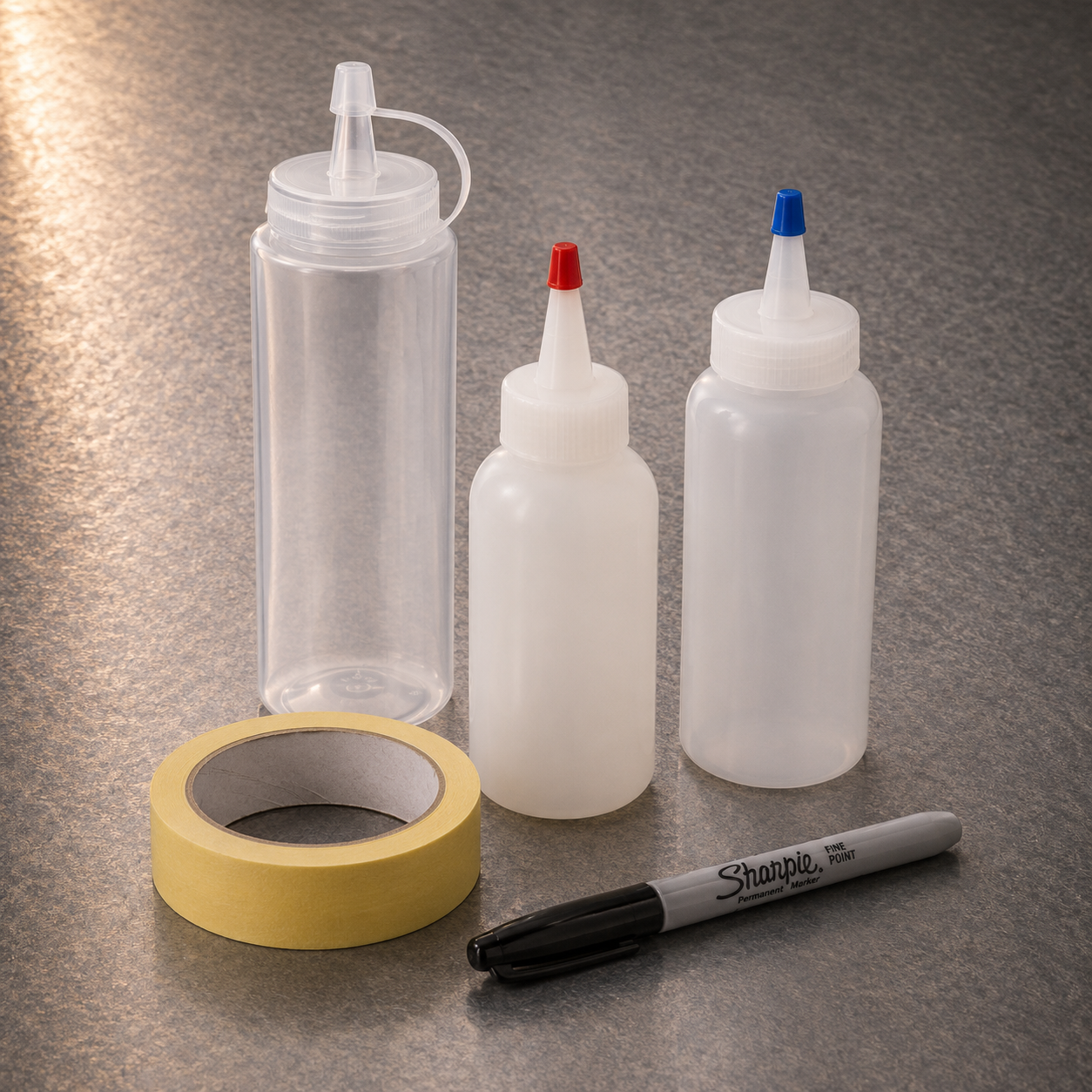
The squeeze bottle appears simple. A plastic bottle, a cap, a small opening. Yet in a professional kitchen, it becomes one of the most useful instruments for controlling how liquids and semi-liquids reach the plate.
Sauces, oils, dressings, mayonnaises, reductions, purées, infused liquids, and syrups can all move through a squeeze bottle. What changes is not only the container, but the degree of control the cook gains over the preparation. A spoon places sauce. A brush spreads it. A squeeze bottle dispenses it with pressure, direction, and repeatability. For this reason, the squeeze bottle belongs in the kitchen not as a disposable container, but as an instrument of controlled application.
Function
The squeeze bottle allows cooks to dispense preparations with precision.
It is used for:
• adding sauces to plates
• dispensing oils and dressings
• applying mayonnaise or aioli
• decorating plates with reductions or purées
• portioning repeated amounts during service
• holding frequently used preparations at the station
In service, squeeze bottles allow speed and consistency. A cook can apply the same sauce to multiple plates with a similar gesture, similar pressure, and similar quantity. This makes the squeeze bottle useful not only for plating, but also for portion control. Over time, a cook learns how much product comes from a particular squeeze, how long a bottle lasts, and how many plates it can serve. This transforms the bottle into a small instrument of kitchen planning.
Geometry
The performance of a squeeze bottle depends on its size, flexibility, cap design, and tip opening.
Bottle Size
Small bottles are useful for delicate plating work or limited quantities of strong preparations.
Medium bottles are common during service, where sauces, oils, and emulsions need to be close at hand.
Large bottles are often used during prep or for high-volume dispensing.
The right size depends on how often the preparation is used, how much is needed during service, and how the bottle will be stored.
Body Flexibility
The bottle must be flexible enough to squeeze comfortably, but strong enough not to collapse or deform.
A bottle that is too stiff makes dispensing difficult.
A bottle that is too soft may release too much product or lose control under pressure.
Tip Size
The tip determines the flow.
Fine tips are useful for thin sauces, oils, reductions, and decorative plating.
Wider tips are better for thicker preparations such as mayonnaise, aioli, purées, dressings, or emulsified sauces.
A mismatch between tip and preparation causes problems: thin liquids may run too fast, while thick preparations may clog the opening or require excessive pressure.
Cap Security
The cap must close tightly.
A poorly fitted cap can pop open under pressure, spilling sauce across the station, the plate, or the cook’s hand.
In service, this is more than inconvenient. It disrupts flow, wastes product, and can ruin a finished plate.
Materials
Squeeze bottles are usually made from flexible food-safe plastics. The material choice matters. A bottle used for food must be designed for food contact. It should not release plastic odors, off-flavors, or unwanted residue into the preparation. This becomes especially important when the bottle holds acidic sauces, oils, or warm liquids. Some squeeze bottles tolerate mild warmth, but not all are suitable for hot preparations. High heat can deform the plastic, affect the cap, or create flavor contamination. Because of this, squeeze bottles should be selected as kitchen instruments, not generic containers.
Ergonomics
A squeeze bottle must feel reliable in the hand.
Grip
The bottle should be easy to hold, even when the cook’s hands are wet, oily, or moving quickly during service.
Pressure Control
The cook should be able to apply gradual pressure. This allows a thin line, a dot, a steady stream, or a heavier application depending on the preparation.
Storage
Squeeze bottles are often stored in refrigerated stations, mise en place trays, sauce rails, or room-temperature areas depending on what they contain. The storage condition must match the preparation inside the bottle.
Visibility
Transparent or semi-transparent bottles allow cooks to see how much product remains. This is useful during service because it helps prevent running out unexpectedly.
Choosing the Tool
Choosing the right squeeze bottle depends on the preparation.
For thin oils and reductions, a smaller bottle with a fine tip offers better control.
For mayonnaise, aioli, dressings, or thicker sauces, a wider tip prevents clogging and allows smoother dispensing.
For preparations used constantly during service, a medium or large bottle may be more practical.
Important considerations include:
• food-safe material
• secure cap closure
• appropriate tip size
• ease of cleaning
• flexibility of the bottle body
• compatibility with temperature and acidity
• clear labeling potential
A good squeeze bottle should not leak, pop open, deform, or retain strong odors after proper cleaning.
Hygiene and Organization
Squeeze bottles require serious hygiene attention. Because they are closed containers with narrow openings, residue can easily remain inside. Sauces can dry around the tip. Oils can become rancid. Purées can form crusts. Old particles can loosen later and contaminate a fresh preparation. This is especially problematic when the bottle is reused without proper cleaning.
Squeeze bottles should be:
• washed thoroughly after use
• inspected inside and around the cap
• dried properly before storage
• labeled clearly
• assigned to specific preparations when needed
• discarded when they retain odor, staining, or deformation
Some flavors are difficult to remove from plastic. Garlic sauce, chili oil, fish sauce, smoked preparations, and strong herb oils can leave lasting aromas. A bottle used for garlic aioli should not later be used for honey, vanilla syrup, or a delicate dessert sauce. In professional kitchens, squeeze bottles need identity. They should have a place, a label, and a purpose.
Common Misconceptions
One common misconception is that all squeeze bottles are the same. They are not. Material quality, cap security, tip size, flexibility, and food safety all matter. Another misconception is that squeeze bottles are only for decorative plating. While they are excellent for plate design, they are also practical service tools for portioning sauces, dispensing oils, managing mise en place, and controlling repeated applications. A final mistake is treating squeeze bottles as permanent containers. They wear out. They stain, absorb odors, lose cap tightness, and deform. When they stop functioning cleanly and safely, they should be replaced.
Closing Reflection
The squeeze bottle is a small instrument of control. It allows the cook to manage flow, pressure, quantity, and placement. It can draw a line of sauce across a plate, add oil to a preparation, dispense aioli during service, or help standardize the amount of dressing used across multiple dishes. Its value lies in precision and repetition. But because it holds food in direct contact with plastic, it also demands discipline: proper material, proper cleaning, proper labeling, and proper use. A squeeze bottle is not just a container. In the kitchen, it is an instrument of controlled dispensing.