Aroma — What Reaches Us Before We Taste
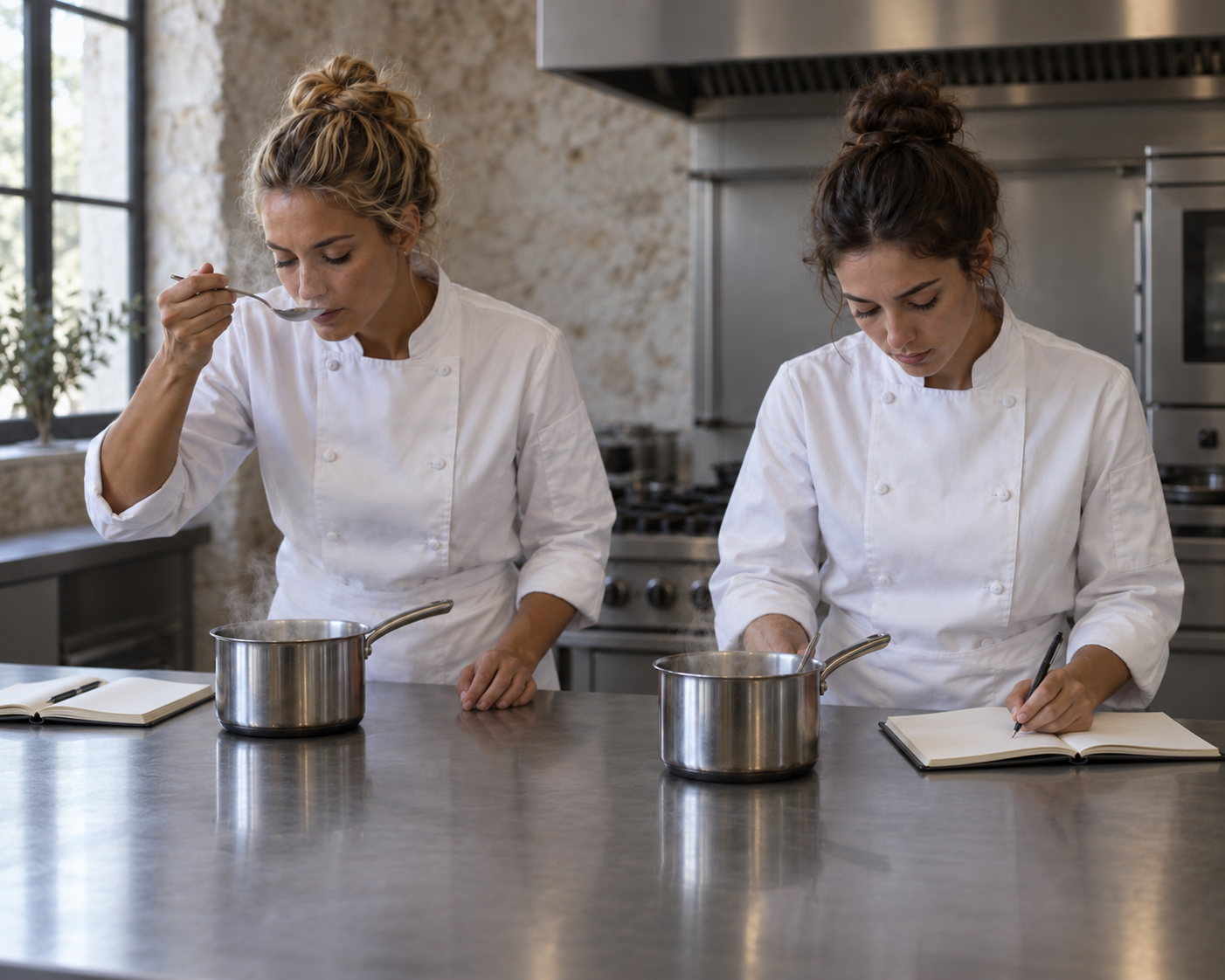
Aroma often reaches us before flavor does. It rises from a pan, escapes when a lid is lifted, moves through steam, clings to warm fat, appears when citrus peel is grated, or deepens when spices touch heat. Before food enters the mouth, aroma begins forming expectation. It can suggest freshness, sweetness, acidity, smoke, fermentation, ripeness, richness, or something that has gone wrong.
Aroma is not garnish. It is not secondary to taste. It is one of the main ways we understand food. It prepares the eater for contact and continues working during the bite. A broth may smell of mushrooms before it tastes savory. A vinegar may announce fruit, wood, or sharpness before its acidity reaches the tongue. Browned butter may smell nutty and warm before it coats the palate. Smoke may call up fire before any charred surface is tasted.
But aroma does not act alone. It becomes part of flavor when it meets taste, temperature, texture, mouthfeel, and memory. The Sensory Perception Guide makes this clear: sensory perception should not be treated as isolated categories because aroma affects flavor, texture influences flavor release, temperature changes aroma and mouthfeel, and aftertaste can alter the judgment of what came before. Aroma invites. It opens the sensory experience before the mouth confirms, complicates, or contradicts what the nose has received.
What Aroma Is — Volatile Information
Aroma is created by volatile compounds that travel through the air and reach the nose. These compounds may come from raw ingredients, cooking processes, fermentation, aging, oxidation, smoke, fat, heat, herbs, spices, flowers, fruits, dairy, seafood, or preserved foods.
The Sensory Vocabulary Reference defines aroma as volatile compounds perceived through the nose before and during eating. It also distinguishes direct aroma, perceived before food enters the mouth, from retronasal aroma, which travels from the mouth toward the nose during chewing and swallowing.
This distinction matters in the kitchen.
A preparation can smell one way before tasting and reveal something different during the bite. A thick sauce may hold aroma until it warms in the mouth. A crisp crust may release aroma only when broken. A warm broth may release aroma immediately through steam. A cold preparation may hide aroma until it comes closer to room temperature.
Aroma is therefore not only what we smell from the plate.
It is what continues to move as food is cut, chewed, warmed, broken, swallowed, and remembered.
Why Aroma Matters — Expectation, Identity, and Appetite
Aroma begins building the identity of a preparation before taste can verify it.
A smoky aroma suggests fire, char, embers, or roasted surfaces. A citrus aroma suggests brightness before acidity arrives. A fermented aroma may suggest depth, age, sourness, funk, or preservation. A marine aroma may suggest seaweed, shellfish, fish, brine, or iodine. A dairy-fat aroma may suggest butter, cream, ghee, cultured dairy, or rendered fat.
This first signal can create appetite. It can also create caution.
Aroma can attract, prepare, warn, or recall. The Sensory Perception Guide describes aroma as something that may suggest freshness, ripeness, sweetness, acidity, smoke, fermentation, richness, or decay before anything enters the mouth.
For cooks, this makes aroma practical.
If an herb oil smells muted, the formula may need fresher herbs, better timing, less heat, or a different fat. If a broth smells flat, it may need roasting, mushroom, seaweed, herbs, or reduction. If smoke dominates a chile paste, the cook may need to reduce char or add acidity, sweetness, or fruit. If a vinegar smells beautiful but disappears in the dish, the application may need to change: less heat, later addition, or use as a finishing element.
Aroma is not only something to admire.
It tells the cook what to adjust.
Moving Beyond the First Aroma
The first aroma is not always the whole aroma.
When we smell a preparation quickly, we often identify the dominant note and stop there. A chile paste becomes “smoky.” A broth becomes “earthy.” A dressing becomes “lemony.” These observations may be accurate, but they are incomplete.
The guide encourages staying with the preparation long enough to notice what appears behind the first impression: mushroom may reveal wood, fermentation, nuts, or minerals; chile smoke may carry dried fruit or cacao; lemon may contain fresh juice, bitter peel, blossom, green leaf, or preserved citrus.
This is an important discipline for Culinary Grammar.
Aroma should be observed in layers:
What reaches us first?
The dominant aroma.
What appears after a moment?
Supporting aromas.
What sits quietly in the background?
Trace aromas, associations, or secondary notes.
This does not mean inventing complexity where none exists. It means giving the preparation enough attention to become readable.
A useful note is not simply:
“Citrus aroma.”
A better note might be:
“Clear lemon-peel aroma with light floral notes and a faint bitterness in the background.”
The second note gives the cook more information.
Intensity — How Strongly Aroma Speaks
Naming an aroma is not enough. We also need to understand its intensity.
The Sensory Vocabulary Reference proposes a practical intensity scale: absent, trace, light, clear, strong, and dominant. This is not meant to be mathematical. It is meant to help cooks compare preparations and track development.
A trace aroma may require focused attention.
A light aroma is present but quiet.
A clear aroma is recognizable without dominating.
A strong aroma shapes the experience.
A dominant aroma controls the preparation and may obscure other elements.
A strong aroma is not automatically better. A delicate herb dressing may need a clear but restrained dill aroma. A smoked oil may need only a trace of smoke. A fermented chile paste may want a strong aroma, but not one that suppresses fruit, acidity, or garlic.
Intensity must be judged by intention.
Aroma can support, contrast, dominate, obscure, balance, persist, or invite another bite. The Sensory Vocabulary Reference frames useful sensory notes through this structure: identify what is present, how intense it is, when it appears, and what it does.
For cooks, that last question matters most.
What does the aroma do?
Dominant, Supporting, and Background Aromas
A practical way to organize aroma is to separate it into three levels.
Dominant aromas
These appear first and establish the primary aromatic identity of the preparation. They may be smoke, citrus, garlic, mushroom, butter, vinegar, spice, herbs, seafood, or fermentation.
Supporting aromas
These are clearly present, but they do not control the whole experience. They may reinforce, balance, or complicate the dominant aroma.
Background aromas
These are quieter notes that appear with more attention. They may be brief, difficult to name, or tied to memory.
The guide gives an example of a roasted mushroom and chile paste: dominant roasted mushroom and smoke, supporting dried chile and garlic, and background cacao, dried fruit, and thyme.
This structure is useful because it slows the cook down.
Instead of writing “good aroma,” the cook can begin asking whether the aroma has hierarchy. Does the smoke dominate? Does the citrus support? Does the herb disappear? Does the fat carry the aroma or mute it? Does the fermentation add depth, or does it become excessive?
Aroma has structure.
Temperature and Aroma
Temperature changes aroma profoundly.
Aromatic compounds need to travel through the air. Heat helps many aromas move. Steam carries aroma quickly toward the nose. Cold temperatures can suppress aromatic expression. Excessive heat can drive delicate aromas away or transform them completely.
The Sensory Perception Guide notes that the same preparation can offer different sensory information when frozen, chilled, at room temperature, warm, steaming, boiling, cooled, or reheated. It also stresses that formulas should be evaluated at the temperature at which they will be served.
This has direct culinary consequences.
A cold sauce may smell muted but taste balanced. A warm sauce may release too much garlic. An infused oil may seem subtle at room temperature but become expressive when spooned over hot vegetables. A citrus dressing may smell bright when fresh but lose its aroma after sitting. A herb oil may darken and flatten if heated too aggressively. A broth may need to be served hot because its aroma depends on steam.
Temperature is not only a serving detail.
It is part of aromatic design.
Fat as Aromatic Carrier
Fat carries aroma.
Butter, olive oil, sesame oil, chile oil, herb oil, infused grapeseed oil, rendered duck fat, browned butter, ghee, coconut oil, and animal fats all hold and release aromatic compounds differently. This is why blooming spices in oil changes them. It is why garlic in butter becomes different from garlic in water. It is why a finishing oil can perfume a plate with only a few drops.
The Sensory Vocabulary Reference includes dairy and fat as an aroma family, with references such as milk, cream, butter, cultured butter, cheese, ghee, and rendered fat. But fat also carries other aroma families: herbs, citrus peel, spices, smoke, mushroom, chile, garlic, and fermented ingredients.
This makes fat one of the most important tools for aroma control.
A neutral oil infused with lemon peel can make mayonnaise carry citrus quietly. A dill oil can move herb aroma through a dressing without visible herbs. Browned butter can bring roasted, toasted, and dairy aromas into vegetables, fish, pasta, or grains. Sesame oil can define the aromatic direction of a dish immediately.
The cook should ask:
Should the aroma be carried by fat?
Should it be fresh, infused, toasted, browned, raw, or finishing?
Should it appear at first smell, during the bite, or after swallowing?
Aroma is not only added.
It is carried.
Aroma Families — A Working Vocabulary
Aroma families help cooks describe what they perceive.
They are not rigid classifications. Ingredients overlap. Coffee can be roasted, fruity, floral, earthy, spicy, or smoky. A chile can be green when fresh, fruity when ripe, smoky when dried over fire, and earthy after fermentation. Butter can begin as dairy and become nutty or toasted when browned. The guide makes this point clearly: aroma families are routes into observation, not fixed boxes.
The Sensory Vocabulary Reference identifies several useful aroma families: citrus, floral, fruity, green and herbal, vegetal, spiced, earthy and fungal, roasted and toasted, smoky and charred, fermented and aged, dairy and fat, marine and briny, and sulfurous and pungent.
For Culinary Grammar, these families become practical tools.
Citrus
Lemon, lime, orange, grapefruit, bergamot, yuzu, zest, peel, blossom. Citrus may smell like juice, peel, pith, oil, leaf, flower, or preserved citrus.
Floral
Rose, jasmine, orange blossom, elderflower, violet, lavender, chamomile. Floral aromas can be delicate, honeyed, perfumed, medicinal, fresh, or dry.
Fruity
Fresh fruit, ripe fruit, green fruit, cooked fruit, dried fruit, preserved fruit, fermented fruit. Fruit aroma should be described by condition, not only type.
Green and Herbal
Grass, leaves, stems, fresh herbs, dried herbs, tea, pine, resin. Green aroma can suggest freshness, but it can also become raw, bitter, stem-like, or underdeveloped.
Vegetal
Peas, beans, roots, squash, tomato, peppers, leafy vegetables, cabbage. Vegetal aromas change dramatically through cooking, fermentation, roasting, and preservation.
Spiced
Cinnamon, clove, pepper, coriander, cumin, fennel, cardamom, chile. Toasting can deepen spice aroma; overheating can make it acrid.
Earthy and Fungal
Mushrooms, truffle, roots, beets, damp soil, forest floor. Earthiness can bring maturity and depth, but context determines whether it feels appetizing or musty.
Roasted and Toasted
Bread crust, toasted grain, roasted nuts, coffee, cacao, browned butter. These aromas often come from browning and carry warmth, bitterness, sweetness, and depth.
Smoky and Charred
Wood smoke, charcoal, embers, ash, grilled surfaces, blackened ingredients. Clean smoke and acrid burning must be distinguished.
Fermented and Aged
Sourdough, vinegar, wine, yogurt, miso, soy sauce, cured foods, aged cheese. These aromas can be sour, yeasty, lactic, funky, alcoholic, savory, or pungent.
Dairy and Fat
Milk, cream, butter, cultured butter, ghee, rendered fat, cheese. These may be fresh, sweet, grassy, nutty, rich, cultured, or animal.
Marine and Briny
Seaweed, shellfish, fresh fish, cured fish, seawater, iodine. Marine aroma can be clean and saline, or intense and fishy.
Sulfurous and Pungent
Garlic, onion, mustard, horseradish, cabbage, egg. These aromas can be appetizing, aggressive, harsh, sweetened by cooking, or deepened by fermentation.
The vocabulary is useful only when connected to actual perception. The cook should move from general to specific:
Citrus.
Fresh citrus.
Lemon peel.
Clear lemon-peel aroma with light floral notes.
This is how vocabulary becomes sensory precision.
Aroma, Memory, and Culture
Aroma is strongly tied to memory.
Smoke may recall food cooked outdoors. Vinegar may recall a pickle jar, a market, a grandmother’s kitchen, or a particular regional dish. Toasted maize, dried chile, browned butter, coconut, fermented cabbage, seaweed, saffron, or garlic in oil may carry cultural references before we can identify why.
The Sensory Perception Guide explains that memory and cultural familiarity participate in perception, and that a cook should distinguish technical observation from personal association.
This distinction is essential.
Instead of writing:
“This aroma is nostalgic.”
A more useful note would be:
“The aroma of toasted maize and smoke reminds me of outdoor meals from childhood.”
The second note identifies the association without pretending it is universal.
Aroma can be familiar to one person and unfamiliar to another. Fermented aromas may signal complexity to someone who grew up with them and spoilage to someone who did not. A pungent fish sauce aroma may be appetizing in one culinary system and difficult in another. Smoke may feel rustic, ceremonial, commercial, or excessive depending on exposure and context.
Aroma carries culture, but culture is not one palate.
The cook should ask:
Who is this aroma for?
What reference does it need?
Is familiarity part of the intended experience?
Is unfamiliarity productive?
Does the aroma invite, confuse, or repel?
Is the response technical, cultural, personal, or physiological?
Aroma is never only chemical.
It is also learned.
Aromatic Saturation and Palate Fatigue
A cook working in a kitchen can become temporarily blind to aroma.
After grilling, smoking, frying spices, cutting large quantities of garlic, cooking onions, or working near strong fermentation, the nose adapts. Subtle aromas become harder to perceive. The guide refers to this as sensory adaptation and also notes that repeated exposure to intense tastes and sensations can create palate fatigue.
This matters during formula development.
A cook may think an aroma is too weak because the nose is tired. Or the opposite: a cook may stop noticing that smoke, garlic, or chile has become dominant. This is one reason tasting alone after hours of cooking can be unreliable.
Good practice includes short pauses, neutral air, small samples, and returning to the preparation later. Smell in short passes rather than inhaling continuously. Compare with a reference ingredient when useful. Record uncertainty instead of inventing precision.
“Faint floral aroma, not yet identified” is a valid observation.
False precision is less useful than honest attention.
Aroma as a Development Tool
Aroma becomes useful when it leads to action.
If an aroma is missing, the cook should ask why.
Was the aromatic ingredient too weak?
Was it old?
Was it added too early?
Did heat drive it away?
Did fat trap it?
Did smoke dominate it?
Did cold temperature suppress it?
Did the texture prevent release?
Did another ingredient obscure it?
If an aroma is dominant, the cook should ask whether it needs reduction, balance, dilution, contrast, or a different timing. If an aroma appears only when warm, the serving temperature may need adjustment. If an herb aroma disappears after ten minutes, the preparation may need a fresh finish. If citrus aroma fades, zest may be added later or carried through an infused oil.
The guide frames this clearly: sensory vocabulary becomes valuable when it helps decide what to test next. The objective is not to describe a formula more elegantly, but to understand it well enough to continue developing it.
This is the bridge between sensory perception and culinary authorship.
Aroma is not only observed.
It becomes part of the next experiment.
Practical Notes — Common Aromatic Problems
The aroma is muted
Possible causes: old ingredients, too much cold, insufficient heat, poor extraction, excessive dilution, weak fat carrier, or aroma lost during cooking.
The aroma is dominant
Possible causes: too much smoke, garlic, spice, fermentation, vinegar, herb, or fat-carried aroma. Reduce quantity, change timing, or add contrast.
The aroma disappears before service
Possible causes: volatile ingredients added too early, excessive heat, long holding, poor storage, oxidation, or loss through ventilation.
The aroma contradicts the flavor
This may be useful or problematic. A sweet-smelling sauce that tastes sharply acidic may need balance, or the contradiction may be intentional.
The aroma feels stale or oxidized
Check oil, nuts, seeds, spices, herbs, storage, and exposure to light or air.
The aroma feels burnt instead of roasted
Distinguish toasted, charred, smoky, acrid, and burnt. Not all darkness is depth.
The aroma is culturally unfamiliar
Do not immediately classify it as wrong. Identify whether it is fermented, pungent, marine, sulfurous, aged, or preserved. Then study its culinary context.
Creative Exercise — One Ingredient, Four Aromatic Paths
Choose one ingredient: mushrooms, carrots, rice, yogurt, tomatoes, potatoes, fish, beans, or cabbage.
Prepare four small versions, changing only the aromatic direction.
1. Citrus
Use zest, juice, or citrus-infused oil.
2. Herb
Use fresh herbs, dried herbs, or herb oil.
3. Roasted or toasted
Use browned butter, toasted seeds, roasted garlic, or toasted spices.
4. Fermented or aged
Use vinegar, miso, soy sauce, fermented brine, yogurt, or aged cheese-style ingredients.
Taste and smell each version in several passes.
Before tasting: what aroma arrives first?
During chewing: what appears retronasally?
After swallowing: what remains?
At different temperatures: what changes?
Which aroma supports the ingredient?
Which dominates it?
Which creates appetite?
Which feels disconnected?
Which one should be tested again?
Document using intensity, character, development, and effect.
The purpose is not to choose the most aromatic version.
The purpose is to understand how aroma changes the direction of the dish.
Closing — Aroma as Invitation
Aroma is the invitation into food. It reaches us before taste, continues during chewing, and often remains after swallowing. It prepares the eater, shapes expectation, carries memory, and gives ingredients their recognizable identity. It can be direct or hidden, delicate or dominant, fresh or aged, clean or funky, volatile or persistent. To cook with aroma is to control when and how a preparation speaks.
Should the citrus arrive before the first bite?
Should the smoke remain in the background?
Should the herb aroma be fresh or infused?
Should the fat carry the spice?
Should fermentation announce itself or sit underneath?
Should the aroma be familiar, surprising, restrained, or intense?
Aroma does not complete the sensory experience alone. Flavor, texture, temperature, mouthfeel, appearance, aftertaste, memory, and culture complete it with us. But aroma often opens the door. The cook who learns to observe aroma learns to listen before tasting.