Ashes in Culinary Applications — 23 Departure Points for Fire, Alkalinity, and Transformation
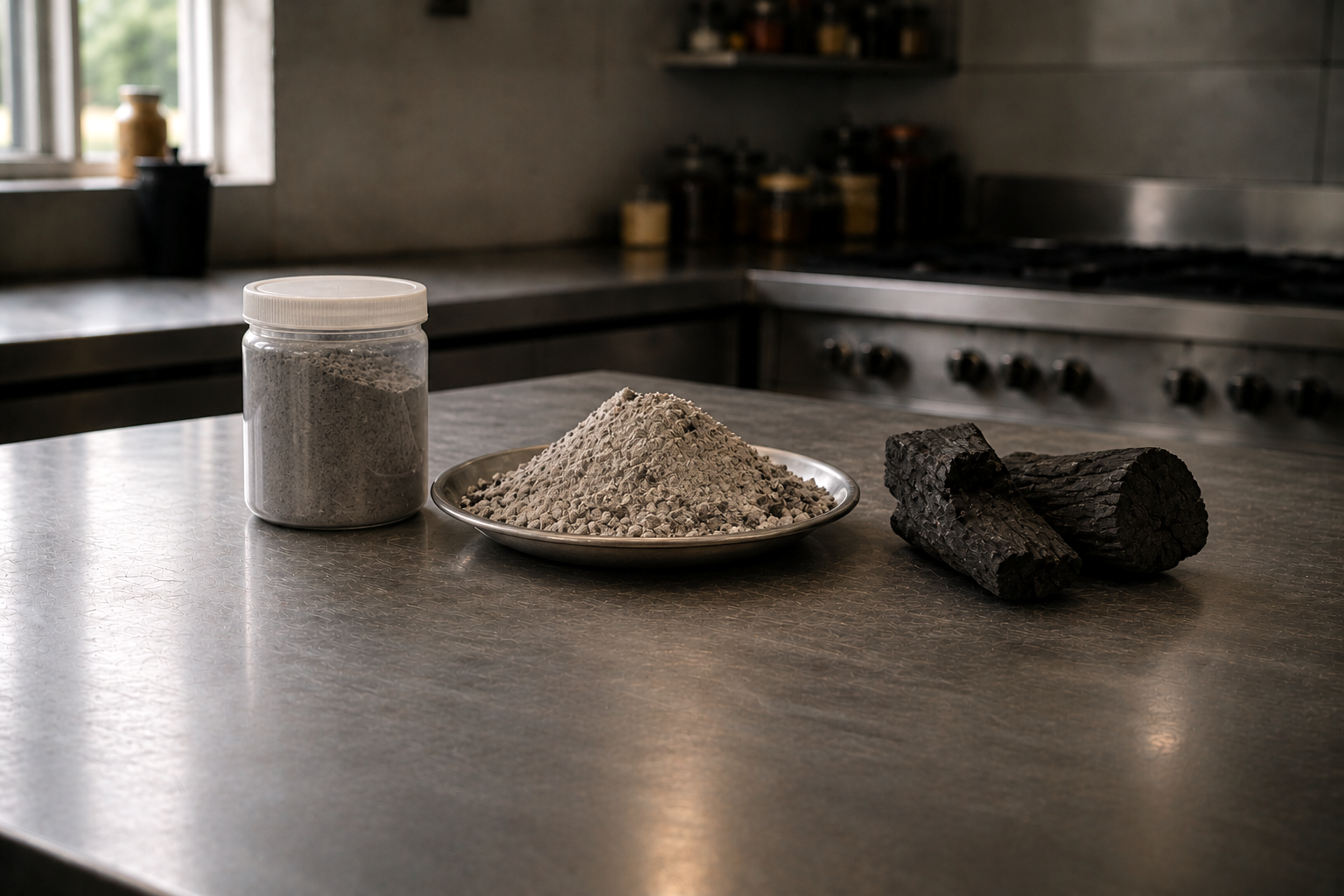
Ash is one of the oldest materials in cooking. It is what remains after fire has done its work, but in many culinary traditions, it is not simply residue. Ash can protect, insulate, alkalize, cure, preserve, tenderize, and transform.
Across the world, ashes have been used in earth ovens, cheese curing, corn processing, root cooking, alkaline soaking, bread baking, and preservation. Sometimes ash never touches the food directly; it surrounds it, insulates it, or carries heat. Other times, ash is transformed into an alkaline solution that changes the structure of grains, legumes, leaves, or preserved foods.
This article gathers 23 known or traditional culinary uses of ashes, organized into clusters so we can understand their roles: as heat, as mineral material, as alkaline agent, as protective coating, and as a link between fire and food.
Safety note: ash-based cooking and alkaline preparations require knowledge, care, and food-safe materials. Not all ashes are suitable for food use. Ash water and lye can be caustic and should not be improvised without proper expertise. This article is an exploratory overview, not a technical instruction manual.
Departure Points is a Materia series built around creative exploration. Each article gathers 23 known or traditionally used applications of an ingredient, technique, region, or culinary material, then organizes them into clusters so cooks can see patterns, possibilities, and relationships. Each point of departure is a catapult for further inquiry: a reference, a context, and a question to carry back into the kitchen. What does this material do? How has it been used before? What changes when we alter the medium, the technique, the temperature, or the cultural context? From there, the work begins.
Cluster I: Ash as Fire, Embers, and Insulating Heat
In these uses, ash functions primarily as part of the cooking environment. It holds heat, protects food from direct flame, and creates slow, earthy cooking conditions.
1. Jamaican Fire Pit Cooking
In Jamaican and Caribbean fire cooking, yams, bananas, and sometimes meats may be roasted near coals, embers, or ash-covered heat. The ash and embers create a rustic cooking environment that softens the interior while giving the exterior smoky character.
2. Ash-Roasted Sweet Potatoes, Japan
Japanese yaki-imo are traditionally cooked slowly in hot stones, embers, or enclosed heat. When associated with ash or ember cooking, the slow heat caramelizes the sweet potato, intensifying sweetness and creating a soft, almost custard-like interior.
3. Ash-Cooked Aubergines, Middle East
Eggplants are often cooked directly in fire, embers, or hot ash until their skins char and the flesh collapses. This technique creates the smoky foundation for preparations like baba ganoush and other fire-cooked eggplant dishes.
4. Ful Medames, Egypt
Traditional long-cooked bean preparations such as ful medames have often relied on slow, insulated heat. In older methods, pots could be kept warm overnight near embers or ash-insulated heat, allowing the beans to soften gently over time.
5. Maori Hāngi, New Zealand
Hāngi uses an earth oven where food is cooked with heated stones and covered to trap heat and steam. Ash is part of the fire process and the cooking environment, helping generate and retain the heat needed for slow underground cooking.
6. Buried in Embers Cooking, Middle East and Balkans
Across fire-based traditions, lamb, vegetables, potatoes, onions, and flatbreads may be cooked in or near embers and ashes. The technique uses residual fire as a cooking medium, creating tenderness, smoke, and deep roasted flavor.
7. Ash-Baked Bread, North Africa
Flatbreads can be baked beneath hot ashes, over coals, or against hot surfaces in fire-based cooking traditions. The ash provides a controlled, enveloping heat, while the dough develops a rustic crust and smoky aroma.
Cluster II: Ash as Alkaline Agent
Ash can become chemically active when transformed into ash water or lye-like solutions. These alkaline preparations can change texture, nutrition, color, and digestibility. This is one of the most powerful, and potentially hazardous, uses of ash in food traditions.
8. Nixtamalization, Mesoamerica
In Mesoamerican corn processing, maize is cooked and soaked in an alkaline solution, often limewater and historically sometimes ash water. This process improves texture, aroma, nutrition, and the ability to form masa for tortillas, tamales, and other preparations.
9. Lutefisk, Scandinavia
Lutefisk is dried fish treated with an alkaline solution, historically linked to lye made from wood ash. The process transforms the fish dramatically, changing its texture into something gelatinous and distinctive.
10. Kivuvese, Congo
Some Central African traditions use ash water in the preparation of cassava leaves or similar greens to assist with tenderization and transformation. This example should be handled carefully in publication and verified by regional sources, but it points to ash water as a tool for altering fibrous plant materials.
11. Wood Ash Lye for Pickles, Poland and Regional Traditions
Wood ash lye has appeared historically in some preservation or alkalizing practices. In pickle or vegetable contexts, alkaline treatment changes texture and chemistry. This is a specialized traditional technique and not something to improvise without expertise.
12. Ash Soup Thickener, Various Traditions
Ash water has been reported in some traditional contexts as a way to alter broth texture, soften plant material, or change viscosity. This is an important research point, but it should be treated as a specialized technique that varies strongly by region.
13. Ash in Fermented Beverages, Traditional African Beers
In some traditional brewing contexts, ash or alkaline materials may be used to influence pH, fermentation behavior, or mineral balance. This points to ash as a fermentation tool, not merely a fire byproduct.
Cluster III: Ash as Curing, Preservation, and Protective Coating
Ash can be used to coat, protect, dry, or regulate the surface environment of food. In this role, it helps manage moisture, acidity, and microbial activity.
14. Ash-Ripened Goat Cheese, France
Some French goat cheeses are coated with vegetable ash. The ash helps protect the cheese surface, moderates acidity, and supports ripening. It also gives the cheese its distinctive gray-black appearance.
15. Salted Ash in Cheese, France and Italy
Ash and salt may be used in some cheese traditions as surface treatments. Morbier is famously associated with an ash line, while other cheeses use ash coating for rind development and preservation logic.
16. Ash in Rennet Making, Europe
Ash or alkaline materials have appeared historically in some cheesemaking contexts to influence acidity or processing conditions. This example should be treated carefully and verified by specific tradition, but it points to ash as part of dairy transformation.
17. Ash-Coated Eggs, China
Century eggs are traditionally made through alkaline preservation systems involving clay, ash, salt, lime, and other materials. The process transforms the egg’s texture, color, and flavor into something gelatinous, dark, and intensely savory.
18. Ash-Wrapped Tempeh, Indonesia
Some traditional tempeh practices have used leaves, ash, or related materials in the fermentation environment. Ash may function as part of the wrapping or surface condition, although exact usage varies and should be verified regionally.
Cluster IV: Ash with Roots, Tubers, Seeds, and Plant Materials
Ash can help dry, tenderize, preserve, or neutralize certain plant materials. These uses often relate to survival, seasonality, and food safety.
19. Chuño, Peru and Bolivia
Chuño is made from potatoes that are freeze-dried through Andean cold and sun exposure. Some traditional variations may involve rubbing or treating with ash-like materials to help drying, preservation, or handling. This should be phrased carefully, since methods vary by region.
20. Pitaya Seeds, Andes / Quechua Contexts
Some seeds or plant materials may be roasted with ash or heated in ash to reduce bitterness, alter texture, or neutralize unwanted compounds. This example needs further regional verification before publication, but it belongs to the broader category of ash as plant transformation material.
21. Ash-Roasted Root Vegetables
Beyond named traditions, roots and tubers around the world have long been cooked in ashes or embers. Sweet potatoes, yams, potatoes, onions, and cassava can all benefit from slow heat, mineral contact, and smoky aroma.
Cluster V: Ash as Tool, Seasoning Environment, and Kitchen Material
In some cases, ash is not an ingredient but part of the kitchen system. It cleans, perfumes, insulates, or creates a rustic cooking environment.
22. Soap Ash as Pot Cleaner, Global Fire Kitchens
After cooking with fire, ash has often been used to scrub pots, pans, stones, and utensils. While not an ingredient, this reminds us that ash belongs to the full ecology of fire-based cooking, from preparation to cleanup.
23. Fire-Kissed Oils, Spain and Rustic Fire Traditions
Olive oil or other fats may be exposed to smoke, ember aroma, or ash-adjacent fire environments to develop rustic, smoky character. This should be treated as a contemporary or experimental direction unless tied to a verified traditional source, but it shows how ash and smoke can influence fat as an aromatic carrier.
What Ashes Teach the Cook
Ashes teach us that fire does not end when the flame disappears. Its residue can continue to cook, preserve, protect, alkalize, and transform.
Across these 23 departure points, ashes appear in several roles:
as insulating heat
as part of earth oven cooking
as an alkaline agent
as a curing or ripening material
as a preservation tool
as a way to transform grains, roots, leaves, eggs, fish, and dairy
as part of the working ecology of fire-based kitchens
The creative lesson is important: ash is not only the end of combustion. In many traditions, it is a second material of fire, carrying heat, minerals, alkalinity, and memory.
Creative Exploration Prompt
Study one fire-based cooking method and identify what role ash plays. Is it heat? Protection? Smoke? Alkalinity? Surface contact? Preservation?
Then ask:
Does the ash touch the food directly?
Is it used only as insulation?
Does it change texture, pH, or aroma?
Is it part of the cooking method or part of the preservation method?
For practical experimentation, begin with safe indirect applications: ember cooking, ash-adjacent roasting, or studying verified traditional methods. Avoid improvising ash water, lye, or alkaline food preparations without proper expertise.
From there, the work begins.