Dairy — Culinary Grammar & The Transformation of Milk
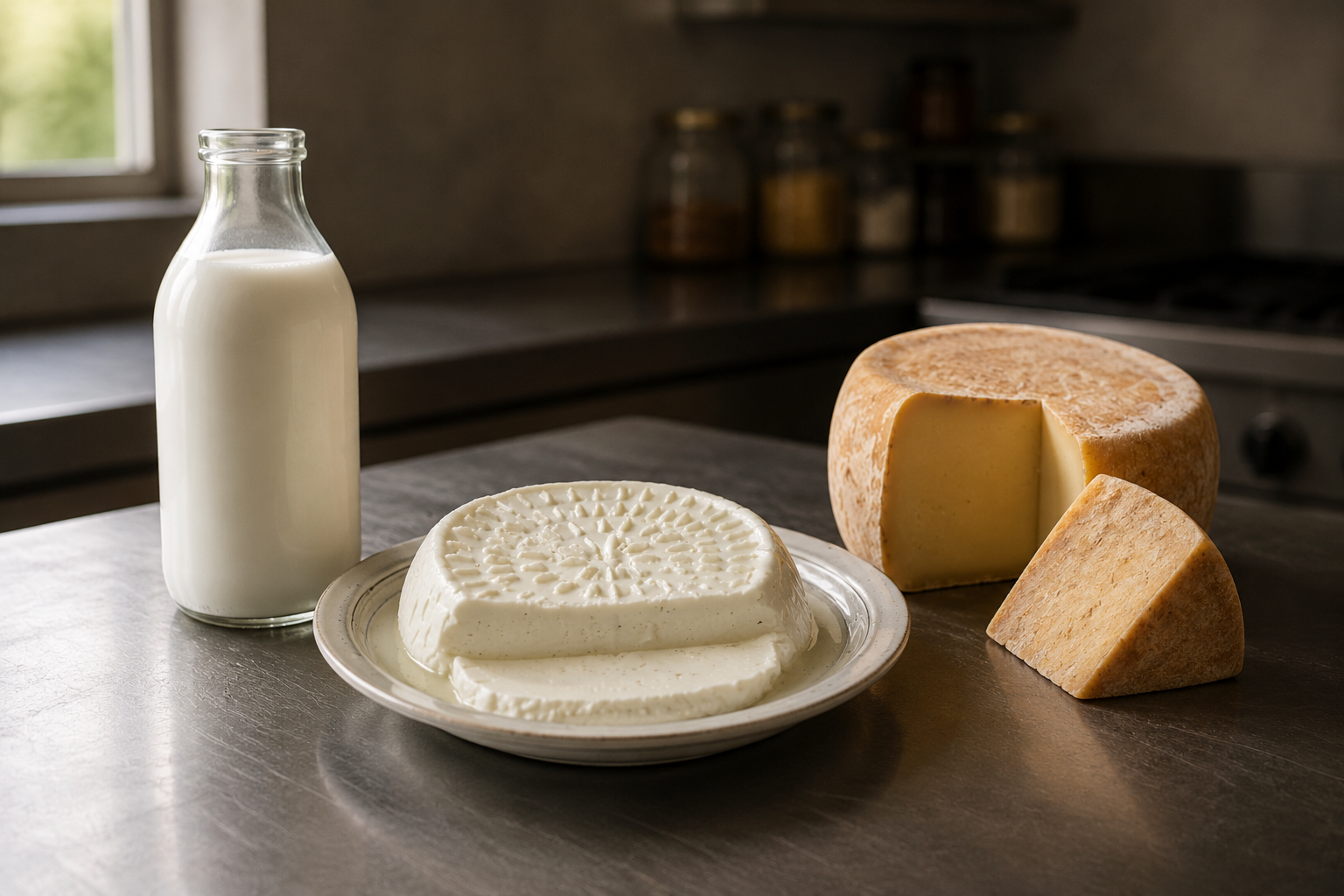
Dairy is not a single ingredient. It is a category of culinary materials that begins with milk and expands into cream, butter, yogurt, kefir, fresh cheeses, aged cheeses, fermented drinks, cultured creams, whey, curds, and countless regional preparations.
In some cuisines, dairy is central. It appears daily in sauces, breads, desserts, soups, pastries, marinades, drinks, and table rituals. In others, it is minimal or absent, shaped by geography, climate, cultural practice, religion, digestion, agriculture, or dietary philosophy. This contrast is important. Dairy is not universal, but where it is deeply used, it becomes foundational.
To study dairy is to study fat, protein, water, fermentation, acidity, texture, and transformation. Milk can become yogurt. Cream can become butter. Butter can become clarified butter or beurre noisette. Curds can become fresh cheese or age into something dense, sharp, and complex. A simple liquid becomes an entire world of structure.
This Materia study is an introduction, not a complete map. Later explorations can go deeper into milk, cheese, butter, cream, yogurt, kefir, and fermented dairy. Here, we begin by understanding dairy as a culinary system.
What Dairy Is — Milk as Origin Material
Milk is the origin point of most dairy preparations. Its quality determines much of what follows.
Milk contains:
water, which carries minerals, lactose, and soluble compounds
fat, which gives richness, aroma, and mouthfeel
protein, especially casein and whey proteins, which create structure
lactose, the natural milk sugar
minerals, especially calcium and phosphorus
microbial potential, when cultured or fermented
Because milk is alive with possibility, it can be transformed in many directions. It can be heated, cultured, separated, churned, curdled, fermented, aged, dried, or concentrated. The quality of the milk matters. Its source, animal diet, freshness, fat content, handling, pasteurization, and processing all affect flavor and behavior.
Responsible Sourcing and Quality
Dairy has become a complicated topic, partly because of how it is often produced at industrial scale. For many cooks and eaters, concerns around animal welfare, environmental impact, transparency, and processing have shaped how they think about dairy. This article does not treat dairy production, and consumption as automatically good or bad. Instead, it asks for responsibility and discernment.
When possible, look for dairy that is:
responsibly sourced
transparently produced
handled with care
appropriate to the preparation
made by producers who respect animals, land, and process
flavorful enough to justify its use
High-quality dairy behaves differently. A good butter browns with aroma. A good yogurt has acidity and body. A good cheese carries place, milk quality, aging, and craft. A good cream gives texture without feeling flat. Culinary Collector’s Materia section is about getting to know the material from different aristas, and make it part of your culinary grammar as you explore it further. With dairy, that means asking where it comes from and what kind of transformation it has undergone.
Food Safety — Pasteurized and Raw Dairy
Some traditional recipes call for raw milk or raw milk cheeses. These have cultural and culinary histories, but they also require serious safety awareness.
Raw milk is milk that has not been pasteurized. Pasteurization heats milk for a defined time and temperature to kill harmful germs. The CDC recommends choosing pasteurized milk and dairy products, noting that raw milk can expose people to germs such as Campylobacter, E. coli, Listeria, Brucella, and Salmonella.
For a general audience, especially in home cooking, pasteurized dairy is the safer default. Raw dairy should never be treated casually, and vulnerable groups, including children, older adults, pregnant people, and people with weakened immune systems, face higher risk from raw milk products.
Materia note:
Respect tradition, but do not romanticize risk. Safety is part of craft.
The Main Forms of Dairy
Milk — Liquid Structure and Transformation
Milk is used directly as a drink, cooking liquid, dessert base, sauce component, bread ingredient, and fermentation substrate. It can be whole, reduced-fat, skimmed, goat, sheep, cow, buffalo, or other animal milk depending on region and availability.
Best uses:
béchamel and white sauces
custards
breads and enriched doughs
desserts
porridges
soups
fermented drinks
fresh cheese making
Materia note:
Milk is not neutral. Fat level, animal source, and processing change flavor and function.
Cream — Richness, Body, and Emulsion
Cream is the fat-rich portion of milk. It thickens, softens, enriches, and creates luxurious texture.
Best uses:
sauces
soups
desserts
whipped preparations
custards
reductions
ganache
cultured creams
Materia note:
Cream can round acidity, soften bitterness, and create body. But too much cream can flatten a dish if it is used without contrast.
Butter — Fat, Aroma, and Heat
Butter is one of dairy’s most important transformations. Made by churning cream, it carries milk fat, water, and milk solids. Those milk solids are what brown, caramelize, and create the aroma of beurre noisette.
Butter can be used as:
cooking fat
finishing fat
emulsifier
pastry ingredient
sauce base
flavor carrier
browning medium
Important butter transformations:
whole butter, creamy, rich, and aromatic
clarified butter, water and milk solids removed for higher heat use
ghee, clarified and often cooked longer for nutty depth
beurre noisette, browned butter with toasted milk solids
Materia note:
Butter is not just fat. It is fat plus aroma, water, milk solids, and transformation.
Yogurt and Cultured Dairy — Acidity, Tenderness, and Fermentation
Yogurt, kefir, cultured cream, and related products show dairy as fermentation. Microbial activity changes texture, acidity, aroma, and digestibility.
Best uses:
marinades
sauces
dressings
dips
soups
desserts
fermented drinks
cooling accompaniments
Yogurt can tenderize, thicken, and add acidity. Kefir can bring tang and lightness. Cultured cream can add richness with complexity.
Materia note:
Cultured dairy is not only creamy. It is acidic, alive with flavor, and structurally useful.
Fresh Cheeses — Softness, Moisture, and Immediate Flavor
Fresh cheeses are young, often high-moisture cheeses. They can be mild, milky, salty, crumbly, creamy, or elastic.
Examples include:
ricotta
paneer
queso fresco
feta-style brined cheeses
fresh goat cheese
mozzarella
requesón
labneh, depending on preparation
Best uses:
salads
fillings
dips
pastries
grilled or fried preparations
fresh toppings
spreads
Materia note:
Fresh cheeses are about immediacy: milkiness, moisture, acidity, salt, and texture.
Aged Cheeses — Time, Concentration, and Complexity
Aged cheeses are shaped by time, moisture loss, microbial activity, salting, and environment. As they mature, they can become nutty, sharp, crystalline, earthy, funky, sweet, or deeply savory.
Best uses:
grating
finishing
sauces
gratins
boards
fillings
soups
savory pastries
As geography changes, dairy cultures shift. Mediterranean cuisines often celebrate fresh and brined cheeses, while mountainous regions in Europe developed rich traditions of aged cheeses connected to pasture, storage, and seasonal preservation.
Materia note:
Aged cheese is milk plus salt, time, microbes, and place.
Whey and Byproducts — The Material That Remains
Whey is the liquid left after milk coagulates into curds. It is often overlooked, but it can be useful.
Best uses:
bread making
soups
fermented drinks
marinades
cooking grains
lacto-fermentation support, when appropriate
Materia note:
Good kitchens do not only value the main product. They understand the byproducts.
Dairy Across Culinary Cultures
Dairy appears differently across the world.
In the Mediterranean, it often appears as fresh cheeses, yogurt, brined cheeses, sheep and goat milk products, and cultured preparations.
In Northern and Alpine Europe, dairy becomes butter, cream, aged cheeses, cultured milk, and preservation systems tied to pasture and winter storage.
In South Asia, dairy plays a major role through milk sweets, ghee, paneer, yogurt, lassi, and creamy sauces.
In the Middle East and Central Asia, yogurt, labneh, kefir-like drinks, fresh cheeses, and fermented dairy carry deep cultural importance.
In Latin America, dairy appears in fresh cheeses, creams, milk-based desserts, drinks, and regional cheeses shaped by colonial history and local adaptation.
In some East and Southeast Asian cuisines, dairy historically played a smaller role, though modern cooking has introduced many hybrid uses.
This unevenness matters. Dairy is not a global constant in the same way as salt or water. Its presence depends on animals, climate, digestion, culture, agriculture, religion, and trade.
Dairy and Plant-Based Alternatives
A nut milk does not behave exactly like cow’s milk. Coconut cream does not behave like dairy cream. Plant-based butter does not brown like butter unless formulated to do so. Vegan cheese may melt, stretch, or season differently depending on starches, oils, proteins, and stabilizers. This does not make alternatives inferior. It means they require their own understanding.
Creative Expansion — Experimenting With Dairy
Dairy can move beautifully across fusion cooking when used with intention.
Try:
miso butter for vegetables, noodles, or fish
labneh with roasted chiles and olive oil
yogurt marinade with garlic, citrus, and herbs
beurre noisette with sesame and sage
ricotta with preserved lemon and honey
paneer with Mediterranean herb oil
feta with tomato confit and black garlic
kefir dressing with cucumber, mint, and lime
ghee with cardamom and smoked chile
fresh cheese with roasted corn and salsa macha
The key is not to add dairy everywhere. The key is to understand what it contributes: fat, acidity, sweetness, structure, fermentation, tenderness, richness, or time.
Storage and Handling
Milk and Cream
keep refrigerated
close containers properly
avoid temperature abuse
use before spoilage signs appear
smell and observe before use
Butter
refrigerate for longer storage
protect from odors
freeze if needed
keep only small amounts at room temperature when appropriate and safe
Yogurt and Cultured Dairy
keep refrigerated
use clean utensils
avoid cross-contamination
observe changes in smell, mold, or separation
Cheese
store according to type
fresh cheeses need faster use
aged cheeses need airflow and protection
avoid excessive moisture accumulation
discard unsafe mold growth on cheeses where mold is not part of the product
Raw or Unpasteurized Dairy
treat with serious caution
know the legal and safety context
avoid for vulnerable groups
prefer pasteurized dairy for general home cooking
Closing Reflection
Dairy teaches us that one material can become many worlds. Milk becomes cream. Cream becomes butter. Butter becomes browned butter. Milk becomes curd, curd becomes cheese, cheese becomes fresh or aged. Milk becomes yogurt, kefir, labneh, whey, custard, sauce, dessert, and drink. This is why dairy belongs in Culinary Grammar. It is not merely a category of ingredients. It is a system of transformation, shaped by animals, land, microbes, time, fat, protein, and human care.