Caribbean Cuisine — 23 Departure Points for Spice, Smoke, Root, and Island Exchange
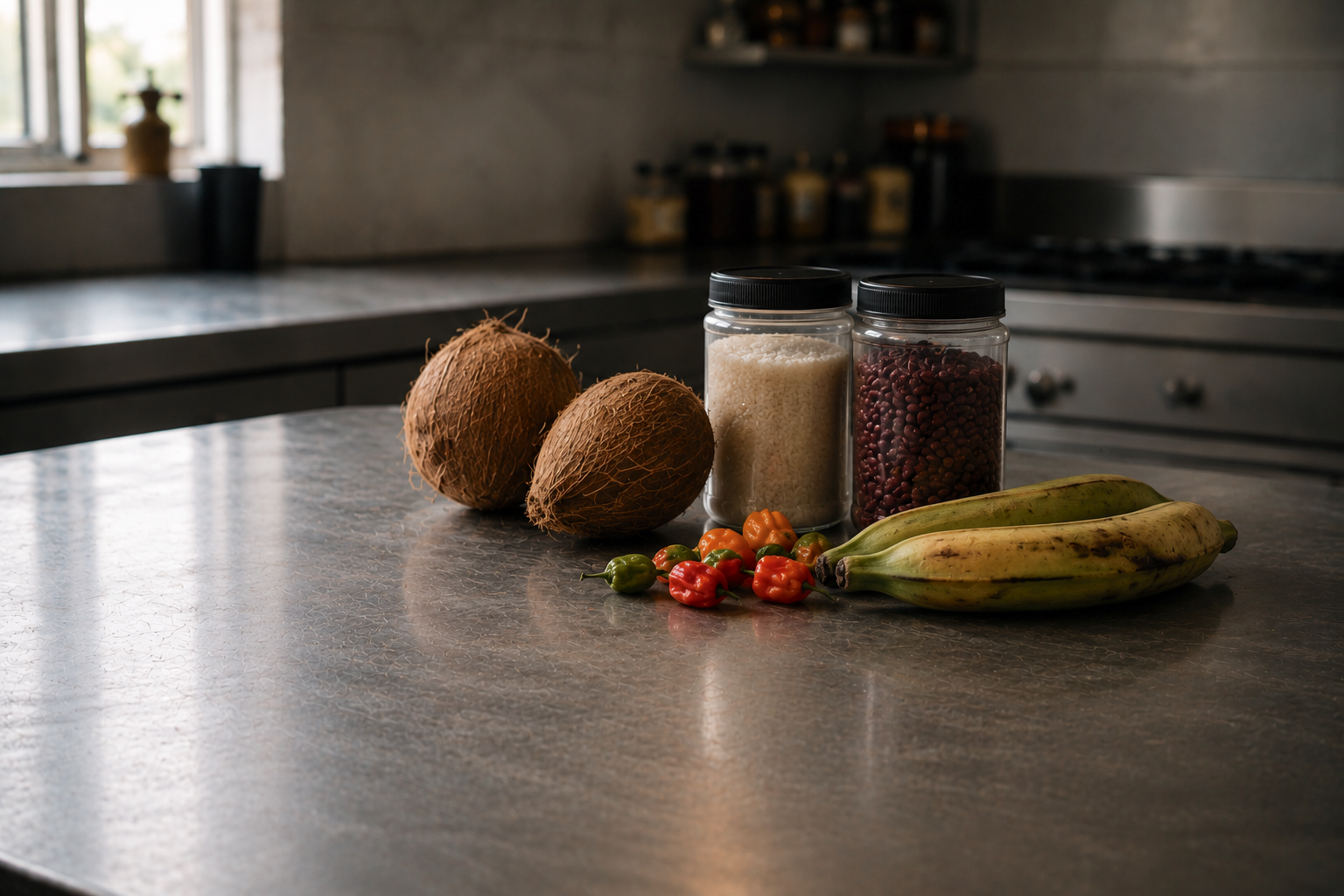
Caribbean cuisine is not one single culinary tradition. It is a region of islands, coasts, ports, plantations, markets, migrations, resistance, adaptation, and exchange. Its food carries Indigenous foundations, African memory, European colonial influence, Indian indentured labor histories, Chinese and Asian traces, and the creativity of people cooking with what the land and sea provide.
Across the Caribbean, flavor is built through heat, smoke, spice, starch, coconut, preserved fish, legumes, tropical fruit, vinegar, herbs, and fire. Cassava becomes bread. Plantains become structure. Saltfish becomes memory and protein. Scotch bonnet brings heat and perfume. Coconut milk softens rice, peas, stews, and curries. Fried dough, pickled fish, slow stews, roti, patties, and one-pot rice dishes show how deeply the Caribbean kitchen transforms necessity into abundance.
This article gathers 23 Caribbean culinary materials, dishes, and preparation systems, organized into clusters so we can begin to see patterns, possibilities, and relationships. The goal is not to define Caribbean cuisine completely, but to offer a structured beginning for creative exploration.
Editorial note: Caribbean cuisine varies widely from island to island and coast to coast. Jamaica, Trinidad and Tobago, Barbados, Guyana, Puerto Rico, the Dominican Republic, Haiti, Cuba, the Bahamas, Antigua, and many other places each hold distinct food histories. This article is a selected introduction, not a complete map.
Departure Points is a Materia series built around creative exploration. Each article gathers 23 known or traditionally used applications of an ingredient, technique, region, or culinary material, then organizes them into clusters so cooks can see patterns, possibilities, and relationships. Each point of departure is a catapult for further inquiry: a reference, a context, and a question to carry back into the kitchen. What does this material do? How has it been used before? What changes when we alter the medium, the technique, the temperature, or the cultural context? From there, the work begins.
Cluster I: Fire, Spice, and Smoke
Caribbean cooking often begins with intensity: chile heat, wood smoke, spice blends, vinegar, herbs, and slow cooking. These preparations teach how seasoning can become a full system, not just a final addition.
1. Jerk
Jerk is a Jamaican seasoning and cooking technique built around ingredients such as allspice, Scotch bonnet peppers, thyme, garlic, scallions, and spices, traditionally connected to slow cooking over wood fire. It teaches how marinade, smoke, chile, and aromatic spice can become one integrated flavor architecture.
2. Curry Goat
Curry goat is especially important in Jamaican and Trinidadian cooking, shaped by Indian influence and Caribbean adaptation. Goat is slow-cooked with curry spices, aromatics, potatoes, and sometimes chickpeas until tender. It teaches how spice, time, and tough cuts become depth.
3. Escovitch Fish
Escovitch fish is a Jamaican preparation where fried fish is dressed or marinated with vinegar, onions, carrots, peppers, and Scotch bonnet. It teaches contrast: crisp fish meets acidity, heat, sweetness, and crunch.
4. Pepper Pot
Pepper pot is a rich slow-cooked stew associated with Guyana and Antigua, among other places. It often includes meat, peppers, spices, and cassareep, a sauce made from cassava. It teaches how bitter, sweet, dark, and preserved elements can shape a stew.
Cluster II: Saltfish, Seafood, and Preservation
Salted fish and seafood are central to many Caribbean kitchens. They reflect preservation, trade, colonial histories, adaptation, and everyday cooking.
5. Ackee and Saltfish
Ackee and saltfish is Jamaica’s national dish, made with ackee fruit and salted cod, usually cooked with onions, tomatoes, peppers, and spices. Ackee has a soft, delicate texture, while saltfish brings salinity and depth.
6. Saltfish Fritters
Saltfish fritters are deep-fried dough preparations made with salted cod, flour, onions, herbs, and spices. They are eaten as snacks, appetizers, or breakfast foods across many islands. They teach how preserved fish can be stretched into a textured, communal food.
7. Souse
Souse is a pickled preparation made with ingredients such as pig’s feet, chicken feet, or tripe, marinated with lime juice, onions, peppers, cucumbers, and spices. It teaches acidity as preservation, flavor, and texture.
8. Choros-style Coastal Logic / Island Shellfish Preparations
While not every island uses the same names or methods, Caribbean seafood traditions often combine freshness, acid, chile, herbs, and onion. This departure point allows later linking to more specific island seafood preparations, such as conch salad, flying fish, crab backs, or pickled seafood.
Cluster III: Roots, Plantains, Cassava, and Starchy Foundations
Starches are central to Caribbean food. They provide body, structure, comfort, and continuity. Many are boiled, fried, pounded, grated, baked, or transformed into breads and cakes.
9. Plantain
Plantains are one of the great structural ingredients of the Caribbean. They can be fried, boiled, baked, mashed, or roasted. Green plantains bring starch and firmness; ripe plantains bring sweetness and caramelization.
10. Mofongo
Mofongo is a Puerto Rican dish made from mashed fried green plantains mixed with garlic, seasoning, and traditionally pork cracklings, then served with seafood, chicken, stews, or sauces. It teaches how plantain can become a vessel, starch base, and textural anchor.
11. Bammy
Bammy is a Jamaican cassava flatbread made from grated cassava, often fried or grilled and served with fish or other dishes. It connects Caribbean cooking to Indigenous cassava traditions and shows how root starch can become bread.
12. Johnny Cakes
Johnny cakes are fried or baked breads associated with several Caribbean islands, including the Bahamas and Barbados. They can be made with flour or cornmeal depending on the tradition, often served as breakfast, snack, or side.
13. Fungi / Cou-Cou / Coo-Coo
Fungi or cou-cou is a cornmeal and okra preparation, similar in some ways to polenta but deeply Caribbean in identity. It is especially associated with Antigua and Barbados and often served with stewed or fried fish. It teaches starch thickening, okra texture, and sauce absorption.
Cluster IV: Rice, Peas, Legumes, and One-Pot Systems
Rice and legumes form one of the most important everyday structures in the Caribbean. These dishes are practical, nourishing, aromatic, and highly regional.
14. Rice and Peas
Rice and peas is a staple Caribbean dish, often made with rice, pigeon peas or kidney beans, coconut milk, thyme, scallions, and Scotch bonnet. It teaches how rice absorbs coconut, herbs, chile aroma, and legume depth.
15. Rice and Beans
Rice and beans appears in many Caribbean islands and coastal regions, sometimes cooked with coconut milk, spices, and red beans. It overlaps with rice and peas but may vary in terminology, bean type, and regional method.
16. Gungo Peas
Gungo peas, also known as pigeon peas, are used in rice dishes, soups, stews, and holiday preparations. They bring earthy flavor, protein, and a firm texture that works well with coconut, thyme, and chile.
17. Pelau
Pelau is a one-pot dish from Trinidad and Tobago made with rice, pigeon peas, chicken or other proteins, vegetables, coconut milk, and caramelized sugar. It teaches browning, sweetness, rice absorption, and layered seasoning in one vessel.
Cluster V: Indian Influence, Street Food, and Portable Forms
The Caribbean also carries strong Indian and South Asian influences, especially in Trinidad, Guyana, and other parts of the region. Flatbreads, curries, chickpeas, chutneys, and street foods become part of the Caribbean culinary language.
18. Roti
Roti is a flatbread with South Asian roots, widely adapted in Trinidad, Guyana, and other Caribbean foodways. It is often served with curry dishes, meats, vegetables, or chickpeas. It teaches portability, wrapping, and sauce absorption.
19. Doubles
Doubles is a Trinidadian street food made with two pieces of fried flatbread, called bara, filled with curried chickpeas, chutneys, pepper sauce, and sometimes cucumber or tamarind sauce. It teaches layered street food logic: soft bread, spiced legume, acid, heat, and sweetness.
20. Mango Chutney
Mango chutney combines mango, vinegar, sugar, spices, and chile or aromatics. It is often served with curries, roti, meats, or snacks. It teaches sweet-acid-spice balance and the Indian-Caribbean movement of condiment culture.
Cluster VI: Pastries, Popular Plates, and Urban Island Food
Caribbean food also lives in bakeries, street stalls, fast casual plates, and urban eating habits. These forms are important because they show how food travels through everyday life.
21. Patties
Patties are flaky pastries filled with seasoned meats, vegetables, seafood, or legumes, especially associated with Jamaica but present in different forms across the Caribbean. They teach spice, pastry, portability, and everyday food culture.
22. Salchipapas
Salchipapas is more strongly associated with Latin American street food broadly, including parts of the Caribbean and circum-Caribbean world. Made with sliced sausages and fries, served with sauces, it represents urban casual food, sauce culture, and popular adaptation.
23. Carne Mechada
Carne mechada is shredded beef found across the broader Caribbean and Latin American world, especially in Venezuela, Puerto Rico, the Dominican Republic, and nearby coastal foodways. It can be served with rice, arepas, empanadas, plantains, or beans. It teaches shredded texture, slow cooking, and sauce absorption.
What Caribbean Ingredients Teach the Cook
Caribbean cuisine teaches us that food can carry migration and memory without becoming fixed. Ingredients and techniques move across islands, ports, plantations, homes, and street stalls, becoming local through use.
Across these 23 departure points, several patterns emerge:
smoke as seasoning and identity
Scotch bonnet as heat and perfume
coconut milk as fat, sweetness, and body
plantains and cassava as structure
saltfish as preservation and memory
rice and legumes as daily architecture
vinegar and lime as brightness
roti, patties, and doubles as portable food systems
chutneys and pepper sauces as finishing energy
one-pot cooking as practicality and abundance
The creative lesson is clear: Caribbean cuisine is a language of movement. It carries Africa, Indigenous foodways, Europe, India, Asia, and the Americas, but it transforms all of them through island conditions, local ingredients, and lived ingenuity.
Creative Exploration Prompt
Choose one Caribbean logic and build a small preparation around it.
For example:
jerk logic: spice + smoke + chile + herbs
rice and peas logic: grain + legume + coconut + aromatic heat
roti logic: flatbread + curry + chutney + portability
escovitch logic: fried ingredient + vinegar + chile + crunch
plantain logic: starch + sweetness + texture
Ask yourself:
What gives heat?
What gives body?
What gives brightness?
What gives portability or structure?
What ingredient carries memory?
Document how the preparation changes when you adjust smoke, acid, chile, coconut, starch, or sauce.
From there, the work begins.