Vinegars — Fermented Acidity, Preservation, and Culinary Complexity
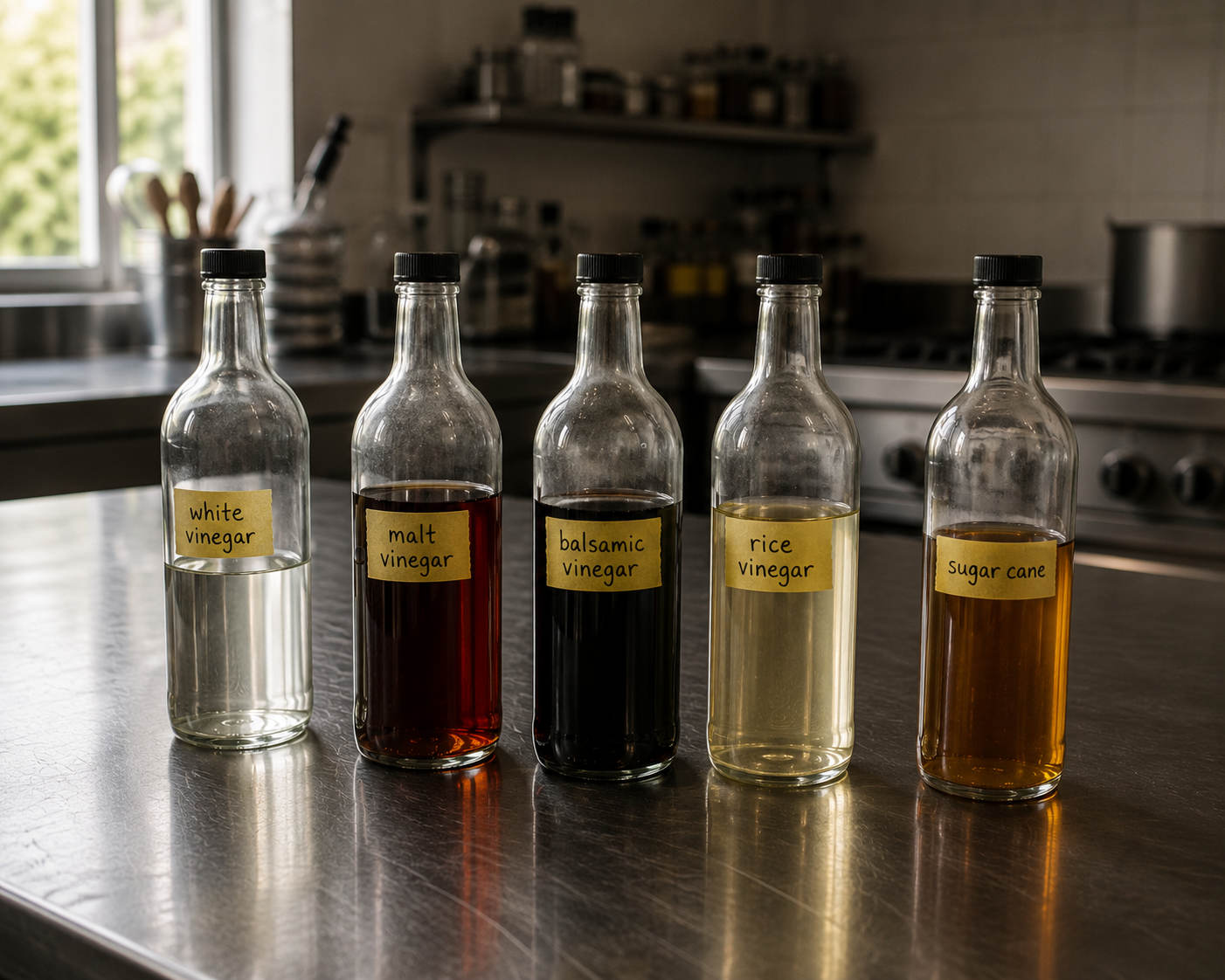
Vinegar is one of the most underestimated ingredients in the kitchen. It is often treated as a background acid, something kept in a bottle for salad dressing, pickles, cleaning, or the occasional splash into a sauce. Many kitchens reduce vinegar to two categories: white vinegar and dark vinegar. Useful, yes, but incomplete. That way of thinking hides one of the most complex families of culinary ingredients we have.
Vinegar is not simply sour liquid. It is transformed alcohol. It is fermentation carried into acidity. It is fruit, grain, rice, wine, cider, cane, coconut, malt, or another base pushed through microbial work until it becomes something sharper, more stable, and often more layered than the liquid it began from. A good vinegar carries provenance. It tells us what it was made from, how it was fermented, how long it aged, how refined or unrefined it is, whether it carries a mother, whether it was filtered, whether it kept its aromatic complexity, and how a culture learned to use it.
They preserve, season, brighten, marinate, pickle, deglaze, reduce, finish, balance, and sometimes even enter beverages and desserts. They can be sharp and direct, or aged and round. They can be cheap and functional, or precious and complex. They can act as an acid agent, but also as a condiment, a seasoning, a cultural marker, and a quiet weapon for cooks who understand how to use them. To study vinegar is to study acidity with memory inside it.
What Vinegar Is — Alcohol Transformed Into Acid
Vinegar is produced when alcohol is transformed into acetic acid through fermentation.
In practical terms, a fermentable liquid first becomes alcoholic, then acetic fermentation turns that alcohol toward vinegar. This is why vinegars can be made from wine, cider, rice wine, malt, sugar cane, coconut sap, fruit wines, and many other bases.
The base matters.
Apple cider vinegar carries the memory of apples and cider. Wine vinegar carries the memory of grapes and wine. Sherry vinegar carries the memory of fortified wine, aging, wood, and oxidation. Rice vinegar carries the memory of rice fermentation. Coconut vinegar carries the memory of coconut sap or related tropical fermentations. Cane vinegar carries the memory of sugar cane and the culinary cultures built around it.
This is the first lesson.
Vinegar is not neutral unless it has been made or refined to behave that way.
A distilled white vinegar can be useful because it is clean, sharp, and direct. But an aged balsamic vinegar, a sherry vinegar, a black rice vinegar, a coconut vinegar, or a cider vinegar with the mother carries a completely different kind of information.
The cook should not ask only, “How acidic is this?”
The better question is:
What did this vinegar used to be, and what does it still carry?
Why Vinegar Matters — Acid With Structure
Vinegar matters because it gives acidity that is more stable and persistent than fresh citrus.
Lemon and lime are bright, volatile, and aromatic, but their freshness fades quickly. Vinegar can hold acidity over time. It can preserve vegetables, season sauces, support marinades, stabilize pickling systems, and enter preparations where citrus would be too fragile or too unstable.
But vinegar’s value is not only stability.
A good vinegar can carry depth, fruit, oxidation, wood, sweetness, bitterness, grain, funk, floral notes, mineral sharpness, or aged complexity. It can bring more than sourness into a dish. A few drops can wake up a broth. A spoonful can sharpen a bean stew. A splash can deglaze a pan. A reduction can become a glaze. A delicate vinegar can dress vegetables without overwhelming them. An aged vinegar can finish cheese, fruit, roasted roots, or even dessert.
Vinegar is one of the cook’s most precise balancing tools.
It can correct heaviness, cut fat, sharpen sweetness, soften bitterness, and give the palate appetite for the next bite.
Vinegar as Preservation
Vinegar is deeply connected to preservation.
Its acidity can help create environments where foods keep longer when combined with the right concentration, salt, sugar, heat, cleanliness, and storage method. Pickles, relishes, escabeches, chutneys, marinades, preserved vegetables, and acidified sauces all rely on vinegar in different ways.
This distinction matters.
A vinegar splash for flavor is not the same as a vinegar system for preservation. A quick pickle kept in the refrigerator is not the same as a shelf-stable preserve. A vegetable covered with vinegar may still require proper salt, sugar, heat, sterilization, pH control, and storage depending on its purpose.
Vinegar is powerful, but it is not a license for carelessness.
When used for preservation, the cook must understand proportion, cleanliness, containers, temperature, time, and intended storage. The acidity must be strong enough for the task. The ingredients must be submerged when required. The jars and tools must be clean. Anything exposed above the liquid can create risk.
Preservation is not only an ingredient choice.
It is procedure.
Vinegar as Seasoning
Vinegar seasons like salt, but in another register.
It sharpens flavor. It makes fat feel lighter. It makes beans more alive. It gives definition to soups and stews. It prevents sweet preparations from becoming heavy. It makes bitter vegetables more readable. It helps sauces finish with direction.
A dish may not need more salt. It may need vinegar.
This is one of the most useful corrections a cook can learn. When something tastes heavy, flat, or closed, a small amount of vinegar can open it. Not enough to make the dish sour. Just enough to create contrast.
A few examples:
A lentil soup finished with wine vinegar.
A cabbage dish sharpened with apple cider vinegar.
A pan sauce lifted with sherry vinegar.
A roasted vegetable dressed with balsamic-style reduction.
A bean salad balanced with cane vinegar or rice vinegar.
A sauce for fried food sharpened with malt vinegar.
A rich stew corrected with a few drops of aged vinegar.
Vinegar can be used before cooking, during cooking, or after cooking. Each moment changes its role.
Before cooking, it can marinate or pickle.
During cooking, it can integrate into sauces and stews.
After cooking, it can lift and finish.
Timing decides whether vinegar becomes structure or accent.
Aroma — The Hidden Complexity of Vinegar
Vinegar has aroma.
This is one reason it should not be treated as generic acid. A strong vinegar can announce itself before it touches the tongue. A delicate vinegar can bring fruit or grain quietly. An aged vinegar can smell of wood, sweetness, oxidation, dried fruit, or cooked must. A rice vinegar may feel clean and soft. A coconut vinegar may carry tropical sharpness. A sherry vinegar may bring nuttiness and depth.
Aromatic vinegar changes a dish differently from neutral vinegar.
When a vinegar is made from a meaningful base and allowed to retain complexity, it behaves almost like a liquid condiment. It can season and perfume at the same time. The aroma becomes part of the dish’s identity.
This is especially important in dressings and finishing applications. A high-quality vinegar used raw is fully exposed. Its bouquet matters. In pickling, the vinegar becomes the environment of the ingredient. In reductions, its aroma concentrates. In marinades, its acidity and aroma enter the surface. In beverages, its scent becomes part of the drinking experience.
The cook should smell vinegar before using it.
If the aroma does not belong to the dish, the acidity alone is not enough reason to use it.
White Vinegar and Functional Acidity
Distilled white vinegar is often treated as the simplest vinegar, but simplicity has value.
It is clean, sharp, neutral, and highly functional. It is useful when the cook wants acidity without much additional aroma: certain pickles, brines, preserves, sharp sauces, cleaning produce in some kitchen procedures, or preparations where a more aromatic vinegar would interfere.
White vinegar is not lesser because it is plain.
It is useful because it is direct.
The mistake is not using white vinegar. The mistake is using it when the dish needs more complexity, or using complex vinegar when the dish needs clean acidity.
The cook must choose according to purpose.
Apple Cider Vinegar — Fruit, Fermentation, and North American Use
Apple cider vinegar is one of the most important vinegars in North American kitchens.
It carries the logic of cider production, orchard culture, and apple fermentation. It can be filtered and clear, or unfiltered and cloudy with the mother. It may be sharp, fruity, rustic, round, or raw depending on how it is made.
It works well with pork, cabbage, beans, grains, apples, root vegetables, slaws, pickles, barbecue-style sauces, dressings, chutneys, and marinades. Its fruitiness makes it more generous than distilled vinegar, but less heavy than many aged vinegars.
Apple cider vinegar also shows how vinegar can remain close to its source. When it is made well, it does not simply taste sour. It carries the memory of apple.
Wine Vinegars — Grapes, Regions, and Sauce Logic
Wine vinegars carry the world of wine into acid.
Red wine vinegar, white wine vinegar, champagne-style vinegar, and other grape-based vinegars differ according to grape, wine style, region, aging, and production method. They are foundational in many Mediterranean and European kitchens because they work naturally with olive oil, herbs, mustard, garlic, shallots, vegetables, fish, meats, sauces, and braises.
Wine vinegar is often the vinegar of vinaigrette logic.
It gives acidity with culinary familiarity: salads, beans, lentils, stews, marinades, pan sauces, escabeches, and pickles. White wine vinegar may be cleaner and lighter. Red wine vinegar may be stronger and more rustic. Champagne-style vinegars may feel softer and more delicate.
The cook should match intensity.
A delicate herb salad may not want the same vinegar as a braised meat sauce.
Sherry Vinegar — Depth, Oxidation, and Spanish Character
Sherry vinegar, associated with Jerez, is one of the great noble vinegars of the kitchen.
It often carries nutty, oxidative, wine-like complexity. It can be sharp but deep, elegant but assertive. It works beautifully with mushrooms, beans, lentils, seafood, tomatoes, roasted peppers, gazpacho-style preparations, soups, sauces, vinaigrettes, grilled vegetables, and rich dishes that need lift without losing depth.
Sherry vinegar is a good example of vinegar as more than acid.
A splash of sherry vinegar can make a sauce taste older than it is. It can give a dish the impression of time, wine, wood, and concentration. It is especially useful where the cook wants brightness with maturity.
This kind of vinegar should be used with attention.
Too much can dominate. The right amount can make a dish suddenly complete.
Balsamic Vinegar — Sweetness, Aging, and Finishing
Balsamic vinegar opens an entire field of study.
Traditional balsamic vinegar from Modena and surrounding traditions is connected to grape must, aging, wood, concentration, and regulated production. Commercial balsamic-style vinegars vary widely, from simple sweet-acid condiments to more complex aged products. The differences matter enormously.
A deeply aged balsamic vinegar may be thick, sweet, acidic, woody, complex, and precious. It may be used in drops over cheese, fruit, roasted vegetables, meats, desserts, or even ice cream. A more everyday balsamic vinegar may be useful for dressings, reductions, glazes, marinades, or roasted vegetables.
Balsamic vinegar also teaches the relationship between sweetness and acid.
It can become a finishing element, not only a dressing ingredient. Reduced balsamic can become glaze. A few drops can transform strawberries, figs, Parmigiano-style cheeses, roasted squash, grilled meats, or bitter greens.
But balsamic should not be used automatically.
Its sweetness and color are strong. It can make everything taste similar if used without restraint.
Rice Vinegars and Asian Vinegar Cultures
Rice vinegars open a large world of culinary acidity.
Japanese, Chinese, Taiwanese, Korean, and Southeast Asian vinegar traditions include many different styles, intensities, colors, and uses. Some rice vinegars are pale and soft. Others are dark, aged, smoky, malty, sweet, or deeply aromatic. Some are used in sushi rice, pickles, dressings, dipping sauces, noodles, braises, soups, beverages, and condiments.
The category “rice vinegar” is too broad to be treated as one thing.
Japanese rice vinegar may bring clean, gentle acidity. Chinese black vinegars can bring depth, grain, malt, smoke, sweetness, and complexity. Taiwanese vinegars and regional rice-based vinegars may carry their own profiles. Korean vinegar use includes cooking, pickling, condiments, and drinking vinegar culture. Southeast Asian vinegars may include rice, coconut, cane, palm, or fruit-based traditions.
A cook should study each vinegar through its cultural use.
What dishes does it accompany?
Is it used raw or cooked?
Is it a dipping vinegar?
A pickling vinegar?
A beverage base?
A noodle seasoning?
A braising ingredient?
A condiment?
Rice vinegar traditions show that vinegar can be delicate, deep, culinary, medicinal, refreshing, or table-based.
Black Vinegars, Grain Vinegars, and Dark Acidity
Dark vinegars made from rice, grains, or other bases can behave almost like fermented sauces.
They may carry sourness, but also sweetness, roasted grain, smoke, malt, umami-like depth, and aging. Chinese black vinegar is one of the clearest examples: it can be used in dipping sauces, noodles, braises, soups, cold dishes, dumplings, and finishing applications.
These vinegars should not be substituted casually with white vinegar.
They are not only acid. They are flavor architecture.
A dark grain vinegar can make a sauce taste deeper, more rounded, and more complex. It can support soy sauce, ginger, garlic, chile oil, sesame, sugar, and broths. It can bring darkness without the heaviness of caramel or molasses.
This is vinegar as depth.
Coconut, Cane, Palm, and Tropical Vinegars
In many tropical and island cuisines, vinegar comes from local abundance.
Coconut vinegar, cane vinegar, palm vinegar, fruit vinegars, and other regional vinegars carry the logic of place. Where coconut sap, sugar cane, palm products, or tropical fruits are fermented, vinegar becomes part of daily seasoning, preservation, dipping sauces, marinades, relishes, and table condiments.
Coconut vinegar is especially important in parts of the Caribbean, the Philippines, and other tropical regions. Cane vinegar appears in many sugar-producing regions. These vinegars can be sharp, rustic, aromatic, and sometimes less refined, retaining more of the character of their base.
They may not behave like European wine vinegars or distilled vinegar.
Their strength is character.
They can support grilled foods, seafood, pork, vegetables, pickles, escabeche-like preparations, dipping sauces, chile condiments, and marinades.
To use them well, start with provenance.
Where is this vinegar from?
What is it traditionally used with?
What does its base ingredient contribute?
Does it want salt, chile, garlic, sugar, herbs, or oil?
Tropical vinegars teach that acidity is local.
Malt Vinegar and Grain Sharpness
Malt vinegar carries grain, fermentation, and a particular sharpness associated with certain British and Northern European food traditions.
It is famous with fried foods because its acidity cuts fat while its malt character complements starch and frying. It can also be used in pickles, chutneys, sauces, and marinades where a grainy, assertive acid is desired.
Malt vinegar is not neutral.
It has personality, and that personality can be perfect in the right setting.
Fruit Vinegars, Plum Vinegars, and Infused Acidity
Fruit vinegars bring aroma and acidity together.
Plum vinegar, berry vinegar, fig vinegar, pomegranate vinegar, mango vinegar, banana vinegar, and other fruit-based or fruit-infused vinegars can support dressings, sauces, glazes, drinks, desserts, pickles, and marinades.
Some fruit vinegars are true fermented vinegars. Others are infused or blended preparations. The distinction matters, but both can be useful if understood clearly.
Fruit vinegars often work where the dish needs acidity with a clear aromatic direction. A berry vinegar may suit bitter greens or duck. Plum vinegar may support rice, vegetables, sauces, or pickles. Pomegranate vinegar may work with grains, lamb, eggplant, or dressings. Fruit acidity can also move into mixology through shrubs and drinking vinegars.
The cook should treat fruit vinegars as flavored acid, not as interchangeable sourness.
Vinegar With the Mother
Unfiltered vinegars may contain the mother: a living culture made of acetic acid bacteria and cellulose that participates in vinegar formation.
The mother is often seen as a cloudy, gelatinous, or floating mass. In raw vinegars, it can be a sign that the vinegar has not been fully filtered or pasteurized. Some cooks use vinegar with the mother as a starting point for making more vinegar, adding an appropriate alcoholic liquid and allowing acetic fermentation to continue under controlled conditions.
For example, cider vinegar with the mother can potentially help transform alcoholic cider into new vinegar if the cider is suitable, unsulfited, and handled properly. Over time, different ciders could produce different flavor profiles, colors, and aromas.
This is fascinating, but it requires care.
Making vinegar in your kitchen is serious fermentation work. It needs oxygen, cleanliness, suitable alcohol content, protection from contamination, proper vessels, observation, and patience. Mold, off smells, or contamination are signs to stop, not to push forward.
The mother is not magic.
It is a living culture that requires correct conditions.
Vinegar Beverages, Shrubs, and Drinking Acidity
In many cultures, vinegar is not only cooked with. It is drunk.
Drinking vinegars, shrubs, vinegar syrups, fruit vinegar beverages, and fermented vinegar drinks appear in different culinary traditions. Korean drinking vinegars, fruit vinegar concentrates, shrubs in cocktail history, and vinegar-based refreshments show how acidity can become part of beverage culture.
This may surprise cooks from cultures where vinegar is only imagined as salad acid or pickle liquid. But vinegar can be refreshing when balanced with sweetness, fruit, water, herbs, tea, or carbonation.
In mixology, vinegar creates structure. It can replace or complement citrus. It can bring acidity that is more stable than fresh juice. It can carry fruit through syrup. It can add depth to non-alcoholic drinks, cocktails, spritzes, and fermented beverages.
The key is balance.
Vinegar in a drink must be integrated. It needs sweetness, dilution, aroma, and temperature. Too much becomes harsh. The right amount becomes appetite.
Vinegar in Cooking Applications
Vinegar can enter the kitchen in many ways.
Dressings
Vinaigrettes, emulsions, slaws, salads, grain dressings, bean salads, and herb sauces.
Pickles
Quick pickles, vinegar pickles, relishes, chutneys, escabeches, fruit pickles, and preserved vegetables.
Marinades
Meat, fish, vegetables, mushrooms, tofu, legumes, and aromatics.
Deglazing
A splash of vinegar can lift browned bits and create a sharper pan sauce.
Reductions
Vinegar can reduce into glazes, gastriques, sweet-sour sauces, and finishing syrups.
Soups and stews
A few drops can brighten lentils, beans, cabbage, seafood stews, meat stews, and broths.
Sauces
Hot sauces, barbecue-style sauces, mustard sauces, herb sauces, mayonnaise-based sauces, and dipping sauces.
Desserts
Aged balsamic, fruit vinegar reductions, shrubs, macerated berries, caramel-vinegar sauces, and sweet-sour fruit preparations.
Beverages
Shrubs, drinking vinegars, vinegar sodas, cocktails, and non-alcoholic drinks.
Vinegar can be foundational or final.
The cook chooses its position.
How to Choose a Vinegar
A cook should choose vinegar by purpose, not habit.
For clean preservation
Use a vinegar appropriate for safe pickling and tested preservation methods.
For delicate dressing
Use a softer vinegar: rice vinegar, champagne-style vinegar, mild wine vinegar, or a gentle fruit vinegar.
For depth
Use sherry vinegar, black vinegar, aged wine vinegar, or darker grain vinegars.
For sweetness and finishing
Use aged balsamic, fruit vinegars, reductions, or sweet-sour vinegars with restraint.
For regional coherence
Use vinegar from the cuisine or region you are studying: rice vinegar for Japanese or Chinese applications, cane or coconut vinegar for tropical and island preparations, cider vinegar for orchard and North American logic, sherry vinegar for Spanish preparations.
For heat and spice
Use vinegar that supports the chile or spice system: cane vinegar, rice vinegar, cider vinegar, coconut vinegar, or distilled vinegar depending on the tradition.
The best starting point is provenance.
Where does this vinegar come from?
What is it made from?
How is it used there?
What foods does it traditionally accompany?
What does it bring besides acidity?
This is how vinegar becomes a research tool.
Safety, Storage, and Care
Vinegar is generally stable because of its acidity, but it still deserves care.
Unfiltered vinegars, vinegars with the mother, infused vinegars, homemade vinegars, and bottles that are poorly sealed or contaminated can develop problems. Mold can grow on exposed surfaces, around bottle rims, or on ingredients that are not properly submerged in infused preparations. Sediment is not always a problem, but mold, unpleasant odors, or strange surface growth should be treated seriously.
Best practices
Keep bottles clean and tightly closed.
Store vinegars away from excessive heat and light.
Use clean utensils when adding or removing vinegar.
Keep infused ingredients submerged when required.
Label homemade or infused vinegars with name and date.
Watch for mold, off smells, slime, or unusual growth.
Do not assume all homemade vinegars are safe.
Use tested methods for preservation.
Discard if contamination is suspected.
Vinegar is forgiving compared with many ingredients, but it is not immune to bad handling.
Creative Exercise — One Ingredient, Five Vinegars
Choose one ingredient: cucumbers, mushrooms, beans, tomatoes, onions, cabbage, grilled fish, roasted carrots, or lentils.
Prepare five small versions using different vinegars.
1. Distilled white vinegar
Observe clean acidity and sharpness.
2. Apple cider vinegar
Observe fruitiness and rustic character.
3. Sherry vinegar
Observe depth, nuttiness, and maturity.
4. Rice vinegar
Observe softness and clean balance.
5. Balsamic or black vinegar
Observe sweetness, darkness, and complexity.
Document:
Which vinegar felt sharpest?
Which carried the strongest aroma?
Which worked best raw?
Which worked best cooked?
Which needed sweetness?
Which needed salt?
Which changed the cultural direction of the dish?
Which would work for preservation?
Which would work as finishing?
This exercise teaches that vinegar is not one ingredient.
It is a family of fermented acids.
Closing — Acidity With Provenance
Vinegar holds transformation inside a bottle. It begins as fruit, grain, wine, cider, rice, cane, coconut, malt, or another fermentable base. It moves through alcohol. It becomes acid. Along the way, it may gather aroma, aging, wood, oxidation, sweetness, bitterness, and cultural identity.
To treat vinegar as generic sourness is to miss its intelligence. Vinegar preserves, seasons, balances, cuts, perfumes, reduces, finishes, and refreshes. It can belong to a pickle jar, a seafood stew, a pan sauce, a salad, a bowl, a marinade, a dessert, or a drink. It can be everyday or precious. It can be clean and direct, or complex and aged.
The best way to begin is to ask where the vinegar comes from.
Provenance gives direction.
Culture gives application.
Technique gives control.
A cook who understands vinegar gains one of the most precise tools for shaping flavor.