Pickles — Acidity, Crunch, and the Discipline of Preservation
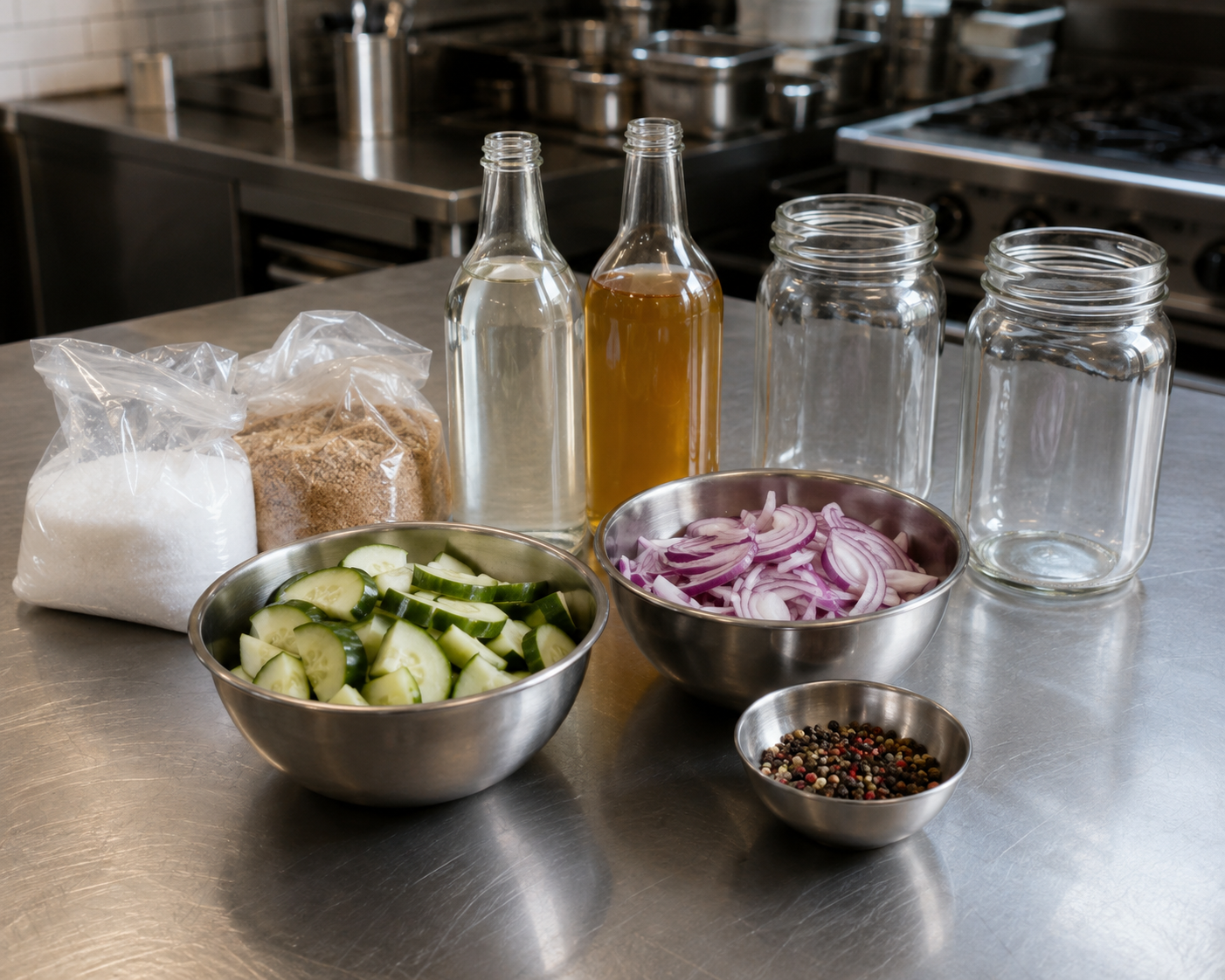
Pickling is one of the oldest ways cooks learned to control how time and chemistry affect raw ingredients. Before refrigeration, before global supply chains, before year-round access to fresh produce, pickling offered a way to hold onto ingredients beyond their season. Salt, acid, sugar, aromatics, fermentation, and careful storage allowed vegetables, fruits, fish, meats, roots, herbs, and spices to last longer than they otherwise would. But pickles are not only about survival.
In the kitchen, pickling is also a way to design flavor and texture. A pickle can bring acidity, crunch, sweetness, salinity, heat, bitterness, aroma, and contrast. It can wake up a rich dish, cut through fat, sharpen a sandwich, brighten a bowl, complete a taco, refresh the palate beside fried food, or become a side dish in its own right. Pickling is not only preservation. It is structure.
A quick-pickled onion can change a plate in fifteen minutes. A vinegar pickle can hold a harvest for weeks or months. A salt-brined vegetable can move toward fermentation. An escabeche can carry acid, oil, spices, vegetables, fish, or meat into a completely different register. Japanese pickles, Vietnamese pickled vegetables, Filipino atchara, Indian pickles, Latin American curtidos, and Mediterranean vinegar preparations all reveal that pickling is not one technique, but a family of culinary logics.
To understand pickles is to understand how acidity and time can become tools for developing authorship.
What Pickling Is — Acid, Salt, Time, and Texture
Pickling is the process of treating ingredients with acid, salt, sugar, brine, fermentation, or a combination of these forces in order to preserve, season, transform, or create contrast.
Not all pickles are fermented.
Not all pickles are shelf-stable.
Not all pickles are meant for long storage.
Not all pickles are sour in the same way.
Some pickles are quick and immediate, designed to add brightness to a dish. Others are preservation systems. Some rely on vinegar. Some rely on salt. Some rely on natural fermentation. Some include oil, spices, sugar, chiles, herbs, garlic, ginger, mustard seed, turmeric, citrus, or dried fruit.
A pickle can function as:
preservation
condiment
side dish
garnish
acid layer
crunch layer
palate cleanser
seasoning system
sandwich element
bowl component
accompaniment to grilled, fried, fatty, or rich foods
The cook must understand the purpose before choosing the method.
A pickle meant to preserve for months is not the same as a pickle meant to brighten tonight’s dinner.
Why Pickles Matter — Contrast and Control
Pickles matter because they introduce contrast with precision.
Many dishes need an acidic counterpoint. Fried foods need lift. Rich meats need brightness. Creamy sauces need interruption. Grains need definition. Beans need acidity. Sandwiches need crunch. Tacos need sharpness. Rice bowls need something alive. A composed plate may need one small element that resets the palate.
Pickles do this work efficiently.
They can be small but decisive. A few pickled onions can change a tostada. Pickled mustard seeds can transform a sauce. Pickled cucumbers can open a sandwich. Pickled chiles can bring heat and acidity at the same time. Pickled carrots and daikon can structure the bite of a bánh mì. Escabeche can turn cooked fish, vegetables, or poultry into something that tastes seasoned through time.
Pickling gives the cook a way to prepare contrast in advance.
That is why professional kitchens rely on pickled elements. They are not decorative. They are controlled tools for balance.
Quick Pickles — Immediate Acidity and Crunch
Quick pickles are made for short-term use.
They usually involve vinegar or citrus, salt, sometimes sugar, and aromatics. The ingredients may sit for a few minutes, a few hours, or a few days under refrigeration. They are not necessarily designed for long preservation. Their purpose is often immediate contrast.
Quick pickles are excellent for onions, cucumbers, radishes, carrots, fennel, cabbage, chiles, turnips, apples, grapes, citrus peel, and herbs.
What they do
add acidity quickly
soften harsh raw flavors
create crunch
add color
sharpen rich dishes
prepare components before assembly
A quick pickle is one of the easiest ways to add structure to a dish. It gives the cook acidity and texture without needing to make a full sauce.
Key principle
Quick pickles are not storage systems first. They are flavor tools.
Vinegar Pickles — Stability, Sharpness, and Aromatic Control
Vinegar pickles rely on acid as the main preserving and flavoring force.
The vinegar may be sharp, soft, fruity, grain-based, wine-based, rice-based, cane-based, or infused. Sugar may be added for balance. Salt sharpens and seasons. Spices and aromatics create identity.
Vinegar pickles can be simple or complex. A cucumber pickle, pickled onion, pickled beet, pickled chile, pickled mushroom, pickled garlic, or pickled fruit all require different thinking because each ingredient has its own water content, texture, density, and flavor.
Common aromatic additions
garlic
bay leaf
mustard seed
coriander seed
dill
peppercorn
chiles
ginger
turmeric
citrus peel
herbs
sugar
spices
The acid does more than preserve. It carries aroma into the ingredient.
Key principle
Vinegar pickling is about acid balance, ingredient density, and aromatic direction.
Salt Brines — Drawing, Seasoning, and Fermentation Pathways
Salt brines work differently from vinegar pickles.
Salt draws moisture, seasons the ingredient, affects texture, and can create conditions for fermentation when handled properly. Salt-brined pickles may remain simple brined vegetables, or they may become fermented pickles through the action of lactic acid bacteria.
This is where the cook must be precise. Salt concentration, temperature, cleanliness, submersion, time, and oxygen control all matter. A salt brine can produce beautiful complexity, but it can also go wrong if treated casually.
Salt-brined pickles often have a different acidity from vinegar pickles. Their sourness can feel rounder, deeper, and more alive because it develops through fermentation rather than direct acid addition.
Key principle
Salt brines are not just salty water. They are systems of texture, microbial activity, and time.
Sugar — Balance, Preservation, and Texture
Sugar is often misunderstood in pickling.
It is not always used to make something taste sweet. In many pickles, sugar balances acidity, softens bitterness, rounds sharp vinegar, supports aromatics, and helps create a more complete flavor.
Sugar can also affect texture and preservation depending on concentration. In fruit pickles, chutneys, relishes, and sweet-sour preparations, sugar may become more prominent. In quick pickles, it may be almost invisible but still essential.
Sugar can help:
soften sharp vinegar
balance chile heat
support fruitiness
round bitterness
make pickles more approachable
create sweet-sour contrast
support glazes and relishes
The cook should ask whether sweetness is meant to be tasted directly, or only felt as balance.
Aromatics — The Identity of the Pickle
A pickle without aromatics can still be useful. But aromatics give it identity.
Dill changes cucumber. Mustard seed changes cabbage. Ginger changes carrot. Garlic changes mushroom. Bay leaf changes escabeche. Turmeric changes cauliflower. Chile changes onion. Coriander seed changes citrus peel. Fennel seed changes fruit. Sesame and soy can move pickles toward another culinary world.
Aromatics may enter fresh, dried, toasted, crushed, whole, infused, or powdered. Their form changes how they behave.
A whole spice gives slow release.
A ground spice gives immediate color and intensity.
A fresh herb gives brightness but may fade quickly.
A dried herb brings persistence.
A chile can bring heat, fruit, smoke, or color.
The pickle is a small container of time. The aromatics decide what time will carry.
Heritage — Pickling Across Culinary Cultures
Pickling becomes especially rich when studied through heritage.
Every culture that pickles has developed its own logic: what is preserved, why it is preserved, how acidity is built, which aromatics are used, and how the pickle enters the meal.
Escabeche and the Spanish-Latin American Bridge
Escabeche opens an entire world of pickling logic. In Spanish cuisine, escabeche often involves vinegar, oil, aromatics, spices, and cooked ingredients such as fish, poultry, or vegetables. It preserves and seasons at the same time.
As Spanish techniques traveled into Latin America, escabeche adapted to local ingredients, chiles, vegetables, fish, and regional habits. This makes escabeche more than a recipe. It is a bridge between preservation, cooking, acidity, and cultural movement.
Japanese Pickles
Japanese pickling traditions include many approaches: salt pickles, rice bran pickles, vinegar pickles, miso pickles, soy-based pickles, and quick pressed pickles. Pickles often appear as small but important elements in a meal, bringing crunch, salt, acidity, and seasonal expression.
The lesson here is restraint and precision. A small pickle can carry a large amount of meaning.
Vietnamese Pickles
Vietnamese pickles often bring brightness, crunch, sweetness, and acidity. Pickled carrot and daikon are central to many dishes, especially as a counterpoint in sandwiches, rice plates, noodle bowls, and grilled foods.
The pickle is not separate from the dish. It completes the bite.
Filipino Pickles
Filipino atchara, often made with green papaya, vinegar, sugar, ginger, and aromatics, shows how pickles can function as sweet-sour relief beside rich, fried, grilled, or savory dishes.
Here, pickling becomes balance for abundance.
Indian Pickles
Indian pickles form a vast and deeply regional universe. They may use oil, salt, spices, chiles, mustard seed, fenugreek, turmeric, lime, mango, garlic, vegetables, or fruits. Some are fermented or aged. Some are intensely spiced. Some are oily, salty, sour, and hot all at once.
The lesson here is that pickles can be powerful, not delicate. They can act as a major flavor force on the plate.
Latin American Curtidos and Pickled Chiles
Curtidos, pickled onions, pickled chiles, escabeches, and vinegar-based relishes appear throughout Latin America. They bring acidity, crunch, heat, and freshness to beans, tacos, pupusas, grilled meats, seafood, sandwiches, and stews.
The pickle often functions as the bright edge of the meal.
These examples are only an entry point. Pickling is a global language, and every culture that practices it holds techniques worth studying.
Preservation vs. Immediate Contrast
One of the most important distinctions in pickling is purpose.
Are you pickling to preserve?
Or are you pickling to create immediate contrast?
These are related, but not identical.
Pickling for preservation
Requires more control. Acidity, salt concentration, sterilization, storage, temperature, containers, oxygen exposure, and time matter. Shelf stability should never be assumed.
Pickling for immediate contrast
Can be faster and more flexible. A quick pickle can be made for service, held in the refrigerator, and used to bring brightness and crunch to dishes.
Both are valuable. But confusing them can create problems.
A quick pickle is not automatically safe for long storage. A fermented pickle is not just a quick pickle left longer. A vinegar pickle intended for preservation requires more discipline than a garnish made for tonight.
The cook must know which process is being used.
Texture — Crunch, Softness, and Timing
Pickling changes texture.
Some ingredients become crisper. Others soften. Some collapse if sliced too thin. Some stay firm when kept cold. Some lose their snap if held too long. Salt can draw water. Acid can firm or soften depending on the ingredient and timing. Sugar can change perception of juiciness. Heat can make pickles more tender.
Texture depends on:
ingredient freshness
cut size
salt concentration
acid strength
sugar level
temperature
time
whether the brine is hot or cold
storage conditions
A cucumber spear, shaved onion, whole chile, julienned carrot, green papaya, radish slice, mushroom, and cooked beet will not pickle the same way.
Texture must be designed.
Application — How Pickles Enter a Dish
As Garnish
Small, bright, sharp, and often used at the end.
As Side Dish
Served beside rich, grilled, fried, or starchy foods.
As Internal Layer
Placed inside sandwiches, tacos, wraps, bowls, and composed salads.
As Sauce Ingredient
Chopped into relishes, tartar-style sauces, dressings, vinaigrettes, or herb sauces.
As Plate Contrast
Used sparingly to cut through fat, sweetness, or heaviness.
As Cooking Ingredient
Some pickled elements can be cooked into stews, sauces, braises, or rice dishes, though this changes their freshness.
A pickle is not only something served beside the dish.
It can be built into the dish.
Practical Notes — Safety, Storage, and Discipline
Pickling requires care.
Acid and salt are powerful, but they are not magic. Not every pickle is shelf-stable. Not every brine is safe to reuse. Not every jar can sit unrefrigerated. Clean handling matters. Temperature matters. Ingredient condition matters.
Best practices
Work with clean jars, utensils, boards, and hands.
Use fresh ingredients in good condition.
Label pickles with name and date.
Refrigerate quick pickles.
Keep ingredients submerged when required.
Use non-reactive containers.
Do not assume shelf stability unless following a tested preservation method.
Watch for mold, slime, gas, off smells, or unexpected texture changes.
Use clean utensils when serving.
Make small batches while testing.
When in doubt, discard.
Pickling is generous, but it demands discipline.
Creative Exercise — Build a Pickle Study
Choose one ingredient: onion, cucumber, carrot, radish, chile, mushroom, cabbage, green papaya, beet, or fennel.
Prepare three versions.
1. Quick Vinegar Pickle
Vinegar, salt, sugar, aromatics. Short rest.
2. Salt-Brined Pickle
Salt and water, with aromatics. Controlled refrigeration or proper fermentation method if experienced.
3. Sweet-Spiced Pickle
Vinegar, sugar, salt, spice, and chile.
Taste them at different moments.
After 15 minutes.
After 1 hour.
After 1 day.
After several days, if safely stored.
Document:
How did texture change?
How did color change?
What happened to aroma?
Did acidity become sharper or softer?
Did the ingredient release water?
Which version works as garnish?
Which works as side dish?
Which could enter a sandwich, bowl, or sauce?
This is how pickling becomes culinary grammar.
Closing — Acidity Held in Time
Pickles teach cooks how to hold acidity inside texture.They are preservation, but also punctuation. They carry crunch, salt, sourness, sweetness, heat, and aroma into places where a dish needs contrast. They can be humble, sharp, delicate, powerful, regional, medicinal, festive, or everyday.
When studied through heritage, pickling reveals how cultures solved practical problems and created deep flavor systems at the same time. Escabeche, tsukemono, atchara, curtidos, Indian pickles, Vietnamese pickles, and countless other traditions show that pickling is not one method. It is a world of methods. To pickle well is to understand time, acid, salt, texture, and restraint. A pickle is not just preserved food. It is acidity disciplined by technique.