The Pan
The Mechanics of Direct Conductive Heat
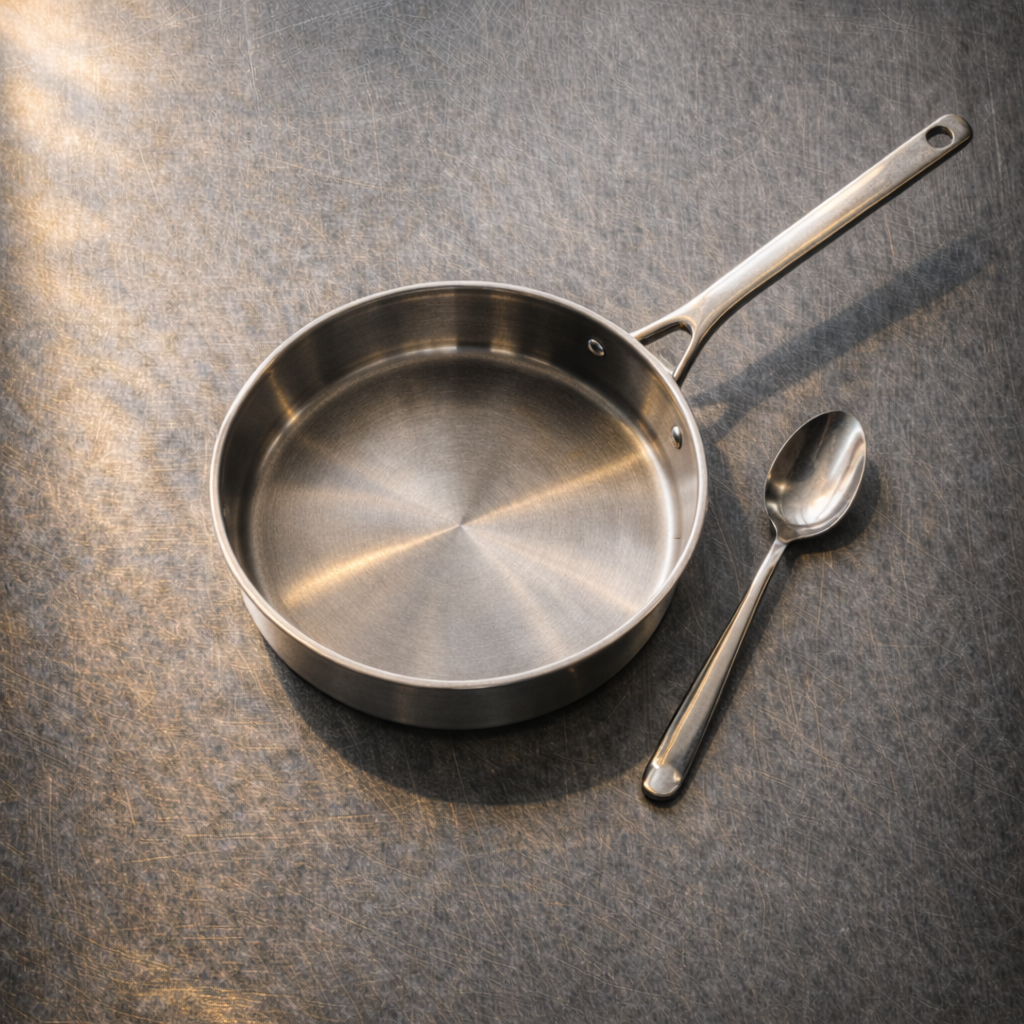
If knives prepare ingredients for cooking, the pan is where flavor truly begins to develop. Through direct contact between hot metal and food, ingredients undergo transformations that define much of cooking itself: browning, caramelization, and the development of complex aromas.
A properly heated pan allows proteins to sear, vegetables to soften while retaining structure, and sauces to emerge from the caramelized residues left behind after cooking. Because of this, the pan is one of the most essential instruments in any kitchen. It is the place where ingredients meet heat directly and begin to change.
The Function
The pan cooks food via direct heat conduction.
Heat moves from the burner into the pan's metal structure and then directly into the ingredient. This direct contact allows the cook to control both the speed and intensity of cooking. Typical uses include:
• searing meats and fish
• sautéing vegetables
• shallow frying
• browning ingredients before braising
• building sauces from pan drippings
The browned residues that form on the surface of the pan are known as fond. When deglazed with wine, stock, or water, these residues become the foundation of many classic sauces. For this reason, the pan is not only a cooking surface but also a flavor enabler.
The Geometry
The shape of a pan influences how ingredients move and cook within it.
Skillet
The skillet typically features sloped sides and a wide cooking surface. This geometry allows ingredients to be flipped or stirred easily and is well-suited for sautéing and frying.
Sauté Pan
A sauté pan has straighter sides and greater depth. This increases capacity and helps contain liquids, making it ideal for cooking ingredients that release moisture or for finishing dishes with sauces.
Wok
The wok is a distinctive form of pan with a deep, rounded shape. Designed for high-heat cooking, the wok allows ingredients to move quickly across the surface while maintaining intense contact with heat. This geometry encourages rapid cooking techniques such as stir-frying, where ingredients are tossed constantly to cook evenly.
Materials
The material of a pan greatly influences how it behaves under heat.
Stainless Steel
Durable and corrosion-resistant, stainless steel pans are common in professional kitchens. Many contain aluminum or copper cores that improve heat distribution. They are particularly valued because they allow the formation of fond, which is essential for deglazing and sauce building.
Cast Iron
Cast-iron pans retain heat extremely well and produce excellent browning. They are heavy but ideal for searing meats and cooking at high temperatures.
Carbon Steel
Carbon steel pans combine many of the advantages of cast iron with lighter weight. With proper seasoning, they develop natural non-stick properties and respond quickly to heat.
Non-Stick Surfaces
Non-stick pans are widely used for delicate preparations such as eggs, fish, or thin proteins, where minimal sticking is desired. However, they require careful handling. Non-stick coatings can degrade with high heat, metal utensils, or rough cleaning. For this reason, professional kitchens often treat non-stick pans as specialized tools rather than general-purpose pans. They are excellent for certain tasks, but must be used thoughtfully to avoid damaging the coating.
Ergonomics
A pan must be comfortable and safe to use during repeated cooking movements.
Pan Size
While pans 20-30 cm are most common, smaller or larger pans may be needed depending on the ingredients being cooked. Using a pan that is too large for the ingredient can make sauce reduction inefficient, while a pan that is too small prevents proper browning.
Pan Thickness
Thicker pans retain heat more effectively and are better suited for searing large proteins. Thinner pans heat quickly and may be preferable for lighter preparations such as delicate fish.
Handles and Heat
Many pans move frequently between the stovetop and oven. Because metal handles become extremely hot, cooks must remain attentive and often rely on a kitchen cloth or towel when handling pans during service. In busy kitchens, forgetting that a pan handle has been in the oven is a common cause of burns.
Choosing the Tool
Selecting a pan depends largely on the type of cooking performed most frequently. Important considerations include:
• heat distribution
• pan thickness
• handle stability
• durability of materials
• appropriate size for the cooking surface
Professional kitchens often rely on a small collection of well-made pans rather than many inexpensive ones. A good pan should heat evenly, remain stable on the stove, and withstand years of repeated use.
Common Misconceptions
One common misconception is that higher heat always improves cooking. In reality, many ingredients benefit from moderate heat that allows them to cook evenly without burning. Another frequent mistake is overcrowding the pan. When too many ingredients are added, moisture accumulates, preventing browning. Pan thickness also influences cooking behavior. Thin pans may heat quickly but can lose heat when large ingredients are added, while thicker pans maintain more stable temperatures.
Closing Reflection
The pan is where ingredients begin to reveal their character under heat. Vegetables soften, proteins caramelize, and the aromas of cooking begin to fill the kitchen. It is an instrument that rewards attention and understanding. The cook learns how heat behaves across the surface, how ingredients respond to contact, and how small adjustments in temperature change the outcome of a dish. In many ways, the pan is the place where cooking truly begins.