Culinary Fats — Flavor, Heat, Texture, and Transformation
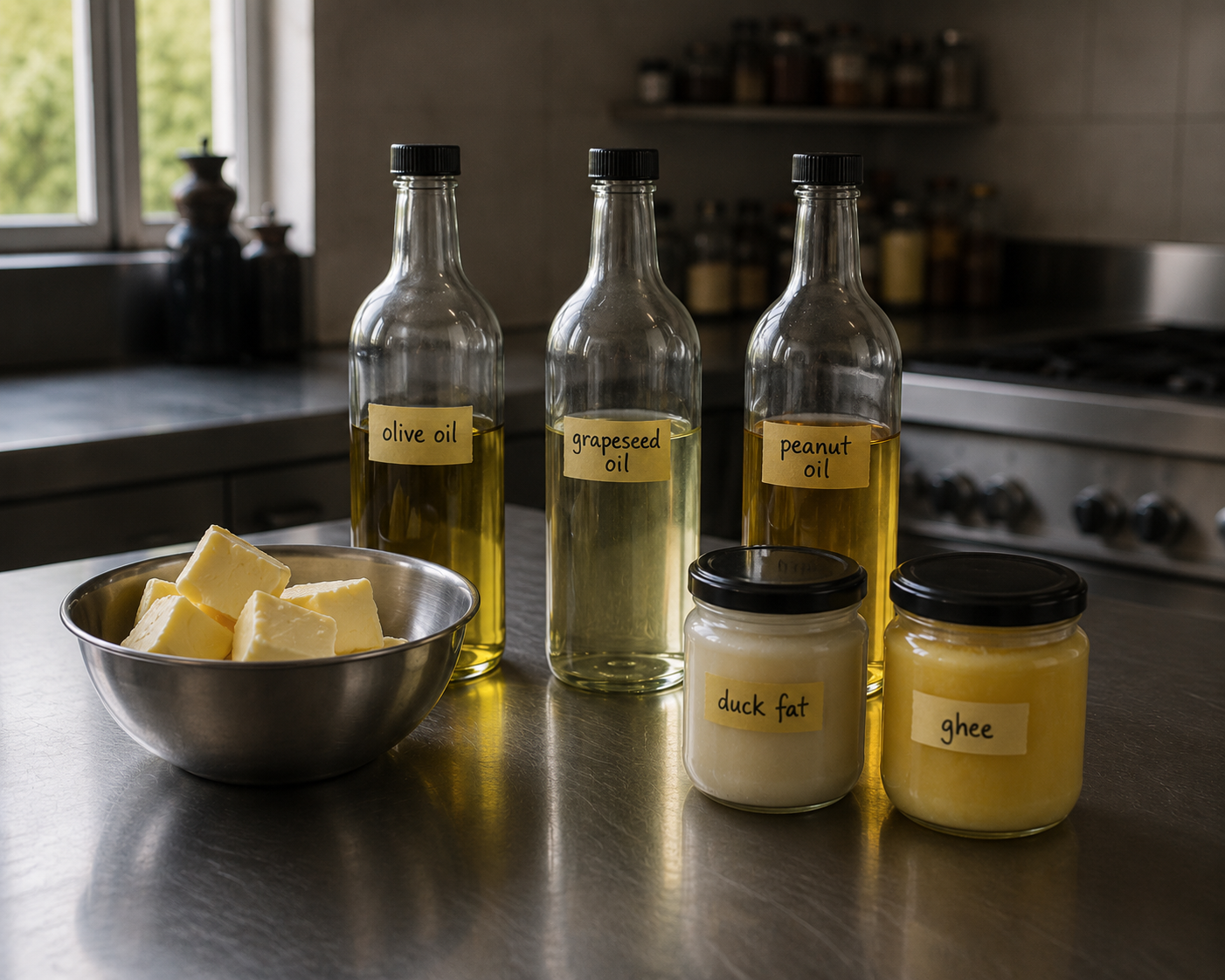
Fat is not only an ingredient, but a primary cooking material. It is a medium, a carrier, a texture builder, a seasoning, a preservative, a heat-transfer system, and one of the most decisive forces in cooking. A raw ingredient entering fat does not simply become “cooked.” It changes according to the kind of fat, the temperature, the impurities present, the cooking method, the timing, and the aromas carried by that fat.
Take the same ingredient: mushrooms. Cook them in grapeseed oil, coconut oil, olive oil, peanut oil, a neutral vegetable oil blend, butter, clarified butter, lard, tallow, or duck fat. The mushroom will not emerge the same each time. Its surface will brown differently. Its aroma will change. Its aftertaste will change. Its relationship to heat will change. Some fats will stay quiet. Some will speak loudly. Some will help the mushroom caramelize cleanly. Some will add nuttiness, dairy notes, fruitiness, animal depth, tropical aroma, or a lingering coating on the palate.
To understand fat is to understand how flavor moves, how heat reaches food, how surfaces brown, how sauces become stable, how aromas are carried, how textures become luxurious, crisp, tender, or rich, and how certain preparations can be preserved beneath a protective layer. Fat is one of the foundations of cooking because it does not only add flavor. It changes what cooking can do.
What Culinary Fat Is — Ingredient, Medium, and Technique
Culinary fats include oils, animal fats, dairy fats, seed fats, nut oils, fruit oils, rendered fats, infused oils, fermented or seasoned oils, and fats used in cooking, finishing, emulsifying, preserving, frying, sautéing, baking, confit, and sauce making.
They can come from plant-based or animal-based sources.
Plant-based fats include olive oil, avocado oil, coconut oil, sesame oil, peanut oil, grapeseed oil, sunflower oil, canola oil, vegetable oil blends, walnut oil, pistachio oil, almond oil, argan oil, cacao butter, coconut cream, tahini, nut butters, seed pastes, and many others.
Animal-based fats include butter, clarified butter, ghee, cream, lard, tallow, schmaltz, duck fat, goose fat, bacon fat, marrow, fish oils, anchovy oil, and fats rendered or carried from previous preparations.
Each fat has its own behavior.
Some are made for high heat.
Some are made for finishing.
Some are neutral.
Some are strongly aromatic.
Some are fragile.
Some are refined and clean-burning.
Some carry milk solids, sediment, flavor compounds, or impurities that brown, smoke, or burn.
Some are stable.
Some oxidize quickly.
Some are precious and should never be wasted in the pan.
A cook does not choose fat only by flavor.
A cook chooses fat by purpose.
Why Fat Matters — Transformation Through Contact
Fat changes food through contact.
It conducts heat, surrounds surfaces, carries aromas, dissolves flavor compounds, supports browning, creates crust, softens acidity, moderates bitterness, rounds spice, lubricates texture, and gives the palate a sense of length.
Water boils and steams. Fat sears, fries, blooms, coats, and carries.
This is one reason sautéing mushrooms in different fats creates such different results. The fat is not passive. It controls how heat reaches the mushroom’s surface and what aromas cling to it. Grapeseed oil may allow a clean, high-heat sauté. Butter adds dairy sweetness and browning through milk solids. Clarified butter removes those solids and tolerates heat better. Olive oil may bring fruitiness and bitterness. Coconut oil may push the dish toward a completely different aromatic world. Duck fat or tallow may give savory depth and a more animal character.
The fat becomes part of the ingredient’s transformation.
This is one of the simplest ways to study culinary grammar: cook the same ingredient in different fats and taste what changes.
Heat Tolerance — Smoke, Refinement, and Control
Not all fats tolerate heat in the same way.
Some fats can be heated strongly before smoking or breaking down. Others are fragile and should be used gently or only as finishing oils. The difference depends on composition, refinement, free fatty acids, moisture, solids, and impurities.
A highly refined neutral oil usually tolerates heat better than a delicate unrefined nut oil. Clarified butter tolerates heat better than whole butter because the milk solids and water have been removed. Extra virgin olive oil can be used in many cooking contexts, but very expressive oils are often better reserved for finishing, where their aroma remains clear. Walnut, pistachio, almond, and argan oils can be extremely aromatic and delicate; they are usually best treated as seasoning oils rather than high-heat cooking fats.
Smoke is not only an inconvenience. It is information.
When a fat smokes, it is changing. Flavor can become harsh. Aromas can degrade. The kitchen environment can become unpleasant. The ingredient may taste scorched before it is properly cooked.
Heat tolerance is one of the first questions a cook should ask:
Is this fat meant to cook, or to finish?
Is it refined or unrefined?
Does it contain solids that may burn?
Does it have a strong aroma worth preserving?
Will high heat improve it, or destroy it?
Cooking with fat begins with respecting its limit.
Clean Fat and Flavorful Fat
Some fats are “clean” in the culinary sense: not morally clean, but purified, refined, filtered, or clarified so that they contain fewer solids, less moisture, and fewer compounds that burn quickly.
A clean neutral oil allows an ingredient to cook without adding much flavor. Clarified butter gives butterfat without the same risk of burning milk solids. Refined oils can tolerate higher heat and create more predictable results. Filtered frying oil, when properly managed, performs differently from dirty or degraded oil.
Other fats are intentionally flavorful.
Butter contains milk solids that brown and create nutty aroma. Extra virgin olive oil carries fruit, bitterness, grassiness, pepper, and body. Duck fat brings richness and animal depth. Bacon fat brings smoke, salt, and cured flavor. Sesame oil brings roasted intensity. Coconut oil brings sweetness and tropical aroma. Anchovy oil or fish-based oils can bring marine depth. Fermented or seasoned oils can act almost like sauces.
The cook must know when to use clean fat and when to use expressive fat.
A delicate vegetable may need a quiet oil.
A grain dish may need a fragrant finishing oil.
A mushroom may benefit from butter or duck fat.
A mayonnaise may need neutral oil, unless an infused oil is part of the idea.
A fried preparation may need stability more than aroma.
Fat choice is not automatic.
It is design.
Fat as Flavor Carrier
Fat carries flavor differently from water.
Many aromatic compounds dissolve or disperse well in fat. This is why spices are bloomed in oil, why garlic becomes fragrant in butter, why chile heat moves through oil, why herb oils can perfume a plate, and why infused fats can become powerful tools for sauces, dressings, marinades, mayonnaise, and finishing.
Fat can carry:
herbs
spices
citrus peel
chiles
garlic
shallots
seeds
smoke
mushrooms
seaweed
anchovy
saffron
vanilla
roasted aromatics
fermented pastes
cooked ingredients from previous preparations
This carrying capacity is central to cooking. A cook may infuse grapeseed oil with coriander seed, then use it to make mayonnaise. The mayonnaise will carry the aroma quietly through the emulsion. A neutral oil infused with cilantro stems can become a green finishing oil. A butter infused with sage can finish squash or pasta. A chile oil can season noodles, vegetables, eggs, soups, or grilled food. A mushroom oil can become the base of a dressing.
This is how fat becomes more than richness.
It becomes memory and movement.
Infused Fats — Preparing Aroma Before the Dish
Infused fats allow the cook to build flavor before the final preparation begins.
An oil may be infused cold, warm, or through cooking. Butter may be browned, clarified, smoked, spiced, or herb-infused. Rendered fat may be perfumed with aromatics. The technique depends on the ingredient and the desired result.
Citrus-infused oils
Lemon, orange, grapefruit, or lime peel can perfume neutral oil. These oils work in mayonnaise, dressings, fish dishes, vegetables, and finishing sauces.
Herb oils
Parsley, dill, cilantro, basil, chive, mint, tarragon, or rosemary can move into oil as green aroma. Some are best used quickly because fresh herb oils can fade or spoil.
Spice oils
Cumin, coriander seed, fennel, chile, pepper, cardamom, turmeric, paprika, or saffron can be bloomed or infused into oil to create a concentrated seasoning fat.
Garlic and shallot oils
These can season noodles, vegetables, soups, rice, beans, sauces, and dressings, but require careful handling and storage.
Mushroom or roasted vegetable oils
These can carry umami and cooked aroma into later preparations.
Infused fats need discipline. Moisture, garlic, fresh herbs, and improper storage can create food safety risks. Small batches, refrigeration when appropriate, clean tools, labeling, and careful observation matter.
An infused oil is not just flavored oil.
It is a prepared ingredient.
Fat From Previous Preparations
Fat can carry the memory of what it has cooked.
The oil left after frying mushrooms is not the same oil it was before. Butter used to brown sage carries nutty milk solids and herb aroma. Bacon fat carries smoke and cured pork flavor. Duck fat that has cooked potatoes carries starch, roast notes, and salt. Oil used to bloom spices carries spice identity.
This fat can be used intentionally in another preparation.
A mushroom cooking oil can become part of a vinaigrette. Bacon fat can season beans or greens. Roasted garlic oil can enrich mayonnaise. Shrimp shell oil can become the beginning of a seafood sauce. Spice-bloomed oil can finish a soup. Duck fat can roast vegetables. Anchovy oil can season a bitter green salad or vegetable stew.
This requires judgment.
The fat must be clean, fresh, safe, and appropriate. Burnt fat should not be reused. Fat that held raw proteins must be handled with care. Old fat can taste rancid or heavy. Strong fats can dominate. Sometimes only a small amount is needed, blended with neutral fat.
Reused fat is not waste management first.
It is continuity, when used well.
Fat as Seasoning
Some fats are best understood as seasoning.
They are not used mainly to cook. They are used to finish, perfume, enrich, or give identity. A high-quality extra virgin olive oil with strong fruit, bitterness, pepper, and body may be wasted in high-heat cooking. Its role may be to finish fish, beans, tomatoes, bread, soup, vegetables, or grains.
The same is true for delicate nut oils and seed oils.
Walnut oil, pistachio oil, almond oil, hazelnut oil, argan oil, sesame oil, and certain specialty oils can carry fine aromas that are easily damaged by heat, light, and oxygen. They should be stored carefully, used fresh, and applied with restraint.
Some seasoned oils behave almost like liquid condiments: chile oil, garlic oil, herb oil, anchovy oil, smoked oil, scallion oil, black garlic oil, shrimp oil, fermented chile oil, or spice oils. These oils can finish dishes with immediate clarity.
A finishing oil asks a different question than a cooking oil.
Not: can it take the heat?
But: what does it say when nothing is hiding it?
Animal Fats — Depth, Browning, and Cultural Memory
Animal fats carry strong culinary identity.
Butter, clarified butter, ghee, lard, tallow, schmaltz, duck fat, goose fat, bacon fat, marrow, and fish oils all shape food differently. They bring mouthfeel, aroma, tradition, and often deeper savory notes than neutral plant oils.
Butter gives dairy sweetness and browning through milk solids. Clarified butter and ghee give butterfat with more heat tolerance and nutty depth. Lard can create tenderness in doughs and richness in beans, stews, frying, or pastry. Tallow gives beefy depth and high-heat performance. Duck fat is famous for roasting potatoes and vegetables because of its flavor and coating power. Schmaltz brings poultry depth. Bacon fat adds smoke, salt, and cured aroma.
These fats are not interchangeable.
They carry cultural memory. A tortilla, biscuit, confit, roast potato, bean dish, pastry, or fried preparation may change completely depending on the fat used.
The question is not only plant-based or animal-based.
The question is what the fat does to the dish.
Plant-Based Fats — Range, Clarity, and Direction
Plant-based fats are not one category.
They range from neutral industrial cooking oils to deeply expressive oils and pastes. Grapeseed, sunflower, canola, peanut, avocado, coconut, olive, sesame, walnut, pistachio, almond, hazelnut, argan, cacao butter, tahini, coconut cream, nut butters, and seed pastes all behave differently.
Some are useful for high heat. Some for dressings. Some for emulsions. Some for baking. Some for sauces. Some for frying. Some for finishing.
Neutral oils
Useful when the cook wants heat transfer without strong flavor.
Olive oil
Can cook, dress, finish, preserve, and define Mediterranean direction, depending on quality and style.
Peanut and sesame oils
Bring nutty and regional identity, with very different intensity depending on refinement and roasting.
Coconut oil and coconut cream
Bring fat, sweetness, aroma, and body. They can change the direction of a dish immediately.
Nut and seed oils
Often best for finishing because of delicate aromas and oxidation sensitivity.
Nut and seed pastes
Tahini, peanut butter, almond butter, cashew cream, and pumpkin seed pastes bring fat and body to sauces, dressings, marinades, and plant-based preparations.
Plant-based fats offer enormous range. The cook should not treat them as neutral substitutes.
They are materials with their own grammar.
COMMONLY USED Cooking Techniques With Fat
Fat changes depending on how it is used.
Sautéing
A small amount of fat transfers heat to the surface of the ingredient. The goal may be browning, softening, aroma release, or quick cooking.
Sweating
Fat gently carries heat into aromatics without browning. Onion, garlic, leeks, celery, peppers, and spices often begin here.
Blooming
Spices, chiles, seeds, pastes, or aromatics are heated in fat to release aroma and color.
Shallow Frying
Food cooks partially submerged in fat. The surface crisps while the inside cooks.
Deep Frying
Food cooks fully submerged in hot fat. Temperature control, oil stability, moisture, coating, and recovery time matter.
Confit
Food cooks slowly in fat at low temperature. The fat surrounds, protects, and gently transforms the ingredient.
Roasting With Fat
Fat coats the surface, supports browning, prevents drying, and carries seasoning.
Basting
Hot fat is spooned over food during cooking, often carrying herbs, garlic, butter solids, and aromatics.
Emulsifying
Fat is suspended in water-based liquids to create mayonnaise, vinaigrettes, hollandaise-style sauces, dressings, aioli, and other preparations.
Mounting
Cold butter or fat may be added at the end to thicken, shine, and soften a sauce.
Preserving Under Fat
Cooked ingredients may be stored beneath a protective layer of fat, reducing oxygen exposure when properly handled.
Each technique uses fat differently. The same butter can sweat onions, brown sage, mount a sauce, baste fish, enrich potatoes, or become part of pastry. The technique decides the result.
Emulsions — Holding Fat in Suspension
An emulsion allows fat and water-based liquid to coexist.
Mayonnaise, vinaigrette, hollandaise-style sauces, aioli, tahini sauces, yogurt dressings, butter sauces, and many modern sauces depend on emulsion logic. The fat may be oil, butter, egg yolk-supported fat, nut paste, dairy fat, or seed fat.
Emulsions change the way fat is experienced. Instead of feeling oily, the fat becomes suspended, creamy, spreadable, pourable, or coating. Acidity, salt, mustard, egg yolk, garlic, miso, tahini, yogurt, aquafaba, or starch can help stabilize the structure.
This is where fat becomes architecture.
A mayonnaise made with neutral oil is one thing. A mayonnaise made with lemon-infused oil is another. A dressing made with olive oil, mustard, and vinegar behaves differently from one made with tahini and water. A butter sauce mounted at the end can make a reduction feel complete.
Emulsions teach that fat can be controlled.
Fat and Preservation
Fat can preserve by creating a barrier between food and air.
Confit, potted preparations, rillettes, preserved vegetables under oil, dairy fats, flavored oils, and certain traditional preserves rely on fat as part of a preservation logic. The fat covers the ingredient, limits oxygen exposure, and can carry flavor at the same time.
But fat preservation requires discipline.
A layer of fat is not a guarantee of safety. Moisture, temperature, acidity, salt, cleanliness, cooking, storage, and oxygen all matter. Ingredients stored under oil or fat can become dangerous if handled improperly, especially when fresh garlic, herbs, vegetables, or low-acid ingredients are involved.
The cook must distinguish between preservation tradition and casual storage.
Fat can protect, but it does not forgive negligence.
Best practice requires clean handling, refrigeration when appropriate, correct cooking, labeling, and knowledge of the specific preparation.
Fat, Aroma, and the Palate
Fat extends flavor.
A water-based flavor may appear quickly and disappear. A fat-carried flavor often lingers. This can be beautiful or heavy depending on balance. Fat lengthens aroma on the palate. It can make spice feel rounder, herbs feel deeper, umami feel fuller, and bitterness feel softer.
But too much fat can dull a dish.
A dish rich in fat may need acid. It may need bitterness. It may need salt. It may need herbs. It may need spice. It may need crunch. This is why fat must be understood in relation to the seven foundations of flavor.
Fat is generous, but it needs contrast.
A fried food needs acidity.
A buttery sauce may need lemon.
A nut oil may need bitterness.
A coconut sauce may need chile and lime.
A duck fat preparation may need herbs, mustard, vinegar, or pickles.
An olive oil-rich dish may need salt and fresh aroma.
Fat gives pleasure when it is balanced.
Storage, Oxidation, and Care
Fats are sensitive materials.
Light, heat, oxygen, moisture, and time can damage them. Some fats are stable; others are fragile. Nut oils, seed oils, and some unrefined oils oxidize quickly. Delicate oils can become rancid. Animal fats can absorb odors. Frying oils degrade through repeated use. Infused oils can become unsafe if improperly stored.
Best practices
Store delicate oils away from light and heat.
Buy fragile oils in small quantities.
Smell and taste oils before using.
Refrigerate certain nut oils or infused oils when appropriate.
Label infused fats with name and date.
Strain and store rendered fats properly.
Discard fats that smell rancid, bitter, stale, burnt, or unpleasant.
Do not reuse frying oil indefinitely.
Avoid moisture contamination in stored fats.
Treat garlic and herb-infused oils with particular care.
Fat carries flavor, but it also carries damage.
A rancid oil can ruin a dish before cooking begins.
Application — Choosing the Right Fat
When selecting a fat, ask what job it needs to do.
For high-heat cooking
Choose a stable fat appropriate for searing, frying, or roasting. Neutral oils, clarified butter, some refined oils, tallow, lard, or other heat-tolerant fats may be useful depending on the dish.
For flavor
Choose a fat that contributes identity: olive oil, butter, sesame oil, duck fat, coconut oil, bacon fat, nut oil, spice oil, or infused oil.
For finishing
Use expressive oils with aroma and body: extra virgin olive oil, walnut oil, pistachio oil, argan oil, herb oils, chile oils, smoked oils, or anchovy oils.
For emulsion
Consider texture, flavor, and stability. Neutral oil gives clean mayonnaise; olive oil gives bitterness and fruit; infused oil gives subtle aroma; tahini or yogurt changes the whole structure.
For preservation
Use only tested methods and proper storage. Fat can protect, but food safety must guide the process.
For pastry and dough
Consider whether the fat should create flakiness, tenderness, richness, structure, or aroma. Butter, lard, shortening, oils, and nut pastes all behave differently.
Choosing fat is a technical decision, not only a preference.
Creative Exercise — One Ingredient, Many Fats
Choose one ingredient: mushrooms, potatoes, onions, carrots, cabbage, eggplant, fish, tofu, or bread.
Cook small portions using different fats.
For example, cook mushrooms in:
grapeseed oil
olive oil
coconut oil
peanut oil
neutral vegetable oil
butter
clarified butter
lard
tallow
duck fat
Use the same pan, same cut, same salt level, same cooking time, and similar heat as much as possible.
Document:
How did the surface brown?
Which fat tolerated heat best?
Which aroma appeared first?
Which fat dominated the ingredient?
Which tasted cleanest?
Which gave the longest aftertaste?
Which made the mushroom feel richer?
Which made it taste heavier?
Which worked best for finishing?
Which would you use again, and for what dish?
This exercise turns fat from assumption into knowledge.
Closing — Fat as Culinary Grammar
Fat is one of the great forces of cooking. It carries aroma, transfers heat, builds texture, preserves, emulsifies, fries, softens, enriches, browns, protects, and finishes. It can be neutral or expressive, plant-based or animal-based, refined or fragile, raw or rendered, infused or reused, stable or delicate. To cook well with fat is not simply to add richness. It is to understand what kind of transformation is needed.
Does the ingredient need high heat?
Does the dish need aroma?
Does the sauce need body?
Does the palate need length?
Does the preparation need preservation?
Does the final plate need a finishing oil?
Does the fat need to disappear, or should it speak?
When a cook begins asking these questions, fat becomes part of culinary authorship. Not background. Grammar.