The Physics of Crunch: A Guide to Textural Contrast
Beyond Taste: Sound, Rhythm, and Structure
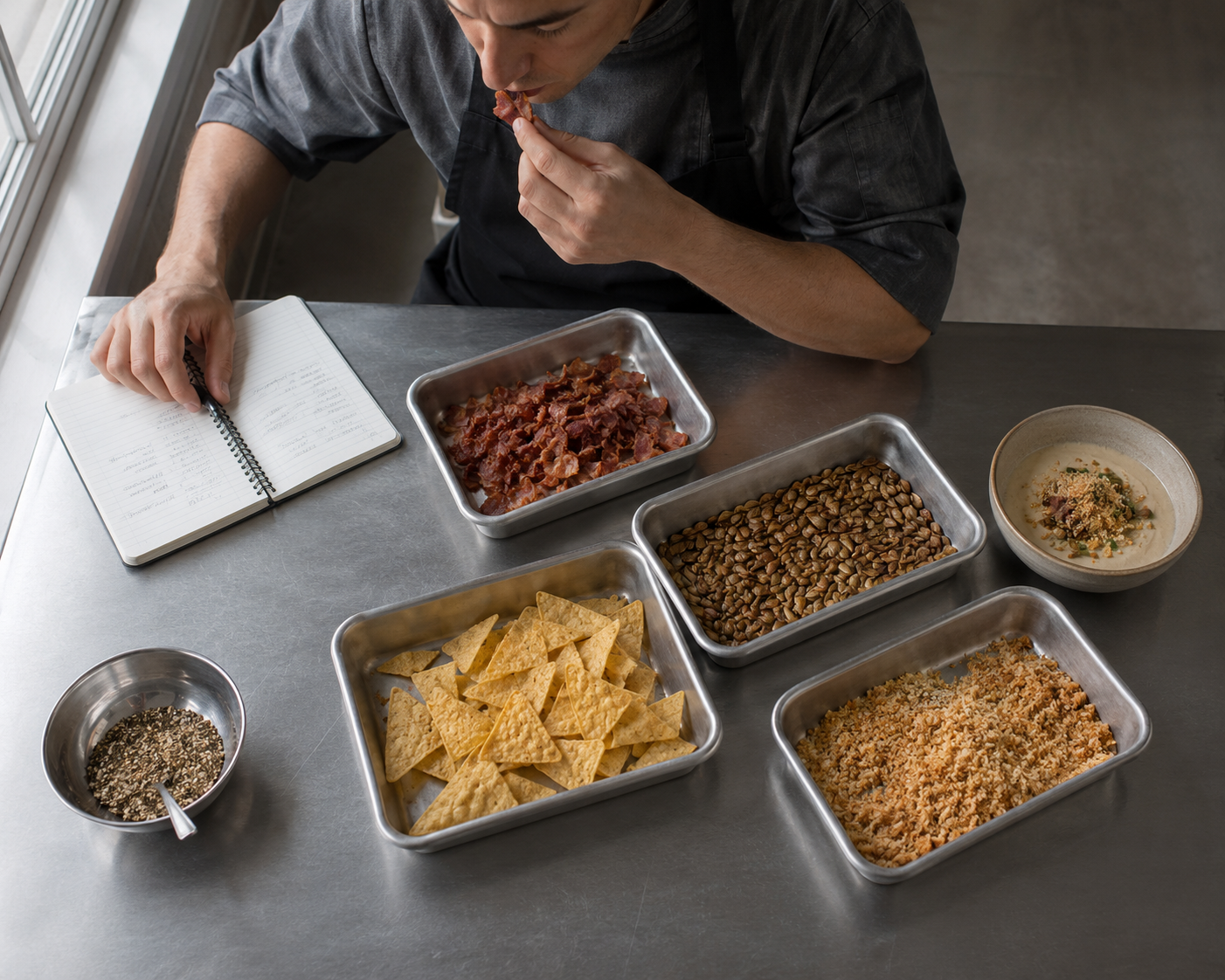
Why Crunch Matters
Crunch is not just a texture. It is sound, rhythm, and punctuation. It is the moment a dish becomes unforgettable. In fusion cuisine, where flavors often travel across continents on a single plate, textural contrast acts as diplomacy. It helps balance unfamiliar flavors, gives structure to bold combinations, and brings excitement to the act of eating.
A simple bowl of soup becomes deeper when a toasted seed or a crisp vegetable floats on top. A soft bao becomes livelier with a pickled, crunchy element inside. A dessert becomes dimensional the moment something brittle meets something silky. Cooking, at its heart, is the art of shaping texture, and crunch is one of the most expressive tools we have.
I. What Creates Crunch? The Three Drivers of Texture
1. Technique
You create crunch through transformation:
Deep-frying intensifies flavor and creates a hard, airy crust.
Pan-frying gives a golden, thin crispness.
Roasting brings caramelization and dry heat crunch.
Dehydration creates fragile sheets that crumble or chip.
Toasting unlocks oils and aroma, making nuts, seeds, and crumbs irresistible.
Baking produces structured crunch: crusts, crumbles, and brittle.
Each technique changes not only the texture but also the aroma.
2. Ingredient Behavior
Some ingredients become crunchy naturally; others need help.
Nuts & seeds: already structured for crunch.
Root vegetables: starch allows crisping when roasted or fried.
Tortillas, bread, doughs: can become crackers, croutons, tostadas.
Grains such as quinoa, amaranth, and rice can be puffed.
Fruits: dehydrated or caramelized for brittle crunch.
Understanding each ingredient's vulnerability helps you shape the final texture.
3. Contrast
Crunch works because it plays against something else.
The most memorable bites always follow the rule:
Soft + Crunchy
Cold + Hot
Creamy + Brittle
Silky + Toasted
Tender + Textured
Where there is contrast, there is pleasure.
II. Fusion Techniques for Achieving Crunch
Below are cross-cultural ways to achieve crunch, framed as fusion tools you can apply to any cuisine.
1. Pan-Toasted Seeds for Layered Bowls
A blend of sesame, pumpkin seed, and amaranth, toasted until fragrant.
Use on: rice bowls, salads, noodle dishes, roasted fish, soups.
Fusion note: A dialogue between Japanese gomasio and Mexican pepitoria.
2. Fried Aromatics from Vietnamese & Yucatán Traditions
Thinly sliced garlic, shallots, or chile, fried until crisp.
Use on: pho, tacos, noodles, ceviche, congee, tostadas.
Technique: Fry at medium heat to prevent burning; drain on paper.
3. Crumb Crunch — Mediterranean x Latin America
Bake panko + cornmeal + olive oil + smoked paprika.
Use on: roasted vegetables, fish, pasta, gratins, salads.
This creates a savory crumble with both Mediterranean perfume and Latin American color.
4. Dehydrated Vegetables for Color & Texture
Thinly slice beets, carrots, nopal, or shiitake; dehydrate until crisp.
Use as a garnish for tacos, fusion bowls, grain salads, and creamy soups.
A technique found everywhere from Peru to Japan.
5. Crispy Tortilla or Flatbread Strips
Fry or bake thin strips of tortilla, lavash, or pita.
Use on: hummus, pozole, lentil soups, grain bowls, aguachiles.
This is crunch as familiar comfort meeting global ingredients.
6. Asian Tempura Meets Mediterranean Herbs
Light tempura batter with oregano, rosemary, or za’atar.
Use for: shrimp, zucchini, sage leaves, onions, green beans.
A delicate crunch infused with aromatic earthiness.
7. Nut & Seed Brittle for Savory Dishes
Make a brittle with sesame, almond, peanut, and honey.
Break into shards.
Use with: grilled halloumi, roasted vegetables, burrata, carpaccio, and desserts.
8. Toasted Grains for Soups and Stews
Toast quinoa or amaranth until they pop.
Use on creamy soups, atoles, purées, or curries.
Inspired by Andean and Central American traditions.
9. Crispy Cheese Meets Asian Chili Oil
Pan-crisp halloumi or queso fresco; drizzle with chili crisp.
Use in bowls, tacos, bao, salads, and mezze platters.
Soft cheese + hot oil = instant contrast.
III. Examples of Crunch in Beautiful Fusion Plates
• Korean–Cambodian Bowl
Crispy rice, soft noodles, fresh herbs, fried shallots, crunchy cucumber pickles.
• Miso–Harissa Roasted Carrots
Soft roasted core with a sesame-peanut brittle on top.
• Creamy Coconut Soup with Roasted Corn “Granizo”
A Guatemalan texture applied in an Asian broth.
• Bao with Crunchy Cabbage + Crispy Shiitake
Soft pillow outside, fragrant crunch inside.
Cultural Note — Crunch Around the World
Crunch is one of the oldest culinary instincts. From Mexican chicharrón to Japanese tempura, from Indian papadam to Moroccan toasted almonds, every culture developed ways to transform ingredients into texture.
Even ancient cultures used crunch to balance soft porridges, stews, and drinks, a reminder that texture is just as cultural as flavor and aroma. Crunch is not an accident. It is a tradition.
Page-to-Plate Insights
Use them to spark action, refine your notes, and carry your creative process from the open page to a served table.
Choose one ingredient you cook often. Prepare it in three textures — raw, toasted, and fried or baked.
Add each version to the same dish and observe how the experience changes.