Salt — Salting With Intention, From Mineral Depth to Culinary Precision
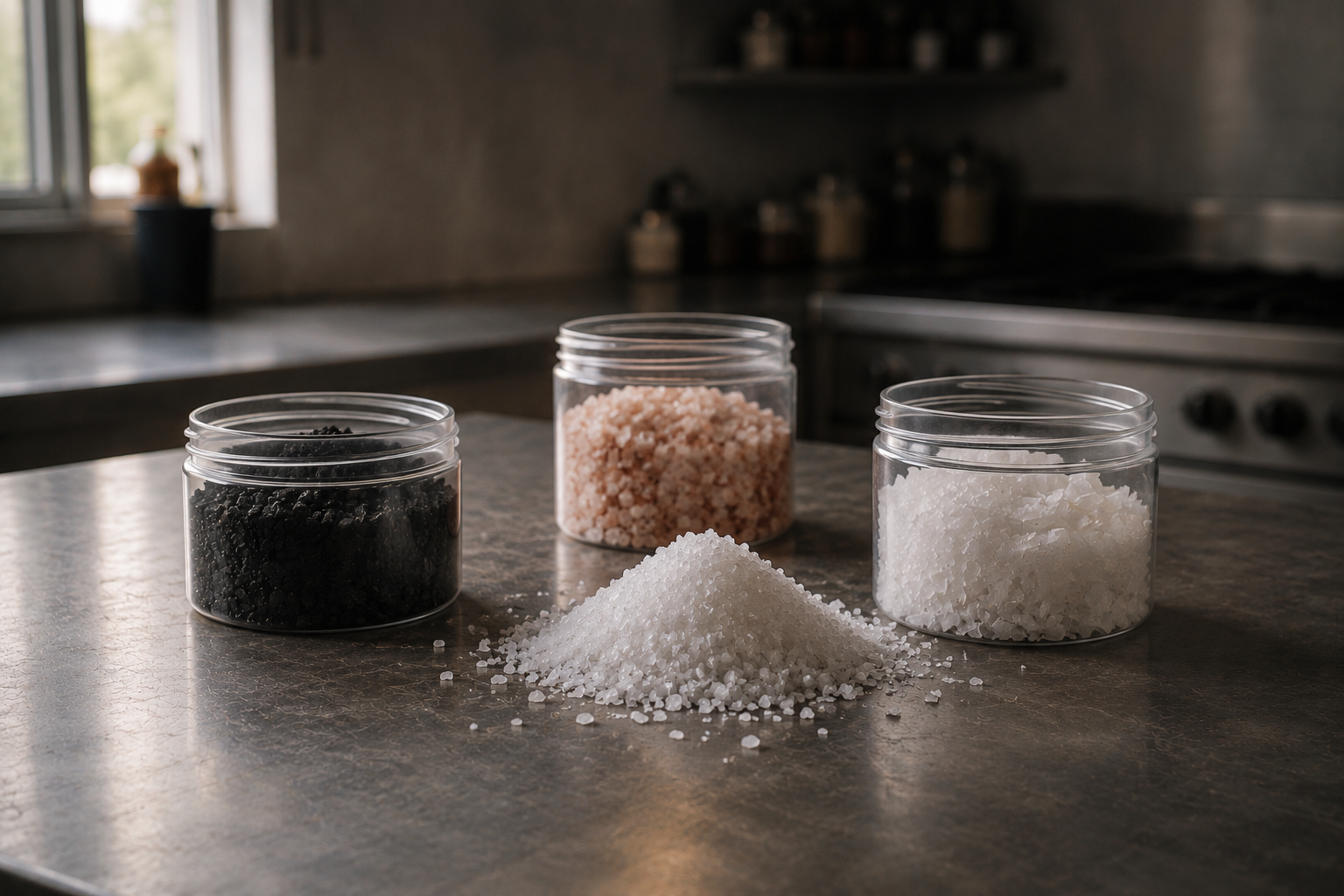
Salt is one of the most basic ingredients in the kitchen, but it is also one of the most misunderstood. At its core, salt is sodium chloride. Yet, not all salts are created equal; the salts we cook with are not all identical in behavior, flavor, texture, origin, or purpose.
A highly refined table salt, a moist sea salt from a coastal evaporation pond, a flaky finishing salt, and a mineral-rich rock salt may all season food, but they do not enter the dish in the same way. Their grain size, moisture, mineral content, extraction method, and refinement level affect how they dissolve, how they feel on the tongue, and how much character they bring to a preparation.
To salt with intention is not simply to add salt until something tastes “salty.” It is to understand what kind of salt you are using, when you are adding it, how it will dissolve, and whether its role is functional, structural, or expressive.
Salt can season, preserve, cure, ferment, draw out moisture, intensify sweetness, control bitterness, and finish a dish with texture. In this sense, salt is not only an ingredient. It is one of the fundamental tools of culinary transformation.
What Salt Is — One Substance, Many Expressions
Chemically, culinary salt is mostly sodium chloride. But most salts also contain traces of other minerals, varying moisture levels, and distinct crystal structures. These differences shape the way each salt behaves.
Some salts are refined until they become almost entirely sodium chloride. This makes them clean, predictable, dry, and useful for technical applications where consistency matters.
Other salts retain more mineral complexity. These may bring subtle bitterness, sweetness, metallic notes, oceanic salinity, earthiness, or a more rounded flavor. Their character comes from source, process, and environment.
Salt may come from:
evaporated seawater
underground salt mines
ancient sea beds
desert salt flats
mountain deposits
volcanic regions
saline lakes
coastal evaporation ponds
Each origin tells a different story of water, geology, climate, and time.
Why Salt Matters — Function Before Flavor
Salt is usually discussed as flavor, but in the kitchen its function is much broader.
Salt can:
season food directly
preserve ingredients
draw moisture from vegetables or proteins
strengthen gluten structure in dough
regulate fermentation
cure fish, meat, vegetables, and citrus
intensify sweetness in desserts
reduce perceived bitterness
create finishing texture
help build stable flavor systems in sauces and condiments
This is why salt should be understood as a technique as much as an ingredient. The question is not only how much salt? but which salt, when, and why?
Types of Salt and Their Culinary Uses
Refined Table Salt — Precision and Predictability
Refined table salt is usually very fine, dry, and uniform. It often contains anti-caking agents, and in some countries it may be iodized.
Because of its consistency, it can be useful in baking, brines, seasoning mixes, and applications where exact measurement matters. Its flavor is direct and clean, but it offers little mineral complexity.
Best uses:
baking
controlled seasoning
dry mixes
brines where precision matters
recipes requiring even distribution
Materia note:
Refined salt is not inferior by default. It is simply specific. Use it when cleanliness, dryness, and predictability matter more than character.
Sea Salt — Salinity With Geography
Sea salt is made by evaporating seawater. Depending on where it is harvested and how it is processed, it can be dry, moist, fine, coarse, delicate, or strongly mineral.
Sea salts from different regions may carry different sensory profiles. Some are bright and clean; others are briny, mineral, or slightly bitter. Artisanal sea salts often reflect their place of origin more clearly than heavily refined salts.
Best uses:
finishing
vegetables
grilled fish
salads
breads
simple dishes where the salt can be noticed
Materia note:
Sea salt is often most expressive when used with restraint, especially at the end of cooking.
Flake Salt — Texture as Seasoning
Flake salts, such as Maldon-style crystals, are prized for their light, irregular structure. They dissolve quickly on the tongue and create a delicate crunch.
They are not usually the best choice for general cooking, where their texture disappears. Their strength is as a finishing salt.
Best uses:
finishing grilled vegetables
tomatoes
chocolate desserts
breads and butter
roasted meats or plant-based mains
cocktails and glass rims
Materia note:
Use flake salt where the diner can feel it. Its value is texture as much as salinity.
Rock Salt and Mined Salt — Ancient Deposits, Earthy Profiles
Mined salts come from underground deposits, often formed by ancient seas that evaporated millions of years ago. These salts may be highly refined or left with mineral traces that give them color and character.
Pink salts, grey salts, and other mineral salts can be visually striking, but they should be chosen for function and verified quality, not simply for appearance.
Best uses:
finishing
salt crusts
grinders
curing
presentation
mineral-forward preparations
Materia note:
Color does not automatically mean better flavor or better quality. Source and testing matter.
Moist Salts — Mineral, Textural, and Alive With Water
Some salts, especially certain sea salts, retain moisture. This gives them a different feel and dissolution pattern. They can be excellent for finishing, curing, and preparations where a more rounded salinity is desired.
Best uses:
fresh vegetables
seafood
curing
finishing simple plates
herb salts
Materia note:
Moist salt behaves differently from dry salt. It may not measure the same by volume, so taste and adjust carefully.
Specialty Salts — Smoked, Volcanic, Herb, and Infused Salts
Specialty salts are salts that carry added or natural character through smoke, minerals, herbs, spices, or other ingredients.
Examples include:
smoked salt
black lava salt
citrus salt
herb salt
chile salt
seaweed salt
mushroom salt
These salts can be powerful finishing tools, but they can also become distracting if overused.
Best uses:
finishing oils
grilled vegetables
roasted mushrooms
cocktails
spice blends
snack seasoning
Materia note:
A specialty salt should serve the dish, not decorate it without purpose.
Choosing Salt With Intention
A useful way to choose salt is by function.
For Cooking
Choose a salt that dissolves evenly and predictably. Fine sea salt, kosher-style salt, or refined salt can work well.
For Finishing
Choose texture and flavor: flake salt, mineral sea salt, or moist salt.
For Fermentation
Use clean salt without additives that may interfere with microbial activity. Many cooks prefer non-iodized salt for lacto-fermentation.
For Curing
Choose salt based on grain size, purity, and control. Precision matters here.
For Infused or Flavored Salts
Use a clean, stable salt as a base. If adding fresh herbs, citrus zest, or wet ingredients, understand that moisture affects shelf life.
Salt, Flavor, and Mineral Character
The more refined a salt is, the more neutral it becomes. This neutrality can be useful. But mineral-rich salts may bring complexity that goes beyond salinity.
A mineral salt may taste:
briny
bitter
sweet
metallic
earthy
oceanic
smoky
sharp
rounded
These nuances matter most in simple preparations. If you are making a complex stew, a deeply spiced sauce, or a marinade with many ingredients, the specific mineral profile of an expensive finishing salt may disappear. Use character salts where their character can be perceived.
Safety and Source Awareness
Because salt comes from land, sea, and geological deposits, it can carry traces of the environment where it was formed or harvested. This may include mineral complexity, but also possible contaminants depending on the source.
For this reason, it is wise to research the salt you use, especially if it is marketed as mineral-rich, volcanic, artisanal, or harvested from areas with potential pollution exposure.
Look for producers who provide:
clear origin information
harvesting method
food safety standards
contaminant testing when relevant
transparent processing details
This is not about fear. It is about culinary responsibility. A serious cook should know where essential ingredients come from.
Storage — How to Keep Salt Properly
Salt itself is stable, but it absorbs moisture and aromas from the environment. This matters especially for finishing salts and infused salts.
Storage guidelines:
keep salt in a clean, dry container
avoid storing near steam, smoke, or strong aromas
keep finishing salts covered when not in use
use open salt cellars only for everyday cooking salt
label flavored salts with ingredients and date
keep wet or herb-infused salts refrigerated if needed
Materia note:
An open salt cellar is useful for active cooking. A delicate finishing salt should be protected.
Salted Condiments — When Salt Becomes a Flavor System
Salt does not only appear as crystals. Many important condiments are built around salt as a stabilizer, fermenting agent, and flavor driver.
Examples include:
soy sauce
miso
doenjang
fish sauce
anchovy paste
capers
olives
preserved lemons
salted herbs
umeboshi
salted chiles
These are not simply “salty things.” They are salt transformed through time, fermentation, acidity, or preservation.
Understanding salt helps you understand these condiments more clearly. When you add soy sauce, miso, or preserved lemon, you are not only adding flavor. You are adding salt in another form.
Creative Expansion — Experimenting with Salt
Salt can become a bridge between culinary traditions.
Try:
seaweed salt for rice bowls, soups, and roasted vegetables
citrus-chile salt for tacos, grilled fruit, seafood, or cocktails
mushroom salt for broths and plant-based proteins
black garlic salt for grilled eggplant, noodles, or potatoes
coffee salt for chocolate desserts or roasted meats
herb salt with rosemary, thyme, oregano, or mint
smoked salt for plant-based bacon-like textures
Salt can carry memory. It can bring a place, a technique, or an ingredient into a dish with a single pinch.
Closing Reflection
Salt is simple only when we stop paying attention. Once we look closer, it becomes one of the most precise tools in the kitchen. It teaches restraint. It teaches timing. It teaches us to notice texture, moisture, bitterness, sweetness, and depth. A careless pinch can flatten a dish. A thoughtful one can reveal it. To salt with intention is to cook with awareness.