Onion — Aroma, Sweetness, and the Hidden Architecture of Flavor
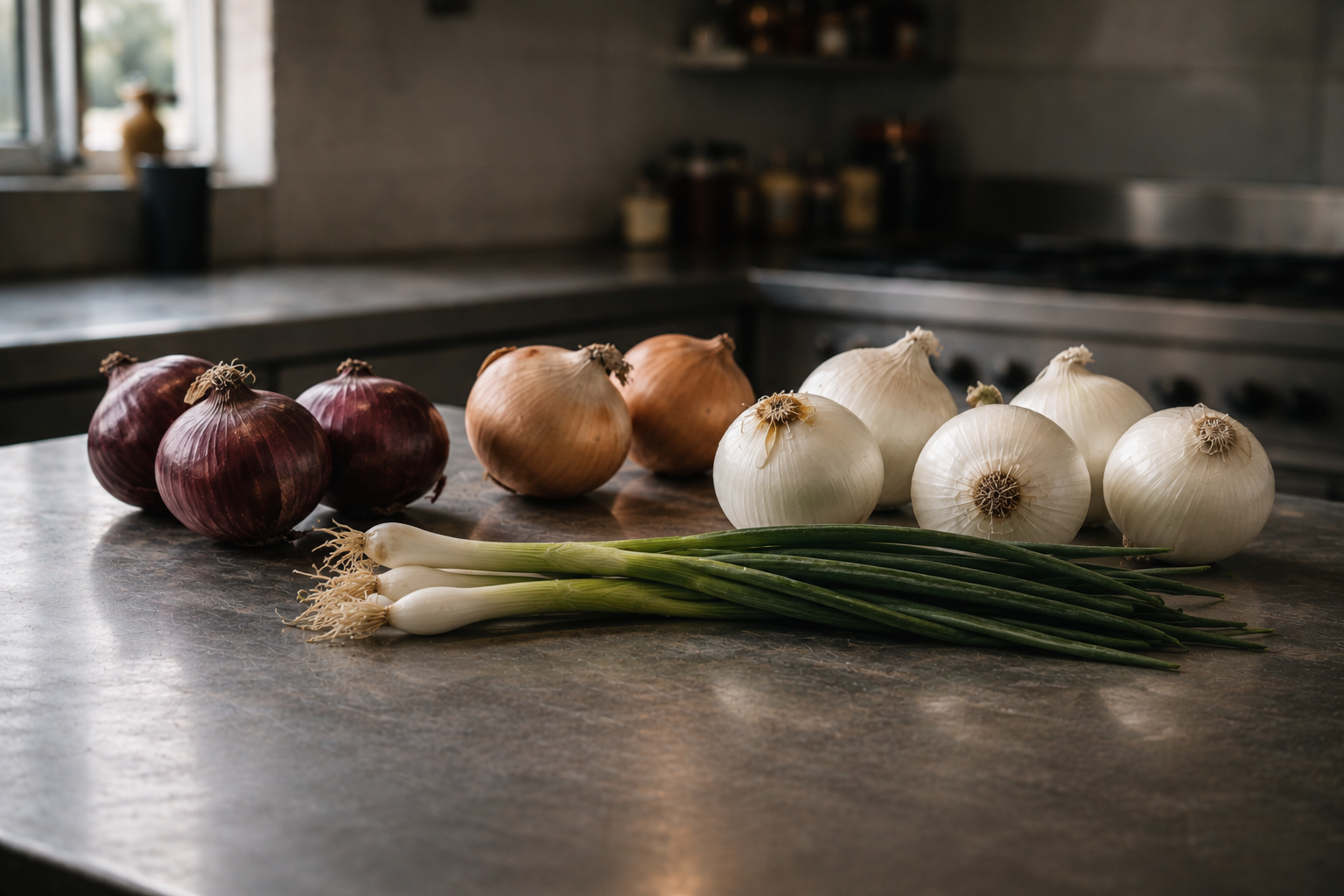
Onion is one of the most common ingredients in the world, and that is exactly why we often stop paying attention to it. It enters recipes quietly: one onion, chopped. One onion, sliced. One onion, minced. But inside those simple instructions there is an entire culinary grammar. The type of onion, the direction of the cut, the size of the pieces, the cooking fat, the timing, the heat, and the final texture all change the result.
An onion can be sharp and raw, sweet and translucent, golden and caramelized, crisp and fried, smoky and charred, soft and almost melted into a sauce. It can become a base, a garnish, a condiment, a broth ingredient, a soup, a pickle, or a textural accent. To understand ‘the onion’ is to understand one of the most important foundations of cooking: how aroma becomes flavor, and how a humble ingredient can shape an entire dish before anything else is added.
What Onion Is — Bulb, Stem, Skin, and Stored Energy
The onion is part of the allium family, alongside garlic, leek, scallion, shallot, chive, and many wild relatives. While the bulb is the most commonly used part, the onion system is larger than the bulb alone.
An onion offers:
the bulb, used raw, cooked, roasted, fried, pickled, or caramelized
the green stems, used fresh, chopped, grilled, or folded into dishes
the skins and peels, often discarded, but useful for broths, stocks, infusions, and color
the root end, usually trimmed away, but structurally important when cutting wedges or keeping onion pieces intact
Onions also store well when properly cured. Their protective layers allow them to travel, wait, and remain usable over time. This durability helped make onion one of the world’s most widely adopted culinary materials. It is humble, but highly engineered by nature: layered, protected, aromatic, and ready to transform.
Why Onion Matters — Function Before Familiarity
Onion matters because it performs several jobs at once.
It can act as:
aromatic foundation, beginning sauces, stews, soups, and braises
sweetness, especially when slowly cooked or caramelized
pungency, when raw or lightly treated
texture, from crisp raw slices to soft cooked layers
body, when melted into sauces or soups
color, especially when browned, charred, or infused through skins
condiment, when fried, pickled, fermented, or preserved
flavor carrier, absorbing spices, fats, acids, and smoke
Onion is not background by default. It becomes background when we stop noticing what it is doing.
Onion in Context — Why the Cut Matters
Every cuisine has its own way of asking onion to behave. A recipe may say “slice the onion,” but that instruction is never neutral. Thin slices, thick slices, diced onion, minced onion, onion wedges, crushed onion, grated onion, and whole onions all behave differently.
The cut affects:
how quickly the onion releases moisture
how fast it browns
how much texture remains
how evenly it cooks
how strong the flavor feels
how it integrates into the final dish
A finely minced onion disappears into a sauce. A thick slice remains present. A wedge can become sweet and tender in a stew. A raw thin slice can act as a sharp garnish. A grated onion can dissolve into marinades and spice pastes.
This is why onion should always be read through context. The correct onion is not only the correct variety; it is the correct cut, cooked to the correct point, for the correct dish.
Types of Onion and Their Uses
This is not an exhaustive list, but a practical map of common onion expressions.
Yellow Onion — The Everyday Foundation
Yellow onion is one of the most versatile cooking onions. It has enough pungency to build depth and enough sugar to become sweet when cooked.
Best uses:
soups
stews
sofritos
sauces
braises
caramelized onions
roasted dishes
Materia note:
When you need one onion to do many things, yellow onion is often the most reliable choice.
White Onion — Sharp, Clean, and Direct
White onion is often sharper and cleaner in flavor. It works well raw, lightly cooked, or charred.
Best uses:
salsas
tacos
raw garnishes
charred sauces
Latin American preparations
quick sautés
Materia note:
White onion is excellent when you want freshness, bite, and clarity.
Red Onion — Color, Sweetness, and Pickling Power
Red onion brings color and a slightly sweeter profile. It is especially strong in raw and pickled applications.
Best uses:
pickles
salads
relishes
ceviche-style dishes
sandwiches
Mediterranean and Latin American garnishes
Materia note:
Pickled red onion is one of the simplest ways to add acid, color, crunch, and aroma to a dish.
Sweet Onion — Softness and Gentle Sugar
Sweet onions contain less sulfur intensity and more perceived sweetness. They work well when the onion flavor should be round rather than sharp.
Best uses:
onion rings
raw salads
grilling
roasting
gentle sautés
sweet onion soups
Materia note:
Sweet onions can become very soft. Use them when tenderness and sweetness are desired.
Scallions and Green Onions — Freshness and Layered Aroma
Scallions offer two ingredients in one: the white base, which is sharper, and the green tops, which are fresh and grassy.
Best uses:
stir-fries
soups
rice dishes
noodle bowls
garnishes
pancakes
grilled preparations
Materia note:
Add the white parts earlier for aroma. Add the green parts later for freshness.
Shallots — Delicate, Elegant, and Precise
Shallots sit between onion and garlic. They are aromatic, refined, and excellent in sauces, vinaigrettes, and frying.
Best uses:
vinaigrettes
sauces
fried shallots
Southeast Asian garnishes
French preparations
delicate sautés
Materia note:
Shallots are powerful when you want onion complexity without heaviness.
Onion Transformations — How Technique Changes Flavor
Raw Onion — Pungency and Bite
Raw onion brings sharpness, crunch, and aromatic intensity. It can wake up a dish, but it can also dominate it.
Best uses:
salads
salsas
ceviche-style dishes
tacos
sandwiches
relishes
Technique note:
Soaking sliced onion briefly in cold water can soften its bite. Acid, salt, or sugar can also tame and redirect its sharpness.
Sweated Onion — Softness Without Color
Sweating onions means cooking them gently in fat until they soften without browning. This develops sweetness while preserving a clean flavor.
Best uses:
soups
sauces
rice dishes
stews
Mediterranean vegetable bases
delicate preparations
Technique note:
Low heat matters. The goal is tenderness and aroma, not caramelization.
Golden Onion — Aroma and Light Sweetness
Cooking onion until lightly golden adds more depth without pushing into full caramelization.
Best uses:
sofritos
pilafs
curries
tomato sauces
beans
braised vegetables
Technique note:
This stage is one of the most useful in daily cooking. It builds flavor while keeping the onion integrated.
Caramelized Onion — Sweetness, Depth, and Time
Caramelized onions are cooked slowly until their sugars concentrate and their structure collapses into sweetness and depth.
Best uses:
onion soup
tarts
sandwiches
flatbreads
stews
sauces
dips
Technique note:
True caramelization takes time. Rushing the process usually produces browned onions, not caramelized onions.
Charred Onion — Smoke, Bitterness, and Structure
Charred onion brings smoke, bitterness, and visual depth. It appears in grilled dishes, broths, salsas, and roasted bases.
Best uses:
broths
salsas
pho-style aromatic bases
grilled vegetables
recados
smoked sauces
Technique note:
Controlled char is seasoning. Burnt bitterness without control can dominate.
Fried Onion and Fried Shallot — Crunch and Aroma
Fried onions and shallots become both garnish and condiment. They add texture, sweetness, and aromatic depth.
Best uses:
rice dishes
lentils
soups
noodles
bowls
stews
salads
Technique note:
Remove them slightly before they reach the final color. Carryover heat will continue browning.
Pickled Onion — Acid, Color, and Crunch
Pickled onion transforms sharpness into brightness. It adds lift to rich, fatty, smoky, or spicy foods.
Best uses:
tacos
grain bowls
sandwiches
grilled vegetables
mezze
salads
bean dishes
Technique note:
Thin slicing helps the pickle penetrate quickly. Salt and acid work together to soften the onion while preserving bite.
Onion Skins — Broth, Color, and Waste Intelligence
Onion skins are often discarded, but they can add color, subtle aroma, and depth to stocks and broths.
Best uses:
vegetable stock
chicken or meat stock
mushroom broths
rice cooking liquids
natural color infusions
Technique note:
Use clean, dry skins. Avoid skins with mold, dirt, or damaged areas. Strain well.
Onion as a Flavor Base Across Cuisines
Onion appears across the world because it builds beginnings.
It is central to:
Mediterranean sofrito and vegetable bases
French mirepoix
Cajun and Creole aromatic foundations
Indian masala bases
Middle Eastern stews and rice dishes
Latin American recados and sauces
East Asian stir-fries, broths, and scallion-based preparations
West African onion-tomato-pepper bases
In each case, onion is not used the same way. Sometimes it is softened. Sometimes deeply browned. Sometimes grated. Sometimes fried. Sometimes raw at the end. The ingredient is global, but its treatment is specific.
Storage and Handling
Onion storage depends on type and freshness.
Dry Bulb Onions
store in a cool, dry, dark, ventilated place
avoid sealed plastic bags
keep away from excess moisture
do not store near potatoes for long periods, as both can affect each other’s shelf life
use sprouting onions quickly
Fresh Onions and Scallions
refrigerate loosely wrapped
keep greens dry but not dehydrated
use within several days for best aroma
trim only when ready to use
Cut Onions
refrigerate in a sealed container
use within a few days
avoid storing near delicate foods that absorb aroma
Onion Skins
save only clean, dry skins
store in a breathable bag or dry container
use for broths and infusions
Creative Expansion — Experimenting with Onion
Onion is powerful in fusion cooking because it already belongs almost everywhere. The key is to understand which onion behavior you are borrowing.
Try:
charred onion and miso broth
pickled red onion with sumac and lime
fried shallots over tamales, rice bowls, or lentils
caramelized onion with black garlic and olive oil
scallion oil with toasted sesame and lemon zest
onion skin broth for mushroom soups
white onion salsa with cilantro, chile, and citrus
sweet onion confit for flatbreads or sandwiches
grilled onion with tahini, herbs, and smoked paprika
onion and tomato sofrito with soy or doenjang
Onion can travel between cuisines because its functions are universal: aroma, sweetness, pungency, texture, and depth.
Closing Reflection
Onion teaches us that the most important ingredients are not always the most spectacular. It is there before the sauce, before the stew, before the soup, before the rice, before the braise. It begins the dish so often that we forget to ask what it is doing. But when we pay attention, onion becomes one of the clearest examples of culinary grammar. Cut changes texture. Heat changes sweetness. Time changes structure. Context changes meaning. To understand onion is to understand beginnings.