Olive Oil — The Liquid Foundation of the Mediterranean Kitchen
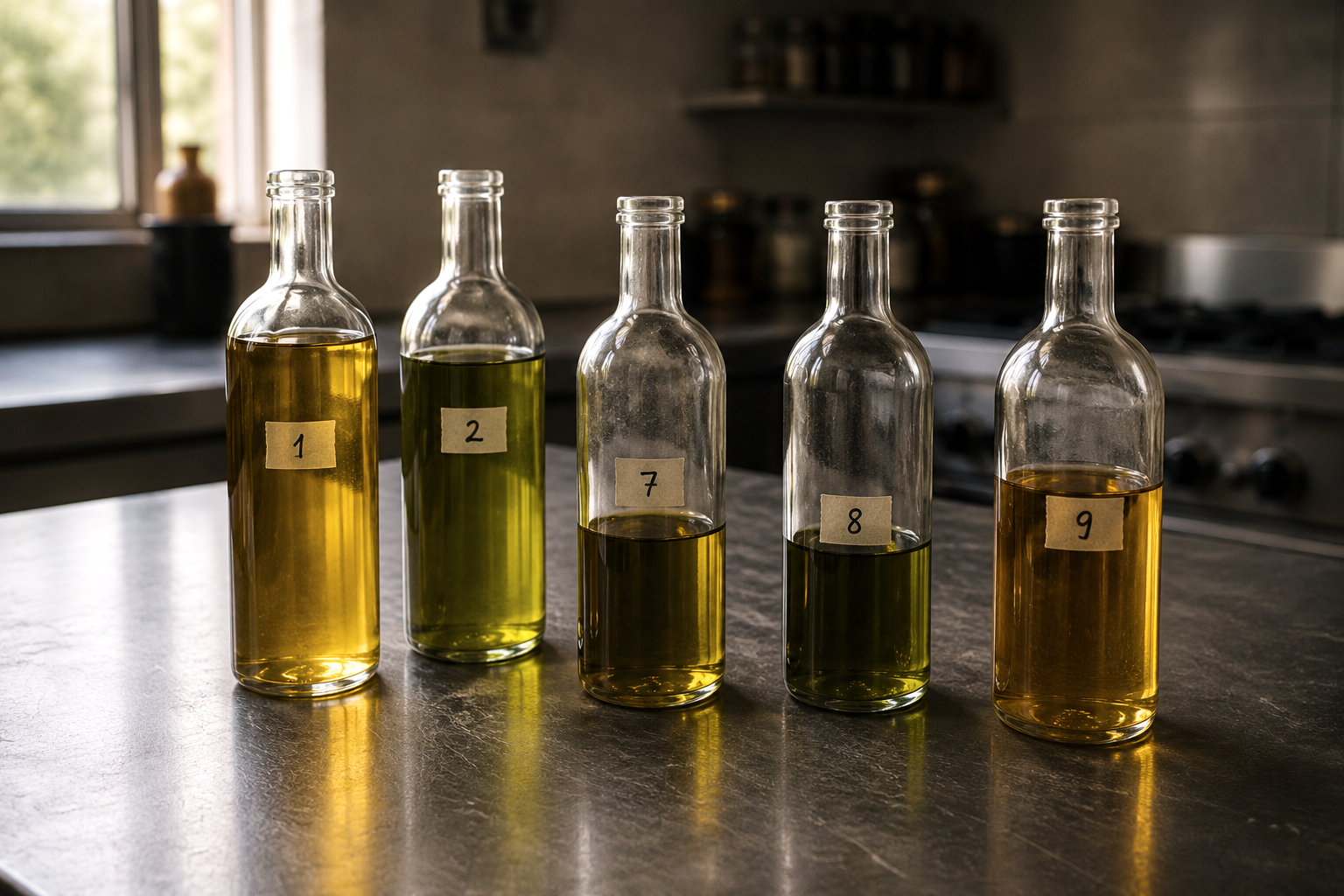
Olive oil is one of the defining ingredients of Mediterranean cuisine. It appears everywhere: drizzled over tomatoes, whisked into dressings, emulsified into sauces, used to soften onions and garlic, poured over grilled vegetables, and folded into breads, pastries, and preserved foods.
But olive oil is not a single thing. Its flavor, texture, aroma, stability, and culinary function change according to olive variety, harvest timing, terroir, extraction method, refinement, storage, and use. A peppery Picual from Spain does not behave like a delicate Leccino from Italy. A robust extra virgin olive oil used as a finishing oil is different from a refined olive oil used for frying or neutral cooking.
To understand olive oil is to understand fat as culinary language. It is not only a cooking medium; it is a carrier of aroma, a softener of texture, a builder of emulsions, and one of the great bridges between ingredient and technique. This Materia study approaches olive oil as both material and method: what it is, how it behaves, how to choose it, and how to use it with intention.
What Olive Oil Is — Fruit, Fat, and Extraction
Olive oil is the extracted oil of the olive fruit. At its best, it is closer to a fresh fruit juice than a generic cooking fat. This is especially true of extra virgin olive oil, which is produced through mechanical extraction without refining.
Its personality depends on several variables:
the olive cultivar
the maturity of the fruit at harvest
the soil and climate where the olives grow
how quickly the olives are pressed after harvest
whether the oil is filtered or unfiltered
how it is stored after extraction
This is why olive oil can taste grassy, peppery, buttery, floral, bitter, fruity, green, nutty, or delicate. Terroir matters deeply. The same cultivar grown in different regions can express different aromas and levels of bitterness, pungency, and fruitiness.
Why Olive Oil Matters — Function in Cooking
Olive oil performs several roles in the kitchen.
It can act as:
a cooking medium, softening aromatics or transferring heat
a finishing ingredient, adding aroma and richness
an emulsifier partner, helping build vinaigrettes, aioli, mayonnaise, hummus, and dressings
a preservative medium, carrying herbs, vegetables, spices, and aromatics
a flavor carrier, dissolving fat-soluble aromas from herbs, garlic, chiles, citrus peel, and spices
a texture builder, giving roundness to soups, sauces, breads, and vegetable preparations
This is why olive oil is foundational in Mediterranean cooking. It allows simple ingredients to become complete: tomato, bread, garlic, herbs, fish, beans, eggplant, zucchini, citrus, and grains all become more expressive when olive oil is used with care.
Types of Olive Oil and Their Uses
Not all olive oils should be used the same way. The goal is not to use the “best” oil for everything, but the right oil for the right purpose.
Extra Virgin Olive Oil — For Flavor, Finishing, and Raw Applications
Extra virgin olive oil is the highest grade of olive oil. It is mechanically extracted, unrefined, and must meet both chemical and sensory standards, including low free acidity. It is prized for aroma, freshness, bitterness, fruitiness, and peppery notes.
Best uses:
drizzling over tomatoes, salads, grilled vegetables, or soups
making vinaigrettes and emulsions
finishing pasta, beans, or grain dishes
dipping bread
blending into hummus, aioli, or herb sauces
Materia note:
Use your most expressive EVOO where its flavor can be noticed. A beautiful oil deserves visibility.
Virgin Olive Oil — For Gentle Cooking and Everyday Flavor
Virgin olive oil is also mechanically extracted, but it allows slightly higher acidity and may have less refinement in aroma than extra virgin. It can still carry good flavor and is useful when you want olive character without using your most expensive finishing oil.
Best uses:
slow sautéing onions, garlic, and vegetables
stews and braises
marinades
grain salads and couscous
Materia note:
Virgin olive oil works well when flavor matters, but the oil is part of a larger preparation.
Olive Oil / Pure Olive Oil — Refined and Blended for General Cooking
Products labeled simply as “olive oil” are usually blends of refined olive oil with some virgin olive oil. They are more neutral and less aromatic than virgin or extra virgin oils. IOC standards define this category as a blend of refined olive oil and virgin olive oils fit for consumption, with free acidity not exceeding 1.0%.
Best uses:
sautéing vegetables
cooking stews or sauces where oil flavor is secondary
roasting at moderate heat
general kitchen use
Materia note:
This is useful when you want the cooking behavior of olive oil but not the strong flavor of EVOO.
Light Olive Oil — Refined, Neutral, and Misunderstood
“Light” olive oil does not mean lower calorie. It usually refers to a lighter color and flavor because the oil has been refined. It is more neutral and often used in recipes where olive flavor is not desired.
Best uses:
frying
baking
neutral cooking
recipes where strong olive flavor would interfere
Materia note:
Use light olive oil as a functional fat, not as an expression of olive character.
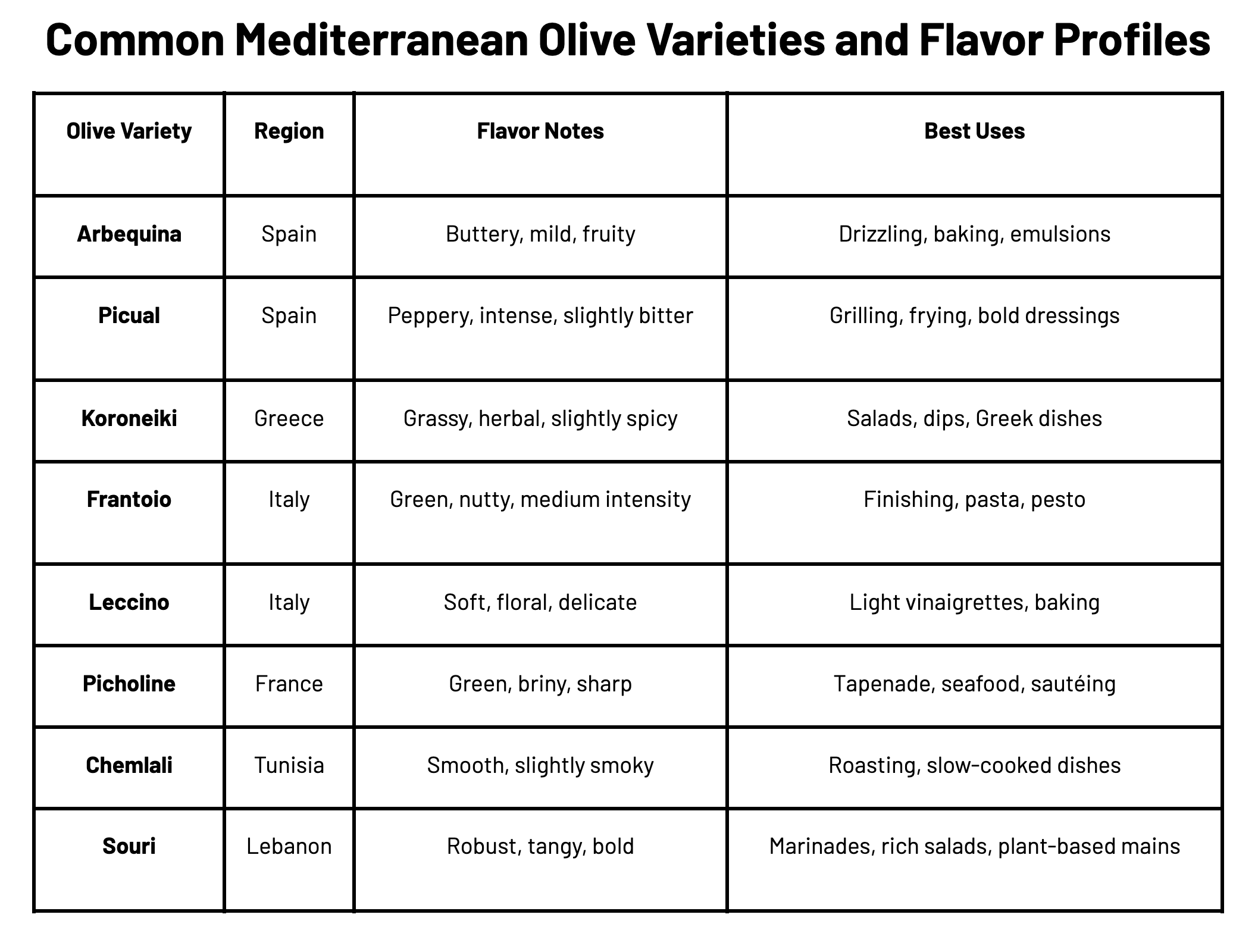
Choosing Olive Oil With Intention
When choosing olive oil, think first about use.
For finishing, choose an oil with character: peppery, fruity, green, floral, or bitter.
For dressings, choose an oil that balances acidity and herbs.
For cooking, choose an oil that can handle heat without wasting its aromatic complexity.
For baking, choose mild oils, such as Arbequina or Leccino, when you want roundness without bitterness.
For infusions, use stable, clean oils and avoid overloading them with fresh wet ingredients unless they are refrigerated and used quickly.
Storage — Protecting Flavor and Preventing Rancidity
Olive oil is sensitive to light, heat, oxygen, and time. These factors accelerate oxidation and rancidity. UC Davis notes that oxidation is promoted by exposure to oxygen, heat, light, and age; another UC Davis publication describes ideal storage as dark conditions around 16–18°C, in packaging that limits light and air penetration.
Practical storage rules:
store in a cool, dark place
avoid keeping bottles beside the stove
use dark glass, tins, or well-sealed containers
close immediately after use
buy smaller bottles if you do not use olive oil quickly
smell and taste regularly; rancid oil can smell waxy, stale, or crayon-like
Materia note:
Olive oil is alive in the sense that it changes. It does not improve indefinitely. Freshness matters.
Creative Expansion — Experimenting with Olive Oil
Olive oil is Mediterranean by origin and identity, but it travels beautifully across cuisines when used with intelligence.
Try:
miso olive oil dressing with lemon and sesame
chile-infused olive oil for tacos, grilled vegetables, or seafood
preserved lemon olive oil for couscous, beans, and roasted carrots
black garlic olive oil for mushroom bowls or grilled eggplant
herb and citrus olive oil for rice dishes, flatbreads, and salads
olive oil aioli with yuzu or calamansi for fusion seafood preparations
Olive oil is a bridge ingredient. It can soften intensity, carry aroma, and bring roundness to sharper elements.
Closing Reflection
Olive oil teaches us that fat is never neutral. It carries geography, labor, harvest, climate, and time. In the Mediterranean kitchen, it is not only used to cook; it is used to connect.
A spoonful of olive oil can finish a soup, soften a vegetable, preserve an herb, or bring a dish into balance. To understand olive oil is to understand one of the fundamental grammars of cooking: how flavor moves through fat, and how a simple ingredient can become the structure beneath an entire culinary tradition.