The Baltic Basin — 23 Departure Points for Smoke, Fermentation, and Cold-Climate Flavor
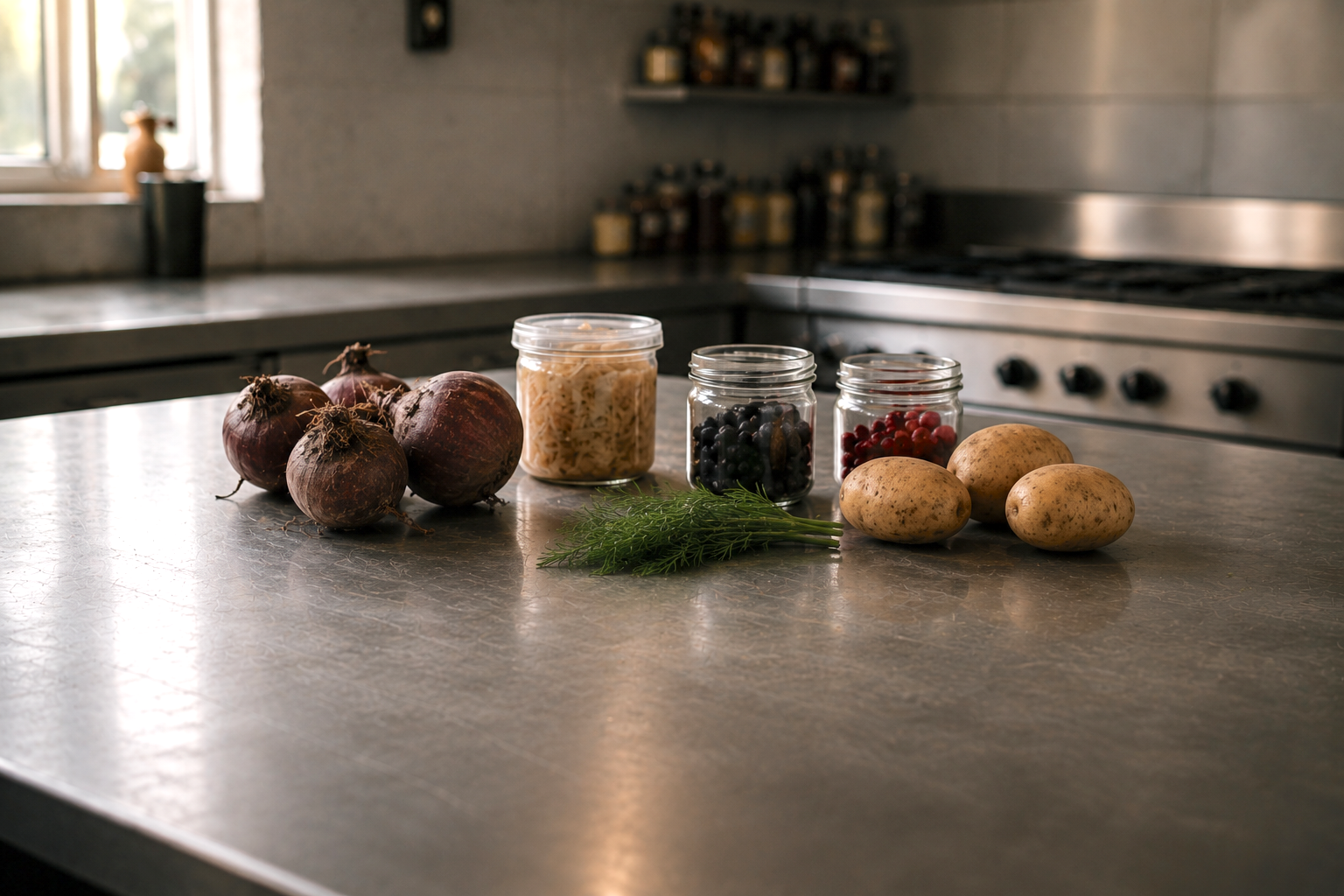
The Baltic Basin is not one cuisine. It is a culinary landscape shaped by forests, cold waters, short growing seasons, preservation, smoke, fermentation, roots, grains, berries, and dairy. Around the Baltic Sea and its surrounding regions, food has long been built through attention to seasonality and survival: what can be gathered, cured, dried, fermented, smoked, stored, or brightened during winter.
This is a region where flavor often comes from restraint rather than excess. Rye gives structure. Fish carries smoke and salt. Berries bring acidity. Cabbage ferments. Mushrooms emerge from forests. Herbs like dill and lovage sharpen the plate. Juniper, spruce tips, caraway, and mustard create an aromatic language that feels both earthy and precise.
This article gathers 23 regionally rooted ingredients and culinary materials from the Baltic Basin, organized into clusters so we can begin to understand the flavor logic of this cold-climate kitchen. The goal is not to define the region completely, but to offer a set of departure points for creative exploration.
Departure Points is a Materia series built around creative exploration. Each article gathers 23 known or traditionally used applications of an ingredient, technique, region, or culinary material, then organizes them into clusters so cooks can see patterns, possibilities, and relationships. Each point of departure is a catapult for further inquiry: a reference, a context, and a question to carry back into the kitchen. What does this material do? How has it been used before? What changes when we alter the medium, the technique, the temperature, or the cultural context? From there, the work begins.
Cluster I: Forest Aromatics and Wild Edges
The forest is one of the defining flavor sources of the Baltic and Nordic food world. These ingredients bring resin, green bitterness, mushroom depth, and the sense of a landscape shaped by trees, moss, wet soil, and seasonal gathering.
1. Juniper Berries
Juniper berries bring a piney, resinous aroma often associated with Nordic and northern European cooking. They work with game, pork, cabbage, smoked foods, pickles, and spirits. As a departure point, juniper teaches how forest aromatics can season without becoming floral or sweet.
2. Spruce Tips
Spruce tips are harvested in spring when young and tender. Their flavor can be citrusy, resinous, green, and lightly acidic. They can be used in syrups, vinegars, salts, desserts, marinades, or infusions, offering a fresh forest note that feels more delicate than mature pine.
3. Forest Mushrooms
Chanterelles, porcini, and other foraged mushrooms are deeply rooted in Baltic, Nordic, and Slavic food traditions. They can be sautéed, dried, pickled, creamed, or folded into soups and grains. They bring earth, umami, and seasonal identity.
4. Lovage
Lovage is a powerful herb with a celery-like, savory aroma. It works in soups, broths, potatoes, dairy sauces, and fermented preparations. Used carefully, it can give a dish the impression of deeper stock or vegetal concentration.
Cluster II: Berries, Acidity, and Northern Brightness
Berries are essential in cold-climate foodways because they bring acidity, color, and preservation potential. They balance fat, fish, dairy, game, grains, and root vegetables.
5. Sea Buckthorn
Sea buckthorn is intensely tart, bright orange, and rich in acidity. It can be used in sauces, syrups, desserts, marinades, vinaigrettes, and glazes. Its citrus-like sharpness makes it a powerful counterpoint to dairy, smoked fish, pork, and root vegetables.
6. Lingonberries
Lingonberries are tart and slightly bitter, often preserved or served with meats, grains, potatoes, or dairy. They function as a northern acid element, cutting richness while adding color and fruit tension.
7. Blackcurrant
Blackcurrant brings deep berry acidity, tannin, and dark aroma. It can be used in syrups, ferments, sauces, desserts, reductions, and glazes. It pairs well with game, duck, chocolate, oats, yogurt, and vinegar.
8. Cloudberries
Cloudberries are rare golden berries associated with northern bog landscapes. Their flavor is tart, floral, and honeyed. They are often used in preserves, desserts, sauces, or with dairy. As a departure point, they show how scarcity and seasonality shape value.
Cluster III: Grains, Bread, and Fermented Foundations
Grains are central to the Baltic Basin because they provide structure, calories, fermentation, and storage. Rye and barley, in particular, carry a strong regional identity.
9. Rye
Rye appears in breads, crisps, porridges, ferments, and beverages. It brings sourness, density, earthiness, and a deep grain aroma. Rye teaches the cook how grain can become both structure and flavor, not just neutral starch.
10. Barley
Barley is used in soups, porridges, breads, beer, and grain dishes. It has a hearty chew and a nutty flavor that works well with mushrooms, dairy, roots, smoked fish, and herbs.
11. Kvass
Kvass is a fermented beverage often made from rye bread or grain. It can be lightly alcoholic or non-alcoholic, with a sour, malty, refreshing character. It offers a departure point for thinking about bread as a beverage and fermentation as refreshment.
12. Caraway Seeds
Caraway is used in rye breads, sauerkraut, cheeses, liquors, and meat preparations. Its flavor is warm, earthy, lightly citrusy, and anise-like. It is one of the key aromatic bridges between bread, cabbage, dairy, and preservation.
Cluster IV: Preservation, Salt, Smoke, and Sourness
Cold climates developed preservation as a necessity and an art. Smoke, salt, fermentation, and pickling are not only practical methods; they define flavor.
13. Pickled Herring
Pickled herring is iconic across Scandinavian and Baltic tables. It combines fish, salt, acidity, sweetness, onion, spices, and sometimes dairy. It teaches balance between marine fat and preserved brightness.
14. Smoked Fish
Smoked trout, whitefish, eel, and other regional fish can be cold-smoked or hot-smoked. These preparations bring smoke, salinity, oiliness, and delicacy. They are often served with rye, potatoes, dill, horseradish, or fresh dairy.
15. Fermented Cabbage
Fermented cabbage, including sauerkraut and related preparations, is a winter staple. It brings acidity, crunch, funk, and probiotic depth. It works with pork, potatoes, sausages, grains, soups, and plant-based bowls.
16. Mustard Seeds
Mustard seeds can be ground, fermented, pickled, or used whole. They bring sharpness, heat, and structure to sauces. In this regional context, mustard often works with fish, meats, cabbage, potatoes, and dairy.
Cluster V: Roots, Dairy, and Northern Comfort
The Baltic Basin kitchen often relies on humble ingredients that become expressive through technique: roots, fresh dairy, butter, and oils. These ingredients create comfort, richness, and grounding.
17. Horseradish Root
Horseradish brings sharp heat and earthy pungency. It is frequently paired with fish, meat, beetroot, dairy, or potatoes. It creates a clean, nasal heat that differs from chile and works especially well in cold sauces.
18. Beetroot
Beetroot is common in Baltic, Slavic, and northern European cuisines. It can be roasted, pickled, grated, fermented, juiced, or used in soups. Its sweetness, earthiness, and color make it extremely versatile in both savory and sweet preparations.
19. Potatoes
Potatoes are foundational in the region, especially waxy varieties that hold their shape. They appear boiled, fried, mashed, baked, in dumplings, salads, pancakes, and soups. Potatoes act as a canvas for smoke, dill, dairy, herring, mustard, and fermented cabbage.
20. Quark
Quark is a fresh curd cheese used in both savory and sweet preparations. It can be eaten with herbs, berries, rye bread, potatoes, pancakes, pastries, or desserts. It brings lactic brightness and light creaminess.
21. Brown Butter
Brown butter gives nutty, caramelized depth to sauces, pastries, grains, fish, vegetables, and cakes. It is a powerful reminder that fat can be transformed into aroma through heat.
22. Cold-Pressed Rapeseed Oil
Cold-pressed rapeseed oil is sometimes described as a northern counterpart to olive oil. It is golden, nutty, and grassy, useful in dressings, vegetable dishes, fish preparations, and finishing applications.
Cluster VI: Herb and Seasoning Bridges
Some ingredients cut across the entire region, connecting fish, potatoes, dairy, pickles, bread, and grains. These are not background details; they often define the plate.
23. Dill
Dill is one of the great signature herbs of northern and Baltic cooking. It appears with fish, potatoes, cucumbers, dairy sauces, pickles, breads, and soups. It brings freshness, green aroma, and a sense of immediate regional identity.
What the Baltic Basin Teaches the Cook
The Baltic Basin teaches us how to cook with climate. Its flavors are shaped by short seasons, cold waters, forests, fermentation, storage, and the need to brighten richness through acidity and herbs.
Across these 23 departure points, several patterns emerge:
smoke as preservation and aroma
fermentation as survival and flavor
berries as acidity and brightness
rye and barley as structure
fish as a preserved and smoked material
herbs and roots as sharpness
dairy and butter as comfort
forest ingredients as identity
The creative lesson is clear: cold-climate cooking is not limited or austere. It is precise, resourceful, and deeply expressive. It teaches how to build flavor through contrast: smoke with berries, fish with dill, rye with dairy, potatoes with mustard, mushrooms with brown butter, roots with vinegar.
Creative Exploration Prompt
Choose one cluster from this article and build a small plate around contrast.
For example:
smoked fish + rye + dill + mustard
beetroot + horseradish + quark + caraway
mushrooms + barley + brown butter + spruce
potatoes + fermented cabbage + rapeseed oil + herbs
Ask yourself:
What brings depth?
What brings brightness?
What brings structure?
What brings regional identity?
Document how the dish changes when you adjust acidity, smoke, fat, or texture.
From there, the work begins.