The Dropper, Pipette & Syringe
The Instruments of Micro-Application and Injection
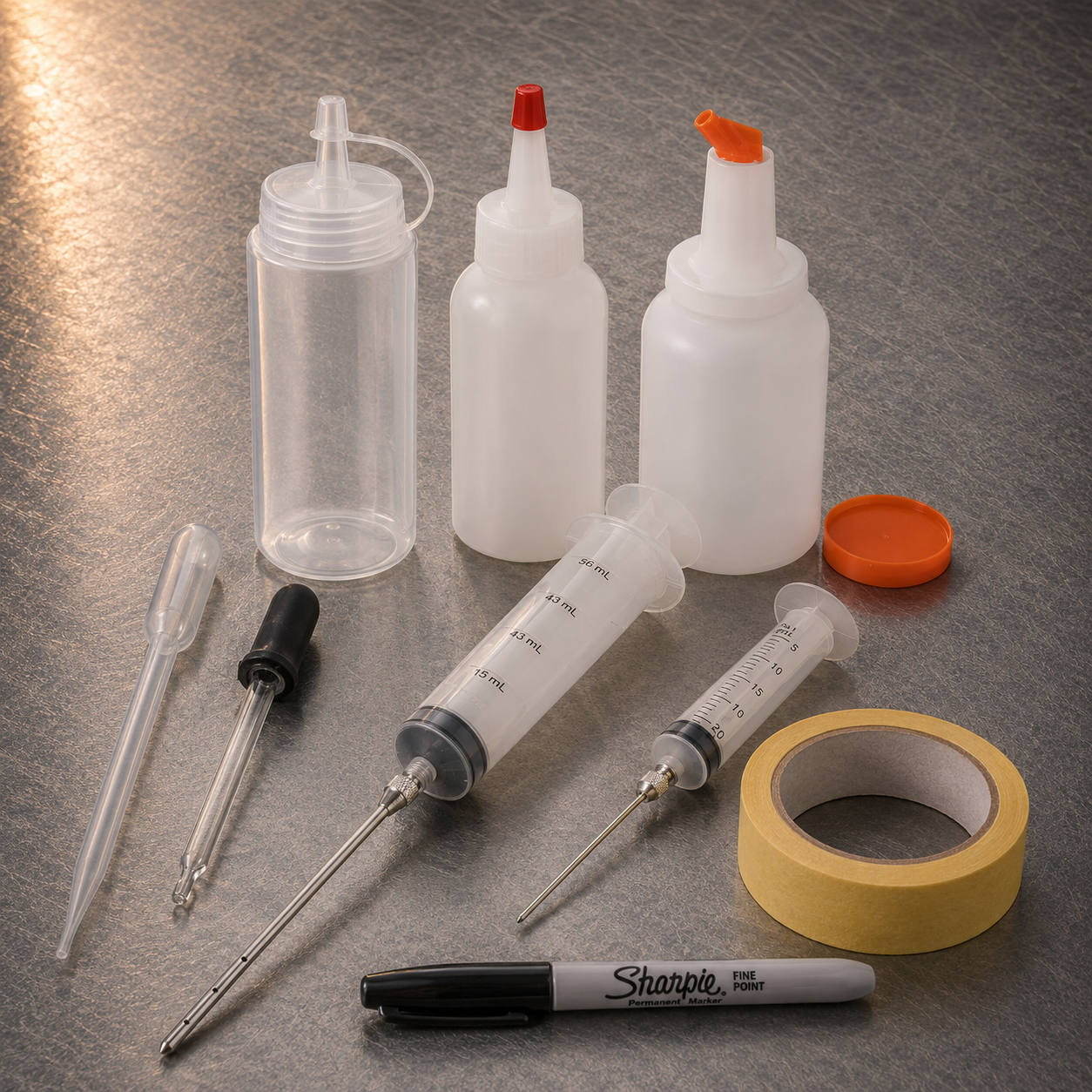
Some culinary gestures are large. A knife cuts. A pan sears. A ladle pours. A whisk agitates. But some gestures are almost invisible. A drop of bitters. A small line of infused oil. A precise addition of citrus essence. A measured dose of concentrate. A brine injected into the interior of a piece of meat.
The dropper, pipette, and syringe belong to this smaller scale of cooking. They allow the cook to apply liquids with extreme precision, either onto the surface of a dish, into a beverage, inside a preparation, or within a specific visual arrangement. These instruments are not used for volume. They are used for control. They bring the cook into the territory of micro-application.
Function
Droppers, pipettes, and syringes allow cooks to handle liquids in very small and controlled amounts.
They can be used to:
• add drops of bitters, essences, concentrates, or aromatic liquids
• dose strong flavors into sauces, drinks, or preparations
• place small dots of sauce or oil during plating
• create visual details on desserts or composed plates
• layer or stratify liquids carefully
• inject brines, marinades, or flavored liquids into meats
• fill small cavities, molds, or preparations
Their value lies in precision.
A spoon may add too much.
A squeeze bottle may be too broad.
A dropper can apply exactly one drop.
This is especially important when working with intense ingredients where excess can ruin balance: bitters, extracts, essential oils, acids, tonics, concentrates, tinctures, and strong infusions.
Geometry
These instruments are defined by narrow passages and controlled liquid release.
Dropper
A dropper usually combines a small glass or plastic tube with a bulb.
It allows liquid to be drawn up and released drop by drop.
Droppers are useful for essences, tinctures, aromatic liquids, bitters, and small adjustments where volume must remain minimal.
Pipette
A pipette is often lighter and more disposable than a dropper.
It can be used for tasting portions, small liquid transfers, beverage applications, plating details, and controlled dosing.
In culinary contexts, pipettes are sometimes used for interactive plating, allowing the guest or cook to release a small amount of sauce, syrup, or aromatic liquid at the moment of eating.
Syringe
A syringe allows more forceful and directed application.
It can function as a precise dispenser, but it can also inject liquid into a preparation. This makes it useful for brines, marinades, fillings, gels, and controlled internal seasoning.
With the appropriate needle or tip, a syringe can place liquid where surface application cannot reach.
Materials
Material selection matters because these instruments often work with concentrated flavors.
Glass
Glass droppers are useful for strong essences, extracts, bitters, and aromatic liquids because glass is less likely to absorb odors.
They are fragile, but clean in flavor.
Food-Safe Plastic
Plastic pipettes and syringes are practical and inexpensive.
They are useful for short-term use, plating, beverage applications, and controlled dispensing. However, some plastics may retain strong aromas or become stained by oils, spices, or acidic preparations.
Stainless Steel Needles
Syringes used for injection often include stainless steel needles.
These must be cleaned carefully and selected according to the viscosity of the liquid being injected.
A thin needle may clog with a brine containing particles or herbs. A wider needle may be necessary for thicker marinades.
Bulbs and Seals
Rubber or silicone bulbs and seals must remain intact.
If they degrade, crack, or retain strong odors, the instrument loses accuracy and hygiene.
Ergonomics
Precision tools must feel controlled in the hand.
Pressure
The cook must be able to control pressure gently.
Too much pressure can release too much liquid, splatter a plate, or disturb a delicate garnish.
Tip Size
The tip opening must match the preparation.
Thin liquids can pass through very small openings. Thicker sauces, gels, syrups, or suspensions may require wider tips.
Visibility
Clear droppers, pipettes, and syringes allow the cook to see the amount of liquid being held.
This is useful when working with small measurements or when trying to repeat the same dose across multiple plates or drinks.
Volume Markings
Some syringes and pipettes include measurement markings.
These are especially useful when working with precise formulations, beverage programs, pastry applications, or recipe development.
Choosing the Tool
The correct instrument depends on the task.
For drops of bitters, essences, or extracts, a glass dropper offers good control and clean storage.
For small plating details or temporary use, pipettes may be practical.
For injection, filling, or more forceful application, a syringe is the appropriate tool.
Important considerations include:
• liquid viscosity
• desired dose size
• need for injection or surface application
• reusability
• cleanability
• material compatibility
• whether the liquid is strongly aromatic, acidic, oily, or staining
Strong liquids should often have dedicated droppers. A dropper used for smoked chili oil or fish sauce should not later be used for vanilla syrup or citrus essence.
Hygiene and Organization
Droppers, pipettes, and syringes demand careful cleaning because their channels are narrow.
Residue can dry inside the tip, bulb, or needle. Oils can coat the interior. Sugars can crystallize. Concentrates can leave lingering aromas.
Good practice requires:
• rinsing immediately after use
• washing narrow channels thoroughly
• drying fully before storage
• using dedicated tools for strong flavors
• labeling bottles and droppers clearly
• avoiding particulate liquids unless the tip is appropriate
• discarding disposable pipettes after use
• checking syringes and needles for clogs
These tools operate at a small scale, so even a tiny blockage can make them unusable.
Common Misconceptions
One common misconception is that droppers and pipettes are only for decoration. They are useful for visual work, but their deeper function is precision. They allow cooks and bartenders to dose powerful ingredients without overpowering the preparation.
Another misconception is that a syringe is only for injecting meat. In reality, it can also be used for filling molds, placing liquids, layering preparations, dosing gels, or adding controlled amounts of sauce.
A final mistake is assuming that strong flavors can share the same tool without consequences. Concentrates, oils, bitters, and aromatics can linger, especially in plastic or rubber components.
Closing Reflection
Droppers, pipettes, and syringes allow cooking to happen at the smallest scale. They give the cook control over drops, traces, injections, and precise placements. They are especially valuable when ingredients are powerful, expensive, aromatic, or visually delicate.
Used well, these instruments bring ultimate control to detail into the kitchen. They remind the cook that sometimes the most important adjustment is not a spoonful, but a single drop.