Understanding the Ingredient
Why Better Cooking Begins With Seeing More Than What Is on the Plate
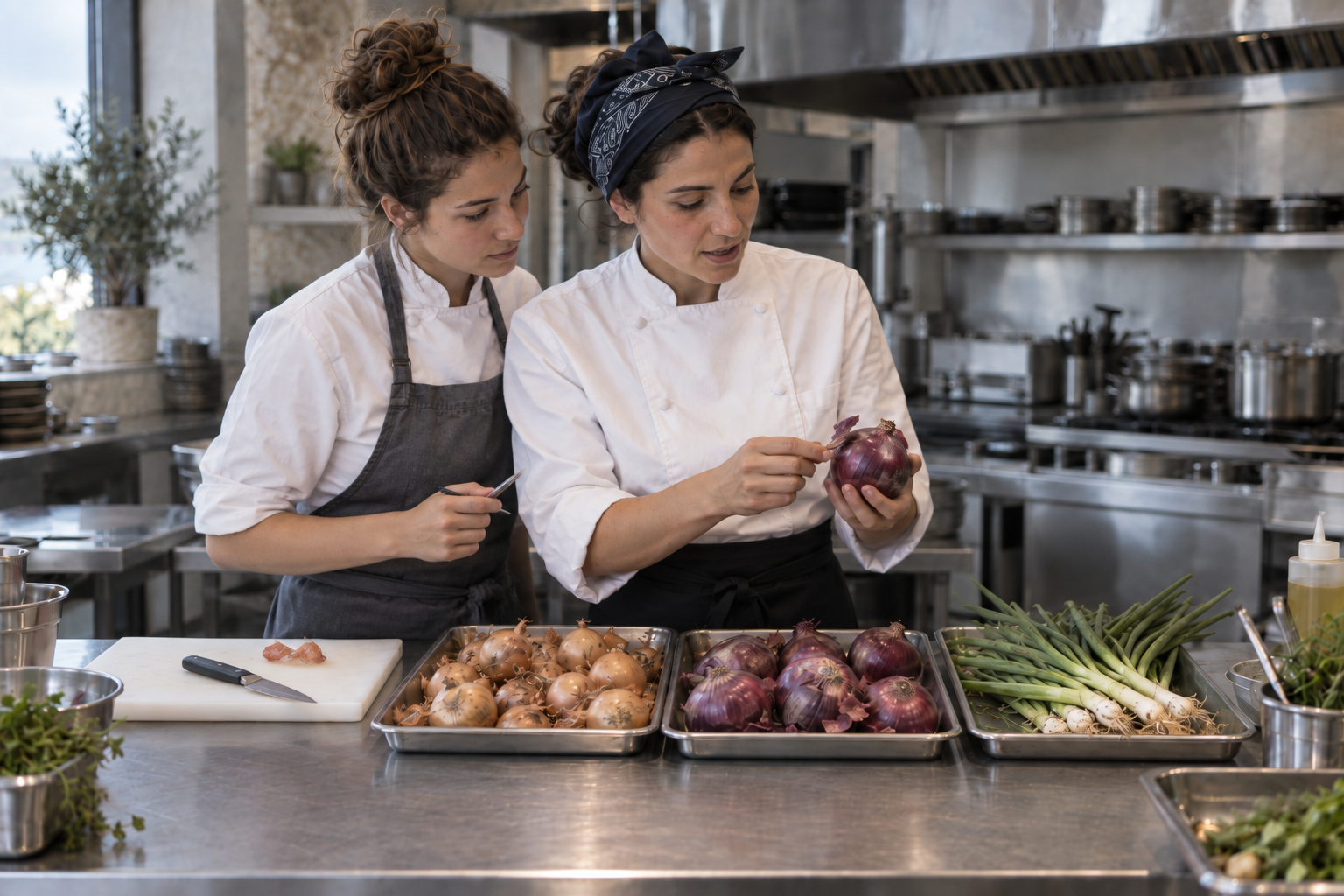
There are moments in cooking when a dish tastes extraordinary and the explanation seems almost too simple. There is no hidden technique, no unusual piece of equipment, no secret combination that nobody else has discovered. The tomato tastes remarkable because it is a remarkable tomato. The fish was handled properly. The herbs were used at the right moment. The cooking method suited the ingredient instead of forcing it into something it was not prepared to become.
From the outside, great cooking can sometimes look mysterious. We imagine that the chef must know some trick, some private recipe, some technical gesture that separates their food from everyone else’s. Sometimes that is true. But very often the difference is more fundamental: the cook understands the ingredient deeply.
That kind of understanding goes far beyond knowing what an ingredient is called or knowing several recipes that contain it. It means knowing how the ingredient behaves, when it is at its best, what changes it, what damages it, what strengthens it, where it comes from, and how other cooks have learned to work with it over time. It means looking at the ingredient not only as something we place on a plate, but as material with its own history, structure, possibilities, and limits.
This is one of the reasons ingredient knowledge matters so much to the culinary creative process. If we understand the material more deeply, we make fewer arbitrary decisions around it. We begin choosing techniques because they make sense for the ingredient, not simply because we know how to perform them.
Knowing an Ingredient Is Not the Same as Knowing Recipes
We can know twenty recipes that use eggplant and still understand relatively little about eggplant itself. We may know how it appears in a gratin, a stew, a purée, or a salad, but that is not quite the same as knowing what happens when we salt it, fry it, roast it whole, char it over fire, steam it, preserve it, or cook it slowly in fat. We may not know how different varieties behave, how maturity changes the seed structure, or why one eggplant absorbs oil differently from another.
The same is true of almost every ingredient. A cook may know several rice dishes without understanding why one variety becomes creamy while another remains separate, why one method depends on washing and another does not, or how cultural expectations around rice change completely from one cuisine to another. We may know how to use a lemon without understanding how its peel, juice, pith, aroma, acidity, maturity, preservation, and variety each create different possibilities.
This is where ingredient thinking begins to become more useful than recipe accumulation. Recipes show us applications. Ingredient understanding helps us see relationships.
The deeper we go, the more the ingredient begins to open. We start asking questions that are not limited to, “What dish can I make with this?” We ask how it responds to heat, water, salt, fat, acid, fermentation, drying, pressure, time, or smoke. We begin looking at texture, aroma, flavor, structure, seasonality, and heritage as part of the same field of knowledge. That is when the ingredient stops being only an item in the pantry and starts becoming something we can really work with.
The Ingredient Changes Before It Reaches the Kitchen
One of the most important things to understand is that an ingredient does not begin its life when we buy it.
A tomato has already been shaped by variety, soil, sunlight, water, temperature, maturity, transport, and storage before it reaches our hands. The tomato growing outdoors in the proper season is not necessarily offering the same thing as a greenhouse tomato in winter. Both may be useful, but they do not ask the same questions of the cook.
A tomato that is intensely ripe, aromatic, and full of water may be wonderful raw and frustrating for a preparation that requires concentration. Another tomato may be less expressive fresh but excellent for roasting or cooking down. One variety may have more acidity, another more sweetness, another a thicker flesh or fewer seeds. The ingredient name is the same, but the material is not.
This is why many serious cooks care so much about source. Their relationship with a farmer, fisherman, butcher, miller, cheesemaker, or producer is not only part of a romantic story about the restaurant. It is often practical. The closer the cook understands the ingredient before it enters the kitchen, the more accurately they can decide what to do with it.
Some restaurants grow part of what they use. Others work with the same farms for years. Some chefs know exactly when a particular vegetable becomes available, how long a certain fish should rest, or which batch of olive oil has the profile they want for a specific preparation. That intimacy with sourcing can look obsessive from outside, but it usually comes from the recognition that quality begins long before cooking.
The ingredient arrives carrying decisions that have already been made by climate, agriculture, processing, transport, and time. Good cooking begins by noticing them.
Technique Has to Respond to the Material
We often speak about mastering technique as though technique exists independently from ingredients. Learn how to roast, fry, braise, emulsify, ferment, grill, poach, and reduce, and then apply those techniques wherever needed.
There is truth in that. Technique gives us vocabulary. But technique becomes much more powerful when it responds to the actual material in front of us.
The right technique for a very ripe tomato may not be the right technique for a pale, watery one. A tender young carrot does not need the same treatment as a large storage carrot. A delicate fish and a firm fish do not behave the same way under heat. An herb that loses its aroma quickly should not automatically be treated like one that becomes more interesting when cooked.
This is where ingredient understanding begins to guide judgment. We stop asking only, “Which technique do I know?” and start asking, “What does this ingredient need in this condition?” Sometimes the answer is more transformation. Sometimes it is less.
Respecting an ingredient does not mean treating it gently all the time. That idea can become sentimental very quickly. Some ingredients reveal themselves through aggressive heat. Some need fermentation. Some need drying, grinding, pressing, long cooking, or deep browning. Respect comes from understanding why the transformation makes sense.
A cook who understands the ingredient is not afraid to change it. They are simply more deliberate about what they are asking the ingredient to become.
Heritage Is Practical Knowledge
The history of an ingredient can also teach us how to use it.
When we look at heritage only as cultural background, we miss part of its practical value. People have been cooking with ingredients for generations, sometimes for centuries or thousands of years. They have discovered ways to preserve them, combine them, make them digestible, stretch them through seasons, intensify them, soften them, or use parts that another cook might discard. That accumulated knowledge is an extraordinary resource.
If we study maize, for example, we are not only studying flavor or texture. We enter into nixtamalization, milling, fermentation, tortillas, tamales, atoles, dried preparations, regional varieties, and relationships between maize and other ingredients. If we study olives, we are also studying curing, pressing, bitterness, ripeness, oil, preservation, and a history of use shaped by geography and climate. An ingredient begins opening into a larger culinary world.
This does not mean tradition should tell us what we are allowed to do. It means tradition gives us evidence of what the ingredient has already been capable of doing. That can expand creativity rather than restrict it.
A technique we discover through historical research may suddenly solve a modern problem. A preservation method may reveal another texture. A traditional pairing may make us understand why two ingredients work together. A regional use may show us a part of the ingredient we had never considered important. The more we know about where the ingredient has been, the more intelligently we can decide where we might take it in our exploration.
Simple Food Exposes Ingredient Knowledge
There is nowhere to hide in very simple cooking. A dish with twelve elements can sometimes absorb a weak ingredient. A sauce can cover something mediocre. Texture, seasoning, garnish, and presentation can create enough complexity that we stop noticing where the material itself is lacking. But when a dish has only a few elements, the quality of the ingredient and the precision of the technique become obvious.
A ripe tomato with salt and good olive oil can be extraordinary. A piece of fish properly seasoned and cooked can require almost nothing else. Rice made with the right grain, water, heat, and timing can be deeply satisfying without complexity. A roasted onion can become more interesting than a complicated preparation if the ingredient and process are both right.
This kind of simplicity is not easy because there is very little to correct afterward. It depends on choosing well and cooking accurately. That is one of the places where professional skill becomes visible. The cook understands which ingredient to buy, what condition it should be in, what technique suits it, how far to take that technique, and when to stop. The final plate may look simple, but the simplicity is resting on a large amount of knowledge.
Ingredient Understanding Builds Culinary Judgment
The more time we spend with an ingredient, the less we need to rely on rules. At first, we may follow recipes closely because we need them to tell us what should happen. After working with the same material repeatedly, we begin recognizing differences. This batch contains more water. This herb is unusually aromatic. These potatoes are behaving differently. This fish is firmer than the one we used last week. The recipe has not changed, but the ingredient has.
That is where judgment begins to take over. We may reduce the liquid because the vegetables released more water. We may use less acid because the tomatoes already have enough. We may shorten the cooking time because the produce is more tender. These decisions are not improvisation for its own sake. They come from familiarity.
This is why ingredient knowledge eventually becomes part of culinary grammar. We begin collecting relationships between material and technique, condition and result, history and application. The ingredient gives us a vocabulary we can use elsewhere.
A cook who has studied onions deeply does not only know more about onions. They understand more about browning, sweetness, water loss, sulfur compounds, texture, raw pungency, slow cooking, fermentation, and the way all of those things influence a preparation. The ingredient becomes a doorway into broader culinary understanding.
Deep Knowledge Can Become Part of Authorship
There is also something more personal that happens when we return to certain ingredients over time. Most cooks do not need to know everything about every ingredient. That would be impossible. What often becomes more interesting is discovering which materials repeatedly draw our attention.
Perhaps we keep returning to maize. Or citrus. Mushrooms. Chiles. Rice. Olive oil. Fermentation. Fish. Beans. Herbs. Fire. Over years, we begin accumulating observations that are specific to our own practice. We remember how one chile behaves over charcoal, how another changes when fermented, which citrus peel holds its aroma after drying, or how a particular grain responds to a cooking method we have used many times.
That accumulated familiarity can begin shaping authorship. Not because we have discovered a secret ingredient that nobody else knows, but because we have developed a relationship with the material that becomes visible in the way we use it. Another cook may work with the same chile, the same tomato, or the same grain and make something entirely different because their history with the ingredient is different.
This is where originality becomes less about novelty and more about depth. Knowing something deeply gives us more possibilities than constantly moving toward the unfamiliar.
Seeing More Changes the Way We Cook
Understanding an ingredient is not a separate academic exercise that happens before the real cooking begins. It changes the cooking itself. The more we know about the material, the more precise our questions become, and the more clearly technique, sourcing, season, heritage, and intention begin working together.
We stop treating the ingredient as interchangeable. We notice when its condition changes. We begin understanding why a preparation worked beautifully in July and feels completely different in January. We start seeing the value of a producer, a variety, a particular stage of maturity, or a technique that another culinary tradition has developed over generations.
That deeper attention also changes the creative process. Instead of asking only what new dish we can invent, we can ask what else this ingredient has not yet shown us. What happens if we change its state? What can its history teach us? Which part have we ignored? What technique reveals something we have not noticed before? Those questions can keep a cook occupied for years.
And perhaps that is part of what separates knowing how to cook from developing a culinary practice. We become less interested in simply accumulating recipes and more interested in understanding the materials those recipes are built from.
The more deeply we understand an ingredient, the fewer arbitrary decisions we need to make around it. We begin choosing with more reason, cooking with more precision, and seeing more possibilities in things that may have been sitting in front of us all along. Better cooking often begins there. Not with doing more to the ingredient, but with seeing more in it.
Understanding the Ingredient
Read Next: When an Ingredient Becomes a World
Read Next: How Creative Chefs Think About Ingredients