When an Ingredient Becomes a World: How Cilantro, Rice, and Lime Opened the Field of Culinary Understanding
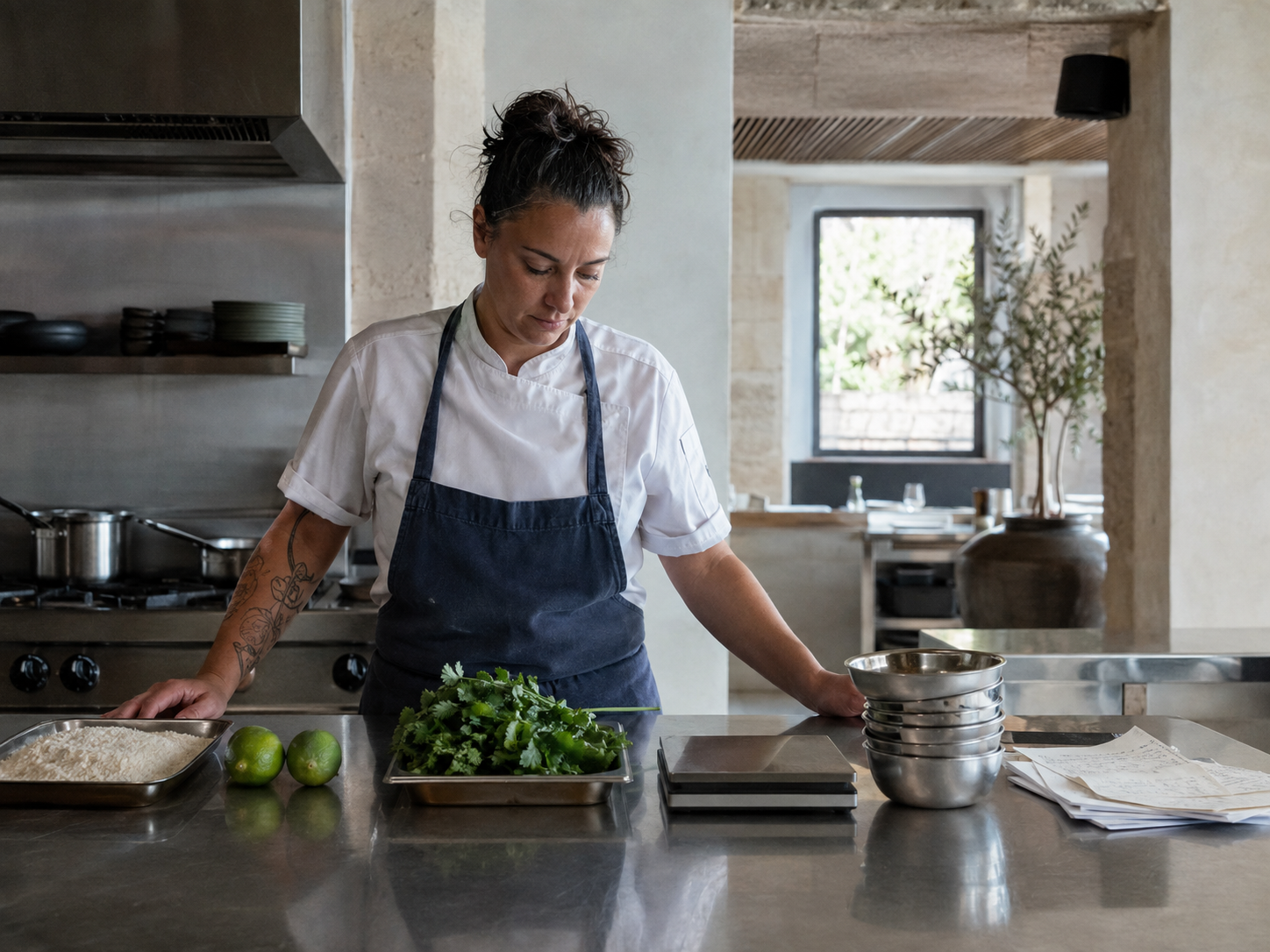
There is a moment in the life of a cook when an ingredient stops being only an ingredient. It becomes a world. Not because it is rare, expensive, or difficult to obtain. Often, the opposite is true. The ingredients that open the largest doors are sometimes the ones that have been around us all along. We pass them every day, use them without thinking, and see them appear in soups, sauces, stews, drinks, condiments, family meals, street food, and restaurant kitchens.
Then something changes. We taste that familiar ingredient somewhere else. We see it handled differently. We hear another cook speak about it with precision. We discover that what seemed simple contains history, technique, aroma, texture, memory, and cultural argument. The ingredient expands, and what really expands is our own field of awareness.
This is where ingredient thinking begins. A cook is no longer asking only, “How do I use this?” but also, “What is this ingredient capable of? What does it become under different conditions? What do other cuisines know about it? What happens when it is raw, cooked, dried, preserved, fermented, ground, roasted, or paired with something unexpected?” These questions slowly build what I think of as culinary grammar: the body of ingredients, techniques, references, and relationships through which a cook understands food.
For me, three of those ingredients are cilantro, rice, and lime. They are humble ingredients, common ingredients where I grew up, ingredients that could easily be taken for granted. And yet each one opened a different door, and continues to surprise me.
Cilantro and the Freshness of Memory
Cilantro was everywhere when I was growing up in Guatemala. It was not presented as a special herb. It was simply there, in gardens, backyards, and small pots near the window, often beside a chiltepe plant. Chiltepe, the small, sharp, intensely spicy pepper from the region, and cilantro seemed to belong together in that domestic landscape. They were not decorative plants. They were living condiments, ready to be used.
The women in the family, who were usually the ones cooking, would step outside and cut a little branch. Sometimes the cilantro was chopped. Sometimes it was torn with the fingers and scattered directly over the food: a soup, a chile relleno, a tortilla with a little meat, a caldo, a sauce, or a plate that needed one final gesture before reaching the table. Cilantro often arrived at the end, fresh, green, immediate. It gave the dish a sense of arrival, as if the food had been completed not by cooking longer, but by being awakened.
That early memory shaped the way I still think about the herb. When I imagine Latin American food, especially food from the Mesoamerican region, cilantro is rarely far away. It appears in sauces, caldos, garnishes, and fresh preparations. Sometimes the leaves are used raw. Sometimes the whole plant, including the roots, enters a stew or broth. The root has another register entirely: deeper, earthier, less delicate than the leaf.
Then there are the seeds. Coriander seed travels differently through cuisines. It is the same plant, but not the same culinary behavior. The fresh leaf and the dried seed belong to different aromatic worlds. One is grassy, sharp, green, and volatile. The other is warmer, citrusy, rounded, and capable of entering spice blends, stews, marinades, and preserved preparations. Already, one ingredient has split into several possible identities: leaf, stem, root, seed, fresh herb, cooked background, ground spice, infusion, garnish, condiment.
As a young adult in the United States, I tasted Thai and Vietnamese food for the first time. In Guatemala at that time, my exposure to Asian food had been mostly Chinese and Japanese. Thai food was new to me. Vietnamese food was new to me. I was lucky that my first experience came not only from a restaurant, but from classmates from Thailand who cooked very well and invited us to eat with them. That meal changed something. Cilantro was there, but it was not the cilantro of my childhood table. It was moving with lemongrass, coconut milk, chiles, fish sauce, herbs, acidity, sweetness, and heat. It belonged to another aromatic architecture. I recognized the herb and did not recognize it at the same time.
That is one of the most important experiences a cook can have: the familiar ingredient becomes foreign, and the foreign dish becomes strangely connected to memory. Cilantro was no longer only the final green touch on a Guatemalan soup or tortilla. It could travel into a completely different structure and still make sense. It could sit beside coconut milk, lift the fragrance of a broth, and join citrus, chile, and fermented depth in a way I had not imagined before.
From then on, cilantro became one of those ingredients I continued to look for. Where could it go? Could it replace parsley in a chimichurri-like sauce? Could it become the green note in a dish that otherwise leaned toward another tradition? Could it enter a marinade, a fresh salsa, a broth, an herb oil, a paste, a condiment, a garnish? The ingredient had become a bridge, not a careless bridge where everything can be mixed with everything, but a bridge that made me ask why certain aromatic families could speak to one another.
Cilantro also teaches through its difficulty. Fresh cilantro is volatile. Its most beautiful aroma exists in a narrow window. The moment it is cut, it begins to change. After ten minutes, it is no longer exactly the same herb. After twenty, something has already faded. After an hour, the green immediacy is largely gone. The cook has to decide what form of cilantro is being used. If the goal is just-cut grassy brightness, then it belongs at the last moment. If the goal is a green sauce that will hold for a little longer, then the cook has to think about oil, acid, salt, blending, oxidation, refrigeration, and color. If the goal is cooked depth inside a caldo or stew, then cilantro will not behave as garnish. It will become part of the background flavor.
This is where an ingredient becomes a study. Not only what it tastes like, but when it tastes like that. Not only how it smells, but how long that aroma survives. Not only where it comes from, but how it behaves under pressure, heat, time, and preservation. Cilantro taught me that an herb is not simply added. It is timed.
Rice and the Question of Correctness
Thinking about rice was different. It has been so present in my daily meals, that I barely saw it. It was a staple, a background, something that appeared with meals and carried other things. Like many familiar ingredients, it suffered from its own proximity. Because it was always there, it seemed already understood. Then, in culinary school in Barcelona, I had a teacher who taught a class on ingredients. He would move through the alphabet, selecting ingredients from one letter and opening them through history, classification, technique, and use. One day, he arrived at the letter A: arroz, rice. He dedicated the entire three-hour class to it.
I remember being stunned that someone could speak for three hours about rice and still make it feel as if the subject had only begun. Rice was not one thing. It was short grain, long grain, medium grain, whole grain, polished, aged, aromatic, glutinous, non-glutinous, grown in different regions, cooked through different methods, valued for different textures. Rice for paella, rice for risotto, rice for sushi, rice for pilaf, rice for congee, rice for rice pudding, rice for daily meals, ceremonies, staff meals, family tables, and national identities.
Suddenly, the word rice became too small. There were rice(s), each one with its own behavior. How much liquid does it absorb? Does it release starch? Should it remain separate? Should it become creamy? Should it hold shape? Should it be washed, soaked, stirred, rested, steamed, toasted, or allowed to stick? These are not small technical questions. They define entire cuisines. The sadness of rice is when one version becomes the universal idea of rice. For some people, rice should be loose and separate. For others, creamy. For others, sticky. For others, dry at the bottom and slightly toasted. For others, soft enough to comfort, or firm enough to hold its structure under sauce. The grain becomes cultural. It carries standards that may not be visible to someone outside that culinary grammar.
Later, I became quite good at making risotto, at least, I thought so. I had been practicing it, understanding the way the rice releases starch, how the liquid enters gradually, how the grains remain present while the whole dish becomes creamy. I liked the discipline of it. Risotto asks for attention. It asks the cook to stay with the pan. One evening, I cooked a risotto at a multicultural dinner party. Friends from Guatemala were hosting, and they were already preparing Guatemalan food, so I decided to bring something different. A Korean couple entered the kitchen while I was finishing the dish. They looked at the risotto with visible discomfort. When I later invited them to try it, they asked what it was. I explained that it was an Italian preparation. They looked at it and said, in effect, “You destroyed the rice.”
To them, it was soggy rice. Ruined rice. Not because the risotto was technically incorrect in its own tradition, but because their expectation of rice belonged to another system. The texture that Italians might value as creamy and properly bound was, for them, evidence that the grain had been mistreated. That moment was not disappointing to me. It was clarifying. One ingredient can hold completely different standards of correctness. A preparation that is perfect in one culture may appear wrong in another, not because one side understands rice and the other does not, but because rice is being judged from different culinary grammars.
When I was studying at Le Cordon Bleu in Paris, I had Japanese friends who often complained that it was difficult to find good sushi in the city. I was confused because there seemed to be sushi restaurants everywhere. They explained that the problem was not simply the presence of sushi. The problem was the rice. It was not cooked correctly, not seasoned correctly, not handled at the right temperature, not treated with the precision they expected. To them, this was not a minor imperfection. It was central. I had eaten in some of those places and enjoyed the food, but they were telling me something important: you do not yet understand what this rice is supposed to be. That is a humbling realization for a cook. It shows that appreciation and understanding are not the same. You can like something without knowing the standards by which it is judged. You can enjoy a dish and still miss what someone else considers essential.
Rice opened that field for me. It taught me that an ingredient can be technically simple and culturally exacting. It can be everyday and sacred, cheap and treated with immense precision, present in every home and still demand years of understanding. Every culture has its claim on the grain, and every claim reveals a way of seeing it.
Lime, Lemon, and the Work of Acidity
The third ingredient is lime, or lime and lemon, because the language itself already opens a question. In much of Latin America, what many English speakers call lime is often called limón: the small green citrus. The yellow lemon is referred to differently, often as a yellow limón. The names shift across regions, and with them the assumptions.
For me, the green lime has always been central. Latin American cooking uses it constantly. It is squeezed over food, used in marinades, added to drinks, placed beside soups, used in ceviche, mixed into sauces, and brought to the table as a form of final adjustment. But I do not think of lime and lemon as a hierarchy. One is not better than the other. They have different profiles. Lime is sharper, greener, and more direct. Lemon can be more floral, rounder, aromatic in another way. Their juices behave differently. Their peels give different oils. Their preserved forms develop different depths. When they are combined thoughtfully, they can create something neither one produces alone.
This is especially clear in preservation. Lacto-fermented or preserved lemons and limes can become extraordinary. Each citrus changes through salt, time, fermentation, and softening. The bitterness transforms. The peel becomes edible and aromatic. The acidity becomes deeper and more complex. When preserved lime and preserved lemon are brought together into a paste, sauce, or condiment, the result can feel almost impossible compared to the raw fruit. The ingredient has not only been used. It has been transformed.
Lime and lemon are not only flavoring ingredients. They process food. They preserve, brighten, protect color, change texture, cure fish, balance sweetness, cut fat, and bring aromatic oils through zest. In a daiquiri, rum, lime, and sugar form a simple but foundational structure. Change the spirit, change the syrup, change the fruit, and the family expands, but the acid remains the point of tension. Without it, the drink collapses into sweetness and alcohol without balance.
In ceviche, citrus becomes another kind of agent. Lime juice changes the surface of the fish. It firms, seasons, and alters perception. Add lemon zest at the end, and another register appears: more floral, lifted, and aromatic. Then there are blackened limes, dried and transformed by heat and time until they become almost unrecognizable from the fresh citrus. The brightness turns into something deeper, smoky, sour, bitter, savory, and perfumed. How can that flavor come from citrus? Because the process reveals another side of the ingredient. Raw lime, lime juice, lime zest, preserved lime, black lime, lemon juice, lemon zest, preserved lemon, roasted lemon, whole lemon inside a chicken, lemon halves cooked with vegetables in a roasting pan: each form brings a different world of use. Again, the ingredient splits. It refuses to remain one thing.
The Ordinary Ingredient Is Not Small
Cilantro, rice, and lime are not rare ingredients. They are not luxurious in the usual sense, and they do not need to arrive with a story of exclusivity. They are common, accessible, often inexpensive, and present in many kitchens throughout the world. That is precisely why they matter. A cook can spend years chasing exceptional ingredients while missing the depth inside the ones already at hand. Most cooking in the world begins not with rare products, but with ingredients that are close, available, repeated, and familiar. Grains, herbs, onions, citrus, legumes, roots, greens, fats, spices, and condiments become the foundation of entire cuisines because generations of cooks have learned how to see more inside them.
The ordinary ingredient becomes extraordinary when we begin to ask better questions. What part of the plant is being used? What happens when it is fresh, dried, cooked, preserved, fermented, roasted, or ground? Which cultures have built techniques around it? What texture is considered correct? What aroma disappears quickly? What does the ingredient do to other ingredients? What role does it play at the table? What does it carry from memory, region, season, and habit?
These questions are not academic decorations. They change practice. A cook who understands cilantro more deeply will know when to add it, when not to cook it, when to use the roots, when to avoid cutting it too early, and how it might connect to other aromatic families. A cook who understands rice more deeply will stop treating all grains as interchangeable and begin asking what kind of texture the dish actually requires. A cook who understands lime and lemon more deeply will use acidity not only as brightness, but as structure, preservation, balance, aroma, and transformation. That is ingredient thinking. It is the habit of staying with an ingredient long enough for it to reveal its possibilities. And as that habit develops, it expands one’s culinary grammar.
Culinary Cultures are Dynamic, Heritage Is a Way of Seeing Them
One of the most interesting parts of studying an ingredient is listening to cultural claims. People say: this is how rice should be, this is when cilantro is added, this is the correct texture, this is how lime is used, this is the proper way to cook it. From outside, those claims can sound rigid, but inside them there is knowledge.
When a culture insists on a particular texture of rice, it is preserving a history of cooking, eating, farming, and judging. When a household adds cilantro at the end of a soup, it carries a sensory memory of freshness and completion. When lime is squeezed over a dish at the table, the guest is not only seasoning. They are participating in the final adjustment of the meal. Heritage teaches through these gestures. The danger is to dismiss them as obvious because they are ordinary to the people who practice them. For someone else, they may be a revelation. The cook should pay attention to both sides: the familiar and the unfamiliar. What is obvious to me may be unknown to another cook, and what is obvious to another culture may completely change the way I understand an ingredient. That exchange is one of the most generous parts of culinary life.
This does not mean treating tradition as something fixed. It means recognizing that traditions often hold very precise knowledge about ingredients. They tell us which texture matters, which aroma should be preserved, which cut changes the result, which condiment belongs at the table, and which mistake is not really a mistake unless you are standing inside that particular culinary logic. To understand that is to cook with respect, sensibility and intelligence.
One Ingredient Can Open Five Doors
An ingredient becomes a world when it can be entered from several directions. Flavor is the first door: what does it taste like, and how does that taste change? Aroma is another: what does it release when cut, heated, toasted, fermented, dried, or preserved? Texture opens another field: how does it feel, and what textures do different cuisines value? Process takes the ingredient further still: what happens when it is cooked, dried, ground, cured, roasted, fried, soaked, fermented, or left raw? Heritage gives the ingredient context: where has it traveled, who has used it, and what meanings has it carried?
This is a simple way to begin a systematic approach without making the ingredient feel dead or overly classified. Cilantro is not only a fresh herb. It is leaf, stem, root, seed, garnish, broth, sauce, memory, and volatile aroma. Rice is not only a grain. It is variety, starch, water, texture, culture, ritual, technique, and argument. Lime is not only acidity. It is juice, zest, preservation, fermentation, cocktail structure, ceviche, roasted aroma, and cultural habits. The ingredients are small. The field is enormous.
A cook does not need to begin with rare materials. Begin with what is already near: an herb you think you know, a grain you have cooked a thousand times, a citrus you squeeze without thinking. Stay with it longer. Taste it in another culture. Use another part of it. Cook it differently. Preserve it. Ask someone how they learned to use it. Compare varieties. Notice when it fades, when it intensifies, when it becomes unpleasant, and when it becomes beautiful. Write the observations down and return to them. That is how an ingredient stops being a line in a recipe and becomes part of a cook’s internal archive. Over time, that archive becomes a practical source for creativity. You are no longer trying to invent from nothing. You are working from a growing map of what ingredients can do.
The moment this happens, creativity changes. You no longer ask only, “What can I add?” You begin to ask, “What is already inside this ingredient that I have not yet understood?” That question can last for years. And if you follow it carefully, one ingredient can become large enough to contain a whole world of possibilities.
When an Ingredient Becomes a World: How Cilantro, Rice, and Lime Opened the Field of Culinary Understanding