The Myth of Inspiration: Building a System for Culinary Creativity
There is a persistent idea in kitchens, and in creative work in general, that creativity arrives as a kind of moment. Something unpredictable, almost accidental. You are working, and suddenly something clicks. An idea appears, a combination makes sense, and what comes out of it feels new, even surprising. Most of us have experienced that at least once.
A preparation works better than expected. A combination reveals something you hadn’t anticipated. For a brief moment, everything aligns, and it feels as if you have accessed something beyond your usual way of thinking. It is easy, then, to believe that this is what creativity is. A kind of fortunate interruption in the normal flow of work. The problem is that those moments cannot be relied on. You cannot call them when you need them, and you cannot reproduce them consistently. And yet, in a professional kitchen, consistency is not optional. You cannot wait for a moment of inspiration to decide what goes on the menu, or how to solve a problem that arises during development. The work demands continuity, whether you feel inspired or not.
This is where the idea of creativity as something spontaneous begins to break down. Because if you spend enough time around chefs who are consistently creating, you begin to notice something that is not immediately visible from the outside. What appears as ease is usually the result of repetition. What appears as intuition is often the result of a process that has been repeated so many times that it no longer feels like a process.
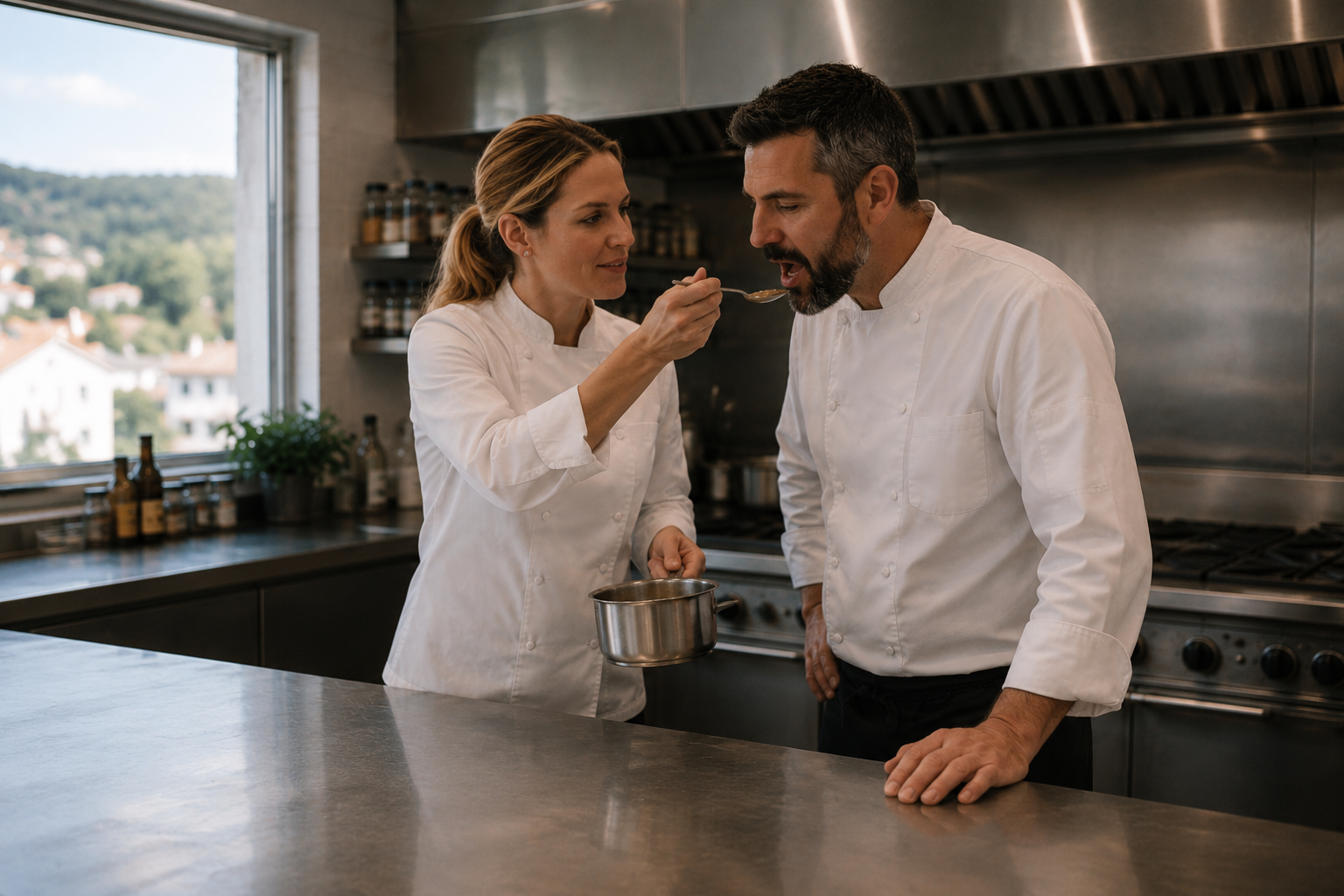
I recall working in a kitchen where the two chefs running the restaurant were always there before anyone else. We would arrive for service in the morning, and they had already been working for hours. Sometimes they were preparing things that only they handled, but often they were simply testing small variations. Adjusting something that had been done the day before, revisiting an idea that hadn’t been resolved, or trying a different approach to an ingredient. None of it looked particularly dramatic. There were no declarations of “new dishes” or moments where something extraordinary suddenly appeared.
Most of what they did seemed incremental, almost repetitive. But over time, those small adjustments accumulated. Ideas that had been explored weeks before would reappear in a different form. Preparations evolved slowly, sometimes without anyone noticing exactly when the change had happened. From the outside, it would have been easy to say that they were constantly inspired. But that was not what was happening. Their work was defined by a rhythmic, internal process rather than random inspiration. It functioned as a continuous cycle: investigating an idea, testing it, evaluating the outcome, and making refinements—the process allowed them to consistently have new outputs for their changing menus.
Once you see that, the idea of creativity changes. It stops being something you wait for, and becomes something that emerges from continuity. Not because every attempt produces something useful, but because staying in the process increases the chances that something will eventually connect. What we call inspiration is often just the moment when those connections become visible. But they were not magically created at that moment. They were prepared by everything that came before. This has a practical consequence. If creativity depends on a moment, then you are always at the mercy of that “spontaneous moment". If it does not come, the work stops. But if creativity is the result of a system, then the work can continue regardless of how you feel. The system carries you forward. It gives you something to return to, even when nothing particularly interesting is happening.
This does not make the work less exciting. If anything, it makes it more reliable. Because instead of depending on isolated events, you are building a continuous relationship with what you are doing. You are keeping ideas in motion, even when they are incomplete. You are allowing things to evolve over time instead of expecting them to resolve immediately. And within that movement, moments of clarity still happen. But they are no longer the foundation of your practice. They are a byproduct of it. For a creative chef, this distinction is essential. Because the kitchen does not wait. Menus need to be developed, adjusted, improved. Problems need to be solved. Decisions need to be made. If all of that depends on whether or not you feel inspired, then your work becomes unstable.
But if you have a way of working that you can return to, then creativity becomes part of the structure of your practice, not something external to it. Over time, that structure begins to define the kitchen itself. Not in a rigid way, but as a continuity of thought. Dishes evolve, ideas connect, and what is being created starts to reflect something coherent. It no longer feels like a series of isolated attempts, but like a direction that is being developed. And that direction is not the result of a single idea. It is the result of staying in the process long enough for ideas to accumulate, interact, and transform. That is what makes creativity sustainable. Not the moment when something appears, but the system that allows it to keep appearing.
The Myth of Inspiration: Building a System for Culinary Creativity