The Tongs
The Instrument of Precision Handling
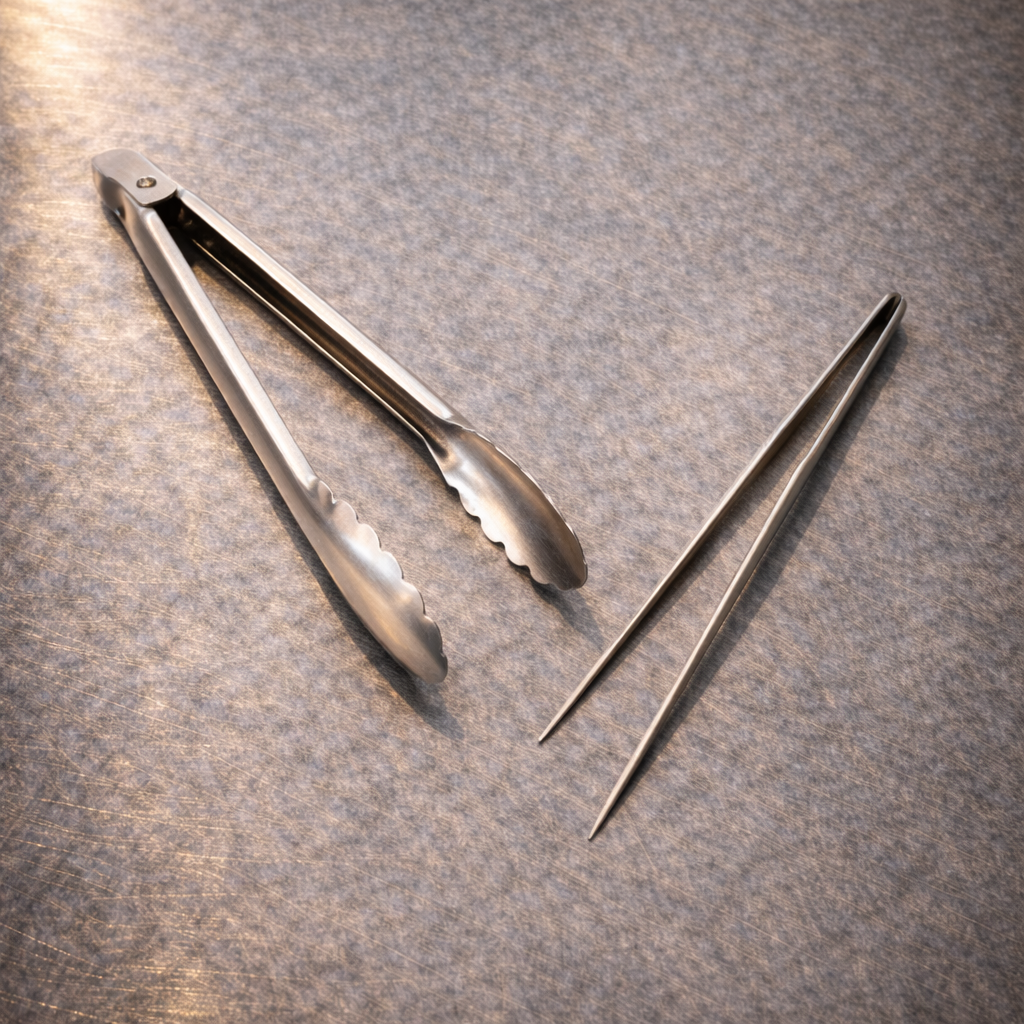
Among the instruments of the kitchen, tongs function as an extension of the cook’s hand. They allow cooks to grasp, lift, rotate, and reposition ingredients while maintaining distance from heat, liquids, or delicate preparations. Where the spoon guides and the whisk agitates, tongs allow the cook to handle ingredients directly yet safely. From turning a steak in a pan to placing a delicate herb on a plated dish, the same fundamental principle applies: controlled pressure applied between two arms.
Function
Tongs serve one essential purpose: controlled gripping. They allow ingredients to be manipulated without piercing, crushing, or contaminating them through direct hand contact. Typical uses include:
• turning meats in pans or on grills
• removing ingredients from hot oil or liquid
• transferring food between vessels
• arranging ingredients during plating
• handling delicate components such as herbs or flowers
Because they allow quick and secure movement of ingredients, tongs are among the most frequently used instruments during cooking service.
Geometry
The design of tongs determines their level of precision and strength.
Standard Kitchen Tongs
These are the most common forms found in kitchens. They provide strong gripping power for turning meats, lifting vegetables, or handling ingredients during cooking.
Long Grill Tongs
Longer tongs allow cooks to work safely over grills, ovens, or deep vessels. Their extended reach protects the cook from heat while maintaining control of the ingredient.
Precision Tweezers
Tweezers are the refined form of tongs. They are used for the delicate placement of small ingredients during plating or garnish work. Chefs often use them to position:
• herbs
• edible flowers
• fine vegetable threads
• micro garnishes
Micro Tweezers
The smallest versions are used in highly detailed plating environments. They allow extremely precise control over tiny elements without disturbing surrounding components.
Materials
The materials used in tongs influence durability and grip.
Stainless Steel
Most professional kitchen tongs are made of stainless steel. This material is strong, heat-resistant, and easy to clean.
Silicone-Tipped Tongs
Some tongs include silicone tips designed to grip delicate ingredients or protect cookware surfaces such as nonstick pans.
Spring Steel Construction
Many tweezers are made from flexible spring steel that allows them to maintain tension and return to their original shape after use.
Ergonomics
Because tongs rely on pressure and control, their ergonomics are critical.
Tension
The spring tension between the arms determines how firmly ingredients can be held. Too much tension makes the tool tiring to use, while too little tension reduces control.
Length
Length must match the cooking environment. Shorter tongs provide greater precision, while longer tongs allow safe handling at high temperatures.
Tip Design
Different tip designs provide different levels of grip. Flat tips hold larger items securely, while fine tips allow delicate manipulation of small ingredients.
Choosing the Tool
Selecting the appropriate tongs depends on the task. Try to consider:
• the size of the ingredient
• the delicacy of the preparation
• the heat environment
• the required level of precision
Professional kitchens often keep several types of tongs available, ranging from robust cooking tongs to delicate plating tweezers.
Common Misconceptions
One misconception is that a single pair of tongs can serve all purposes. In practice, the ideal tool varies depending on the task. Large tongs may damage delicate ingredients, while very fine tweezers lack the strength to handle heavier foods. Choosing the correct tool improves both efficiency and precision.
Closing Reflection
Tongs bridge the space between the cook and the ingredient. They allow food to be handled without direct contact, preserving both safety and precision. At one end of the spectrum, strong tongs manage heavy ingredients over intense heat. At the other end, delicate tweezers place a single herb leaf onto a finished plate. In this range—from strength to finesse—the instrument reveals its true nature: an extension of the cook’s hand, adapted to the many gestures of cooking.