The Spatula & The Scraper
Lifting, Turning & Scraping
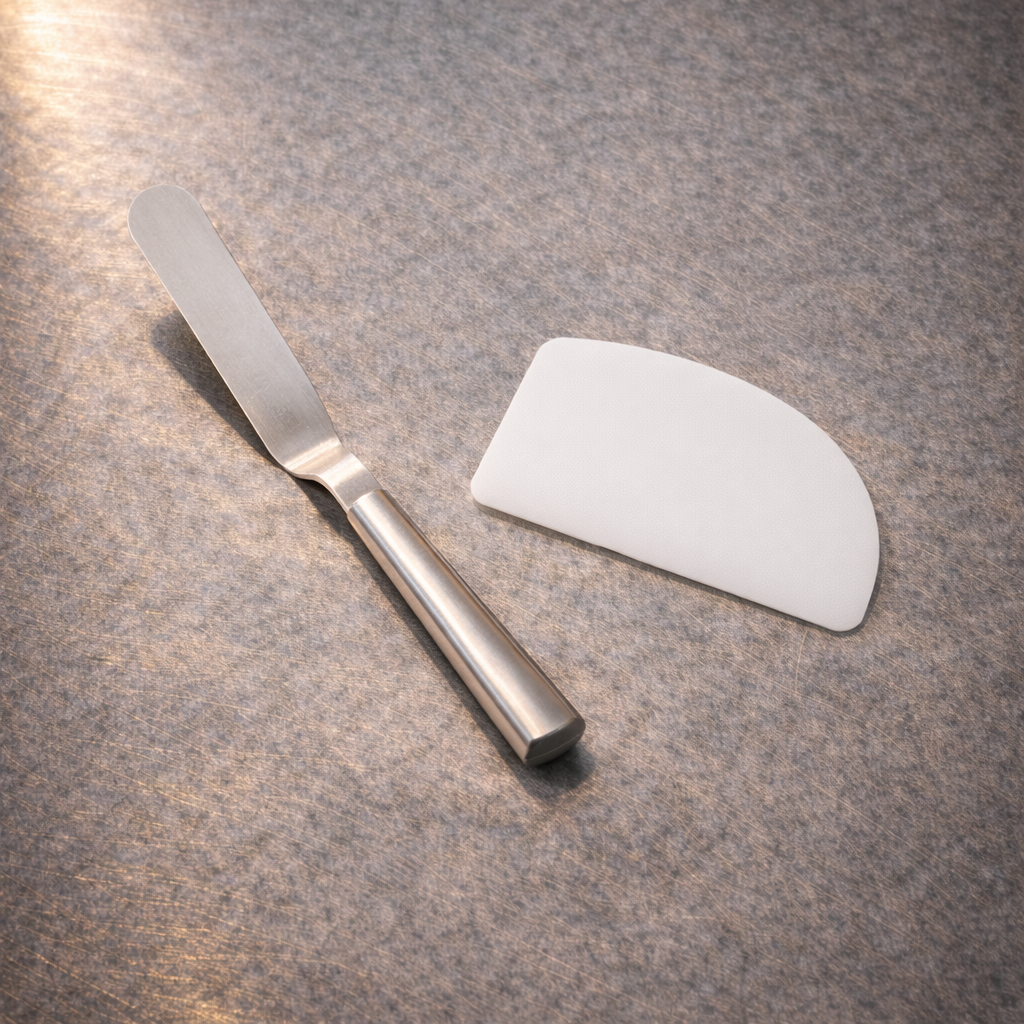
Cooking often requires more than stirring or mixing. Ingredients must be lifted, turned, spread, or transferred without breaking their structure. A delicate fish fillet must be flipped in a pan. A piece of meat must be lifted from a braising pot. A batter must be scraped from a bowl so that none of it is wasted. The spatula and the scraper perform these tasks.
These instruments extend the cook’s hands, allowing food to be moved, lifted, and handled with control and precision. Their flat surfaces slide beneath ingredients, supporting them as they are turned or transferred. Because of this versatility, spatulas and scrapers are among the most frequently used tools in professional kitchens.
Function
The spatula and scraper serve several key functions in the kitchen. They allow cooks to:
• flip foods during cooking
• lift delicate ingredients
• scrape mixtures from containers
• spread creams or batters
• transfer ingredients between surfaces
These tools are particularly useful when ingredients must be handled without breaking or tearing. Their flat surfaces provide support while moving ingredients across pans, griddles, or preparation surfaces.
Geometry
The design of spatulas varies widely depending on their intended use.
Solid Spatulas
Solid metal spatulas are commonly used on griddles or flat cooking surfaces. Their rigid structure allows cooks to lift heavy foods such as burgers, vegetables, or grilled meats.
Fish Spatulas
Fish spatulas are thin, flexible tools with slotted surfaces. Their flexibility allows them to slide easily beneath delicate foods such as fish fillets, preventing them from breaking during turning.
Silicone Spatulas
Silicone spatulas are often used in pastry and mixing tasks. Their flexible edges allow cooks to scrape bowls clean and fold mixtures gently without damaging delicate textures.
Bench Scrapers
Bench scrapers are flat, rectangular tools used on preparation surfaces. They are commonly used in pastry kitchens to divide dough, scrape work surfaces, or transfer chopped ingredients.
Materials
Spatulas and scrapers are produced using materials suited to different tasks. Stainless steel spatulas provide strength and durability for lifting foods on griddles and pans. Silicone spatulas offer flexibility and heat resistance, making them ideal for scraping bowls and mixing batters. Plastic or nylon spatulas are often used when working with nonstick cookware to avoid damaging surfaces. Each material offers a different balance between flexibility, strength, and heat resistance.
Ergonomics
Spatulas are designed to allow cooks to maneuver ingredients efficiently. Key ergonomic features include:
• thin leading edges that slide beneath food
• flexible blades for delicate ingredients
• comfortable handles for extended use
• angled or offset designs for better control
Offset spatulas, for example, allow cooks to spread creams or sauces while keeping their hands elevated above the work surface. These small design differences can significantly influence how easily ingredients can be handled.
Choosing the Tool
Different cooking tasks require different types of spatulas. A thin fish spatula is ideal for delicate proteins, while a sturdy griddle spatula works better for heavier foods. Silicone spatulas are essential in pastry work, where mixtures must be folded gently or scraped from bowls. Professional kitchens often maintain several types of spatulas to handle the variety of tasks encountered during preparation and service.
Common Misconceptions
One misconception is that all spatulas perform the same function. In reality, different spatulas are designed for very specific tasks. Using the wrong type may damage delicate foods or make certain tasks unnecessarily difficult. Another misunderstanding is that spatulas are only used for flipping food. In practice, they also play an important role in scraping, spreading, and transferring ingredients during preparation.
Closing Reflection
The spatula and scraper may appear simple, yet they perform some of the most delicate movements in the kitchen. They allow cooks to lift fragile ingredients without breaking them, to spread mixtures evenly, and to recover every last portion from a bowl or pan. Through these gestures, the spatula becomes an extension of the cook’s hand, translating intention into precise movement.