The Serrated Knife
Cutting What Should Not Be Crushed
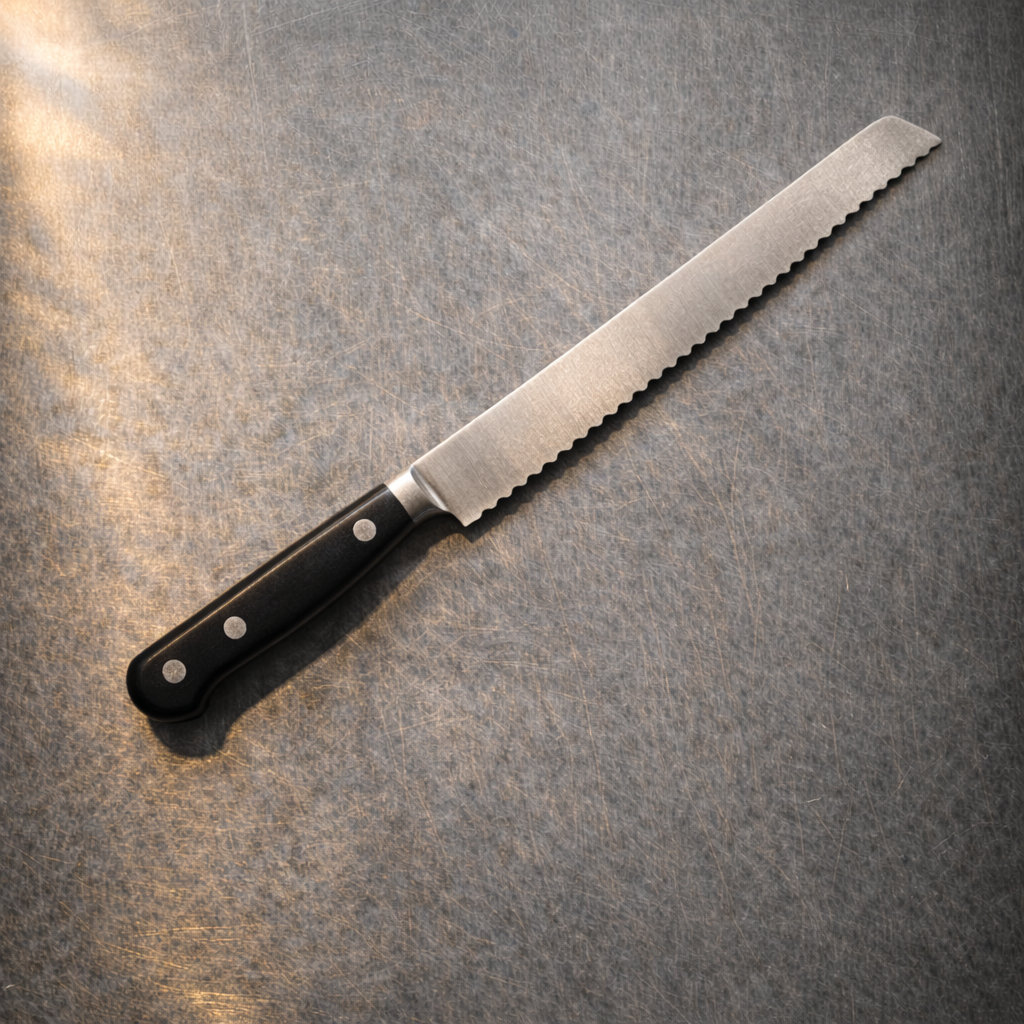
Most knives cut by sliding a smooth edge through an ingredient. The serrated knife works differently. Rather than relying on a continuous edge, the blade is composed of a series of small points and valleys. These points concentrate pressure into tiny contact areas, allowing the knife to grip and penetrate surfaces that would otherwise resist a smooth blade.
This is why a serrated knife can cut through a crusty loaf of bread without crushing the soft crumb inside. It grips the crust, saws gently through the structure, and preserves the interior. For this reason, serrated knives are indispensable whenever an ingredient has a firm exterior and a delicate interior.
The Function
The serrated knife exists to solve a particular problem in cutting: fragile structures protected by resistant surfaces.
Examples include:
• crusty bread with soft interior
• ripe tomatoes with delicate flesh
• citrus fruits with tough skin
• cakes and pastries with airy crumb
A smooth blade tends to slide across these surfaces or crush them before penetrating. The serrations create small contact points that grip the surface and initiate the cut with minimal pressure. The knife then advances using a sawing motion, rather than a straight push cut.
The Geometry
Serrated knives vary considerably depending on the tasks they are designed to perform.
Bread Knife
Bread knives are typically long, often 20-26 cm, and feature large, widely spaced serrations. Many have a rounded or sheep’s foot tip. Because the knife is designed primarily for slicing bread, a sharp point is unnecessary and sometimes undesirable. The long blade allows the cook to cut through large loaves with a single smooth motion.
Utility Serrated Knife
Medium-sized serrated knives serve as versatile tools in many kitchens. With blades around 15–18 cm, they can cut bread, tomatoes, sandwiches, and soft fruits. Many feature a pointed tip, allowing them to perform small trimming tasks as well. These knives often become general-purpose serrated tools in daily cooking.
Small Serrated Knife
Smaller serrated knives are particularly useful for delicate fruits and vegetables. Their shorter blades allow quick, precise movements when slicing tomatoes, citrus fruits, or other delicate produce. A pointed tip is usually preferred because it allows the cook to remove small imperfections or cores.
Materials
Serrated knives are usually made from stainless steel due to the practical realities of their use. Because sharpening serrated edges is more complicated than sharpening smooth blades, corrosion resistance and durability become particularly important. Unlike smooth knives, the small points of a serrated edge tend to remain functional even as the knife becomes slightly dull. For this reason, serrated knives often retain acceptable cutting performance for longer periods between sharpenings.
Ergonomics
Several factors influence how a serrated knife behaves in the hand.
Blade Length
Long blades are ideal for slicing large bread loaves and cakes because they allow smooth, continuous strokes. Shorter blades provide greater maneuverability for fruits and smaller ingredients.
Tip Shape
Rounded tips are common in bread knives because they reduce the risk of puncturing the loaf during slicing. Pointed tips allow more precise work, particularly when cutting fruits or vegetables.
Blade Rigidity
Some serrated knives have rigid blades, while others are slightly flexible. Rigid blades provide more control for precise slicing tasks. Slightly flexible blades are sometimes used in baking environments when cutting cake layers or delicate pastries.
Choosing the Tool
The best serrated knife depends largely on the tasks performed in the kitchen.
Bread-focused kitchens
A long bread knife with aggressive serrations and a rounded tip offers the most efficient slicing.
General cooking
A medium-sized serrated knife with a pointed tip can handle tomatoes, citrus fruits, bread, and various utility tasks.
Precision produce work
A shorter serrated knife allows faster, more controlled movements when working with delicate fruits and vegetables. Because serrated knives are difficult to sharpen, it is worth investing in a well-made blade that maintains its edge for a long time.
Common Misconceptions
One misconception is that serrated knives never need sharpening. While they do maintain usable edges longer than smooth blades, they eventually become dull and require specialized sharpening techniques. Another misunderstanding is that serrated knives are used only for bread. In reality, they are extremely useful whenever an ingredient has a surface that resists a smooth blade.
Closing Reflection
Where smooth knives glide through ingredients, serrated knives grip and advance. They are tools designed not for elegance of motion but for solving a specific structural problem in cutting. In a well-equipped kitchen, they serve as quiet specialists, called upon when the nature of the ingredient demands a different approach.
Related Instruments
Chef’s Knife
Paring Knife
Mandoline
Cutting Board