The Cutting Board
The Surface of Preparation
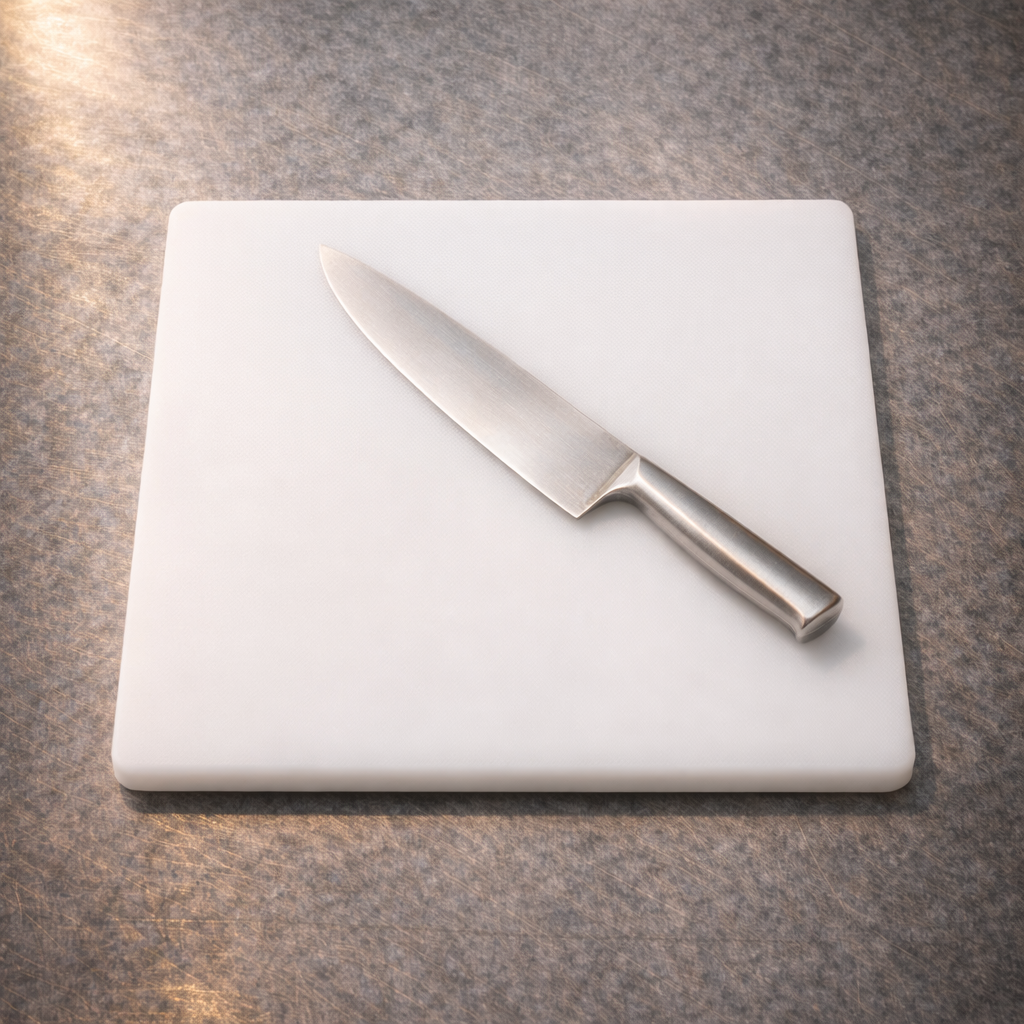
The cutting board is often seen simply as the surface where cutting happens. In reality, it is one of the most active workspaces in the kitchen. Here, ingredients are chopped, trimmed, peeled, sliced, and sometimes assembled before reaching the plate. Even after cooking, many preparations return briefly to the cutting board to be finished, portioned, or garnished.
In smaller kitchens, especially, the cutting board becomes a central station for last-minute manipulations. Herbs may be chopped just before serving, meats sliced after roasting, or delicate preparations opened and plated. In this sense, the cutting board functions as the stage where preparation and finishing meet.
Function
The primary role of the cutting board is to provide a stable and protective surface for cutting operations. Without it, knives would quickly damage countertops, dull their edges, or create unsafe working conditions. Typical tasks performed on cutting boards include:
• slicing vegetables
• trimming meats
• chopping herbs
• opening cooked preparations
• portioning ingredients
• assembling dishes before plating
Because of this wide range of uses, the cutting board becomes one of the most frequently used surfaces in a professional kitchen.
Geometry
The size and thickness of a cutting board influence its performance.
Size
Large cutting boards provide more working space and allow cooks to organize ingredients while cutting.
Smaller boards are often used for quick tasks or in limited workspace environments.
Thickness
Thicker boards provide greater stability and are better suited for heavy chopping tasks such as breaking down meats or cutting dense vegetables. Lighter boards may be used for smaller or more delicate preparations.
Materials
Cutting boards are made from several materials, each with its own advantages and limitations.
Plastic
Plastic cutting boards are widely used in professional kitchens. They are nonporous, easy to clean, and dishwasher-safe in many cases. Their durability and sanitation properties make them common in high-volume food preparation environments.
Hardwood
Traditional wooden boards are valued for their durability and knife-friendly surfaces. Certain hardwoods used for cutting boards are less porous and naturally resistant to bacterial growth when properly maintained. However, wooden boards require careful cleaning and maintenance.
Bamboo
Bamboo boards are harder and absorb less moisture than many hardwoods. They resist scarring and can be relatively resistant to bacterial growth when properly cleaned.
Nonporous Surfaces
Other materials, such as glass or marble, exist, but they are less common because they can dull knives quickly and provide less forgiving cutting surfaces.
Ergonomics
A cutting board must be stable and secure during use.
Stability
A cutting board should not slide during cutting. Many kitchens place a damp cloth, paper towel, or nonslip mat under the board to prevent it from moving. This stability is essential when working with sharp knives at speed.
Surface Condition
Over time, knife marks accumulate on cutting boards. Deep grooves can trap food particles and bacteria, making them difficult to clean properly. Boards that become excessively worn should be replaced.
Choosing the Tool
Selecting a cutting board depends on the intended use. Important considerations include:
• board size relative to workspace
• material suited to sanitation requirements
• thickness for heavy cutting tasks
• ease of cleaning and maintenance
Professional kitchens often keep several boards available to accommodate different types of preparation.
Preventing Cross-Contamination
Because cutting boards come into contact with many ingredients, sanitation is critical. Many professional kitchens use color-coded cutting boards to reduce the risk of cross-contamination. Typical color systems include:
Green – vegetables and produce
Blue – fish and seafood
Yellow – poultry
Red – red meats
White – general preparation or cooked foods
These systems help ensure that bacteria from raw foods do not contaminate ingredients that will not be cooked further.
Cleaning and Sanitation
Cutting boards should be cleaned thoroughly after each use. Standard sanitation procedures include:
• washing with hot, soapy water
• rinsing with clean water
• air drying or drying with clean paper towels
Boards may also be sanitized using a diluted chlorine bleach solution. Both plastic and wooden boards can be sanitized in this way, although laminated boards may be damaged by dishwashers. Boards that become deeply grooved or difficult to clean should be discarded and replaced.
Common Misconceptions
One misconception is that cutting boards are passive tools that require little attention. In reality, they are among the most sensitive surfaces in the kitchen because they regularly come into contact with raw ingredients. Improper sanitation practices can easily lead to cross-contamination. Another poor practice is flipping a cutting board during service to use the opposite side without cleaning it. This can spread contaminants from raw ingredients to cooked foods. Proper protocol requires cleaning or replacing the board instead.
Closing Reflection
The cutting board may appear simple, but it plays a central role in the choreography of cooking. It protects knives, organizes ingredients, and provides a stable surface for many kitchen gestures. From the first chop of vegetables to the final slicing of a roasted piece of meat, the cutting board supports the physical actions that shape a dish. It is the stage on which many of the cook’s most important movements take place.