The Pot
The Mechanics of Immersive Heat
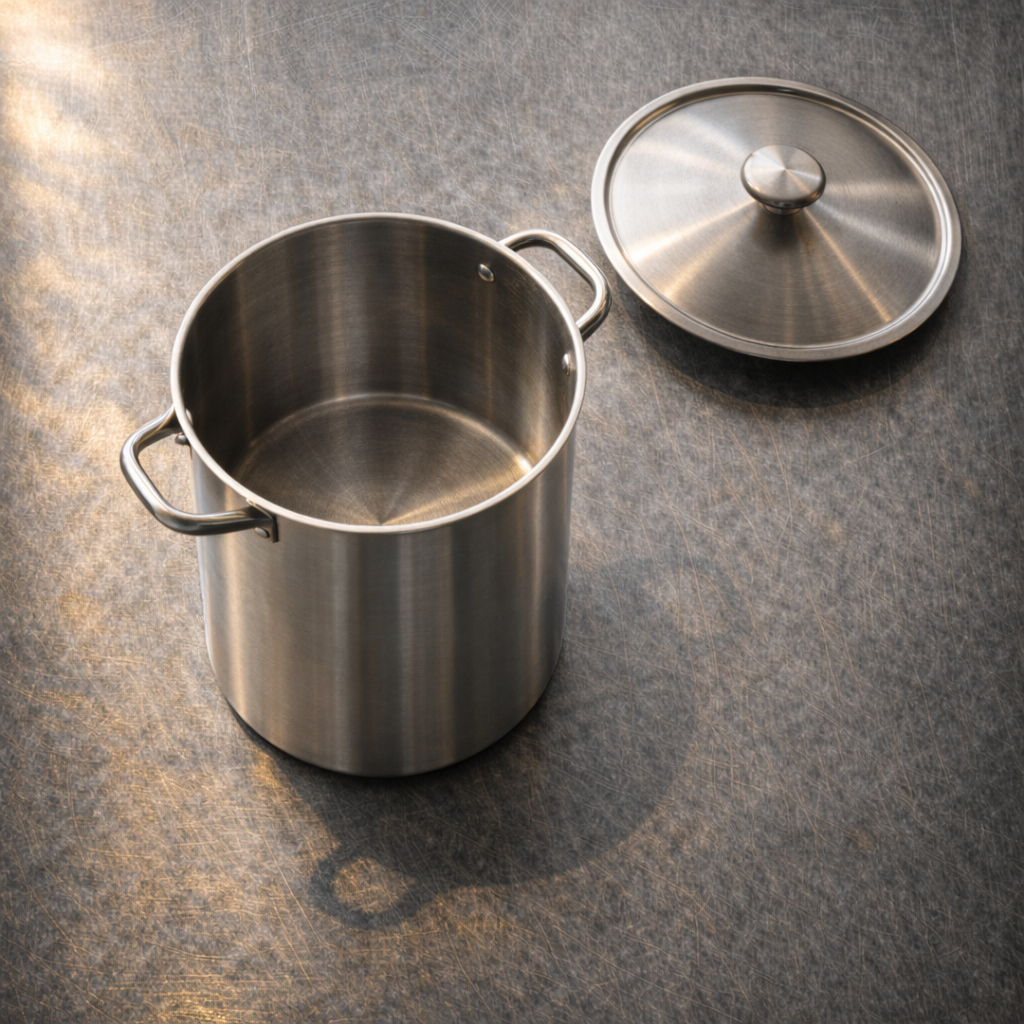
If the pan introduces ingredients to direct heat, the pot introduces them to immersive heat. Here, ingredients are surrounded by liquid rather than resting on a hot surface. This environment allows gentle, controlled cooking that extracts flavor, softens structure, and distributes heat evenly throughout the preparation. From soups and broths to simmering sauces, boiling vegetables, and steaming, the pot is one of the most versatile vessels in the kitchen.
But beyond cooking, pots also function as containers for preparation and storage. Large batches of ingredients may be brined, soaked, or rested inside them before cooking begins. For this reason, the pot is both a cooking instrument and a holding vessel within the rhythm of the kitchen.
The Function
The pot cooks through heat transferred by liquid. Water, broth, oil, or other liquids absorb heat and distribute it around the ingredients, creating a more uniform cooking environment than direct surface contact. Typical uses include:
• boiling vegetables or pasta
• simmering soups and sauces
• preparing stocks and broths
• steaming foods with inserts
• frying ingredients in oil
• soaking or brining ingredients before cooking
Because liquid distributes heat evenly, pots are ideal for preparations that require gentle and consistent cooking over time.
The Geometry
The shape and capacity of a pot determine how efficiently it performs different tasks.
Saucepan
Smaller pots are commonly used during service to heat sauces, broths, or small vegetable preparations. Their compact size allows quick heating and easy control.
Saucepot
Medium-sized pots are often used for soups, sauces, or other liquid-based preparations. They provide a balance between capacity and manageable size.
Stockpot
Large stockpots are designed for high-volume cooking. They are used for preparing stocks, boiling large batches of ingredients, or maintaining hot water during service. However, because they occupy significant space, they are often used primarily during preparation rather than active service.
Materials
The material of a pot affects how heat moves through the vessel.
Stainless Steel
Durable and corrosion-resistant, stainless steel is widely used in professional kitchens. Many stainless pots contain aluminum or copper cores that improve heat conductivity.
Aluminum-Core Construction
Many modern pots include aluminum layers inside stainless steel walls or bases. This improves heat distribution and helps reduce the formation of hot spots.
Thick Bottom Construction
Some pots concentrate heat-conducting material in the base of the vessel. This design is effective for boiling liquids but may create uneven heating when preparing sauces that require constant stirring.
Fully Clad Construction
Higher-end pots distribute heat along both the base and the side walls, allowing more even temperature control for delicate preparations such as sauces.
Ergonomics
Pots must balance capacity with manageability.
Size Selection
While large pots may seem versatile, they can become impractical in kitchens with limited space.
Oversized pots occupy burners, require more washing space, and may slow cooking if the liquid volume is excessive for the task. Choosing pot sizes that match the menu and kitchen workflow improves efficiency.
Lids
Many pots include lids that help retain heat and reduce evaporation. However, lids are not always necessary and are sometimes sold separately. In certain preparations, such as boiling, frying, poaching, reducing sauces or stocks, or evaporation, lids are rarely used.
Storage and Organization
Because pots occupy considerable space, kitchens must organize them carefully. Large pots are often stored separately and brought into use only when needed.
Choosing the Tool
Selecting the right pot depends largely on how it will be used. Important considerations include:
• capacity appropriate to the kitchen’s production scale
• heat distribution suited to the preparation
• manageable weight when filled with liquid
• durable handles for safe handling
Not every kitchen requires extremely large stockpots. In many cases, a smaller collection of well-sized pots improves efficiency and reduces unnecessary handling.
Common Misconceptions
One common misconception is that larger pots are always more useful. In reality, oversized pots often waste energy, occupy valuable stove space, and make handling more difficult. Another misunderstanding concerns heat distribution. When preparing sauces containing starch or flour, uneven heating can cause scorching at the bottom of the pot. Selecting pots with good heat distribution helps prevent this problem.
Safety Considerations
Pots can become extremely dangerous when filled with hot liquids. Large pots may appear manageable when empty, but become very heavy once filled with water, broth, or oil. Transporting large pots across a kitchen floor is particularly risky and should be avoided whenever possible. Whenever heavy pots must be moved, they should be handled carefully and with adequate assistance. Hot liquid combined with sudden movement can easily lead to burns or spills.
Closing Reflection
The pot represents a different philosophy of cooking from the pan. Instead of heat striking the ingredient directly, the ingredient is surrounded by liquid that carries heat gently and evenly. This environment allows flavors to unfold slowly. Aromatics infuse broths, vegetables soften gradually, and ingredients exchange flavor through time and temperature. In many kitchens, the pot becomes the quiet center of preparation, where liquids simmer, and the deeper foundations of cooking are built.