Plant-Based Dairy — Not Dairy, But a New Material Language
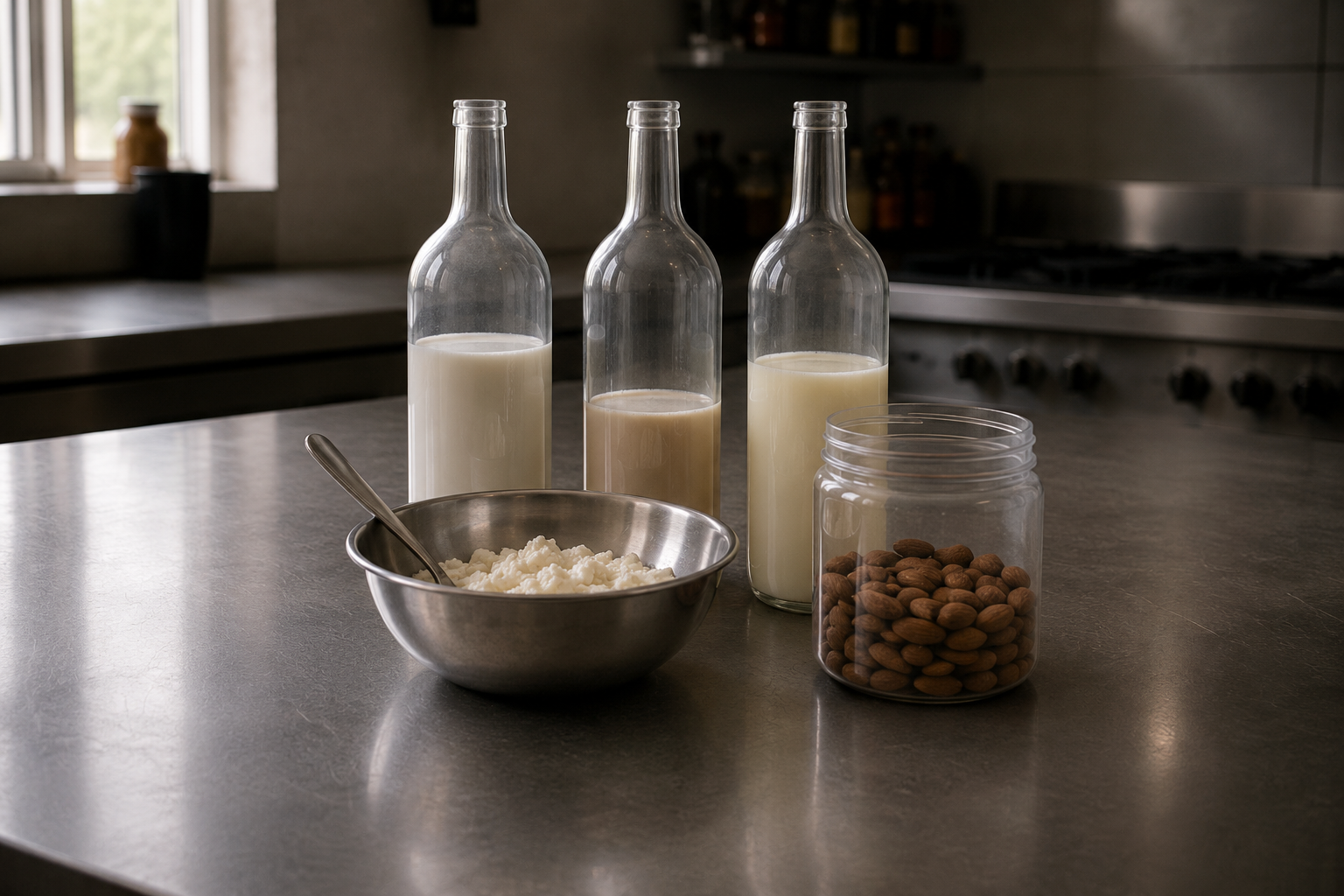
Plant-based dairy is not dairy. That distinction matters. The term exists because we need a shared language. When we say “plant-based milk,” “plant-based yogurt,” or “plant-based cheese,” we are not saying these products are the same as milk, yogurt, or cheese made from animal dairy. We are saying they are designed to occupy a similar culinary role: to pour, thicken, cream, soften, emulsify, ferment, spread, melt, or enrich.
This is where the category becomes interesting. Plant-based dairy is not only about replacement. It is about discovering how nuts, seeds, grains, and legumes can be transformed into creamy, cultured, spreadable, pourable, or fat-rich preparations. The goal is not always to imitate dairy perfectly. Often, the better question is: what can these ingredients become on their own terms?
A cashew cream does not need to pretend to be goat cheese to be valuable. Oat milk does not need to behave exactly like cow’s milk to be useful. Sesame, almond, peanut, rice, coconut, soy, chickpea, and oat each bring their own flavor, body, fat, starch, protein, and texture. When we understand them as materials, not simply substitutes, the creative field opens.
What Plant-Based Dairy Is — Approximation Through Function
Plant-based dairy refers to preparations made from plant materials that are processed to behave, in some way, like dairy.
The usual source materials include:
nuts, such as cashew, almond, hazelnut, walnut, macadamia
seeds, such as sesame, sunflower, pumpkin, hemp
grains, such as oat, rice, barley
legumes, such as soy, chickpea, pea, peanut
coconut, technically distinct, but central in many plant-based creamy preparations
These ingredients are blended, soaked, strained, heated, fermented, emulsified, thickened, cultured, or enriched to create products that resemble milk, cream, yogurt, butter, cheese, or sauce bases.
But every source behaves differently. A nut creates richness through fat. A grain creates body through starch. A legume contributes protein and structure. A seed can bring oil, bitterness, earthiness, or aroma. This is the first rule: the source ingredient determines the material logic of its application.
Why Plant-Based Dairy Matters — Beyond Replacement
Plant-based dairy matters for many reasons: dietary needs, ethics, allergies, lactose intolerance, religious practice, sustainability concerns, or simply culinary curiosity. But for a cook, its value also lies in technique.
Plant-based dairy can function as:
creaminess, in sauces, soups, dressings, dips, and desserts
body, in purées, custards, porridges, and beverages
fat, when made from coconut, nuts, seeds, or oils
fermentation base, in yogurt-like or cheese-like preparations
emulsion, when blended with oils, acids, and stabilizing ingredients
spreadable texture, in cashew cheeses, seed creams, or bean-based dips
flavor carrier, especially when paired with herbs, chiles, citrus, spices, miso, garlic, or fermented pastes
The key is to stop asking only, “Can this replace dairy?” A better question is, “What texture, flavor, and function do I need, and which plant-based source can help me build it?”
The Main Families of Plant-Based Dairy
Plant-Based Milks — Water, Fat, Starch, and Suspension
Plant-based milks are made by blending a plant source with water, then straining or stabilizing the liquid.
They may come from:
almond
oat
soy
rice
cashew
coconut
hemp
sesame
peanut
hazelnut
Each has its own behavior. Oat milk brings starch and sweetness. Almond milk is lighter and nutty. Soy milk has more protein and can be coagulated into tofu-like textures. Coconut milk brings fat and tropical richness. Rice milk is thinner and naturally sweet. Sesame milk can be earthy and aromatic.
Materia note:
Plant-based milks are not interchangeable. Their fat, starch, protein, and flavor profiles determine how they cook.
Plant-Based Creams — Concentration and Body
Plant-based creams are thicker and richer than milks. They are often made from cashews, coconut, oats, sunflower seeds, or blended nuts.
Best uses:
soups
sauces
desserts
dips
dressings
pasta sauces
creamy vegetable preparations
A cashew cream may be neutral and rich. Coconut cream is powerful and aromatic. Oat cream can be smooth but more starchy. Sunflower seed cream can be economical and earthy.
Materia note:
Creaminess can come from fat, starch, protein, or blending. Know which one you are using.
Plant-Based Yogurts — Culture, Acidity, and Texture
Plant-based yogurt-like preparations are created by culturing plant-based milks or creams. Soy, coconut, cashew, almond, and oat bases are common.
Their success depends on:
available sugars for fermentation
protein and fat content
added cultures
temperature
time
stabilizers or thickeners, if used
Homemade versions may separate or remain thinner than dairy yogurt. Industrial versions often use gums, starches, emulsifiers, or stabilizers to create a more familiar texture.
Best uses:
sauces
dips
dressings
marinades
breakfast bowls
desserts
cooling accompaniments
Materia note:
A plant-based yogurt should be judged by its own acidity, body, and flavor, not only by how closely it mimics dairy yogurt.
Plant-Based Cheeses — Texture, Fermentation, and Expectation
Plant-based cheeses vary enormously. Some are simple fresh spreads made from soaked nuts. Others are fermented, aged, cultured, stabilized, or designed to melt.
Homemade versions often work best as:
cashew spreads
almond ricotta-style preparations
sunflower seed cheeses
tofu-based spreads
coconut-based soft cheeses
fermented nut creams
chickpea or soy-based preparations
The goal should be clear. Are you trying to create something spreadable? Sliceable? Meltable? Tangy? Firm? Aged? Creamy? Crumbly?
Each goal requires different ingredients and techniques.
Materia note:
A “cheese-like” preparation succeeds when its function is clear. Do not expect one plant-based cheese to behave like every dairy cheese.
Plant-Based Butters and Fats — Not All Fat Behaves the Same
Butter is complex because it contains fat, water, and milk solids. Those milk solids brown and create the aroma of beurre noisette. Most plant-based butter-like products do not behave exactly this way unless specifically formulated.
Plant-based fats may include:
olive oil
coconut oil
avocado oil
nut oils
seed oils
cocoa butter
plant-based butter blends
margarine-style products
Some commercial products are highly processed and may contain emulsifiers, stabilizers, colorings, flavorings, or hydrogenated fats. Others are more carefully formulated.
Materia note:
When replacing butter, ask what the butter is doing: adding fat, structure, browning, aroma, moisture, or emulsion. Then choose accordingly.
Plant-Based Dairy daily — Usage & Practicalities
Homemade vs. Industrial Plant-Based Dairy
This distinction is essential. Homemade plant-based dairy is usually simpler: nuts, grains, seeds, legumes, water, salt, acid, culture, or fat. It can be beautiful, fresh, expressive, and flexible, but it may also split, separate, curdle, or behave unpredictably under heat.
Industrial plant-based dairy is often engineered for stability. It may include:
emulsifiers
gums
starches
stabilizers
protein isolates
oils
acidity regulators
flavorings
This does not automatically make industrial products bad, but it does make them different. They may perform better in coffee, baking, or sauces because they are designed to resist separation.
Materia note:
Homemade plant-based dairy gives you clarity and control. Industrial products may give you stability. Know which result matters.
The Problem of Heat — Splitting, Curdling, and Instability
One of the first challenges with plant-based dairy is heat.
A homemade cashew cream may thicken beautifully in a soup, but split in a sharp acidic sauce. Oat milk may become slimy if overheated. Coconut milk may separate if boiled too aggressively. Almond milk may feel thin in a sauce unless supported by starch or fat.
Plant-based dairy can split because of:
high heat
sudden temperature changes
acidity
insufficient fat
unstable emulsions
low protein or starch structure
over-reduction
incompatible ingredients
Practical guidance:
heat gently
avoid sudden boiling
add acidic ingredients gradually
blend thoroughly
use starches, nuts, or seeds for body
finish sauces off the heat when possible
test before serving in large quantities
Materia note:
If dairy can break, plant-based dairy can break differently. Stability must be learned through testing.
Flavor — Work With the Source, Not Against It
Every plant-based dairy has a flavor signature.
oat: sweet, grainy, soft
almond: light, nutty, slightly floral
cashew: creamy, mild, round
peanut: bold, warm, roasted
sesame: earthy, bitter, aromatic
coconut: sweet, tropical, fatty
soy: beany, protein-rich, adaptable
rice: light, sweet, thin
sunflower seed: earthy, green, economical
Rather than hiding these flavors, work with them.
A sesame cream wants lemon, herbs, chile, miso, garlic, or honey-like sweetness. A cashew cream can carry black garlic, nutritional yeast, roasted vegetables, or fermented chile. Coconut cream can move toward curry, cacao, lime, ginger, or tropical fruit. Oat milk can support cinnamon, vanilla, coffee, roasted corn, or grains.
Materia note:
The best plant-based preparations do not erase the source ingredient. They compose with it.
Texture — The Real Creative Field
Texture is where plant-based dairy becomes exciting.
You can create:
pourable milks
thick creams
spoonable yogurts
spreadable cheeses
whipped textures
emulsified sauces
fermented pastes
frozen desserts
custard-like preparations
silky purées
Texture can be built through:
soaking
blending
straining
heating
fermenting
adding starch
adding oil
adding acid
resting
reducing
emulsifying
The more you understand each method, the less you depend on imitation. You begin designing textures instead of replacing ingredients.
Source Materials and Their Best Uses
Nuts — Fat, Creaminess, and Spreadability
Nuts are excellent for richness and body.
Best uses:
cashew cream
almond ricotta-style spreads
hazelnut dessert creams
macadamia soft cheeses
nut-based sauces
Technique note:
Soaking improves blending. Light roasting changes flavor dramatically.
Seeds — Aroma, Oil, and Earthiness
Seeds can be powerful, economical, and aromatic.
Best uses:
sesame cream
sunflower seed cheese
pumpkin seed sauces
hemp milk
seed-based dressings
Technique note:
Seeds may carry bitterness. Balance with acid, salt, sweetness, herbs, or fermentation.
Grains — Starch, Softness, and Body
Grains bring starch and natural sweetness.
Best uses:
oat milk
rice milk
grain custards
creamy porridges
dessert bases
Technique note:
Overheating grain-based milks can create unwanted thickness or gumminess.
Legumes — Protein and Structure
Legumes bring protein, body, and structure.
Best uses:
soy milk
tofu-based creams
chickpea sauces
pea protein formulations
fermented soy preparations
Technique note:
Legumes can have strong flavors. Proper soaking, cooking, fermentation, or seasoning matters.
Coconut — Fat and Tropical Richness
Coconut behaves differently from most plant sources because of its fat content.
Best uses:
creams
curries
desserts
whipped toppings
ice creams
sauces
Technique note:
Coconut is rarely neutral. Use it when its flavor belongs.
Creative Expansion — Experimenting With Plant-Based Ingredients
Learning From Dairy Without Pretending It Is Dairy
The history of dairy transformation is useful because it teaches processes: culturing, separating, thickening, churning, curdling, aging, fermenting, emulsifying, and concentrating. These processes can inspire plant-based experimentation. But inspiration is not equivalence. A plant-based cheese may borrow the idea of culturing from dairy. A cashew cream may borrow the function of cream. A coconut yogurt may borrow the structure of yogurt. But each result is its own material. This is where the creative opportunity lives: not in pretending, but in translating.
Try:
cashew labneh-style spread with olive oil, za’atar, and lemon
sesame yogurt-like sauce with lime, garlic, and herbs
oat cream with roasted garlic for pasta or grains
soy milk béchamel with miso and nutmeg
coconut kefir-style drink with pineapple and ginger
almond ricotta-style spread with preserved lemon
sunflower seed cheese with smoked paprika and herbs
peanut milk horchata with cinnamon and cacao
rice milk custard with cardamom and orange zest
cashew cream sauce with black garlic and mushrooms
The goal is not to hide the plant base. The goal is to let it become its own expression of flavor, aroma and texture.
Closing Reflection
Plant-based dairy becomes most interesting when we stop treating it only as a replacement. Yes, it can stand in for milk, cream, butter, yogurt, or cheese in certain situations. But its real value appears when we ask better questions: what can sesame become? What can cashew hold? What can oat thicken? What can soy structure? What can coconut enrich? What can fermentation reveal? This is the Culinary Grammar of plant-based dairy: understanding source, process, texture, flavor, and intention.