Leaves — 23 Departure Points for Wrapping, Infusion, and Aroma in The Kitchen
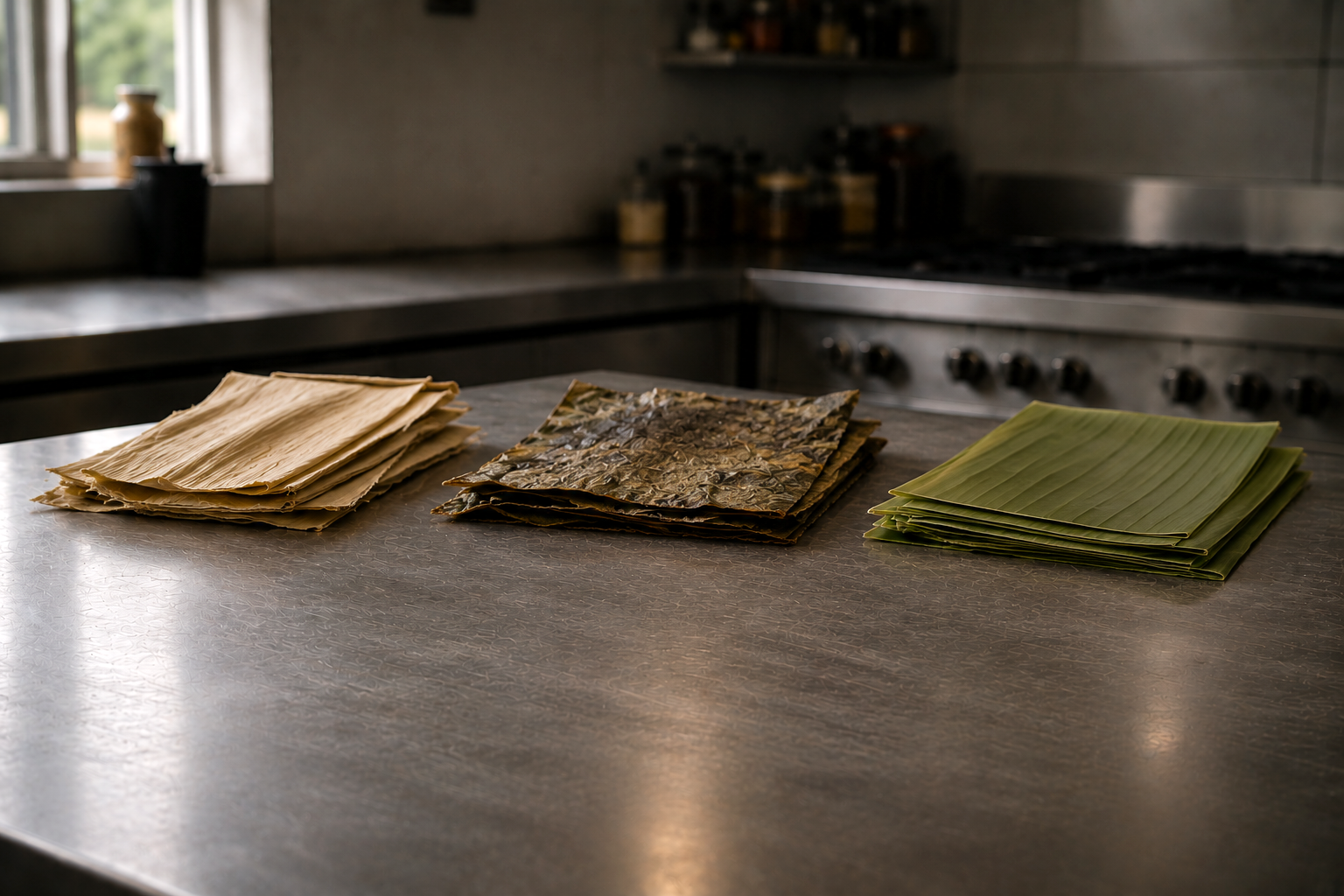
Leaves are among the oldest culinary materials. Before parchment, foil, steam baskets, and silicone molds, cooks used what grew around them: banana leaves, corn husks, grape leaves, cabbage, bamboo, fig, taro, shiso, hoja santa, and countless others.
A leaf can protect food from direct heat. It can perfume rice, fish, cheese, meat, or vegetables. It can become a wrapper, a serving surface, a steaming layer, or an edible green. Some leaves are eaten directly; others are used only to transfer aroma, moisture, or structure.
This article gathers 23 traditionally used leaves in cooking, organized into clusters so we can understand their roles beyond simple garnish. Leaves teach us that flavor can be carried through contact, steam, wrapping, and time.
Departure Points is a Materia series built around creative exploration. Each article gathers 23 known or traditionally used applications of an ingredient, technique, region, or culinary material, then organizes them into clusters so cooks can see patterns, possibilities, and relationships. Each point of departure is a catapult for further inquiry: a reference, a context, and a question to carry back into the kitchen. What does this material do? How has it been used before? What changes when we alter the medium, the technique, the temperature, or the cultural context? From there, the work begins.
Cluster I: Leaves as Wrappers for Steaming, Grilling, and Baking
Some leaves work like natural parchment. They protect food from direct heat while trapping moisture and aroma. These leaves often become part of the cooking method itself.
1. Banana Leaves
Banana leaves are used across Latin America, the Caribbean, South and Southeast Asia, and parts of Africa for wrapping tamales, fish, rice dishes, and grilled preparations. They protect food from scorching while adding a subtle grassy aroma.
2. Lotus Leaves
Lotus leaves are used in Chinese cooking, especially for sticky rice preparations in dim sum. They perfume rice with a distinctive earthy fragrance while keeping the grains moist during steaming.
3. Corn Husks
Corn husks are essential in tamales and other maize-based preparations. They function as wrappers, steaming vessels, and subtle aromatic skins, especially when used with masa, beans, chiles, or fillings.
4. Bamboo Leaves
Bamboo leaves are used for zongzi and other rice dumplings. They provide structure, a gentle vegetal aroma, and protection during long steaming or boiling.
5. Ti Leaves
Ti leaves are traditionally used in Polynesian and Hawaiian cooking, including imu-style earth oven preparations. They help wrap and protect foods during slow cooking, contributing moisture and a subtle vegetal character.
6. Sasamaki / Bamboo Grass
Used in Japan for wrapping sticky rice cakes and sweets, bamboo grass adds a fresh, green aroma while preventing sticking. It also functions as a beautiful serving material.
Cluster II: Leaves as Aromatic Infusion Materials
These leaves may not always be eaten directly, but they carry fragrance into liquids, rice, creams, broths, and sauces. They remind us that aroma is often transferred indirectly.
7. Fig Leaves
Fig leaves can infuse coconut milk, cream, custards, and syrups with a subtle aroma often compared to coconut, green almond, or vanilla. They can also be used to wrap fish or cheese before grilling.
8. Kaffir Lime Leaves
Kaffir lime leaves bring intense citrus aroma to broths, curries, rice, desserts, and creams. They are usually bruised or torn before use to release their essential oils.
9. Pandan Leaves
Pandan leaves are widely used in Southeast Asian sweets, rice dishes, and beverages. They contribute a fragrant, grassy, vanilla-like aroma and are often knotted or blended for extraction.
10. Curry Leaves
Curry leaves are commonly fried in oil or added to dishes as an aromatic seasoning. They can also be used to perfume sauces, rice, broths, and spice bases.
11. Soursop or Guava Leaves
In some traditions, soursop or guava leaves are used for aromatic infusions. Their role is usually subtle, more about fragrance and background character than dominant flavor.
Cluster III: Leaves as Edible Wrappers and Filled Forms
Some leaves are cooked and eaten as part of the dish. They create structure, hold fillings, and contribute flavor, texture, and color.
12. Grape Leaves
Grape leaves are used for dolmas and stuffed preparations across the Mediterranean, Balkans, and Middle East. Their acidity and tannic quality balance rice, herbs, meats, legumes, and olive oil.
13. Cabbage Leaves
Cabbage leaves are used for roulades, stuffed dishes, steaming fish, and protective wrapping. When cooked, they become tender, slightly sweet, and excellent at holding fillings.
14. Collard Greens
Collard greens are used in Southern U.S. cooking and increasingly as fresh or cooked wraps. Their broad leaves and sturdy texture make them useful for both traditional dishes and contemporary plant-based wraps.
15. Lettuce Leaves
Romaine, butter lettuce, and other lettuces are used for fresh wraps, grilled leaves, or serving vessels. They bring crispness, freshness, and immediacy rather than deep aroma.
16. Betel Leaves
Betel leaves are used in Thai, Indian, and Southeast Asian snacks and wraps. They carry a peppery, aromatic quality and often hold small combinations of herbs, nuts, fruit, spices, or condiments.
Cluster IV: Leaves as Regional Culinary Signatures
These leaves carry strong cultural identity. They are not just functional; they define flavor systems and regional techniques.
17. Avocado Leaves
Avocado leaves are used in Oaxacan cooking, especially in black beans, barbacoa, and moles. Toasted or fresh, they bring an anise-like aroma and a distinctly regional profile.
18. Hoja Santa
Hoja santa, also called Mexican pepperleaf, is used in moles, tamales, fish preparations, and sauces. Its aroma can suggest anise, pepper, eucalyptus, and sassafras, making it one of Mesoamerica’s most expressive culinary leaves.
19. Shiso Leaves
Shiso is used in Japanese cuisine for wrapping, pickling, tempura, garnishing, and pairing with fish or rice. It brings a complex aroma: minty, citrusy, herbal, and slightly spicy.
20. Chaya Leaves
Chaya, or tree spinach, is used in Mayan and regional Mexican cooking. It must be cooked before eating, usually by boiling, and works in soups, stews, tamales, and egg dishes.
21. Taro Leaves
Taro leaves are used in Polynesian, Caribbean, South Asian, and Southeast Asian cooking. They must be cooked thoroughly, often in stews or with coconut, to become safe and tender.
Cluster V: Leaves as Vegetal Surfaces, Steam Layers, and Seasonal Greens
Some leaves act as cooking surfaces, layers, or green elements. They can protect, soften, or add freshness depending on how they are used.
22. Pumpkin Leaves
Pumpkin leaves are cooked in many African cuisines and can also be used as soft wrappers or green components. They bring vegetal depth and a slightly fibrous texture.
23. Mango Leaves
Mango leaves are not commonly used in everyday cooking, but young leaves are sometimes used in regional Indian contexts for steaming, grilling, or ceremonial food contact. Their use is more specialized and should be approached with care, using only known culinary-safe sources.
What Leaves Teach the Cook
Leaves teach us that culinary material is not always consumed in the final bite. Sometimes it shapes the dish by enclosing, perfuming, protecting, or structuring it.
Across these 23 departure points, leaves appear in several roles:
as wrappers
as steaming vessels
as aromatic infusions
as edible greens
as cultural signatures
as protective surfaces
as serving materials
The creative lesson is simple: a leaf can become a tool. It can hold moisture, transmit aroma, create texture, define a regional identity, or change the way heat reaches food.
Creative Exploration Prompt
Choose one leaf and test it in three ways: as a wrapper, as an infusion, and as a serving surface. Observe what changes.
Ask yourself:
Does the leaf contribute aroma?
Does it change texture?
Does it protect the ingredient from heat?
Is it meant to be eaten, removed, or used only as a cooking material?
Document how the same leaf behaves across different techniques.
From there, the work begins.