Molecular Cuisine Plant-Based Ingredients — 23 Departure Points for Creating Textures
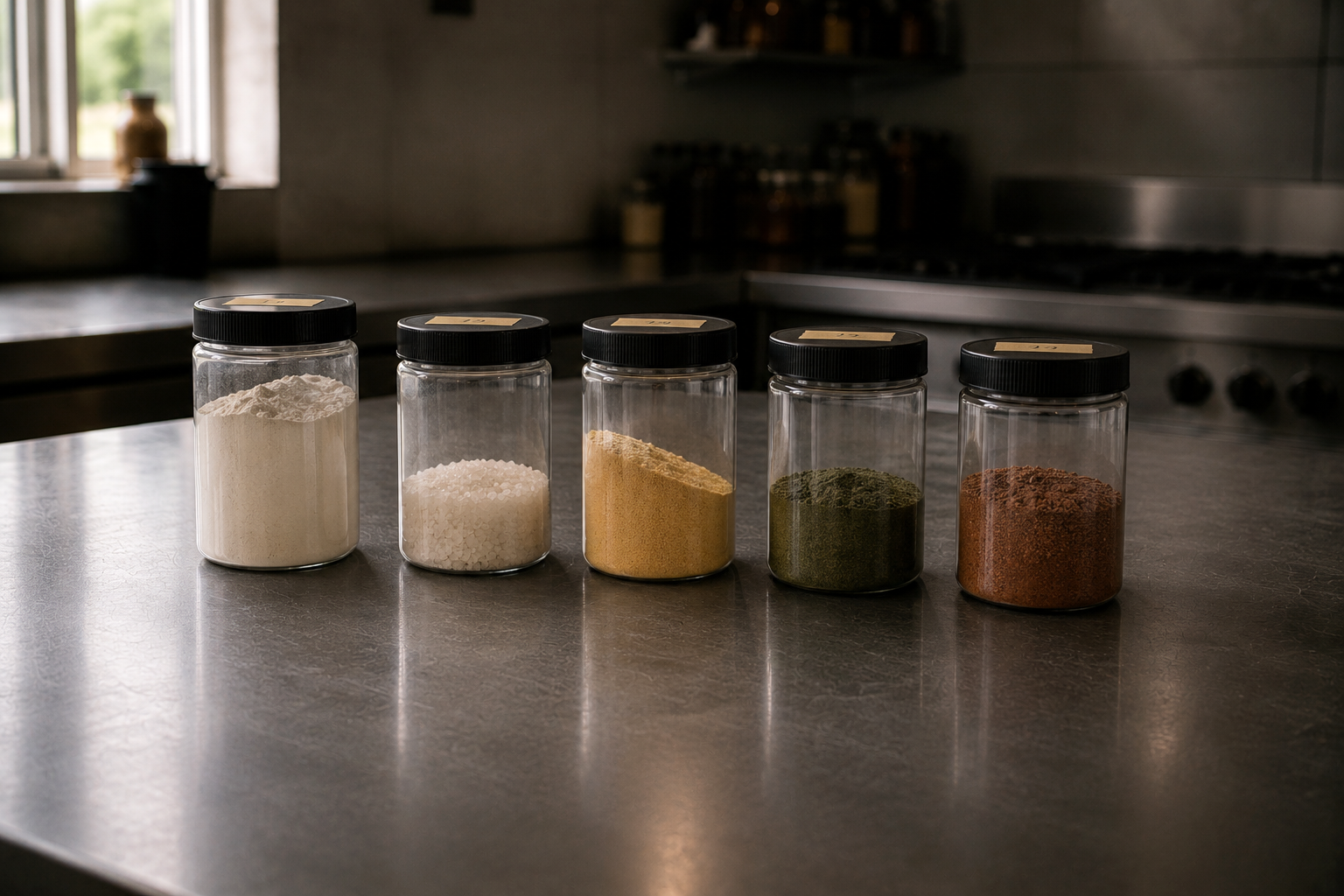
Plant-based molecular cuisine begins with a simple question: what can nature do when we understand its structure? Seaweeds can turn liquids into gels. Fruits can be made into preserves and sheets. Seeds can emulsify. Roots can thicken. Fibers can bind. Algae can color. Starches can suspend, soften, crisp, or cloud. These ingredients are not artificial shortcuts; many of them are extracted from plants, seaweeds, fruits, legumes, grains, and microbial fermentation.
In molecular cuisine, these materials become part of the cook’s grammar. Agar, pectin, lecithin, xanthan, konjac, starch, citrus fiber, spirulina, cocoa butter, and fruit powders do not simply add flavor. They shape behavior: viscosity, elasticity, opacity, stability, aeration, melt, suspension, and release.
This article gathers 23 plant-based molecular ingredients, organized into clusters so we can understand their functional role in the kitchen. The goal is not to turn cooking into chemistry for its own sake. It is to help the cook see how natural materials can support precision, texture, and creative expression.
Safety and scope note: Many molecular ingredients are powerful in very small quantities. Always use food-grade products, accurate measurements, and tested ratios. Some ingredients require specific temperatures, hydration methods, pH levels, or blending conditions to work properly. Culinary-grade essential oils must be used with extreme restraint and only when explicitly safe for food use.
Departure Points is a Materia series built around creative exploration. Each article gathers 23 known or traditionally used applications of an ingredient, technique, region, or culinary material, then organizes them into clusters so cooks can see patterns, possibilities, and relationships. Each point of departure is a catapult for further inquiry: a reference, a context, and a question to carry back into the kitchen. What does this material do? How has it been used before? What changes when we alter the medium, the technique, the temperature, or the cultural context? From there, the work begins.
Cluster I: Gelling Agents and Liquid Structure
These ingredients transform liquids into gels, sheets, layers, cubes, pearls, or sliceable forms. They teach the cook that liquid can become architecture.
1. Agar-Agar
Agar-agar is extracted from red seaweed and used to create firm, heat-stable gels. It is useful for fruit gels, savory jellies, transparent sheets, gel cubes, and structured sauces. Its texture is clean and firm, different from animal gelatin.
2. Carrageenan
Carrageenan is also derived from red algae and can create textures ranging from elastic to creamy, depending on the type used. It is often used in dairy and plant-based systems for stabilization, suspension, and gel formation.
3. Pectin
Pectin is found in fruit cell walls, especially apples and citrus. It is essential in jams, fruit gels, pâte de fruit, glazes, and acid-sugar systems. It teaches how fruit can set itself when the right balance of sugar, acid, and heat is present.
4. Konjac / Glucomannan
Konjac comes from the konjac root and has exceptional water absorption. It creates elastic, heat-stable gels and thick textures. It is useful in noodles, gels, vegan textures, and low-calorie thickening systems.
5. Vegetable Gelatin Systems
Plant-based “vegetable gelatin” usually refers to blends of agar, konjac, carrageenan, or similar gelling agents designed to imitate some qualities of gelatin. These systems can create elastic desserts, foams, molded preparations, and plant-based gel structures.
6. Seaweed-Based Gelling Blends
Some blended seaweed extracts combine properties of agar and carrageenan to create clear, firm, clean-release gels. These should be understood as functional blends rather than one universal ingredient. They are useful when the cook wants clarity, firmness, and reliable setting.
Cluster II: Thickeners, Stabilizers, and Viscosity Control
These ingredients control how liquids move. They thicken, suspend, stabilize, and prevent separation. They are useful in sauces, drinks, purées, dressings, foams, and frozen desserts.
7. Xanthan Gum
Xanthan gum is produced through bacterial fermentation. It thickens liquids, stabilizes emulsions, suspends particles, and works at low concentrations. It is useful in sauces, drinks, dressings, purées, and gluten-free systems.
8. Guar Gum
Guar gum comes from guar beans and thickens cold liquids effectively. It is often used in frozen desserts, sauces, beverages, and plant-based creams. It gives body without needing heat.
9. Locust Bean Gum / Carob Gum
Locust bean gum is derived from carob seeds. It is often combined with other gums to create smooth, creamy textures, especially in frozen desserts and gelled systems. It is valuable for improving mouthfeel.
10. Starch: Potato, Corn, and Tapioca
Starch is one of the oldest texture tools in the kitchen. When heated in liquid, starch granules swell and create viscosity. Potato, corn, and tapioca starch each bring different textures, from glossy sauces to custards, fillings, and gels.
11. Arrowroot Powder
Arrowroot is a tropical starch known for its clean flavor and glossy finish. It is useful in delicate sauces, fruit preparations, and light thickening where clarity and neutrality matter.
12. Rice Starch
Rice starch creates smoothness, opacity, and fine texture. It can be used in sauces, dairy alternatives, desserts, coatings, and formulations where a softer, more delicate thickening effect is desired.
Cluster III: Emulsifiers and Harmony Between Opposites
These ingredients help oil and water stay together. They create stable sauces, creams, foams, dressings, and plant-based textures. In this cluster, the main lesson is balance.
13. Lecithin: Soy or Sunflower
Lecithin is a natural emulsifier found in soy, sunflower, and egg yolks. In plant-based molecular cooking, soy or sunflower lecithin helps blend oil and water and can also support light foams. It is useful in vinaigrettes, airy sauces, flavored oils, and emulsified creams.
14. Soy Protein Isolate
Soy protein isolate can stabilize foams, emulsions, and plant-based structures. It brings protein functionality without animal products and can help build texture in creams, mousses, sauces, and plant-based preparations.
15. Citrus Fiber
Citrus fiber comes from citrus peel and pulp. It adds body, water retention, and some emulsifying capacity. It is especially useful in clean-label sauces, dressings, spreads, and plant-based formulations where texture and moisture need support.
Cluster IV: Fibers, Binders, and Texture Architecture
These ingredients create cohesion, chew, body, and structure. They help turn loose mixtures into stable preparations and allow plant-based foods to hold shape.
16. Cellulose / Plant Fiber
Cellulose provides structure and stability in plant-based emulsions, fillings, films, and textural systems. It can help create body without adding strong flavor. It is part of the invisible architecture of many modern plant-based preparations.
17. Beetroot Fiber and Vegetable Fibers
Beetroot fiber and other vegetable fibers can support binding, moisture control, and texture while also adding natural color or subtle vegetal notes. They are useful in plant-based patties, sauces, fillings, and molded preparations.
18. Cocoa Butter
Cocoa butter is a plant-based fat that solidifies at room temperature and melts near body temperature. It can be used for crisp shells, coatings, glazes, chocolate work, encapsulated textures, and melting contrast.
Cluster V: Natural Colorants, Pigments, and Visual Identity
Color is not decoration alone. It shapes expectation before taste begins. These ingredients help the cook design visual identity through natural pigments.
19. Spirulina
Spirulina is a microalgae used for green-blue color, protein, and subtle vegetal or umami notes. It can color creams, powders, foams, crackers, gels, and drinks. Its flavor is strong, so restraint matters.
20. Chlorophyll Extract
Chlorophyll extract comes from green leaves and gives vivid green color with mild vegetal character. It is sensitive to heat and pH, so it works best when handled carefully. It can be used in oils, sauces, gels, and fresh preparations.
21. Fruit Powders
Dehydrated or freeze-dried fruit powders concentrate color, acidity, aroma, and flavor. They can be used for dusting, meringues, glazes, creams, foams, sauces, and plated finishes. They bring both pigment and taste.
Cluster VI: Acids, Aromas, and Final Gestures
These ingredients work in small quantities. They season, brighten, perfume, finish, and sharpen the final experience of the dish.
22. Vinegar Powders / Acidulants
Vinegar powders and other naturally derived acidulants add brightness in dry form. They can season snacks, powders, rubs, coatings, crisps, and dehydrated preparations. They allow acidity to appear without adding liquid.
23. Culinary-Grade Essential Oils
Culinary-grade essential oils are highly concentrated aromatic extracts. Used sparingly, they can flavor foams, creams, gels, syrups, oils, and encapsulated preparations. They require precision because even a drop too much can overpower a dish.
What Plant-Based Molecular Ingredients Teach the Cook
Plant-based molecular ingredients teach us that texture is not accidental. It can be designed through material knowledge: seaweed for gels, fruit for pectin, seeds for emulsification, roots for viscosity, fibers for structure, algae for color, and powders for concentration.
Across these 23 departure points, several patterns emerge:
seaweed can create structure
fruit can gel, color, and acidify
roots and grains can thicken
seeds and proteins can emulsify
fibers can bind and stabilize
algae and leaves can color
fats can melt, coat, and encapsulate
powders can intensify flavor and finish a dish
acidity can be introduced without liquid
aroma can be used as a precise, volatile material
The creative lesson is clear: plant-based molecular cuisine is not about imitating animal-based systems. It is about understanding what plant, seaweed, fruit, grain, root, and microbial materials can do on their own terms.
Creative Exploration Prompt
Choose one liquid and transform it in three ways.
For example, use:
apple juice
mushroom broth
coconut milk
beet juice
citrus syrup
herb infusion
Test three directions:
Gel: use agar, pectin, carrageenan, or konjac
Body: use starch, xanthan, guar, citrus fiber, or arrowroot
Air or emulsion: use lecithin, soy protein, or citrus fiber
Ask yourself:
What gives structure?
What gives softness?
What gives elasticity?
What stabilizes the mixture?
What changes when you alter pH, temperature, or concentration?
Document the ratios, timing, texture, and result.
From there, the work begins.