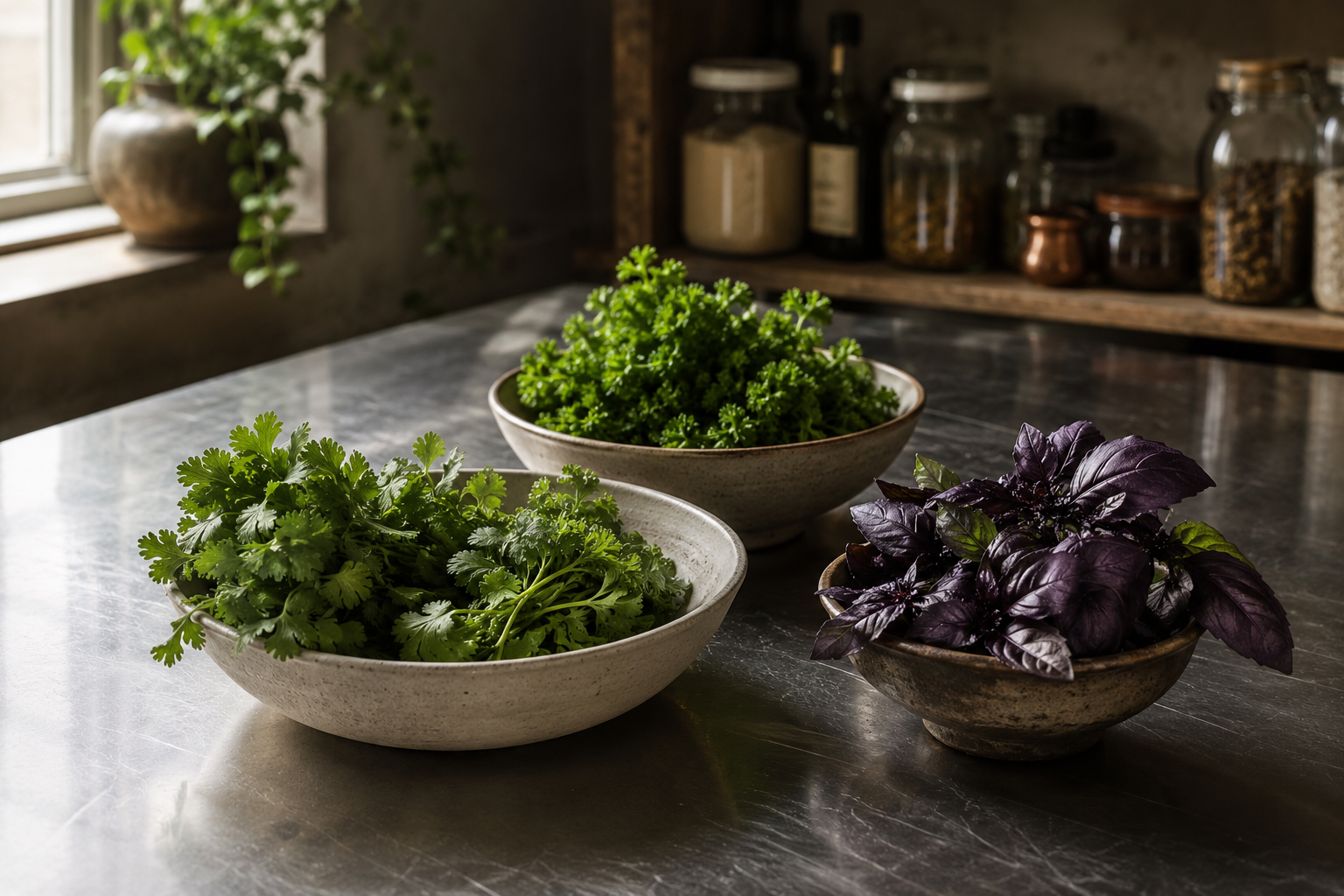
Fresh herbs bring immediacy. They carry moisture, volatile aroma, color, and the living edge of the plant. Unlike dried herbs, which often work slowly through heat, fat, and time, fresh herbs can transform a dish in seconds and evoke aromatic memories. They can lift a stew, sharpen a sauce, cool a spicy preparation, perfume a salad, brighten a grain bowl, or give the final gesture that makes a plate feel complete.
This article gathers 23 departure points for working with fresh herbs. The purpose is not to list every possible use, but to show how fresh herbs function as brightness, green aroma, texture, freshness, and finishing intelligence.
Departure Points is a Materia series built around creative exploration. Each article gathers 23 known or traditionally used applications of an ingredient, technique, region, or culinary material, then organizes them into clusters so cooks can see patterns, possibilities, and relationships. Each point of departure is a catapult for further inquiry: a reference, a context, and a question to carry back into the kitchen. What does this material do? How has it been used before? What changes when we alter the medium, the technique, the temperature, or the cultural context? From there, the work begins.
Cluster I: Fresh Herbs as Finishing and Lift
Fresh herbs are often most powerful at the end of cooking. Their aromas are fragile, so the final moment preserves their brightness. This is where herbs become a finishing language: a way to add freshness, contrast, and direction.
1. Last-Minute Garnish
A final handful of chopped parsley, cilantro, dill, basil, mint, chives, or shiso can change the way a dish lands on the palate. The herb does not need to dominate. It can simply give the dish a fresh aromatic line.
Try this direction: finish the same soup or stew three ways: with parsley, cilantro, and mint. Notice how the identity of the dish changes without altering the base.
2. Herb Finish for Grains
Rice, couscous, bulgur, quinoa, farro, barley, and lentils all respond well to fresh herbs. Herbs break the density of cooked grains and add green aroma.
Try this direction: fold chopped cilantro, parsley, mint, scallion, and lemon zest into warm rice or grains just before serving.
3. Fresh Herbs Over Roasted Vegetables
Roasted vegetables are sweet, caramelized, and often heavy. Fresh herbs bring contrast. Parsley, dill, cilantro, mint, basil, tarragon, and chives can lift roasted carrots, potatoes, squash, cauliflower, eggplant, mushrooms, or beets.
Try this direction: roast carrots with olive oil and salt, then finish with mint, cilantro, lime, and chile.
4. Fresh Herbs Over Soups and Broths
A broth can be technically correct and still feel flat without fresh aroma. Herbs added at the end bring life to the surface.
Try this direction: finish a mushroom broth with scallion, cilantro, Thai basil, or dill. Taste how the aroma rises before the first spoonful.
Cluster II: Fresh Herbs as Sauces and Condiments
Fresh herbs can become the body of a sauce. When chopped, crushed, blended, or pounded with salt, acid, fat, nuts, seeds, garlic, or chile, they become condiments that carry brightness through a dish.
5. Pesto Logic
Pesto is more than basil. It is a method: fresh herbs or greens, fat, nuts or seeds, salt, garlic, and sometimes cheese or an alternative source of umami.
This logic can travel through many herbs: cilantro pesto, parsley-walnut pesto, mint-pistachio pesto, dill-almond pesto, shiso-sesame pesto.
Try this direction: make a pesto with cilantro, toasted pumpkin seeds, lime zest, garlic, olive oil, and salt.
6. Chimichurri
Chimichurri shows the power of chopped herbs, acid, oil, garlic, and chile. Parsley is traditional in many versions, but oregano, cilantro, mint, or other herbs can shift the profile.
The sauce works because it cuts through richness and gives grilled foods a fresh, sharp finish.
Try this direction: make a parsley-cilantro chimichurri with vinegar, garlic, chile, and olive oil. Use it on grilled vegetables, mushrooms, meats, or beans.
7. Salsa Verde
Salsa verde appears in many forms across cuisines. It can mean tomatillo salsa, Italian parsley-caper sauce, French herb sauce, or other green condiments.
The shared logic is green freshness, acidity, salt, and a medium that carries the herbs.
Try this direction: build a salsa verde with parsley, basil, capers, lemon, olive oil, and garlic.
8. Zhug and Fresh Chile-Herb Sauces
Fresh herbs and chiles create sauces with heat and brightness. Zhug, green chutneys, fresh sambals, and herb-chile relishes all show how herbs can carry fire.
Try this direction: blend cilantro, parsley, green chile, garlic, cumin, lemon, and oil into a fresh green chile sauce.
Cluster III: Fresh Herbs as Salad, Texture, and Volume
Fresh herbs do not need to be garnish. In many preparations, they become part of the volume of the dish. They can be eaten as leaves, not just added as perfume.
9. Herb Salads
Herb salads treat herbs as greens. Parsley, mint, cilantro, dill, basil, chervil, tarragon, and tender celery leaves can be combined with lettuces, grains, fruit, nuts, vegetables, or pickles.
Try this direction: make a salad where herbs represent at least half of the greens. Dress lightly with lemon, olive oil, and salt.
10. Tabbouleh Logic
Tabbouleh teaches that parsley can be structure, not decoration. The grain is present, but the herb carries the dish.
This logic can be extended to other herb-heavy salads with quinoa, bulgur, rice, lentils, or chopped vegetables.
Try this direction: make a parsley-forward salad with bulgur, tomato, cucumber, mint, lemon, and olive oil.
11. Fresh Herbs in Slaws
Cabbage, carrots, radishes, fennel, cucumber, and green papaya all benefit from fresh herbs. Herbs add lift to crunchy vegetables and prevent slaws from becoming purely acidic or sweet.
Try this direction: make a cabbage slaw with cilantro, mint, basil, lime, fish sauce-style seasoning or soy, and chile.
12. Whole Herb Leaves as Texture
Not all herbs need to be chopped. Whole leaves can create small bursts of flavor and texture.
Basil, mint, cilantro, parsley, dill fronds, shiso, and chervil can be scattered whole or torn gently.
Try this direction: finish a bowl of rice, grilled vegetables, or noodles with whole mint and cilantro leaves instead of chopped herbs.
Cluster IV: Fresh Herbs in Oils, Waters, and Infusions
Fresh herbs can flavor liquids, but their freshness must be handled carefully. Some herbs infuse quickly. Others bruise, brown, or become bitter. The goal is to capture aroma without flattening it.
13. Fresh Herb Oils
Herb oils can be made by blending herbs with oil, sometimes blanching first to preserve color, then straining or using as a loose sauce.
They add aroma, color, and fat-soluble flavor.
Try this direction: make parsley oil or basil oil and drizzle over soups, grilled vegetables, fish, beans, or fresh cheese-style preparations.
14. Fresh Herb Dressings
Fresh herbs make dressings feel alive. They can be blended into vinaigrettes, yogurt-style sauces, tahini dressings, miso dressings, or citrus oils.
Try this direction: blend dill, parsley, lemon, olive oil, mustard, and a little honey into a green dressing.
15. Infused Waters and Aguas Frescas
Mint, basil, cilantro stems, shiso, lemongrass, lemon verbena, and other herbs can infuse cold drinks, aguas frescas, teas, and flavored waters.
Herbs in drinks should be balanced carefully. Too much can become medicinal or bitter.
Try this direction: infuse cucumber water with mint and basil, or hibiscus agua fresca with mint and lime.
16. Herb Syrups
Fresh herb syrups can carry aroma into drinks, desserts, glazes, and dressings. Mint, basil, rosemary, thyme, tarragon, lemon verbena, and shiso all work differently.
Try this direction: make a basil syrup for citrus drinks, fruit salads, or a light dessert sauce.
Cluster V: Fresh Herbs in Fillings, Wraps, and Internal Flavor
Fresh herbs can be hidden inside a preparation, not only placed on top. They can perfume fillings, stuffings, dumplings, breads, rolls, and wrapped foods from within.
17. Herb-Stuffed Fillings
Fresh herbs can be folded into fillings for dumplings, empanadas, ravioli, stuffed vegetables, savory pies, rice rolls, or flatbreads.
They bring moisture and aroma from inside the preparation.
Try this direction: mix parsley, cilantro, mint, scallion, and lemon zest into a mushroom or lentil filling.
18. Herb-Stuffed Fish, Vegetables, or Mushrooms
Whole sprigs or chopped herbs can be used inside roasted fish, eggplant, peppers, squash, mushrooms, or onions. The herb perfumes the interior as heat moves through.
Try this direction: stuff roasted mushrooms with parsley, thyme, garlic, breadcrumbs, and olive oil.
19. Fresh Herbs in Rolls and Wraps
Vietnamese fresh rolls, lettuce wraps, herb-filled flatbreads, tacos, and rice paper rolls show how herbs can become a structural ingredient.
The herbs are not garnish. They are part of the bite.
Try this direction: build fresh rolls with mint, Thai basil, cilantro, rice noodles, vegetables, and a chile-lime dipping sauce.
20. Herb Layers in Sandwiches and Handheld Foods
Fresh herbs are essential in many sandwiches, tacos, wraps, tortas, bánh mì-style preparations, dürüms, and flatbread fillings. They cut through fat and give freshness to dense structures.
Try this direction: add cilantro, mint, basil, or parsley as a full layer in a sandwich instead of a small garnish.
Cluster VI: Fresh Herbs as Preservation, Fermentation, and Table Culture
Fresh herbs are fragile, but they can be extended through salt, oil, vinegar, fermentation, freezing, and table condiments. These methods allow the cook to preserve freshness while creating new forms.
21. Fresh Herb Relishes
Fresh herb relishes combine chopped herbs with acid, salt, oil, vegetables, fruit, nuts, seeds, or chile. They sit between sauce, garnish, and condiment.
Try this direction: make a relish with parsley, cilantro, cucumber, chile, lime, olive oil, and toasted seeds.
22. Herb Pastes
Herb pastes are useful when herbs need to be preserved briefly or integrated into cooking. They can be made with salt, oil, garlic, chile, citrus, nuts, or fermented ingredients.
Try this direction: make a cilantro-mint paste with salt, lime, garlic, and oil. Use in marinades, dressings, rice, or soups.
23. Fresh Herbs at the Table
Many cuisines place fresh herbs directly on the table: basil, mint, cilantro, parsley, dill, scallions, shiso, lettuce leaves, and herb bundles. This lets the person eating complete the dish.
Fresh herbs at the table create participation. The dish is not fixed before it arrives. It is finished by the hand of the eater.
Try this direction: serve a simple soup, rice bowl, or grilled dish with a plate of herbs, lime, chile, and salt. Let each person build their own final balance.
What These 23 Points Teach the Cook
Fresh herbs are not decorative. They are active culinary tools.
They can function as:
garnish
sauce
salad
texture
aroma
filling
infusion
dressing
relish
table condiment
final correction
Their strength is immediacy. They bring a dish into the present moment. They can make something heavy feel lighter, something flat feel alive, something rich feel balanced, and something familiar feel more precise.
To use fresh herbs well, the cook must understand timing, tenderness, cutting, storage, and proportion. A fresh herb added too early may disappear. A fresh herb added without direction may become noise. But when used with intention, herbs become one of the simplest ways to give a dish identity.
Practical Note: Fresh Herbs Are Fragile
Fresh herbs need care.
They bruise, wilt, darken, oxidize, and lose aroma quickly after cutting. Tender herbs like basil, cilantro, mint, dill, and chervil should be handled gently. Sturdier herbs like rosemary, thyme, sage, and bay can tolerate more heat and handling, but they still change with time.
Store herbs clean and dry, or wrapped lightly with moisture depending on the herb. Keep them cold, but not crushed. Cut them close to use. Use sharp knives. Remove yellow or slimy leaves. Save stems for stocks, broths, sauces, and marinades when appropriate.
Freshness is not only about appearance. It is about the subtlities of complex aromas unfolding in the palate.
Closing Reflection — Green Aroma as Final Gesture
Fresh herbs teach us that a dish is not finished only when it is cooked. Sometimes it is finished when it is lifted. A handful of herbs can open the aroma of a broth, cut through the richness of roasted food, brighten grains, sharpen sauces, and bring the palate back to attention. They are humble, but they often carry the final intelligence of the dish.
Fresh herbs are not decoration. They are the green grammar of finishing.