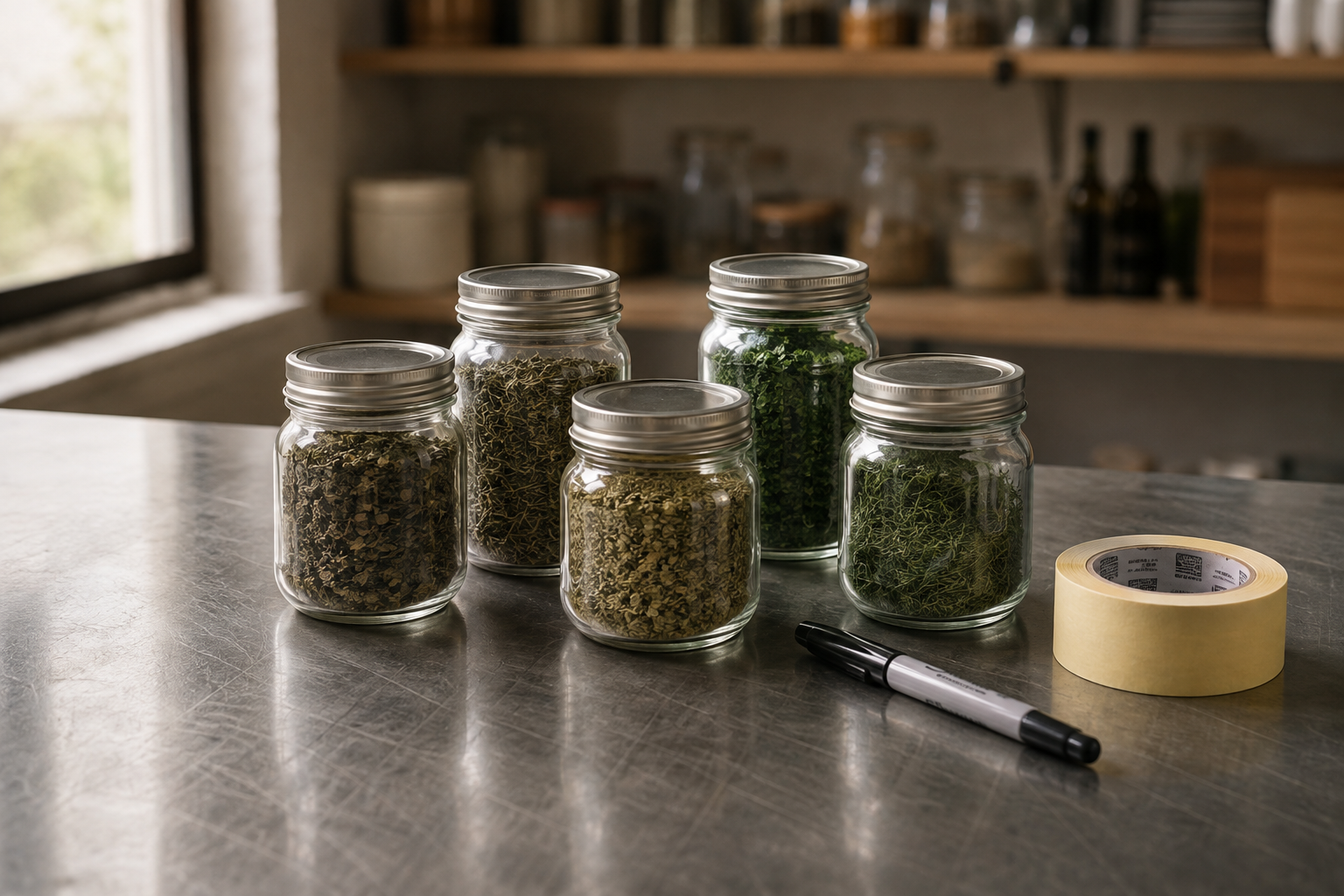
Dried herbs are not faded versions of fresh herbs. They are a different material. When herbs are dried, water leaves, volatile aromas change, and the plant’s character becomes more concentrated, more persistent, sometimes warmer, more resinous, or more bitter. This makes dried herbs especially useful in slow cooking, pantry blends, broths, rubs, marinades, breads, and preparations where flavor needs time to unfold.
This article gathers 23 departure points for working with dried herbs. The goal is not to list every possible use, but to show how dried herbs can become tools for structure, aroma, memory, and slow flavor development.
Departure Points is a Materia series built around creative exploration. Each article gathers 23 known or traditionally used applications of an ingredient, technique, region, or culinary material, then organizes them into clusters so cooks can see patterns, possibilities, and relationships. Each point of departure is a catapult for further inquiry: a reference, a context, and a question to carry back into the kitchen. What does this material do? How has it been used before? What changes when we alter the medium, the technique, the temperature, or the cultural context? From there, the work begins.
Cluster I: Dried Herbs as Foundations for Slow Cooking
Dried herbs are often strongest when they are given time. Unlike tender fresh herbs, which can lose their brightness under prolonged heat, dried herbs can slowly release aroma into sauces, broths, beans, stews, grains, and braises. They become part of the background architecture of the dish.
1. Dried Herbs in Stews
Dried thyme, oregano, bay, rosemary, marjoram, sage, and savory can support long-cooked stews. They release slowly and help create continuity between vegetables, liquids, fats, and proteins.
Try this direction: add dried thyme and bay leaf to a bean stew or vegetable braise. Taste how the aroma becomes background rather than garnish.
2. Dried Herbs in Tomato Sauces
Tomato and dried herbs have a deep relationship across Mediterranean and Latin American kitchens. Dried oregano, basil, thyme, bay, and marjoram can enter early and become part of the sauce’s identity.
Try this direction: bloom dried oregano briefly in olive oil before adding tomato. Compare it with oregano added at the end.
3. Dried Herbs in Beans
Beans benefit from slow aromatic support. Dried oregano, epazote, bay leaf, thyme, cumin seed, or marjoram can help shape the broth around them.
Try this direction: cook black beans with dried oregano and bay, then finish with fresh cilantro or lime. Notice the difference between foundation and finishing.
4. Dried Herbs in Braises
Braises need flavor that survives time. Dried herbs can hold their place through moisture, heat, and reduction.
Try this direction: use rosemary, thyme, bay, and dried orange peel in a mushroom or root vegetable braise.
Cluster II: Dried Herbs as Rubs, Crusts, and Surface Flavor
Dried herbs are excellent for surface seasoning because they contain little moisture. They can cling to ingredients, mix with salt, fat, spices, or crumbs, and help create aromatic crusts under heat.
5. Herb Rubs for Grilling
Dried herbs can become rubs for vegetables, fish, mushrooms, tofu, poultry, or meats. Their low moisture helps them stick and toast on the surface.
Try this direction: make a rub with dried oregano, thyme, smoked paprika, black pepper, salt, and citrus zest.
6. Herb Crusts
Dried herbs can be mixed with breadcrumbs, nuts, seeds, or grated cheese-style ingredients to form a crust. This works especially well when paired with fat and heat.
Try this direction: combine dried parsley, thyme, breadcrumbs, olive oil, and lemon zest for a crust on roasted cauliflower or fish.
7. Dry Marinades
A dry marinade uses salt, herbs, spices, and time to season before cooking. It can draw moisture, firm texture, and concentrate surface flavor.
Try this direction: season mushrooms or tofu with dried herbs, salt, garlic powder, and chile. Let rest before roasting.
8. Herb Seasoning for Fried Foods
Dried herbs can season fried foods immediately after cooking, when the surface is hot and slightly oily.
Try this direction: toss fried potatoes, mushrooms, chickpeas, or tempura vegetables with dried oregano, salt, and chile powder.
Cluster III: Dried Herbs in Breads, Doughs, and Grains
Dried herbs are especially useful in doughs and grains because they distribute evenly and can withstand baking, steaming, or simmering. They become part of the structure rather than remaining only on the surface.
9. Dried Herbs in Bread
Dried rosemary, oregano, thyme, sage, and fennel greens can be incorporated into breads, focaccia, flatbreads, biscuits, crackers, and savory doughs.
Try this direction: add dried rosemary and thyme to focaccia dough, then finish with olive oil and flaky salt.
10. Dried Herbs in Crackers
Because crackers rely on dryness and crispness, dried herbs fit naturally. They add aroma without adding moisture.
Try this direction: make a simple cracker dough with dried oregano, sesame, salt, and olive oil.
11. Dried Herbs in Rice and Grain Pilafs
Dried herbs can season rice, bulgur, couscous, farro, quinoa, or barley while they cook.
Try this direction: cook rice with bay leaf, dried dill, and a little olive oil. Finish with lemon and fresh herbs.
12. Toasted Grain and Herb Blends
Dried herbs can be combined with toasted grains, seeds, or crumbs to create finishing blends.
Try this direction: mix toasted rice powder, dried mint, sesame, chile, and salt. Sprinkle over roasted vegetables or yogurt sauces.
Cluster IV: Dried Herbs as Condiments and Pantry Tools
Dried herbs are one of the foundations of the pantry. They can be blended, salted, powdered, infused, or combined with other dried ingredients to make condiments that are ready when the dish needs direction.
13. Herb Salts
Herb salts combine dried herbs with salt, sometimes with citrus peel, chile, garlic, or seaweed. They are useful because they season and perfume at the same time.
Try this direction: blend dried oregano, dried thyme, lemon peel, and sea salt. Use on eggs, roasted vegetables, grilled fish, or tomato salads.
14. Dried Herb Blends
Many culinary traditions rely on herb blends: herbes de Provence, za’atar-style mixtures, Italian herb blends, fines herbes-inspired dry blends, adobo seco, and house seasoning systems.
Try this direction: create your own house herb blend around one identity: Mediterranean, Latin American, herbaceous-smoky, citrus-herb, or bitter-green.
15. Herb Powders
Dried herbs can be ground into powders for seasoning dusts, rubs, sauces, or finishing. Powders disperse quickly and can become subtle background flavor.
Try this direction: grind dried parsley, celery leaves, and lemon peel into a green finishing powder for soups or roasted roots.
16. Herb Sugar
Some herbs work beautifully with sugar. Dried mint, lavender, basil, rosemary, lemon verbena, thyme, and tarragon can be used in desserts or drinks.
Try this direction: mix dried mint with sugar and citrus zest. Use on fruit, yogurt, tea, or cocktail rims.
Cluster V: Dried Herbs in Liquids, Infusions, and Fats
Dried herbs often need a medium to release properly. Water, oil, vinegar, alcohol, honey, and fat can all carry their aromatic compounds in different ways.
17. Herb Oils
Dried herbs can infuse oil, especially when warmed gently. The oil becomes a carrier of aroma and can be used as a finishing element.
Try this direction: warm olive oil with dried rosemary, thyme, and chile flakes. Strain if desired and use over beans, soups, or grilled vegetables.
18. Herb Vinegars
Vinegar extracts aroma and preserves it. Dried tarragon, oregano, thyme, rosemary, dill, and mint can all shape vinegars for dressings and marinades.
Try this direction: steep dried tarragon in white wine vinegar for a simple herb vinegar.
19. Herbal Broths
Dried herbs can define the aromatic identity of broths and stocks. Bay leaf, thyme, oregano, dill seed, parsley stems, and dried mint can all work depending on the preparation.
Try this direction: make a light vegetable broth with bay, thyme, dried mushroom, and dried parsley. Use as a base for grains or soup.
20. Herbal Teas and Cooking Infusions
Some dried herbs live between cooking and drinking: mint, lemongrass, sage, thyme, chamomile, lemon balm, verbena, and oregano. Their infusions can become liquids for desserts, syrups, sauces, poaching, or drinks.
Try this direction: make a strong dried mint infusion and use it in a syrup, granita, or yogurt sauce.
Cluster VI: Dried Herbs as Finishing Aroma and Texture
Although dried herbs often work best with time, they can also finish a dish when used carefully. The key is texture. Whole dried leaves can feel rough if not handled well, but crushed, powdered, toasted, or mixed into salt or fat, they can become elegant finishing tools.
21. Dried Herbs Over Creamy Foods
Dried mint, oregano, dill, or thyme can work beautifully over yogurt, labneh-style spreads, hummus, bean purées, whipped feta-style preparations, or plant-based creams.
Try this direction: sprinkle dried mint and chile over yogurt with olive oil and salt.
22. Dried Herbs on Roasted Vegetables
Roasted vegetables benefit from herbs that can stand up to heat and sweetness. Dried rosemary, thyme, oregano, sage, and marjoram can emphasize caramelization.
Try this direction: toss carrots, potatoes, squash, or cauliflower with dried herbs before roasting. Finish with acid.
23. Dried Herbs as Table Seasoning
A small bowl of dried herb salt, chile-herb powder, or toasted herb blend can live at the table. This lets each person adjust aroma, salt, and intensity.
Try this direction: make a table blend with dried oregano, toasted sesame, chile flakes, citrus peel, and salt. Use on soups, eggs, beans, rice, or grilled vegetables.
What These 23 Points Teach the Cook
Dried herbs are not passive pantry items. They are preserved aromatic systems.
They can act as:
slow-cooked foundations
rubs and crusts
dry marinades
bread and dough seasonings
grain aromatics
herb salts
finishing powders
infused oils and vinegars
broth builders
table condiments
Their strength is not only convenience. Their strength is persistence. They allow aroma to survive time, travel, storage, heat, and long cooking.
To use dried herbs well, the cook must ask when they should enter the dish, what medium will release them, and whether they are meant to become background, crust, infusion, or finish.
Practical Note: Dried Herbs Are Not Immortal
Dried herbs last longer than fresh herbs, but they do not last forever. They lose aroma through time, light, heat, humidity, and poor storage. A dried herb can still look usable while contributing almost nothing to a dish.
Store them in airtight containers, away from heat and light. Keep leaves as whole as possible and crush closer to use. Smell before adding. If the aroma is weak, dusty, or flat, the herb has lost its purpose.
Closing Reflection — Preserved Season, Slow Aroma
Dried herbs carry season into storage. They remind us that preservation is not only survival; it is also style. Drying changes the herb, but it does not erase it. It gives the cook another way to work with aroma: slower, warmer, more persistent, and often more structural. Fresh herbs bring immediacy. Dried herbs bring continuity. To understand dried herbs is to understand how aroma can be preserved, concentrated, and carried forward.