Global Culinary Techniques — 23 Departure Points for Heat, Texture, and Transformation
Cooking is not only a matter of ingredients. It is also a matter of verbs: frying, sealing, smoking, wrapping, curing, suspending, braising, grilling, drying, coating, and steaming. These transformational actions shape the material of food, changing texture, aroma, moisture, structure, and meaning.
Across the world, culinary traditions have developed techniques that respond to climate, available tools, fuel, ingredients, and ritual. Some techniques rely on fire and direct heat. Others use acidity, steam, pressure, fat, smoke, gelatin, or time. Some are rustic and elemental. Others are highly refined and technological.
This article gathers 23 global culinary techniques, preparations, and method-based traditions, organized into clusters so we can better understand what each one does. The goal is not to create a complete technical encyclopedia, but to offer a structured beginning: a set of methods that can become points of departure for creative cooking.
Editorial note: Some entries in this article are strict techniques, while others are dishes, preparation systems, or culinary philosophies built from multiple techniques. They are included because each one teaches a distinct way of transforming ingredients.
Departure Points is a Materia series built around creative exploration. Each article gathers 23 known or traditionally used applications of an ingredient, technique, region, or culinary material, then organizes them into clusters so cooks can see patterns, possibilities, and relationships. Each point of departure is a catapult for further inquiry: a reference, a context, and a question to carry back into the kitchen. What does this material do? How has it been used before? What changes when we alter the medium, the technique, the temperature, or the cultural context? From there, the work begins.
Cluster I: Fire, Grill, Ember, and Direct Heat
These techniques rely on flame, charcoal, hot surfaces, embers, or radiant heat. They build smoke, char, crust, caramelization, and direct contact with fire.
1. Al Ajillo
Al ajillo is a Spanish and Latin American technique in which ingredients such as seafood, mushrooms, chicken, or vegetables are cooked in olive oil with garlic and sometimes chile. It teaches the power of aromatic fat: garlic infuses the oil, the oil coats the ingredient, and heat brings everything into contact.
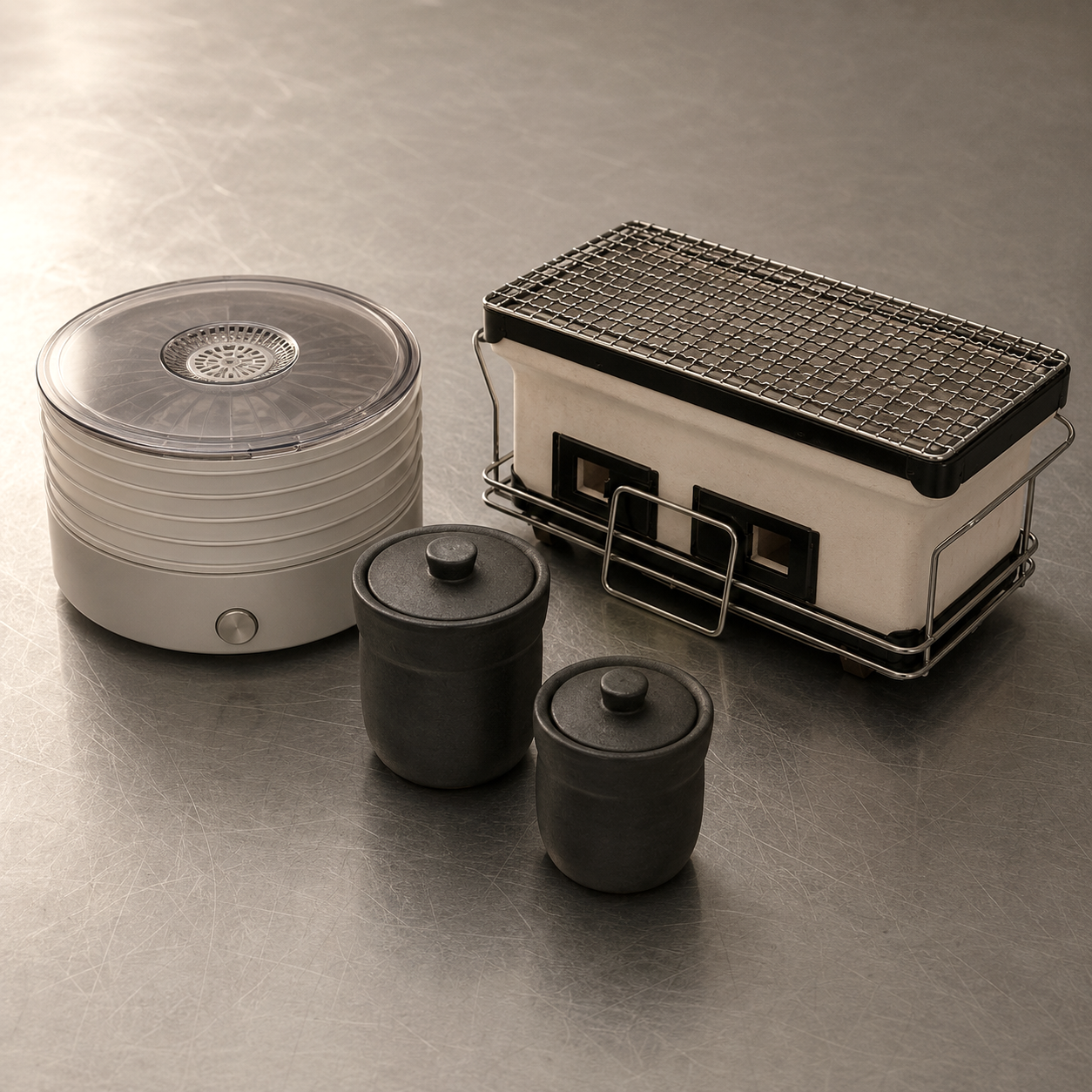
2. Hibachi Grilling
Hibachi-style grilling refers to cooking over a small charcoal grill or brazier-like heat source. In practice, it teaches the value of compact, intense heat for skewers, vegetables, seafood, and small cuts. The departure point is control: small fire, direct surface, quick cooking.
3. Planking
Planking cooks food, often fish, on a wooden plank placed over heat. The plank protects the food from direct flame while adding wood aroma, gentle smoke, and moisture buffering. It is especially useful for fish, mushrooms, vegetables, and delicate proteins.
4. Jerking
Jerking is a Jamaican method built around marinade, spice, and fire. Ingredients are seasoned with a mixture often including Scotch bonnet peppers, allspice, herbs, and aromatics, then cooked over grill or open flame. It teaches how marinade and smoke can work together as a full flavor system.
5. Escalivada
Escalivada is a Catalan preparation of fire-roasted vegetables, often peppers, eggplants, onions, and tomatoes. The vegetables are charred until soft, peeled, then dressed with olive oil. It teaches how fire can collapse vegetables into sweetness, smoke, and silk.
6. Mongolian Khorkhog / Hot Stone Cooking
Khorkhog is a Mongolian hot-stone cooking method in which meat is cooked with heated stones inside a closed container, often with water and sometimes vegetables. It teaches how stones can become both heat source and cooking tool, creating steam, pressure, and mineral contact.
Cluster II: Moist Heat, Sealed Cooking, and Slow Transformation
These techniques rely on containment, moisture, stock, steam, or slow cooking. They preserve juiciness, deepen flavor, and allow ingredients to transform gradually.
7. Dum Pukht
Dum pukht is a slow-cooking technique from the Indian subcontinent in which food is sealed in a pot, often with dough, and cooked gently in its own steam and juices. It teaches containment: aroma stays inside, moisture circulates, and flavor deepens without aggressive heat.
8. Fondant Cooking
Fondant cooking, especially with potatoes, begins with browning in fat and continues with braising in stock. The result is a vegetable with a golden exterior and tender, deeply flavored interior. It teaches how searing and braising can be combined in one method.
9. Barigoule
Barigoule is a French method often associated with braising artichokes with white wine, herbs, garlic, and aromatics. It teaches how a vegetable can be cooked gently in a flavorful liquid until it becomes both tender and infused.
10. Balti Cooking
Balti cooking is associated with food cooked quickly in a wok-like pan called a balti, especially in Pakistani and northern Indian-influenced restaurant traditions. It teaches fast sauce-building, high heat, and aromatic layering in a compact vessel.
11. Nikujaga
Nikujaga is a Japanese simmered dish of thinly sliced meat, potatoes, onions, soy sauce, mirin, and sugar. As a technique reference, it teaches gentle simmering, sweet-salty balance, and the way potatoes absorb broth while holding structure.
12. Rending / Rendang-Style Reduction
Rendang, from Indonesia and Malaysia, is not simply slow cooking. It is slow reduction: meat is cooked with coconut milk and spices until the liquid reduces, fat separates, and the sauce clings intensely to the meat. The departure point is concentration through time.
Cluster III: Raw, Acid, Cure, and Gelatin-Based Preparations
These techniques transform ingredients without direct heat, or with structural agents like acid and gelatin. They depend on freshness, timing, safety, and precision.
13. Ceviche Preparation
Ceviche uses citrus juice to marinate raw fish or shellfish. The acid denatures the proteins, changing appearance and texture, but it does not replace the safety function of heat cooking. This technique teaches acidity as transformation, but also demands freshness and care.
14. Crudo Preparation
Crudo is an Italian raw preparation, often fish or seafood sliced thin and served with olive oil, citrus, salt, and seasonings. Unlike ceviche, it relies less on acid transformation and more on purity, slicing, fat, and immediate seasoning.
15. Aspic
Aspic suspends ingredients in a clarified gelatinous stock. It appears in French, Russian, and other European traditions. It teaches structure through gelatin: liquid becomes architecture, and ingredients can be preserved visually inside a transparent savory medium.
16. Katsuobushi
Katsuobushi is made by simmering, smoking, drying, and fermenting skipjack tuna into hard blocks that are shaved into flakes. It teaches a layered preservation process where smoke, drying, fermentation, and shaving create one of Japan’s essential umami materials.
Cluster IV: Fat, Protection, and Moisture Management
These techniques use fat as protection, moisture support, or flavor delivery. They are especially important when working with lean ingredients.
17. Barding
Barding involves wrapping lean meats with thin slices of fat, such as bacon or pork fat, before roasting or grilling. The fat protects the surface and helps prevent drying while adding flavor.
18. Larding
Larding inserts strips of fat into lean meats using a larding needle. Unlike barding, which wraps from outside, larding introduces fat internally. It teaches how fat can be embedded into structure before cooking.
19. Aburaage Frying
Aburaage is made by deep-frying thin slices of tofu until they become puffy and golden. The result can be used in inari sushi, soups, simmered dishes, or stuffed preparations. It teaches how frying can transform tofu into an absorbent, flexible skin.
20. Napping
Napping means coating food lightly with sauce so it drapes over the surface. It is not a cooking method in the same sense as frying or braising, but it is an essential finishing technique. It teaches control over sauce texture, viscosity, and coverage.
Cluster V: Preservation, Concentration, and Modern Transformation
These techniques remove water, encapsulate flavor, or construct new textures through technical manipulation.
21. Dehydration
Dehydration removes moisture through low heat, air circulation, sun, or controlled drying. It preserves food, concentrates flavor, and changes texture. Fruits, vegetables, meats, herbs, mushrooms, and citrus peels all become different materials once dried.
22. Encapsulation
Encapsulation encloses liquids or ingredients inside a gel-like casing, often associated with modernist cooking. It teaches how flavor can be delivered as a burst, sphere, or controlled release rather than as a traditional sauce.
23. Scalding
Scalding heats milk or cream to just below boiling. It changes proteins, affects texture, and prepares dairy for custards, breads, sauces, or fermentation. It teaches how gentle heat can alter a liquid without fully cooking it.
What Global Culinary Techniques Teach the Cook
These techniques teach us that cooking is a language of transformation. Each method changes food through a different force: fire, acidity, fat, moisture, steam, pressure, drying, gelatin, fermentation, or containment.
Across these 23 departure points, several patterns emerge:
fire builds char, smoke, and collapse
sealed cooking preserves aroma and moisture
slow reduction concentrates flavor
acidity changes texture without heat
fat protects, enriches, and carries aroma
drying concentrates and preserves
gelatin and encapsulation create structure
finishing techniques shape the final experience
The creative lesson is clear: technique is not only execution. It is interpretation. When you understand what a method does, you can move it across ingredients, cultures, and new contexts with more intention.
Creative Exploration Prompt
Choose one technique from each cluster and test it with the same ingredient.
For example, use mushrooms:
grill them
braise them
marinate them with acid
fry them
dehydrate them
Ask yourself:
What does heat change?
What does moisture preserve?
What does acid alter?
What does fat protect?
What does drying concentrate?
Document how the same ingredient becomes five different culinary materials through technique.
From there, the work begins.