The Braiser
The Physics of Enclosed Heat
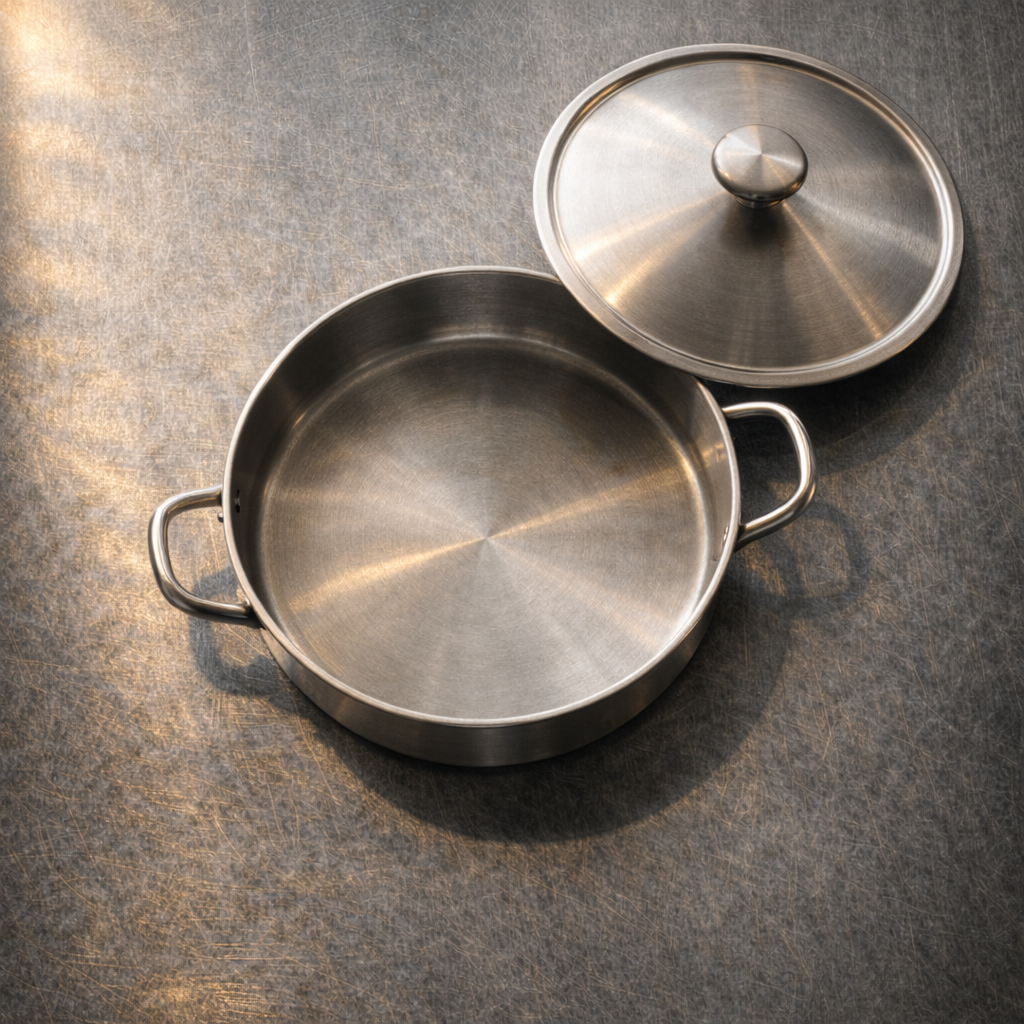
If the pan exposes ingredients to direct heat and the pot immerses them in liquid, the braiser introduces a third cooking environment: enclosed heat. In this environment, ingredients cook slowly inside a partially covered vessel. Moisture circulates, heat surrounds the food, and flavors concentrate over time. This method is fundamental to many cuisines of the world. Long-cooked stews, tender braised meats, and deeply flavored vegetable preparations all rely on this gentle yet powerful cooking environment. The braiser allows cooks to combine techniques: searing, simmering, roasting, and reduction all within a single vessel.
The Function
Braising typically follows three stages.
1. Initial Searing
Ingredients are browned on the stovetop to develop flavor through caramelization.
2. Enclosed Cooking
Liquid is added, and the vessel is covered. The preparation then continues cooking slowly, usually in the oven.
Inside the braiser, heat circulates through a mixture of:
• radiant heat from the oven
• steam from evaporating liquid
• convection inside the vessel
This environment allows tough ingredients to soften gradually while flavors deepen.
3. Reduction and Finishing
Toward the end of cooking, the lid may be removed to allow excess liquid to evaporate and flavors to concentrate. This stage often creates the final texture and balance of the dish.
The Geometry
Braisers either round, oval or square, are typically wide and relatively shallow, which allows ingredients to sit in a layer of liquid while still being partially exposed to heat. This geometry is ideal for slow cooking, where ingredients are not completely submerged.
Materials
The material of the braiser greatly affects its performance.
Cast Iron
Heavy cast iron retains heat extremely well and provides stable cooking conditions. This is the material used in most Dutch ovens.
Enameled Cast Iron
Enameled versions offer easier maintenance and prevent rust while maintaining the thermal mass of cast iron.
Clay and Ceramic
Clay vessels conduct heat more gently and create particularly moist cooking environments. They are common in traditional Mediterranean and North African cooking.
Heavy Stainless Steel
Some professional braisers are made from thick stainless steel with aluminum cores for improved heat distribution.
Variations Across Cuisines
Different culinary traditions developed their own versions of braising vessels.
Dutch Oven
The Dutch oven is one of the most versatile braising vessels. Its heavy construction and tight lid create a stable enclosed environment ideal for long cooking times. Dutch ovens are commonly used for:
• stews
• braised meats
• confit preparations
• slow-roasted vegetables
• bread baking
Because of their durability, they are also used outdoors, sometimes buried under embers with fire placed above the lid.
Cazuela
The Spanish cazuela is a shallow clay vessel used for slow cooking. It is common in Spanish and Mediterranean cuisines and is particularly associated with seafood and stew preparations. Cazuelas are used for dishes such as:
• suquet de peix
• seafood stews
• vegetable braises
• garlic and olive oil preparations
They can be used both on stovetops and in ovens, depending on the material.
Tagine
The tagine is a North African braising vessel with a distinctive conical lid. The lid allows steam to condense and fall back into the dish, maintaining moisture while concentrating flavor. Tagines are used for slow-cooked dishes combining meats, vegetables, spices, and dried fruits.
Classic Braiser Pan
Professional kitchens often use large braiser pans that may or may not include lids.
These are typically used for:
• braising meats
• preparing stews
• slow-cooking large batches of ingredients
When lids are absent, the vessel is often covered with parchment or aluminum foil during cooking.
Choosing the Tool
Selecting a braiser depends on several factors. Important considerations include:
• heat retention
• capacity
• compatibility with stovetop and oven
• ease of handling when full
For many kitchens, one or two well-sized braisers provide the versatility needed for most slow-cooking preparations.
Common Misconceptions
One misconception is that braisers are used only for stews. In reality, they are extremely versatile vessels capable of producing a wide range of dishes, from slow-roasted vegetables to confit preparations. Another misunderstanding is that braising always requires large amounts of liquid. Many braised dishes rely on minimal liquid combined with trapped steam to create the cooking environment.
Safety Considerations
Because braisers are often heavy and filled with hot liquid, careful handling is essential. When transferring a braiser from the stovetop to the oven, or from the oven to the stovetop, cooks must ensure a secure grip and proper support. Heavy cast-iron vessels retain heat for a long time, and their handles can remain extremely hot.
Closing Reflection
The braiser represents one of the most patient forms of cooking. Instead of quick transformations, braising relies on time and controlled heat to slowly reshape ingredients. Tough cuts become tender, vegetables absorb surrounding flavors, and sauces deepen through gradual concentration. Within the enclosed space of the braiser, cooking becomes less about speed and more about quiet transformation.